
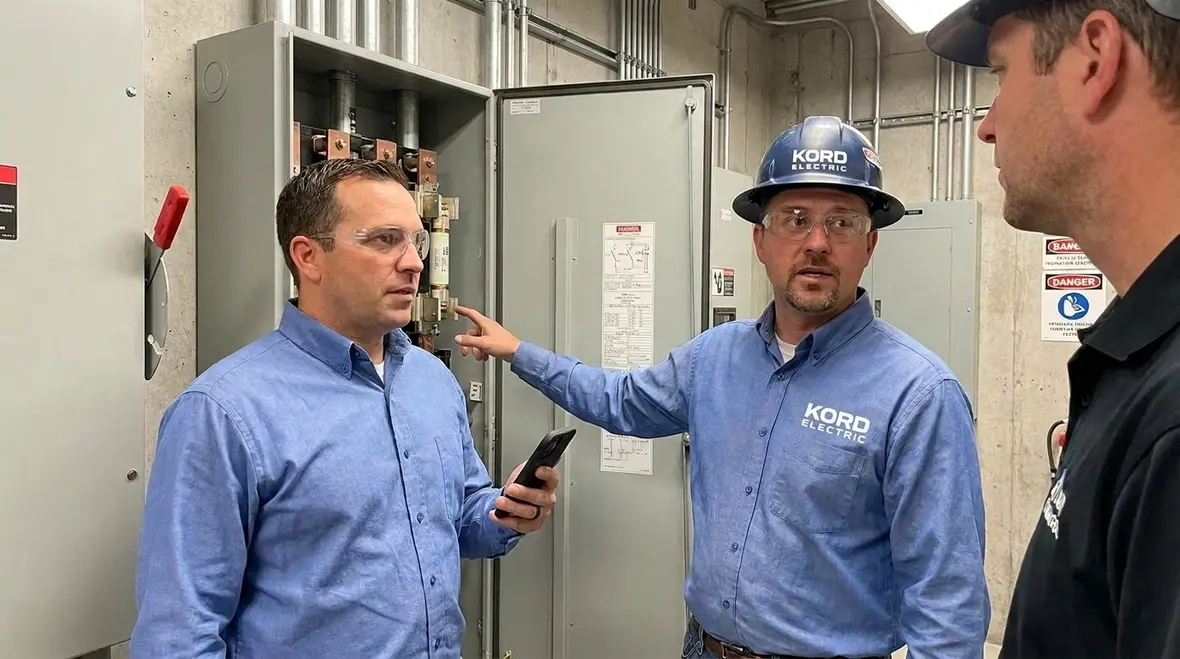
NFPA 70 Section 240.40 NEC Fuse Disconnecting Means
Kord Electric helps commercial and industrial facilities understand the NEC fuse disconnecting means requirements before they become costly problems. When a site uses fuses, someone has to provide a safe way to disconnect that equipment for maintenance and emergencies. That is where NFPA 70 Section 240.40 comes in. Our technicians explain the rule in plain terms, then we verify how it fits the real layout on the ground, not just on paper. And yes, we have heard every joke about “just pull the fuse later.” That plan usually ends with angry supervisors and a call to us. So we slow it down, we measure, and we document what keeps people safe and systems reliable.
NFPA 70 240.40 and why it matters in real buildings
In commercial and industrial settings, electrical gear does not live in a quiet classroom. It lives next to motors, pumps, control panels, elevators, and whole networks of equipment that run hard every day. Therefore, the disconnecting method for fuses becomes a safety foundation, not an afterthought. Under NFPA 70 Section 240.40, the NEC fuse disconnecting means must allow workers to remove power safely and quickly without guessing.
Our expert service staff often starts with one simple idea. Fuses protect conductors and equipment from overload and fault conditions. However, once a fuse has opened, the panel may still contain parts that are energized. So we do not treat “the fuse is blown” as the same thing as “the equipment is safe.” Instead, we confirm the design includes the disconnecting capability the code requires.
And to keep things engaging, we will say it this way: a fuse can be the messenger, not the guard at the door. The guard is the correct disconnecting means.
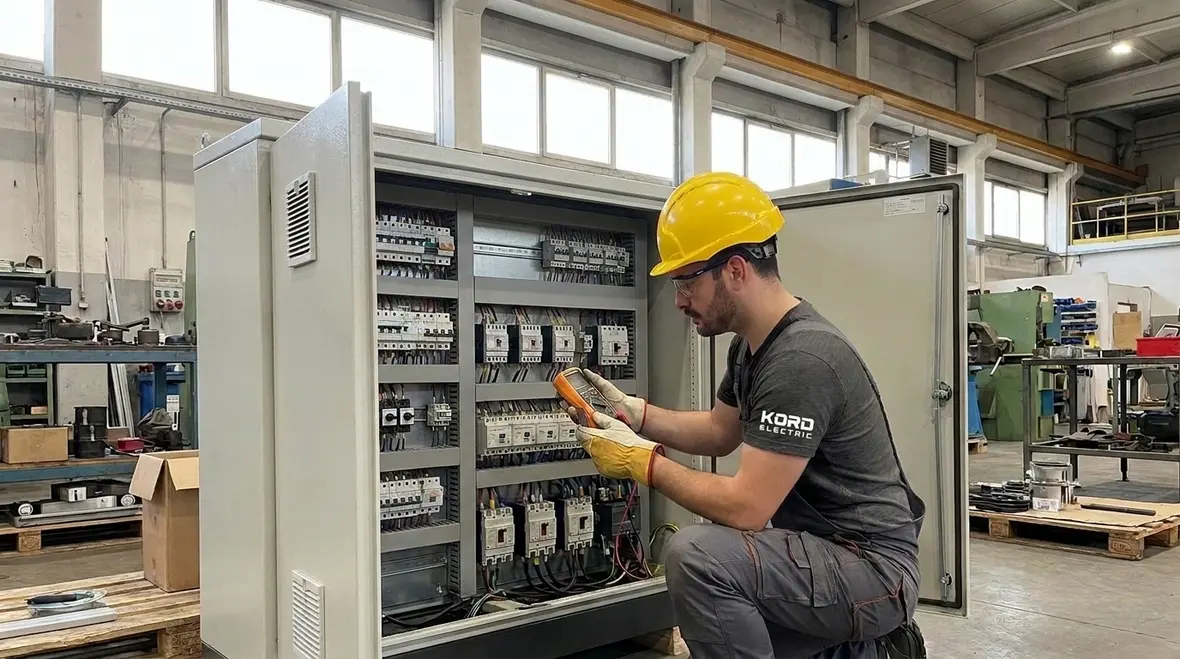
For facility leaders who want a broader code foundation, our team also points to resources like Understanding NFPA 70: The National Electrical Code Explained for 2026. That orientation helps connect fuse disconnecting decisions to the larger NEC framework your building already has to follow.
What the code expects for fuse disconnecting means
NFPA 70 Section 240.40 focuses on how facilities provide a disconnecting means when fuses are used. It requires that the disconnecting action can be made by one of the recognized methods the NEC allows, depending on the system design. In practice, this means the arrangement must let personnel de energize the circuit for maintenance while meeting code intent for safe access and clear operation.
When our technicians visit a facility, they map where fuses sit relative to the load and relative to the intended work area. Then we check how personnel would operate the disconnect. We look for problems that often show up in older installations, such as:
- Fuses that act like the disconnect but do not provide a proper means to de energize the full circuit under load conditions
- Access barriers that make it hard to operate the required handle or device safely
- Clear labeling that does not match the actual circuit function, so someone turns the wrong thing off
- Equipment layouts where the “disconnect” lives far from the work location, creating confusion
Next, we confirm the fuse disconnecting means aligns with the equipment and enclosure details. Because in real buildings, people do not follow diagrams on a wall. They follow what they can reach safely, with the correct procedure and labeling.
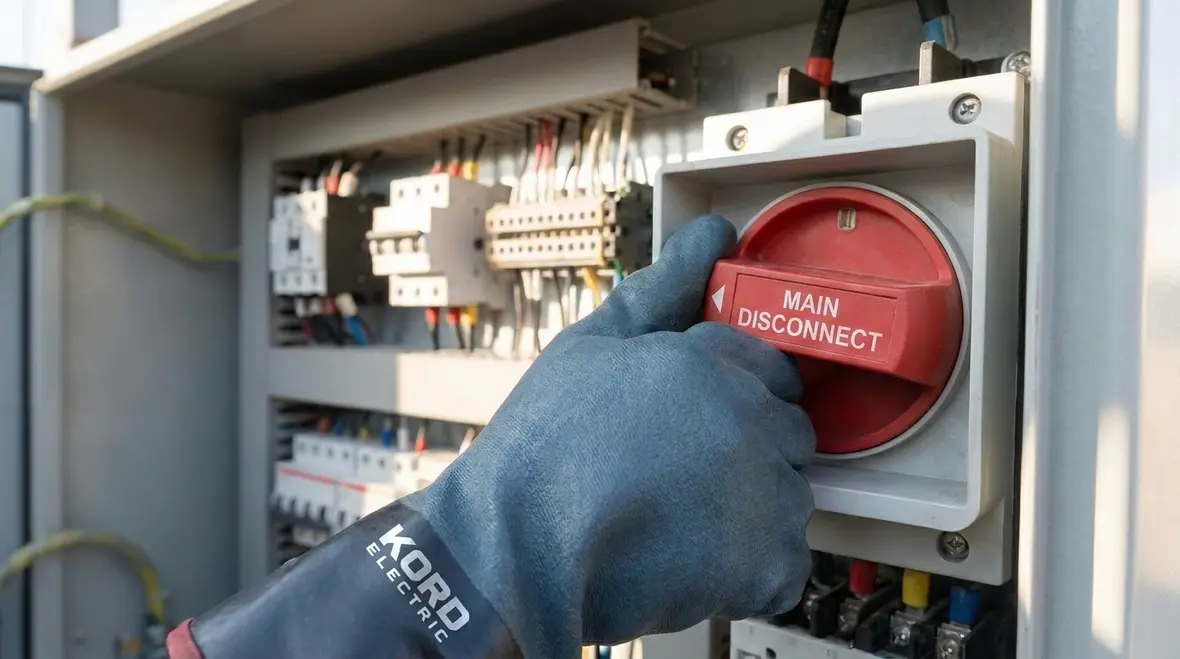
How our technicians check compliance step by step
At Kord Electric, we treat this as a process, not a guess. First, our team reviews the one line diagram and panel schedules. Then we inspect the actual field installation. After that, we verify that the disconnection action meets the intent of NFPA 70 Section 240.40 for the specific fuse arrangement.
To keep the work smooth for commercial and industrial clients, we follow a sequence that reduces downtime. For example, we confirm the circuit boundaries first, then we align test points and access paths. As a result, the job goes faster, and the team wastes less time.
Our expert service staff also talks with the facility team. Therefore, maintenance supervisors know exactly what the disconnecting action does and what it does not do. That conversation matters, because people often assume a fuse location equals the “safe point.” We explain the difference clearly.
We also document what we find, because audits and troubleshooting later require evidence. If something does not meet requirements, we propose corrective action. And if it meets requirements, we still recommend improvements like labeling updates and operational verification, since the best design still deserves clear guidance.
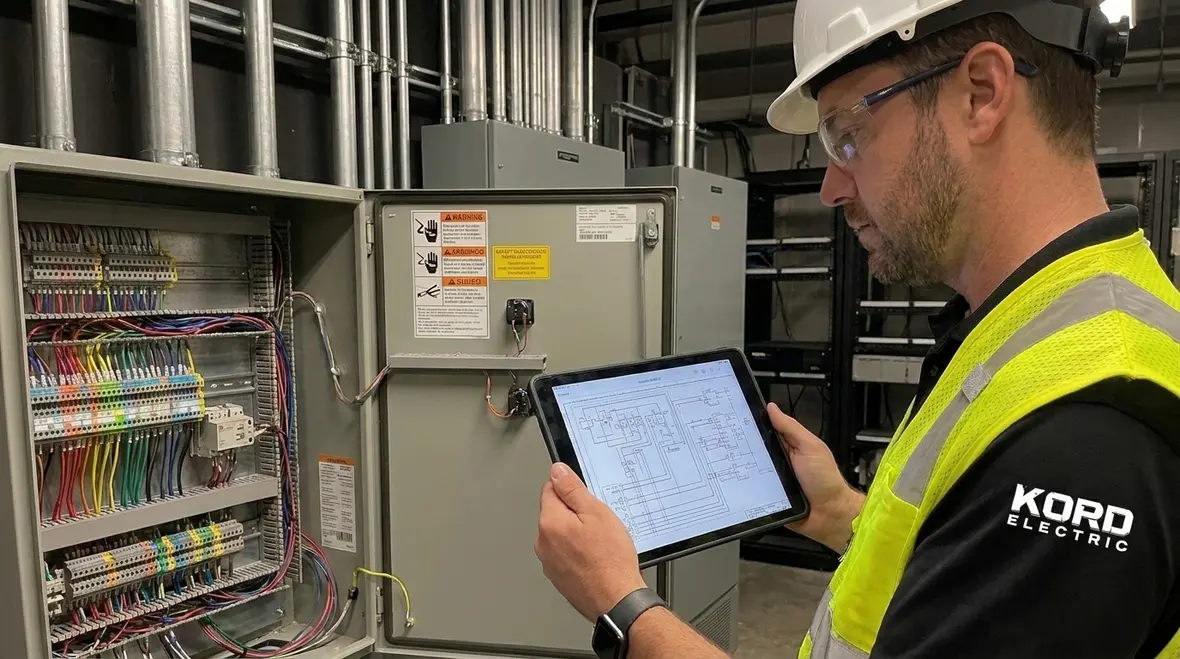
Common mistakes with fuse systems in commercial and industrial spaces
Fuses are reliable, but the installation details around them often become the weak link. When a site uses fuses in a power distribution scheme, the disconnecting means must make safety obvious. However, the following mistakes show up again and again.
- Misleading access: The fuse holder may look reachable, but the code intent focuses on a disconnecting means that personnel can operate safely and correctly.
- Incorrect assumptions after a fault: Workers see a blown fuse and assume all downstream parts are safe. Yet parts of the system can remain energized.
- Weak or missing identification: When labels do not match the actual circuit, operators waste time and may shut down the wrong equipment.
- Improper coordination with protective devices: Even when fuses clear faults, a disconnecting method still must exist for maintenance and safe work.
- Unclear procedure during emergencies: If the site has no practiced steps, the disconnect operation becomes slow under stress.
Meanwhile, some teams try to “fix it later.” We understand the temptation, but in a major property building, later becomes never. Also, electrical safety does not care about schedules. It reacts the moment something is energized.
Where fire and life safety professionals fit into the plan
Commercial buildings do not run on power alone. They run on reliability, and reliability links to fire and life safety strategies. That connection matters because many facilities coordinate electrical systems with fire pumps, emergency power, and alarm devices. Even though this article focuses on NFPA 70 Section 240.40, our work still respects the broader safety ecosystem.
Our approach stays consistent across the industry. If the facility must also meet fire system needs, we coordinate electrical disconnecting and maintenance access so fire and pump equipment teams can work without creating new hazards. For clients who value safety culture, we align with best practices discussed by organizations that focus on national electrical code awareness and fire system readiness, including resources like Kord Fire’s NEC coverage and specialized fire pump guidance. When teams share the same safety language, maintenance becomes cleaner and response becomes faster.
That is also why we talk to the right people early. When Kord Electric’s expert service staff explains the disconnecting means clearly, operations teams can plan work orders better. In other words, we help everyone avoid the “guess and hope” method. That method is popular on TV. It does not belong in switchgear.
NEC fuse disconnecting means in building projects and upgrades
Facilities often need this topic during new construction, tenant improvements, or equipment upgrades. In those cases, project teams want predictable outcomes. So we assist in planning how the fuse disconnecting means will work with the rest of the electrical system. We also help reduce uncertainty during installation and commissioning.
For upgrades, our technicians pay attention to transitions between old gear and new gear. Therefore, the disconnecting method must remain consistent with code intent even when the site modifies parts of the system. We check:
- How the disconnecting means interfaces with the fuse holders and circuit boundaries
- Whether the operational location supports safe maintenance workflow
- Whether labels and circuit ID remain correct after changes
- Whether the enclosure access follows safe operation expectations
As a result, facilities protect equipment and people. And because commercial and industrial sites often run around the clock, we focus on solutions that fit real operations. If a shutdown can be minimized, we design the plan that way. If a labeling refresh prevents future downtime, we do that too. The goal remains the same: safe work, fewer surprises, and systems that keep moving.
For complex renovations or multi-phase projects, many teams also lean on Kord Electric’s broader Los Angeles County electrical services, where NEC planning, upgrades, and field verification all work together. That way, the NEC fuse disconnecting means is not an isolated detail but part of a coordinated electrical safety plan.
FAQ about NFPA 70 240.40 and fuse disconnects
Bring safety to fuse circuits with Kord Electric
When your facility uses fuses, NFPA 70 Section 240.40 demands more than good intentions. Kord Electric brings expert service staff, careful field verification, and clear explanations that help teams act safely and correctly. If you are planning an upgrade, troubleshooting a maintenance problem, or preparing for an inspection, we can evaluate the disconnecting means for fuse circuits and recommend next steps.
We also help connect NEC fuse disconnecting means decisions to your wider electrical plan, so coordination with branch circuits, general requirements, and system scope stays intact. That way, your building’s fuse protection, disconnects, and maintenance procedures all support one goal: safe work, strong uptime, and inspections that feel predictable instead of mysterious.
Contact us today, and we will help your building stop guessing and start operating with confidence.


