
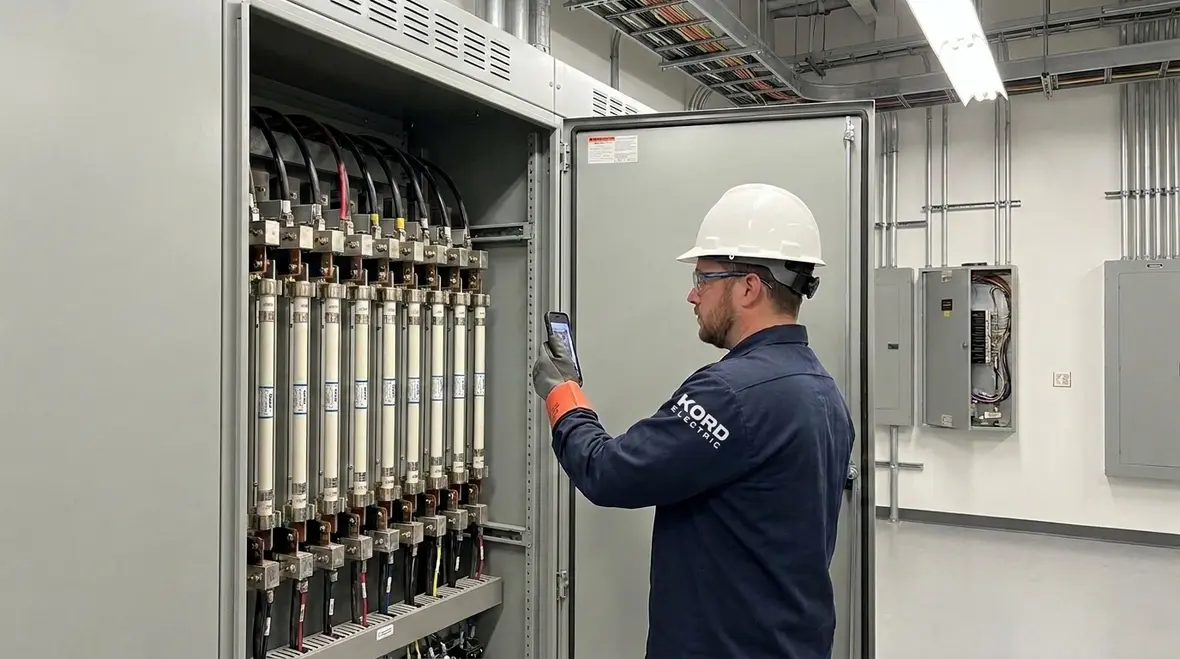
NEC Vertical Fuse Orientation Rules NFPA 70 240.33
In this guide, we explain the NEC vertical fuse orientation rules tied to NFPA 70 Section 240.33, because getting it right matters long before anyone spots a problem. At Kord Electric, we work with commercial and industrial facilities and major property buildings, and we see the same theme again and again: when fuses sit the wrong way, maintenance gets harder, safety margins shrink, and inspectors stop smiling. Our technicians and expert service staff walk clients through the details in plain language, so teams know what to check and why it matters. And yes, electrical work can feel like a sitcom where the fuse is the punchline, but we prefer to keep the punchline in a joke, not in a failure.
What NFPA 70 Section 240.33 requires for vertical fuses
NFPA 70, better known as the NEC, includes clear rules for fuse placement. Specifically, Section 240.33 addresses vertical fuse orientation requirements when fuses are installed in vertical arrangements. In simple terms, the NEC expects the fuse type and its mounting orientation to match the requirements that apply to its design and installation method. This matters because fuses rely on the internal structure and the way current travels through the fuse element, and orientation can affect how the device behaves during fault conditions.
When our service staff reviews plans or field conditions, we do not treat Section 240.33 as a “good idea.” We treat it as a must-follow safety and compliance item. Therefore, our approach stays practical: we confirm the fuse rating, we verify the installation orientation, and we check how the fuse holder or switchgear assembly supports the fuse. Then we document what we found, so the facility team can show a clean, defensible compliance story.
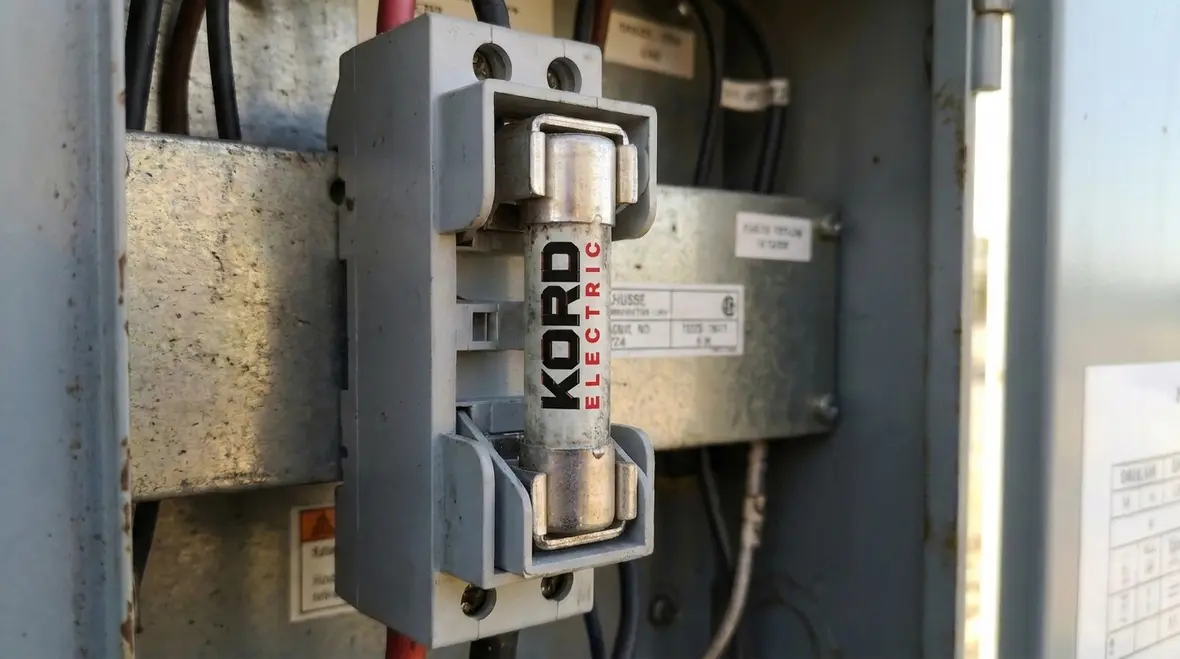
For facility teams who want to connect Section 240.33 with the broader rulebook, Kord Electric’s deeper explainer on NFPA 70 for 2026 helps show how fuse installation rules sit alongside service equipment, grounding, and overcurrent protection decisions across a building’s electrical system. You can see that bigger picture in our article How to Read NFPA 70: A Practical Guide to the National Electrical Code, which turns dense code language into usable guidance for commercial and industrial projects.
Why orientation affects safety and performance in real systems
Some people think the fuse will “always work the same” no matter how it is mounted. However, during abnormal current conditions, the fuse has to respond the way the manufacturer intended. When the NEC vertical fuse orientation rules align with correct mounting, the fuse movement, clearing action, and heat behavior follow expected patterns. As a result, systems reduce nuisance disruptions and improve the odds that protection functions as designed.
Additionally, orientation errors can create ongoing maintenance headaches. For example, teams may struggle to replace devices quickly, labels may end up facing the wrong direction, or visual checks take longer because access becomes awkward. And in a commercial or industrial setting, time equals money, so we aim to prevent the “we will fix it later” problem that always turns into a later with a higher cost.
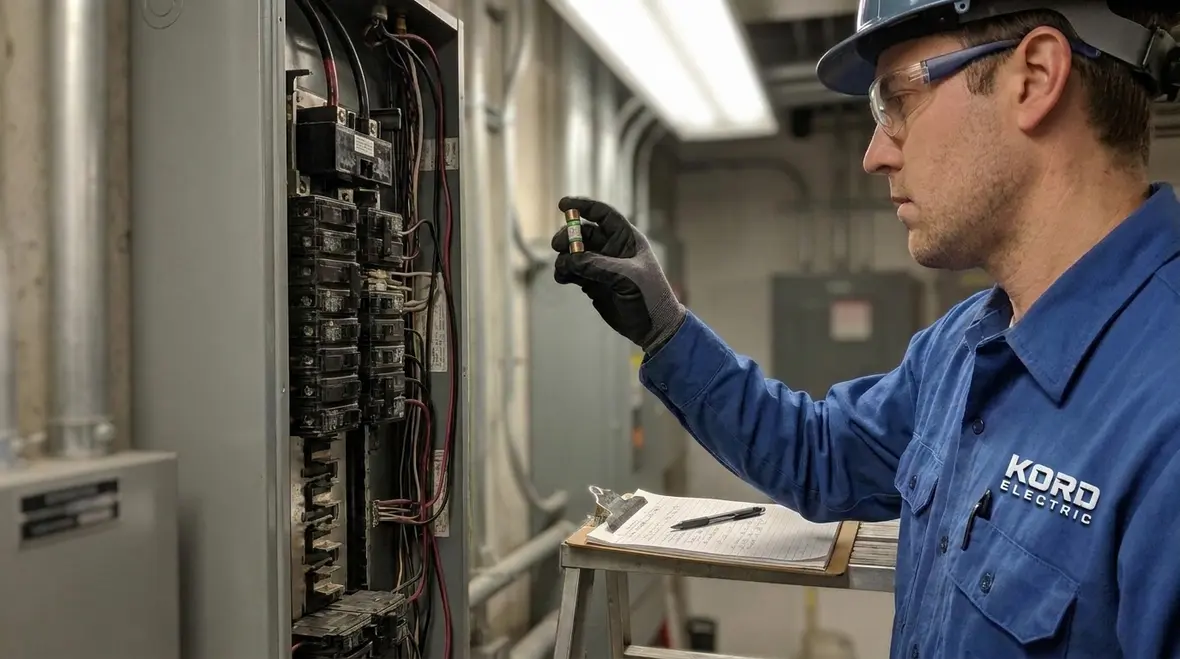
In facilities that depend on tight uptime windows, we also align fuse orientation checks with broader reliability work such as commercial electrical load testing for safety. When overcurrent protection, fuse mounting, and real-world load behavior line up, inspections get easier and the system behaves more predictably under stress.
How we verify compliance on commercial and industrial equipment
At Kord Electric, we handle the field work the way responsible pros do: carefully, methodically, and with proof. First, we identify the equipment in scope, such as panels, switchboards, and other distribution gear used by commercial and industrial facilities and major property buildings. Next, we verify what fuse assemblies are installed and how the manufacturer specifies their orientation.
Then, we connect the dots between the manufacturer’s instructions and the NEC vertical fuse orientation expectations in NFPA 70 Section 240.33. If the field installation matches the required vertical orientation, we move forward. If it does not, we recommend corrective actions and we outline the path to get the system back into compliance without causing unnecessary downtime.
Finally, our technicians explain the “why” to facility teams. We do not just say, “This must be changed.” We show them how orientation affects the fuse clearing behavior and how the standard expects the installation to support safe operation.
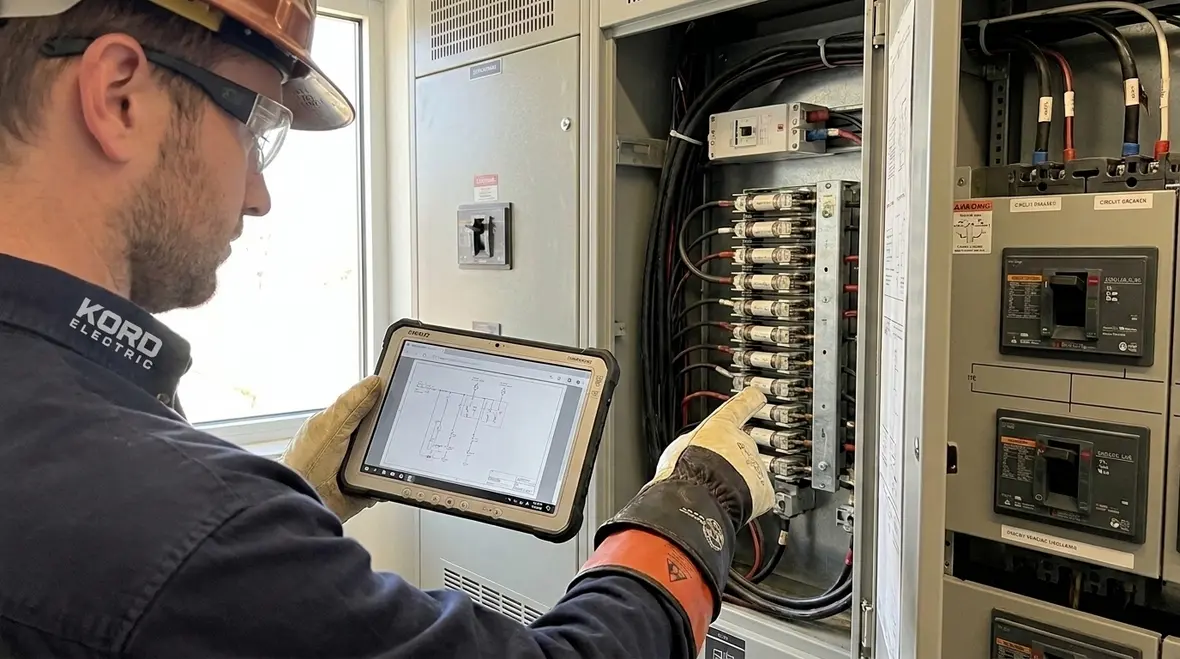
Because fuse installations rarely live in isolation, we often fold these checks into bigger planning efforts. For example, when a facility is working through a broader electrical infrastructure upgrade planning guide process, vertical fuse orientation becomes one of the technical details that supports long-term reliability and clean inspection closeouts.
Common installation mistakes we see during service visits
Even careful crews can stumble. Therefore, we watch for patterns that show up across many sites. Here are a few of the mistakes we commonly encounter:
- Fuses installed in the wrong position within a holder or assembly, even if the fuse rating matches
- Inconsistent alignment across multiple vertical fuse locations, where some devices follow orientation and others do not
- Missing or mismatched labels that make it harder to confirm the correct orientation during routine inspections
- Improper equipment mating, where replacement hardware does not match the original fuse holder design intent
- “It looked fine at the time” approvals that ignore documentation and field verification
And if you are wondering whether people ever copy-paste the wrong orientation during maintenance, the answer is yes. Humans are surprisingly good at repeating mistakes. Fortunately, our expert service staff catches those issues early, before a fault turns the building into a drama series and not the other way around.
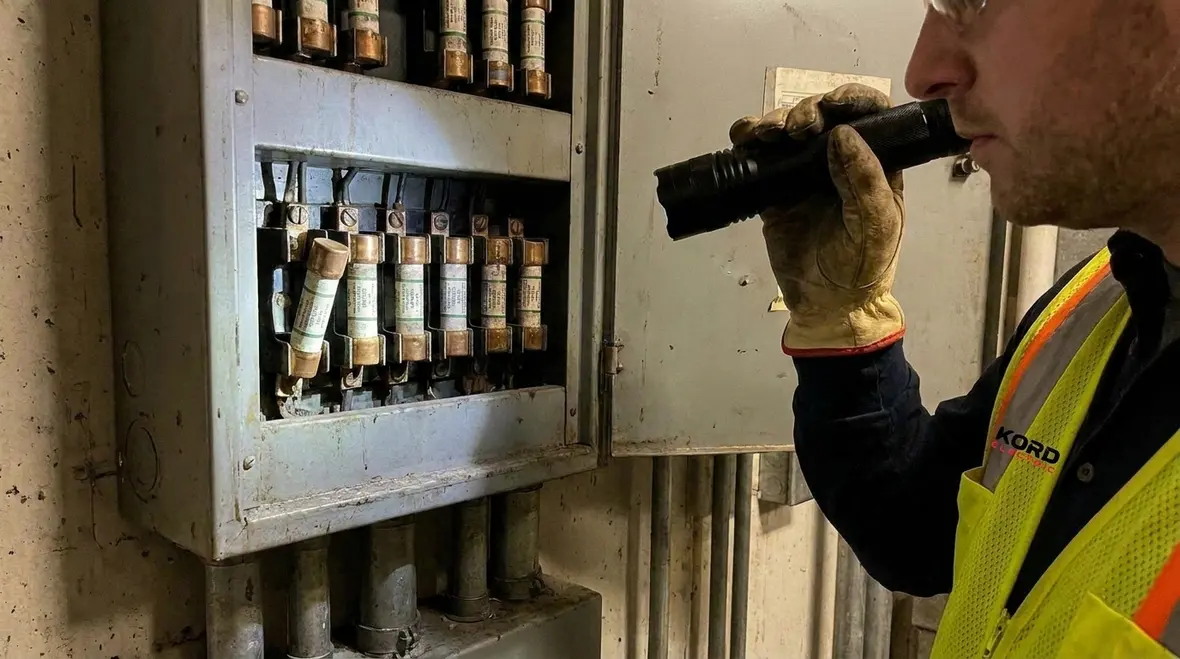
For renovation work, these mistakes often show up alongside other code gaps. That is why many owners pair fuse orientation checks with electrical code upgrade consulting for renovations, so Section 240.33 compliance travels in step with service upgrades, panel changes, and distribution redesign.
Standards context: using the NEC correctly with related code topics
NFPA 70 does not stand alone. It connects to equipment listing rules, installation practices, and safety goals that span the entire electrical system. So when we review vertical fuse orientation, we also consider how the fuse installation fits the overall design approach. In other words, we do not just check the fuse and walk away.
For example, we look at how distribution equipment supports safe access, how components are protected, and how the electrical arrangement supports reliable operation. Additionally, we make sure clients understand that code compliance involves both the written standard and the correct installation in the real world.
For teams who want broader background on NFPA 70 and how the NEC explains system expectations, we often point them to resources like the NFPA 70 explainer content on our sites, including Kordfire and Kord Electric materials. We also encourage facility owners to use credible guidance, not random internet forum opinions from people who think a multimeter is a magic wand.
If you want to see how individual code sections connect to real service decisions, articles like our explainer on NFPA 70 Section 230.2 service listing requirements show how overcurrent protection, service equipment choices, and upstream listing rules interact with downstream protection details like NEC vertical fuse orientation.
NEC inspection readiness checklist for vertical fuse orientation
We build inspection readiness around what inspectors and internal safety teams actually verify. Thus, the goal is to make the site easy to evaluate, with clear, accurate evidence. Below is a checklist we use and refine for commercial and industrial facilities and major property buildings:
- Confirm fuse type and rating match the installed equipment requirements
- Verify vertical mounting orientation matches the NEC expectations and the manufacturer instructions
- Check fuse holder and assembly compatibility, including replacement parts
- Inspect labeling so teams can identify orientation and circuit information quickly
- Review access and clearances so maintenance does not compromise safety practices
- Document field verification with photos and notes where appropriate
During this process, our technicians explain what they see and why they care. In turn, facility teams gain confidence, because they understand the reasoning behind the fix, not just the outcome.
Code safety through people and process
Standards live on paper. Safety lives in the field. That is why we rely on experienced technicians, careful procedures, and clear communication. When our team works on a distribution system, we keep the pace steady and the process consistent. First, we learn the system context. Next, we verify the details that relate to NEC vertical fuse orientation and the requirements under NFPA 70 Section 240.33. Then we provide a clear plan to correct issues and keep the facility running.
Meanwhile, we make sure facility leadership understands the benefits of doing this work the right way the first time: fewer shutdown surprises, cleaner compliance documentation, and better protection during faults. If you think that sounds like a sales pitch, fair. But we prefer outcomes over speeches. And if you want peace of mind that does not feel like a late night infomercial, that is exactly what our process aims to deliver.
| Item we verify | Why it matters |
| Vertical fuse orientation on installed devices | Helps ensure safe, expected clearing behavior during fault conditions |
| Manufacturer instructions for the fuse holder or assembly | Aligns listed design intent with NEC installation expectations |
| Labels and access for maintenance | Reduces mistakes, speeds troubleshooting, and supports ongoing safety |
In many buildings, these verification steps sit alongside broader strategies for safe operation, such as fire prevention in commercial electrical systems. When fuse orientation, overcurrent coordination, and routine maintenance pull in the same direction, the entire distribution system becomes more resilient.
FAQ
Conclusion and call to action
If you manage a commercial or industrial facility, you do not need guesswork around fuse installation. We at Kord Electric focus on correct NEC vertical fuse orientation practices under NFPA 70 Section 240.33, and we verify the field details that matter during inspections and real faults. Contact us to schedule an assessment with our experienced technicians and expert service staff. We will explain what we find, what needs correction, and how to keep your electrical system safe and compliant without turning your day into an electrical mystery novel.
For organizations planning larger projects or long-term reliability work, we can also align fuse orientation reviews with Los Angeles County electrical services that cover design support, upgrades, and preventive maintenance across your commercial or industrial portfolio. That way, NEC details like Section 240.33 become part of a bigger strategy instead of a last-minute worry before inspection.


