
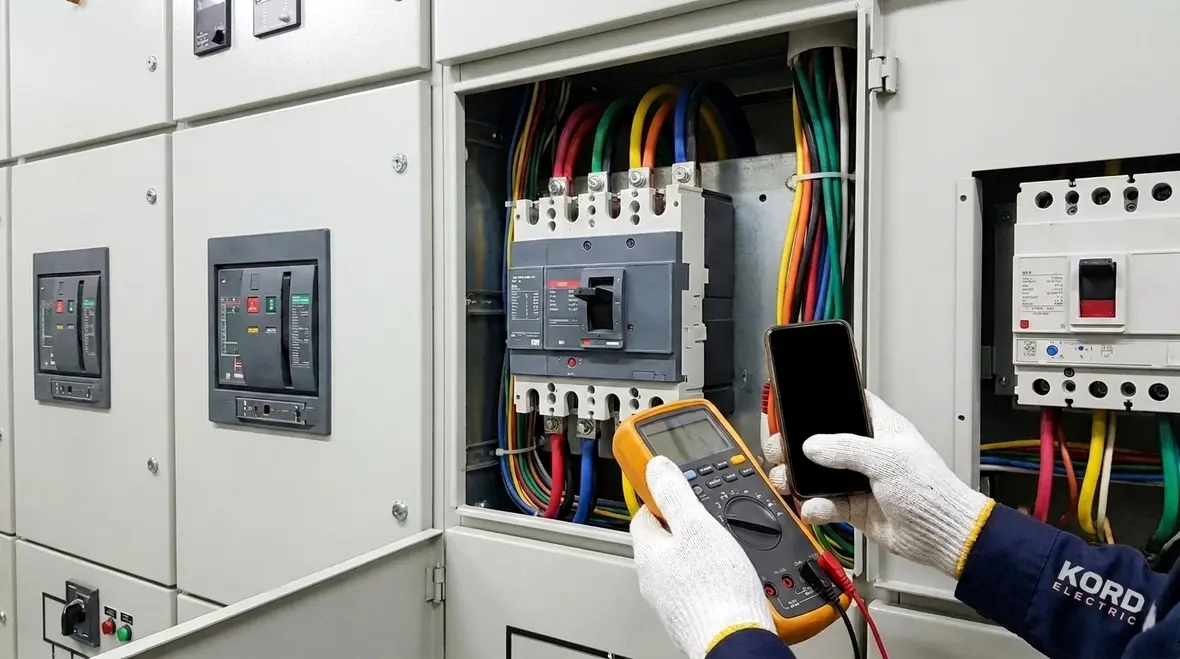
NFPA 70 Section 240.50 Circuit Breaker Requirements
In commercial and industrial buildings, we treat power protection like a serious promise: keep people safe, protect equipment, and reduce downtime. That is why NFPA 70 Section 240.50 circuit breaker requirements matter to our clients. In simple terms, these rules explain what circuit breakers must do, how they must be rated, and how they must fit the job. Others might skip the details, but we do not. We align installations with the NEC direction for circuit breaker use, then we verify the design and field conditions before anyone flips a switch. And yes, we have seen breakers installed like it was a casual “good enough” decision. The building then reminds everyone that electricity has a sense of humor, and it is not friendly.
NFPA 70 Section 240.50: what this rule set covers
NFPA 70, also called the NEC, uses Section 240 to cover overcurrent protection. Section 240.50 focuses on what circuit breakers must meet so they can reliably protect conductors and equipment. First, we read the rule as it is written, then we translate it into install-ready steps for the field. Our expert service staff and technicians explain what the code intends, not just what the words say, because many problems come from missing the purpose.
In practice, the requirements connect three ideas. Rating matters because the breaker must match the electrical system. Compatibility matters because a breaker should work with the enclosure and conductors. Performance matters because the breaker must interrupt fault current safely and on time. Therefore, we do more than “pick a breaker.” We confirm the entire protection path, from incoming source to branch circuits, while respecting the way commercial facilities operate daily.

How we apply NEC circuit breaker requirements to real electrical design
When a project starts, we do not begin with product shopping. Instead, we build from the load needs and the available fault current data, then we match breaker characteristics to the system. As a result, the NEC circuit breaker requirements become a checklist that protects both people and the budget.
Here is how we typically approach it in major property buildings and industrial sites:
- We confirm the service and feeder arrangement so the breaker placement matches the one line diagram and electrical logic.
- We verify conductor sizes and insulation ratings to ensure the breaker protects the cable, not just the equipment.
- We review selectivity needs when downtime costs real money, which happens often in factories, hospitals, data centers, and multi-tenant facilities.
- We check whether the breaker must handle sustained loads and short-time events without nuisance trips.
After that, our technicians explain how adjustments in field settings can affect performance. For example, a breaker that looks identical on paper can behave differently depending on trip settings, accessories, or installation details. So, even if the model number matches, we still validate the final setup. Code compliance is not a vibe. It is a process.
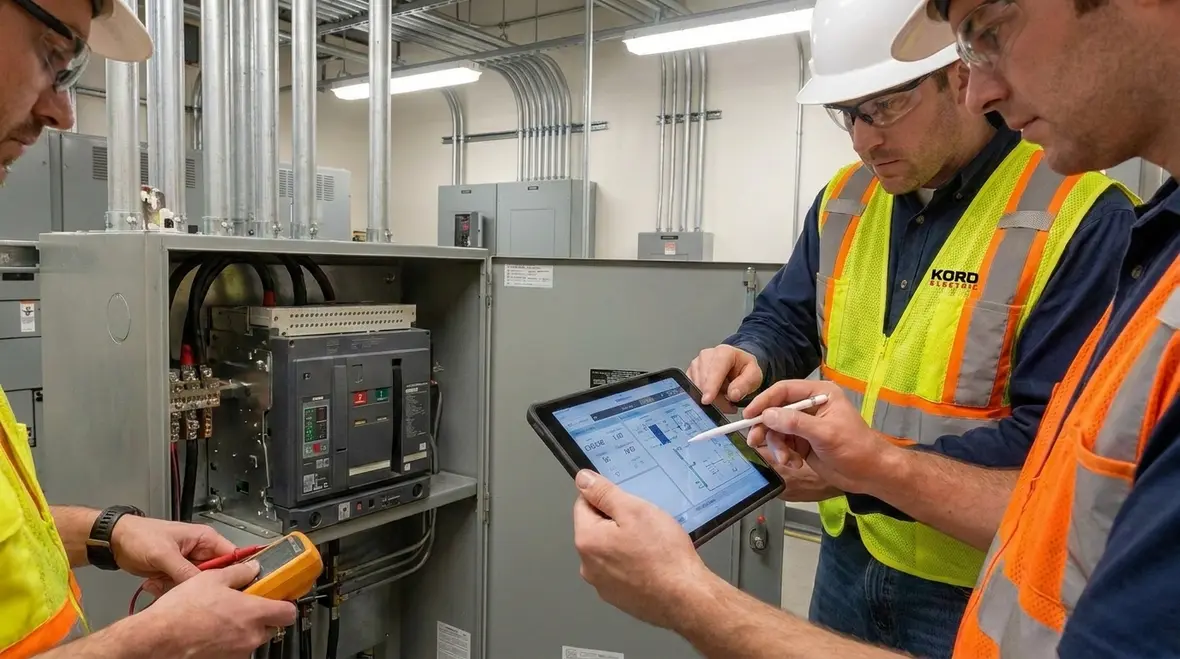
Trip ratings, frame sizes, and installation fit
Section 240.50 does not live in isolation. It works alongside other NEC sections that address how circuit breakers connect and how they protect conductors. Therefore, we pay attention to how a breaker rating works with the rest of the system.
Our expert service staff often gets the same question: “If the breaker fits the panel, isn’t that enough?” In truth, fit is only step one. A breaker must also align with the electrical design intent. We focus on the relationship between:
- Ampere rating, which must match the protective needs of the circuit conductors and load profile.
- Voltage rating, which must match the system voltage where it will operate.
- Interrupting rating, which must be sufficient for available fault current so the breaker can clear a fault safely.
- Mechanical and terminal ratings, which must match wiring methods used on commercial and industrial projects.
Then comes installation fit. We verify panelboard or switchboard compatibility, torque values, conductor termination methods, and proper labeling. Also, we keep an eye on physical constraints like wire routing and enclosure access. When someone squeezes a conductor like it is trying to get through a crowded elevator at Comic Con, termination quality suffers. And that is how heat and failures show up later, usually during the busiest shift.

Fault current, interrupting capability, and why it matters
Electric faults do not ask permission. So the breaker has to interrupt the fault current without turning the enclosure into a science experiment. This is where interrupting ratings and fault calculations become critical for commercial and industrial facilities.
As available fault current increases, the breaker must clear within its designed interrupting capability. If it does not, you get unsafe conditions. For that reason, we use the project electrical data to confirm the breaker choice and ensure it meets the needed performance. Then we document the basis so facility teams can review it later.
Additionally, we consider how maintenance affects performance. A breaker can be compliant at install time and still drift from intended operation if accessories, connections, or settings change. Therefore, our service team schedules inspections and testing as part of facility reliability plans. We also explain to our clients what “tested” means in the real world, because words can hide the truth.
For clients who also manage fire protection systems, our team coordinates with facility safety planning. In those situations, we treat power protection as a partner to the whole life safety strategy, similar to how fire and life safety groups plan for one system to support another. If someone tries to run the building like separate islands, problems grow like weeds.
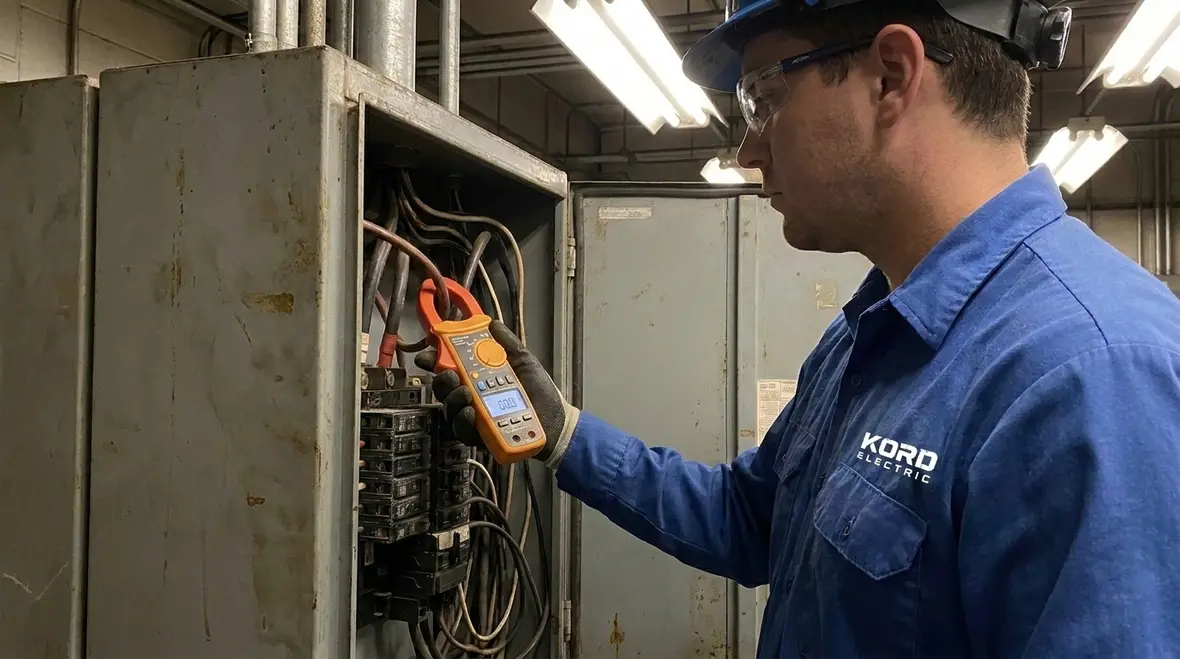
Coordination and selectivity for uptime in major properties
Commercial buildings rarely tolerate long outages. When a fault happens, the goal is to protect the faulted area while keeping the rest of the facility running. That is why coordination and selectivity matter and why Section 240.50 requirements connect to the broader NEC protection plan.
We help clients plan for selective tripping, especially in:
- Large retail centers with tenant-critical spaces
- Manufacturing plants with production schedules that cannot pause
- Multi-tenant office buildings with shared mechanical and IT loads
- Major property buildings where power reliability directly impacts operations
Here is what we do differently. First, we look at breaker types and time-current characteristics. Next, we verify coordination with upstream and downstream devices. Then, we check how the building’s operational priorities affect the coordination plan. Because if every fault trips the main breaker, the building becomes an expensive dark room.
Our technicians also explain the tradeoffs. Better selectivity can reduce nuisance trips and limit downtime, but it requires careful design and accurate settings. In other words, the code gives the guardrails, and we drive inside them. With some practical experience, it becomes less like guesswork and more like disciplined engineering.
If your facility team wants more background on how the broader National Electrical Code direction shapes these choices, you can also review Kord Electric’s resource Understanding NFPA 70: The National Electrical Code Explained for 2026, which connects high-level NEC guidance to real-world upgrade planning.
What inspections and documentation should look like after install
Meeting NEC circuit breaker requirements does not end when the breaker is set in the enclosure. After install, we verify that the breaker and its connections operate as intended. Therefore, we focus on inspection, labeling, and closeout documentation that helps building owners and maintenance teams.
In the field, our service staff typically checks:
- Proper breaker installation and secure termination
- Correct breaker labeling to match the circuit directory and one line diagram
- Accessory compatibility, including any shunt trips, alarms, or monitoring components
- Inspection of wiring methods and physical routing so the installation matches the design
Then we provide a record of what was installed, verified, and set. That documentation helps when facilities expand, when maintenance teams need troubleshooting support, or when compliance reviews come around. It also helps avoid the “mystery circuit” problem, where nobody remembers what a breaker controls until something stops working. We prefer our clients to know what they own, not to chase electrical ghosts.
For teams that also want code context, we point them to resources that explain the NEC direction for commercial life safety and power distribution. We also stay current with updates relevant to how the code is interpreted. If you are building and maintaining the kinds of properties that carry serious responsibility, you need answers you can trust, not vague assurances.
When facilities in Los Angeles County need help translating NEC requirements into real-world work, they often start with dedicated support such as Los Angeles County electrical services, which connect regional project needs to code-aligned electrical planning and maintenance.
NEC circuit breaker requirements FAQ
Conclusion: let Kord Electric handle the protection plan
When our clients build or maintain commercial and industrial facilities, they need power protection that performs under real conditions. We help you meet NFPA 70 Section 240.50 expectations by selecting properly rated circuit breakers, validating interrupting capability, and coordinating devices for better uptime. Our technicians and expert service staff walk through the reasoning so your team understands what was installed and why. If you want a safer system and fewer surprises during peak operations, contact Kord Electric today and let us review your circuit breaker requirements.


