

NFPA 70 Section 265.63 Servicing Disconnects Explained
When a facility uses NEC equipment requiring servicing, the safety plan cannot be an afterthought. In the real world, equipment gets serviced on a schedule, troubleshooting happens, and parts eventually need replacement. Yet without the right way to disconnect that equipment, “safe maintenance” can turn into “figure it out at 2 a.m.” At Kord Electric, we help commercial and industrial facilities and major property buildings understand NFPA 70 Section 265.63 in plain terms, then we build electrical practices around it. Our technicians and expert service staff explain the why behind the code and the how behind the wiring, so the staff who maintain systems have control that is clear, reliable, and compliant.
What NFPA 70 Section 265.63 requires for servicing disconnects
Section 265.63 focuses on how disconnecting means should work for equipment that needs servicing. In simple terms, it requires that the facility must provide a way to disconnect equipment requiring service so workers can safely work on it. When we review a system plan with a client, we treat this as a practical maintenance issue, not a paperwork issue. That is because the code language exists for a reason: it reduces shock risk, helps prevent unexpected starts, and supports safe troubleshooting.
Next, we look at the type of equipment and how it is used in the facility. For example, if equipment is part of a critical process, maintenance staff need a disconnect that truly isolates that equipment. Therefore, the disconnect must be designed and installed so it performs its job at the moment maintenance begins. And if it does not, the “disconnect” becomes a suggestion. People can joke about it, but safety does not laugh.
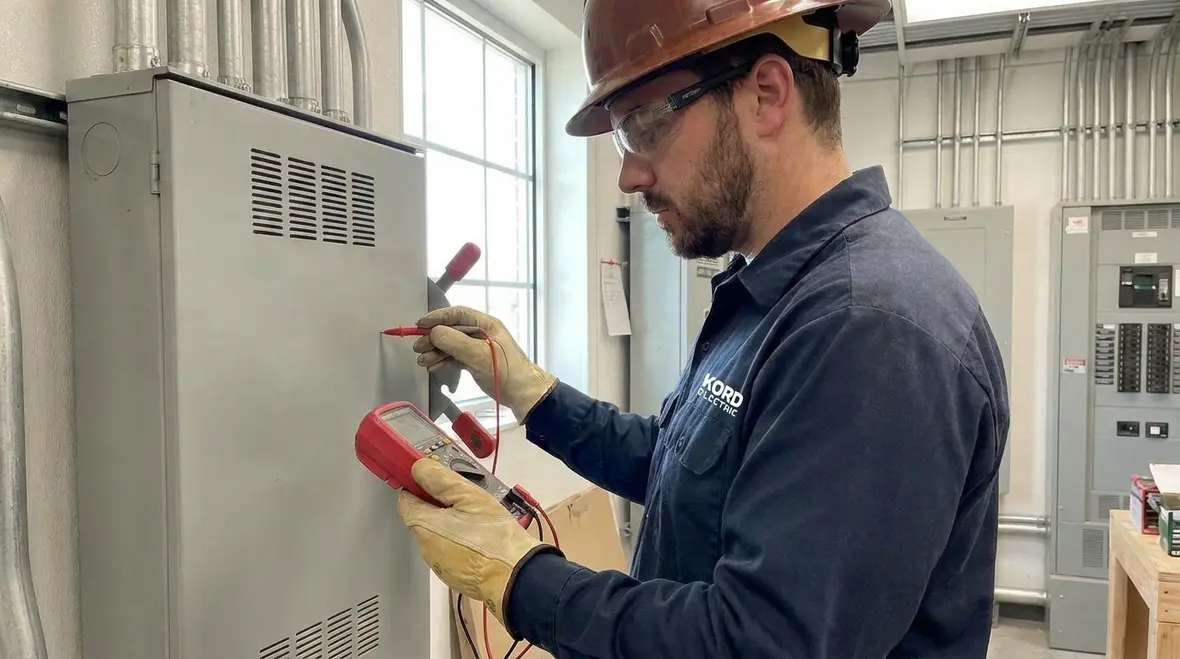
How we interpret “equipment needing servicing” in real facilities
In commercial and industrial settings, equipment needing servicing comes in many forms. Some units require routine inspection. Others need periodic replacement of components, cleaning, calibration, or fault checks. Additionally, some systems are rarely touched until something goes wrong, and then everyone wants answers fast. That is exactly when disconnects matter most.
When our technicians and expert service staff evaluate your site, we consider how your team operates. We ask what technicians actually do during maintenance. Then we map that workflow to the electrical design. In that process, we look for mismatches such as the following:
- Disconnects that do not clearly identify the equipment being serviced
- Control devices that shut off parts of a system but do not truly isolate the equipment
- Disconnects that are hard to reach, poorly labeled, or blocked during normal operations
- Situations where multiple loads share circuits, which makes isolation less reliable
From there, we explain the outcomes in language maintenance teams understand. For instance, if a technician pulls a disconnect, they should know what is de energized. And when they work, they should not face surprise feedback, stored energy, or a restart path that bypasses the intended isolation. If that sounds obvious, good. Many sites still discover it the hard way.
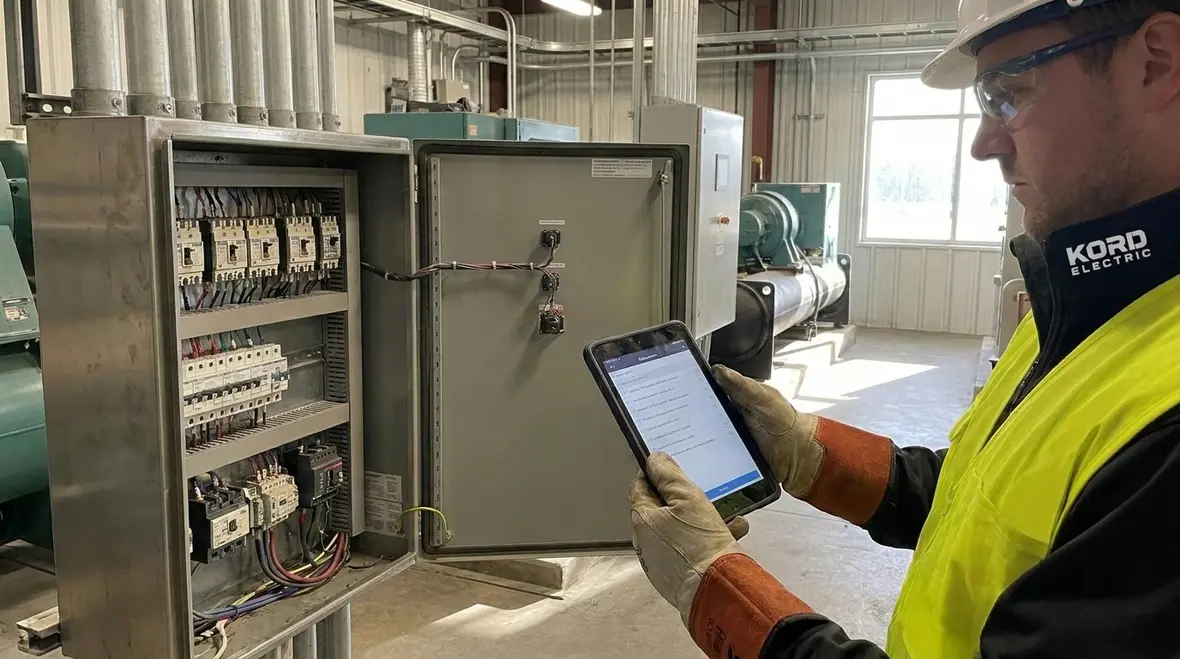
Designing the disconnect so it truly works during maintenance
Section 265.63 does not ask for a random switch in a convenient location. Instead, it pushes facilities to use disconnecting means that support safe servicing. Therefore, we focus on placement, labeling, and the disconnect’s ability to isolate. When we assist a property team, we also coordinate with facility operations, electricians, and maintenance supervisors so the disconnect is consistent with how the site runs.
Here are key points we emphasize on the job:
- Clear identification: Labels should match the equipment and the maintenance task, not vague terms like “misc.” We have seen that word. It does not do anyone any favors.
- Accessibility: Workers need to reach the disconnect without moving hazards or using improvisation.
- Distinct isolation: The disconnect should isolate the NEC equipment requiring servicing. If shared feeds complicate isolation, we help the client address it through design adjustments.
- Operational awareness: Disconnect placement should support safe workflow so technicians do not get forced into unsafe shortcuts.
Then, we connect these points to maintenance realities. For example, a disconnect might be “available,” but if the access requires shutting down unrelated processes, the maintenance team may delay servicing. That delay can lead to bigger failures later. So we help clients select approaches that reduce friction, because safety and productivity should live in the same building, not fight like rival teams.
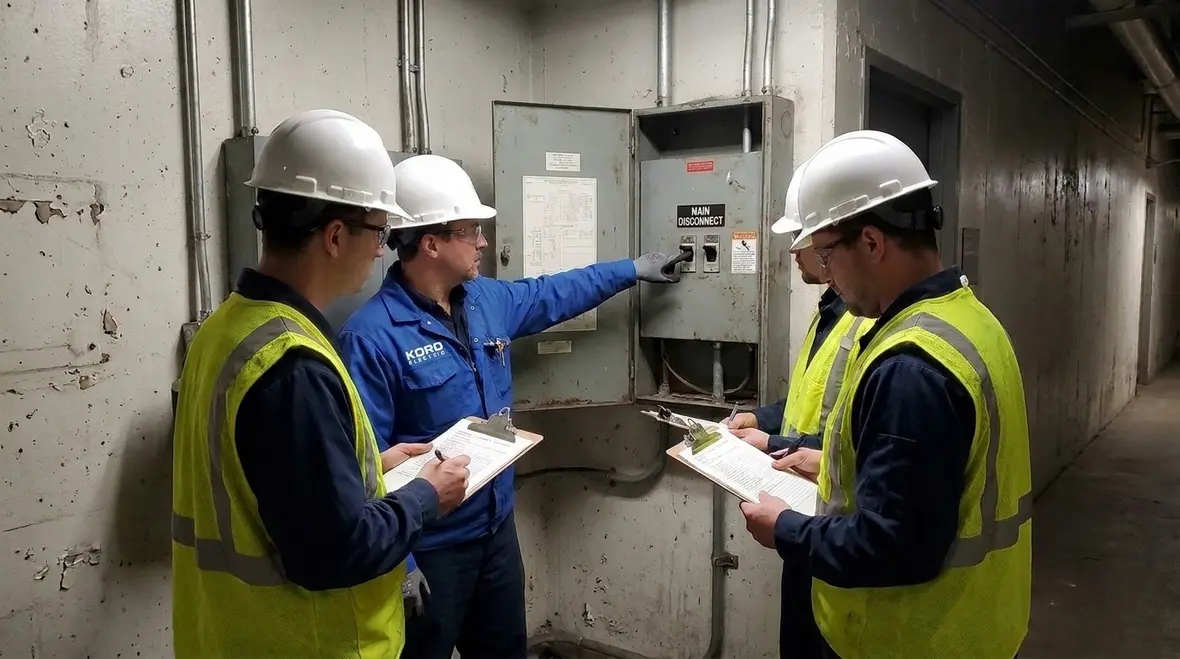
Coordination with your service plan and site safety practices
Even when wiring meets code, safety still depends on how people use the system. That is why we connect NFPA 70 requirements with your maintenance practices. In commercial and industrial facilities, the disconnect should support your lockout and tagout process, your job planning, and your field documentation.
Our expert service staff explains this step with calm certainty. First, the disconnect provides an isolation point. Next, the site’s safety rules guide who uses it and how. Then, the maintenance crew verifies the correct equipment is safe to work on. Finally, after servicing, the facility restores power through a controlled path that prevents accidental startup.
At Kord Electric, we also consider how building staff communicate. If your electricians and maintenance technicians rely on different labels, they will eventually make different assumptions. Therefore, we help align field labeling and documentation so the team does not argue with the circuit at the worst time. Think of it like a movie script: if the character does not read their lines, the plot gets messy fast.
Common issues we find during audits and corrective work
When we perform evaluations for commercial sites and major property buildings, we frequently discover a handful of recurring problems. These issues can exist even when a system looks fine at a glance. However, during servicing, those small gaps turn into big headaches.
Some common issues include:
- Disconnects that are installed for convenience, not for servicing isolation
- Equipment cabinets where multiple loads share a disconnect, which blurs isolation boundaries
- Missing or unclear labels, especially after upgrades or tenant changes
- Disconnects that become hard to access once surrounding equipment or cable trays are installed
- Disconnect locations that ignore real maintenance routes for technicians
Next, we guide clients through corrections that match the building’s constraints. We do not just point at problems and walk away. Instead, we explain the solution options, the safety impact, and the practical installation approach. Then, our team coordinates so the work does not disrupt critical operations more than necessary. Yes, we schedule around real life, not idealized spreadsheets.
What to document so compliance holds up over time
Compliance is not a one-time event. It stays strong when the facility keeps good records and clear field references. Since NEC equipment requiring servicing often changes as systems get upgraded, we recommend documenting the disconnect arrangement and the associated maintenance notes.
When we support a facility, we help clients create an “audit-ready” structure that includes:
- As-built information showing where the disconnects are and what they isolate
- Updated labels that match the current equipment lineup
- Maintenance guidance that links the disconnect to the correct servicing tasks
- Notes for operational staff so they understand isolation impacts
Meanwhile, our technicians and expert service staff also explain what to check during routine inspections. For example, if a label fades, if access changes, or if equipment gets replaced, the facility should confirm the disconnect still isolates the right equipment. That step often prevents a future safety issue that would otherwise show up during the next service call, when everyone is already stressed.
Connecting NFPA 70 Section 265.63 to broader NEC compliance
Servicing disconnects do not live in isolation from the rest of the National Electrical Code. They tie directly into how panels are laid out, how branch circuits are managed, and how equipment is classified and protected. Many of the same ideas you will see in a broader NFPA 70 overview—like clear overcurrent protection, proper grounding, and safe equipment access—show up again when you zoom in on Section 265.63.
If your team wants a deeper foundation on the overall code before drilling into servicing disconnects, Kord Electric’s guide on understanding NFPA 70 for 2026 is a helpful starting point. From there, Section 265.63 becomes less of an isolated paragraph and more of a logical extension of the same safety priorities that run through the entire NEC.
How servicing disconnects support long-term maintenance strategy
When facilities talk about NEC equipment requiring servicing, they are rarely thinking about just one work order. They are thinking about years of inspections, replacements, upgrades, and troubleshooting visits that have to fit around production schedules, tenants, and public access. A well-designed servicing disconnect supports that long-term reality.
First, it shortens the time between “we found an issue” and “we can safely work on it.” Second, it gives maintenance supervisors confidence that isolation steps will be followed consistently, even when shifts change or when contractors step in to help. Finally, it reduces the temptation to bypass procedure when pressure is high, because the path to safe isolation is straightforward instead of confusing.
Over time, this turns into fewer near misses, fewer surprise outages, and fewer awkward conversations where someone has to explain why a simple task almost turned into an incident. It also aligns with broader electrical reliability goals—like preventative maintenance, load balancing, and hazard prevention—because servicing tasks can be completed on schedule, instead of pushed until “things slow down.”
FAQ
Why Kord Electric for servicing disconnects and safe isolation
At Kord Electric, we work with commercial and industrial facilities and major property buildings that cannot afford vague electrical answers. We bring a steady process: we explain the code intent, we review your real equipment layout, and we support corrective work that keeps servicing safe. Our technicians and expert service staff take the complexity out of NFPA 70 requirements and help your teams get the disconnects that actually isolate the NEC equipment requiring servicing. If you want a compliant plan that holds up, contact us today for a site review.
If your facility is in Southern California and you are planning upgrades, troubleshooting recurring issues, or preparing for inspections, our team can also assist through our dedicated Los Angeles County electrical services. We align servicing disconnect design with your broader power distribution, maintenance strategy, and growth plans so you are not just compliant on paper, you are confident in the field.
From early design reviews to post-installation audits, Kord Electric supports facilities that want safe, predictable power—without turning every maintenance task into a late-night adventure. When NFPA 70 Section 265.63 is handled correctly, servicing disconnects stop being a mystery switch on the wall and become a reliable part of your everyday safety toolkit.


