NEC 266.4 Feeder Ampacity Sizing for Reliable Commercial Power
NEC 266.4 feeder ampacity sizing that keeps commercial power reliable
At Kord Electric, we often begin by checking NEC feeder ampacity sizing early, because it sets the tone for the whole electrical system. In practice, NFPA 70 Section 266.4 guides how the feeder conductor minimum ampacity and size should match the load conditions and heat limits. That matters in commercial and industrial facilities, where a “close enough” design can turn into downtime, nuisance trips, or worse. Our expert service staff and technicians explain it in plain terms during job walks, because while code language can sound like it was written by a robot with a thesaurus, the goal is simple: conductors must safely carry the current they will see.
Now, let’s slow down, zoom in, and make the details feel usable, not like a textbook you read once and regret forever.
What NFPA 70 Section 266.4 actually requires

In a nutshell, NFPA 70 Section 266.4 sets the rules for feeder conductor minimum ampacity and size based on how the system gets loaded and how long it stays loaded. In other words, it focuses on whether the conductor can handle the expected current without overheating.
To apply it correctly, we look at feeder conductors that supply branch circuits or other downstream loads. Then we confirm the minimum ampacity of those conductors does not fall below the required values determined by the rest of the NEC rules for load calculation. After that, we select sizes that meet both ampacity and the installation conditions that affect conductor temperature and allowable current.
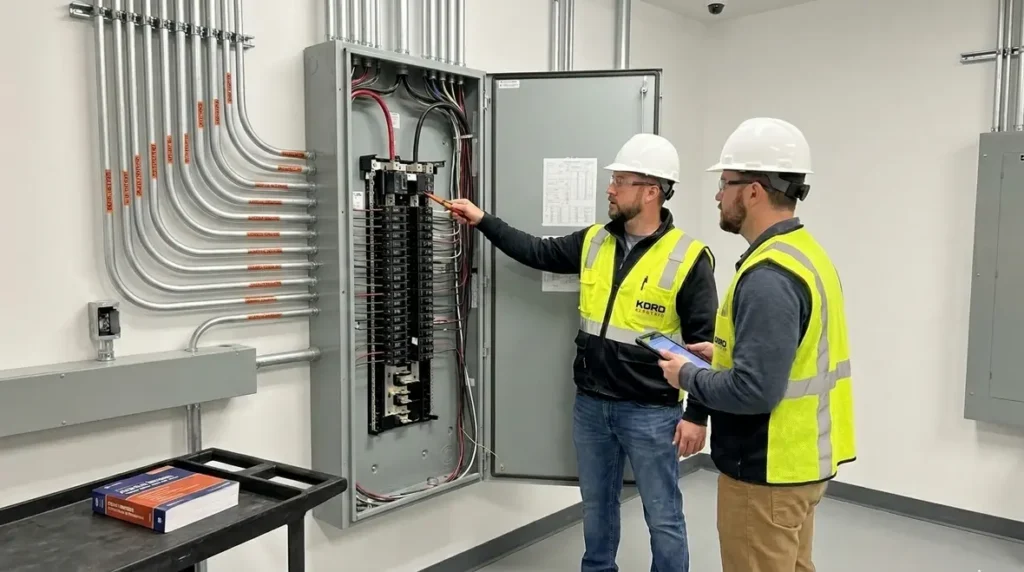
Our technicians explain this with a steady, calm method: they separate the “what the load is” part from the “what the conductor can safely handle” part. Then they make sure the numbers line up. That approach keeps designs code compliant and keeps facilities running like a well tuned HVAC system.
If you want more background on how the National Electrical Code shapes these expectations, resources like Understanding NFPA 70: The National Electrical Code Explained for 2026 on the Kord Electric blog walk through the broader NEC framework and how feeder rules fit into that picture for modern commercial and industrial projects.
Step by step: sizing feeder conductors for minimum ampacity

Most problems show up when someone jumps straight to conductor wire size without confirming the load and the conditions. Therefore, we recommend a sequence that our expert service staff follows on commercial and industrial projects.
First, we determine the feeder load from the electrical plans and panel schedules. We use the required load calculations from the NEC pathway appropriate for the building type.
Next, we compute the minimum conductor ampacity needed. Section 266.4 ties this minimum ampacity requirement to the conductor behavior under load.
Then, we check the conductor size choices against the installation conditions. Temperature ratings, adjustment factors, and similar variables can change what “allowable” current looks like in real life.
Finally, we verify protection coordination and practical compliance. Even when ampacity matches, poor coordination can still lead to nuisance trips or unsafe fault performance. Kord Electric technicians treat these as one system, not separate boxes on a drawing.
As pop culture would say, skipping these steps is like watching only the trailer and assuming you understood the whole movie. You will, at some point, be very surprised.
Conductor temperature, installation conditions, and why “ampacity” is not a guess

In the field, the conductor does not live in a clean vacuum. It sits inside raceways, cable trays, or conduit. It travels through spaces that can be warm, shaded, bundled, or exposed to conditions that increase temperature rise. As a result, NEC rules use adjustment and correction logic so that the conductor remains within safe temperature limits.
When NFPA 70 Section 266.4 is applied, it requires the conductor minimum ampacity and size to align with those limits and the system design. Therefore, we never treat ampacity as a fixed number. We treat it as a limit that can shift based on the environment.
Our expert service staff explains this like a simple thermostat story. If the room runs hotter, you cannot expect the same performance from the same hardware, and you also cannot ignore how much heat gets trapped. That’s the heart of conductor temperature behavior, and it directly affects feeder ampacity outcomes.
How we verify conductor selection for commercial buildings

Commercial and industrial facilities have complex load profiles. They rarely consist of one stable, steady load. Instead, they include motors, HVAC equipment, lighting, process loads, and standby or optional feeders. Therefore, we verify conductor selection with the project’s real load behavior in mind.
Kord Electric uses a design review mindset before the work starts. We check that:
- Feeder conductor ampacity aligns with the required minimum values derived from the NEC pathway
- The conductor size matches the installation conditions, including where temperature factors apply
- Overcurrent protection matches the conductor sizing and the feeder’s protective device rules
- Voltage drop and system performance remain acceptable for the facility’s operating needs
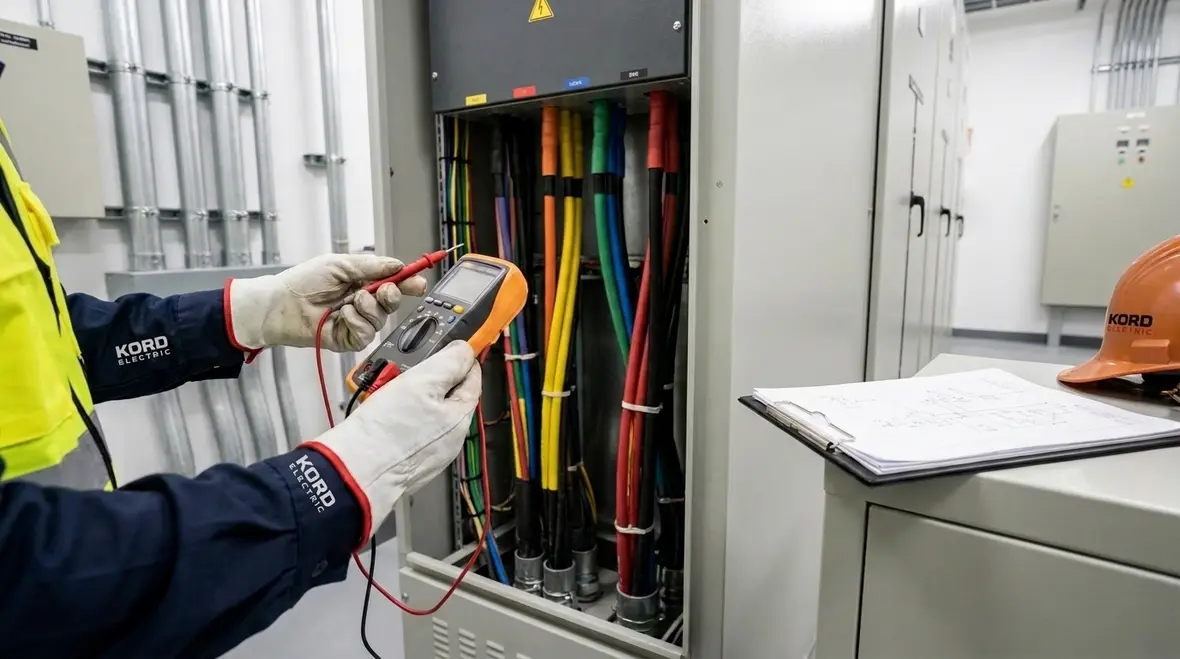
Then we confirm details in the field during install and testing. That includes verifying conductor type, terminal suitability, and terminations that do not overheat. Because yes, even the best design can fail when a connection is rushed. We have seen that story end badly. It usually ends with someone saying, “We thought it was fine,” which is a phrase that makes technicians age faster.
For teams planning broader upgrades, articles like the Kord Electric guide on modern electrical systems for commercial buildings show how solid feeder design, NEC feeder ampacity sizing, and protection strategy all come together to support reliability, especially in regions with detailed requirements for Los Angeles County and similar jurisdictions.
Design guide snapshot for feeder conductor minimum ampacity checks
To make the idea easier for facility managers and project teams, we use a short internal checklist. We do this once, early, and then again during review. It keeps everyone aligned, and it reduces last minute surprises that blow up schedules.
| Check | What it means in the design |
| Load basis | We confirm the feeder load calculation so the minimum ampacity target is correct. |
| Minimum ampacity requirement | We apply NFPA 70 Section 266.4 to ensure the conductor minimum ampacity meets the required value. |
| Installation conditions | We account for temperature and adjustment factors so the allowable performance matches reality. |
| Feeder size selection | We choose the conductor size that satisfies both minimum ampacity and safe operating limits. |
For guidance and background on the NEC framework and how these concepts fit into the broader code approach, readers can also explore the explanations published by Kord Electric and Kord Fire. Kord Electric focuses on practical clarity for building teams, while Kord Fire provides additional NEC context that helps people connect code language to real installations.
And if you are wondering whether this helps someone on site, the answer is yes. We build our documentation so your team can follow it without needing a night course.
Common mistakes we correct during AFC and pre energization reviews
Even careful teams can slip. Therefore, our technicians often catch patterns that create risk or noncompliance. We correct these early to protect equipment, staff safety, and the facility’s operating timeline.
First, some teams size conductors only from nameplate data and skip the minimum ampacity logic. That mistake leads to undersized conductors under actual load.
Second, others ignore installation conditions and assume the conductor rating applies unchanged. In many commercial setups, bundling, raceway fill, or thermal conditions reduce allowable current.
Third, some projects select conductor size but fail to align overcurrent protection and terminal ratings with that size. When that happens, even a compliant ampacity number can still cause trouble.
Finally, we see rushed terminations. A loose connection increases resistance, creates heat, and turns a normal system into a slow burning problem. Kord Electric technicians do not treat this as a small detail. We treat it as the part that actually touches the power.
Also, a quick joke for the road: code compliance is like proper prep for a barbecue. You can buy the best meat, but if your grill runs out of temperature control, you still end up eating something you do not want. Electricity behaves the same way. It does not care about intentions.
FAQ: feeder conductor minimum ampacity and NEC 266.4
Why Kord Electric keeps feeder ampacity sizing consistent
When you manage power in a commercial or industrial facility, you need electrical design and field execution that stay aligned. That is why our technicians and expert service staff treat NFPA 70 Section 266.4 as a practical rule, not a paperwork hurdle. We verify minimum ampacity, match conductor size to installation conditions, and confirm that protection and terminations support the whole feeder system. If you want reliable power and fewer surprise outages, start with a review before the job starts.
For facilities in regions with complex requirements, pairing strong NEC feeder ampacity sizing with expert support for permit and inspection paths is especially helpful. Kord Electric’s experience with Los Angeles County electrical services shows how detailed local expectations and NEC rules can work together when feeder design, documentation, and workmanship are all handled with the same calm, consistent method.
Ready for a feeder conductor review? Kord Electric can support your commercial and industrial electrical projects with code based design checks and on site verification. Contact us to schedule an expert review with our technicians and service team, and let us help you size feeders correctly, reduce risk, and keep your facility operating smoothly. We move with calm precision, so your electricians and facility managers can breathe easier.