
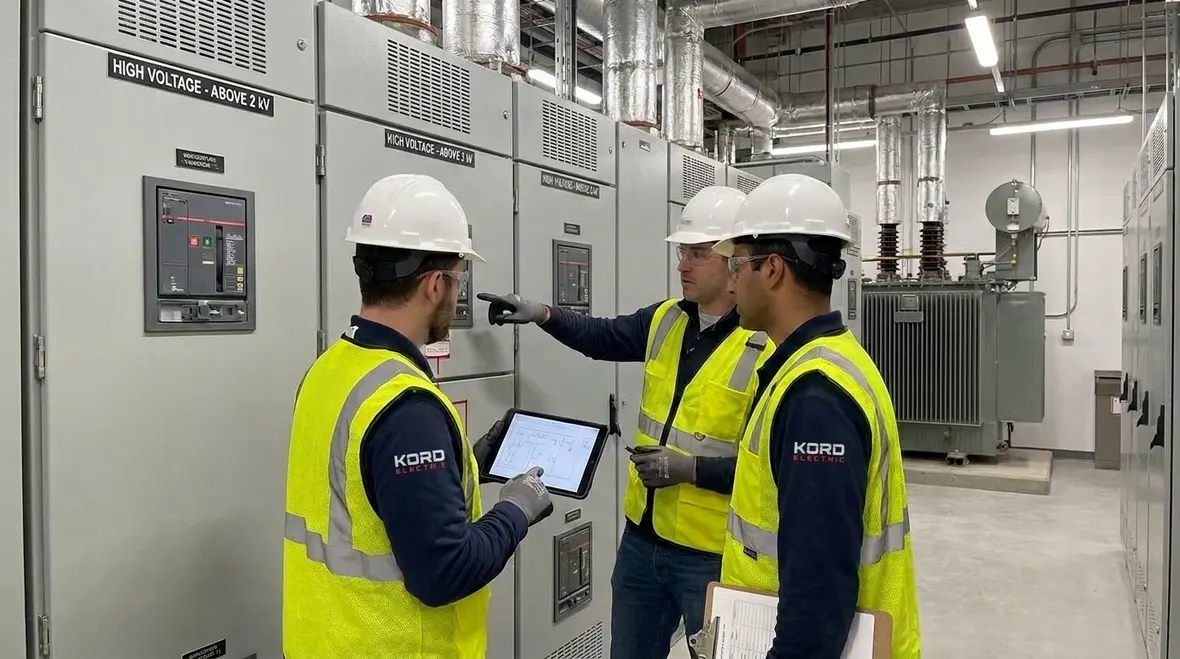
NFPA 70 Section 268.4 Number of Services Above 2 kV
Kord Electric helps commercial and industrial facilities understand the electrical rules that keep power safe, reliable, and future proof. In this article, we focus on NFPA 70 Section 268.4, specifically how the code handles Number of Services Above 2 kV. Early on, we note that this section matters most when a facility has two or more services above 2 kV. Even though that sounds like a lot of numbers and a little less coffee, it directly impacts design, switching, coordination, and emergency readiness. So, others can avoid guesswork, and our clients can avoid outages that feel like an unwanted guest who never RSVP’d. To make it easy, we explain it in plain language, and our technicians explain the real world meaning behind the text.
Why Section 268.4 matters for facilities with multiple 2 kV services
When a building reaches 2 kV and above, the stakes rise. Power equipment gets larger, protective devices get more complex, and the design choices become harder to undo later. Therefore, NFPA 70 Section 268.4 addresses how many services can feed a facility when they are above 2 kV. In other words, the code treats higher voltage like a serious relationship: you cannot improvise, and you cannot “just add one more line” without consequences.
Additionally, commercial and industrial facilities often run on tight schedules. They may include manufacturing, data centers, hospitals, large campuses, distribution centers, and major property buildings with critical load. Because those operations cannot tolerate long interruptions, the facility’s service design must support stable operation and safe switching.
Our team at Kord Electric works with engineering partners and site managers. While the text in the code looks dry, we make it practical by showing how it affects coordination of protection systems, fault clearing, and maintenance planning. Then, our expert service staff explains decisions in meetings, not just on drawings.
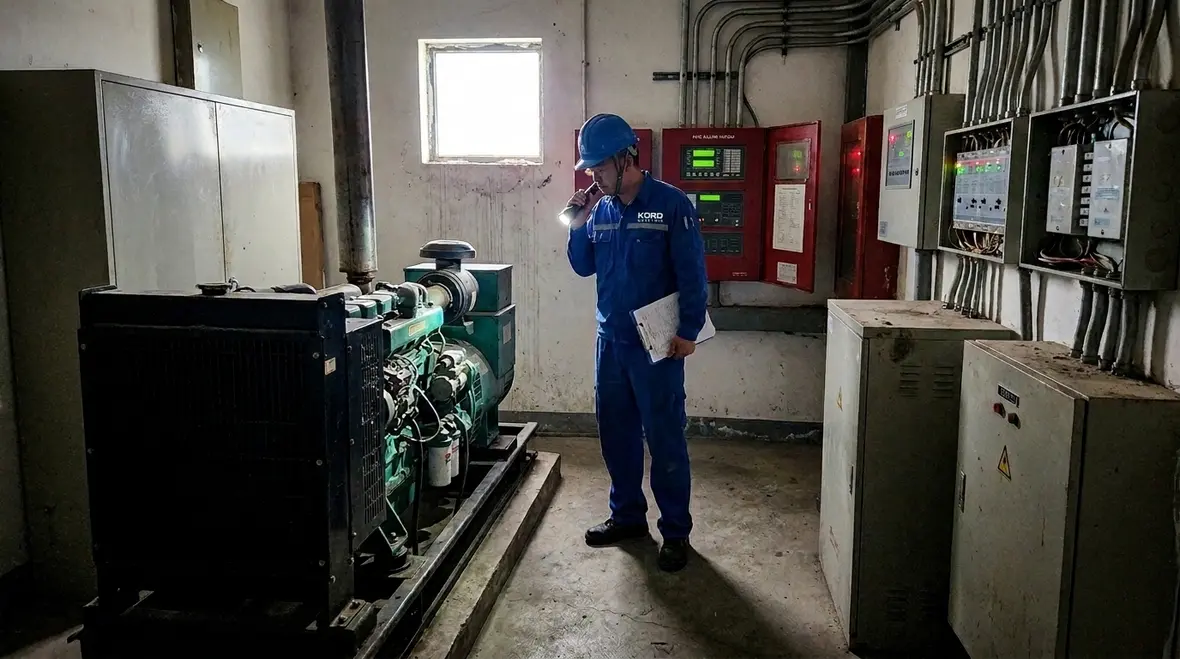
How the code links service count to reliability and safety
Section 268.4 does not just count services for fun. It connects the number of services above 2 kV to how the system behaves during normal operation, abnormal conditions, and planned outages. For example, more services can mean more flexibility, but they can also increase complexity. That complexity affects how quickly and cleanly the system isolates faults.
As a result, the facility needs a clear plan for how each service interfaces with switchgear, transformers, and protective relays. If the system is designed without that plan, crews may face confusing indications during troubleshooting. Furthermore, during a fault, multiple sources can energize equipment in unexpected ways unless protective coordination clearly defines what trips, what stays on, and what locks out.
In the field, we also see a second issue. Maintenance windows shrink. So, when a facility has multiple services above 2 kV, the safe method for isolation, verification of deenergization, and restart should follow the design intent. Our technicians explain these steps to operators, so everyone understands what they can and cannot do during a job.
And yes, sometimes the “it should be fine” plan fails the second someone tries to reset a breaker without checking upstream states. That is the moment when a calm, experienced explanation saves hours, and sometimes saves equipment.
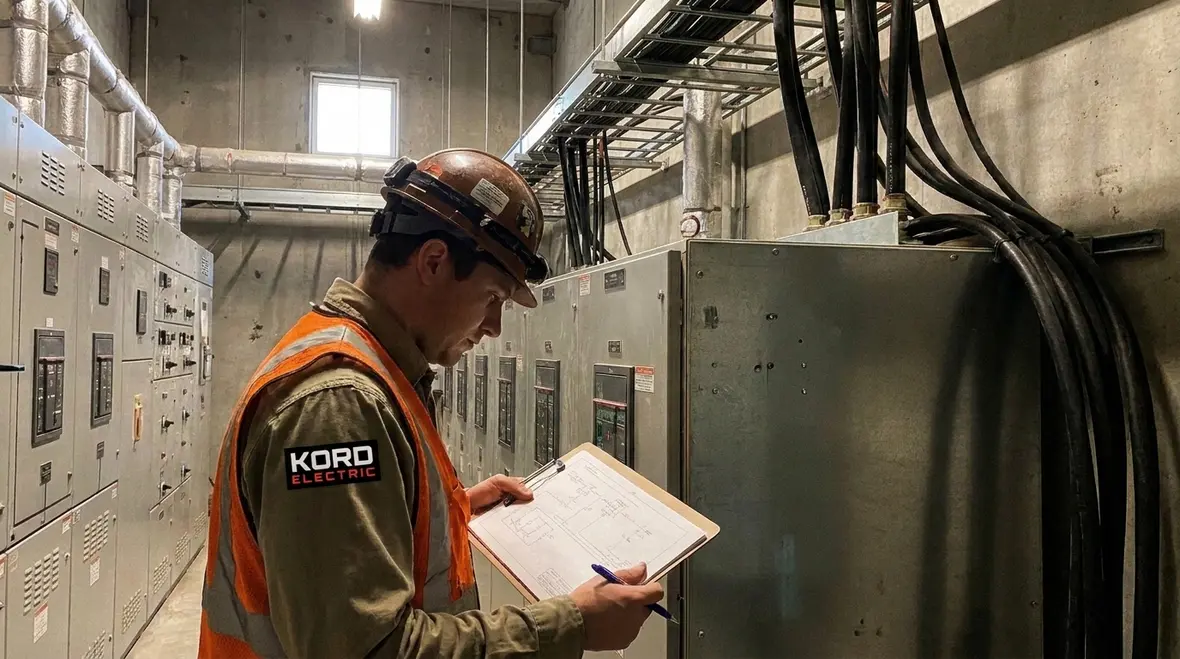
Design realities: switchgear, feeders, and coordination above 2 kV
Once a facility includes services above 2 kV, design choices must align with protection and control. Therefore, switchgear layout, feeder routing, and protective device settings need to support the required outcomes. In many builds, the electrical room becomes the “control center” for how power flows. Consequently, the number of services matters because it changes how upstream sources coordinate with downstream breakers.
Here is how we think about it during project planning. First, others define the operational goal: will the loads transfer between services automatically, will they run in parallel, or will one service serve the main loads while the other provides backup? Next, the team maps those goals onto relays, breakers, and interlocks. Then, they verify coordination so that faults clear at the right level and in the right time window.
Also, we consider maintenance and testing. Switchgear inspections often require that crews isolate specific sections without interrupting critical processes. Because services above 2 kV can feed different parts of the system, the design needs clear boundaries. Our expert service staff supports that planning by translating code requirements into safe procedures for your site.
To be blunt, a facility does not need a “hero electrician” at every shutdown. It needs a dependable system and a well understood plan. We help make that plan real.
Documenting the service plan so teams can operate it confidently
One reason facilities get into trouble is not the original design. Instead, the trouble comes when the facility changes over time, and the drawings do not match reality. Therefore, for commercial and industrial buildings, service configurations above 2 kV require strong documentation and change control.
Our process typically includes reviewing single line diagrams, transformer and switchgear data, protection settings, and labeling. Then, our technicians help validate field conditions against the plans. After that, we help teams build a simple operating reference that aligns with the actual equipment.
We also encourage clients to connect operational staff with technical staff early. When operators understand why a system has the service count it does, they manage switching more confidently. And when they understand the “why,” they stop turning procedures into guesswork. It is like teaching someone to fish rather than handing them a fish during the next emergency.
For context, Kord Electric supports compliance focused on major property buildings and industrial sites. We also coordinate with KordFire resources when fire and life safety topics intersect electrical system decisions, because real safety systems work together. You can see that connection in resources such as the Kord Fire overview of NFPA codes and guidelines for fire protection and life safety and in their NEC focused material on NFPA 70: All About The National Electrical Code (NEC) 2026, which pairs well with Kord Electric’s own NEC explainers.
Coordination with emergency and life safety systems
In many facilities, services above 2 kV ultimately feed systems that protect people, equipment, and operations. Therefore, we treat electrical service design as part of an overall safety strategy. That includes how power routes to emergency loads, how standby systems start, and how coordination avoids damaging backfeed paths.
For major property buildings, life safety coordination often includes emergency lighting, fire alarm system power, smoke control interfaces, elevators, and critical process loads. Although those systems may follow other sections of NFPA 70 and other codes, the electrical service design still sets the stage for reliable operation.
As a practical example, if protective relays coordinate poorly across service boundaries, critical loads can drop when they should stay up. Conversely, well planned coordination helps critical circuits remain stable during a fault, while non critical loads clear or transfer as designed.
Our technicians take time to explain these connections so stakeholders see the full picture. When the electrical and life safety teams speak the same language, the facility operates with less drama and fewer “mystery trips.”
Common mistakes we see with multiple services above 2 kV
Over the years, we have noticed repeated patterns that cause trouble. First, some teams add equipment or expand production without updating the electrical study. As a result, settings and labeling can drift away from the actual operating conditions.
Second, some facilities treat the service design as a one time task. However, commercial and industrial sites change. Loads grow. Equipment shifts. So, the protection scheme should match the current configuration. Without that, a fault response can become slower than intended, or it may isolate more equipment than needed.
Third, teams sometimes misunderstand how service count impacts operational switching. They may assume a procedure fits all scenarios, even though the system includes multiple sources. Therefore, we encourage facilities to train staff using the real one line diagram and real interlock behavior.
Finally, crews sometimes skip verification steps because the job looks routine. Yet, when you work with services above 2 kV and above, routine is not the same as safe. Our expert service staff uses clear checklists and calm communication to keep verification consistent.
Partnering with Kord Electric for code aligned execution
Kord Electric serves commercial and industrial clients, and we focus on major property buildings where reliability and compliance matter. We help teams interpret and apply NFPA 70 requirements, including NFPA 70 Section 268.4 and the rules related to the Number of services above 2 kV. Then we support design reviews, coordination studies, commissioning support, and service upgrades that help protect your power system through real operating conditions.
Most importantly, our technicians and expert service staff do not hide behind technical jargon. Instead, we explain what matters, we show why it matters, and we support the facility so operators can act with confidence. And when someone says, “We thought it was already covered,” we respond with documentation, verification, and a plan that holds up under pressure. Because your building runs on power, not hope.
If your team wants to pair this discussion with broader NEC context, you can explore related Kord Electric resources such as Understanding NFPA 70: The National Electrical Code Explained for 2026 or practical guides on how to read and apply NFPA 70 across commercial and industrial projects.
For facilities planning work in Southern California, Kord Electric’s Los Angeles County electrical services overview shows how our team supports everything from code aligned design and distribution upgrades to inspection support and long term maintenance planning.
FAQ
Next steps with Kord Electric
If your facility has services at 2 kV and above, do not leave code application to guesswork. Kord Electric helps commercial and industrial property teams plan, coordinate, and verify service designs so protection and switching work as intended. Reach out for a consult, and our technicians will walk through the service plan in plain language. Then we help you turn compliance into a dependable operational system. Schedule your assessment now and keep your power steady when it matters most.
For organizations reviewing NFPA 70 across their portfolio, pairing this NEC Section 268.4 discussion with broader code resources from Kord Electric and Kord Fire can help align electrical service strategy with fire protection, inspection readiness, and long term capital planning.


