
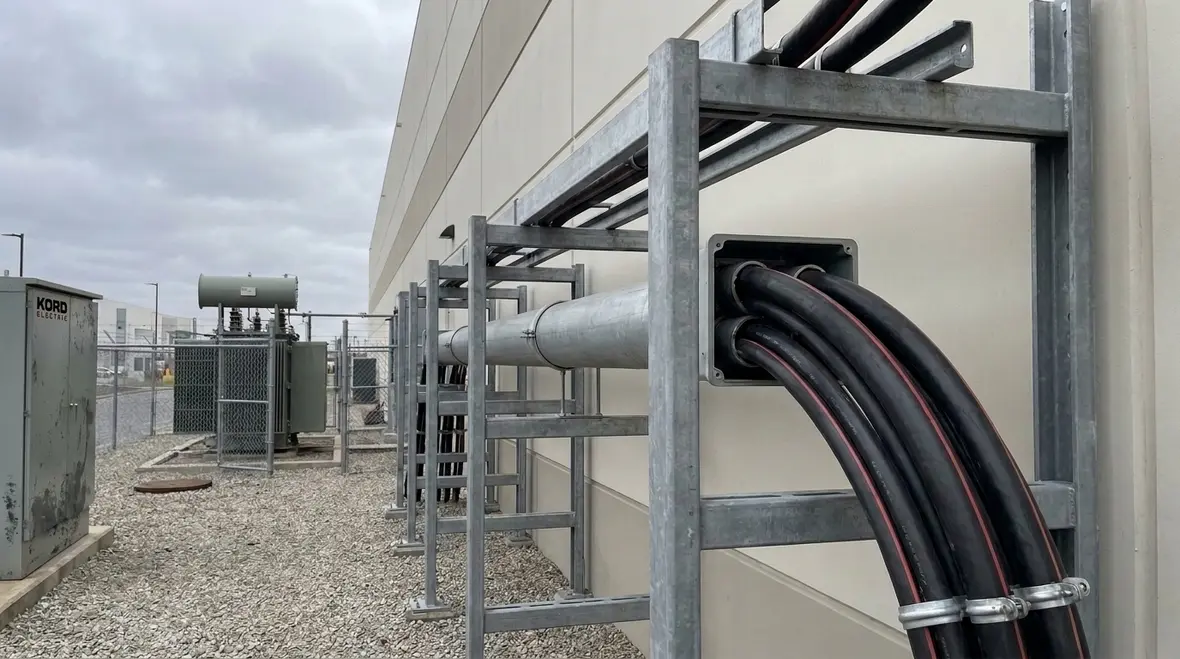
NFPA 70 Section 268.6 NEC conductors outside building 2 kV
At Kord Electric, we routinely help commercial and industrial facilities understand how power systems stay safe, reliable, and code compliant. In our work, the topic of NEC conductors outside building 2 kV shows up again and again, because the moment you move conductors outdoors above 2 kV, the safety rules get stricter and the details matter. Now, Section 268.6 of NFPA 70 focuses on conductors outside the building, and when we explain it, we do it in plain language first, then we connect it to what a facility really needs to do in the field.
And yes, we know. Electrical code sounds like bedtime reading for people who enjoy paperwork more than sleep. Still, when our expert service staff walks a site and points out what is required, the rules stop feeling abstract and start feeling practical.
NFPA 70 Section 268.6 and NEC conductors outside building 2 kV for commercial and industrial sites
In the world of commercial and industrial power systems, NFPA 70 Section 268.6 is one of those sections that quietly controls a lot of risk. It focuses on conductors located outside the building above 2 kV and ties together how routing, guarding, and construction methods all work to keep people, property, and equipment safer. Instead of treating it like a paragraph you read once and forget, we treat it like a working checklist that shapes how high voltage conductors move across a site and how they transition in and out of buildings.
When we talk through this section with facility teams, we connect it back to broader NEC fundamentals so everyone understands that outdoor high voltage conductors are not a separate universe. They sit inside the same rulebook as the rest of your system, including the concepts covered in resources like Understanding NFPA 70: The National Electrical Code Explained for 2026, but with extra attention on outdoor conditions and exposure.
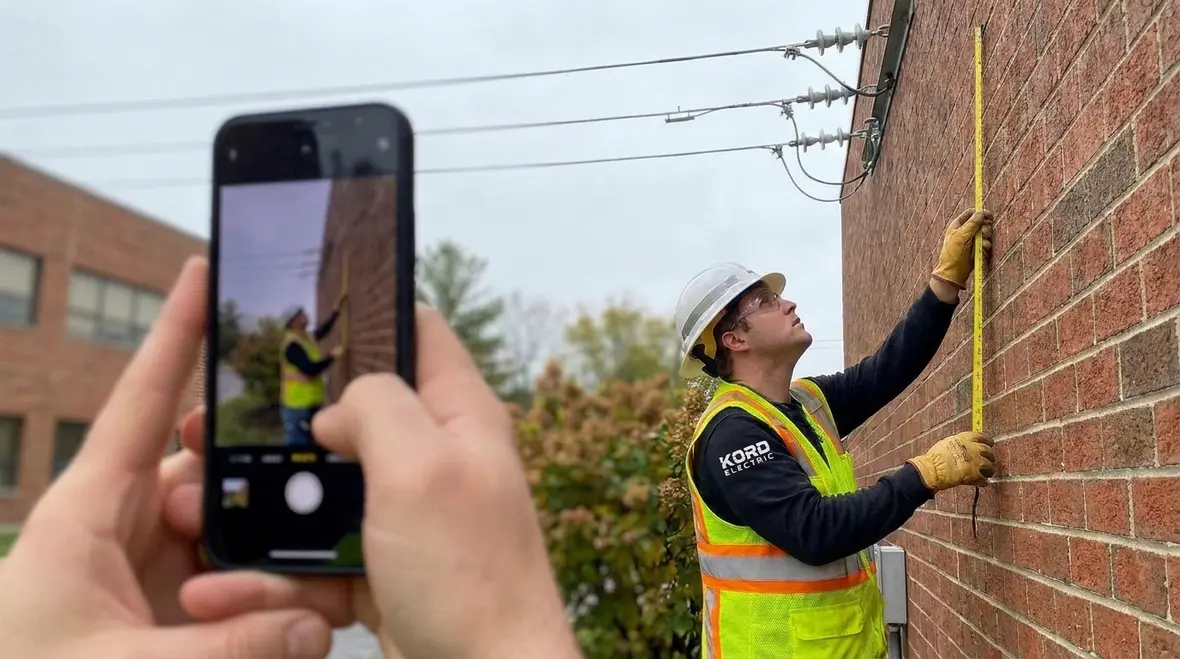
So when you hear someone mention NEC conductors outside building 2 kV, think about it as the part of your system that spends its life outdoors, where weather, temperature swings, and human activity collide. Section 268.6 is there so those conductors are not just “present,” but installed in a way that respects real-world conditions.
What NFPA 70 Section 268.6 requires for outdoors above 2 kV
Third party auditors and facility managers often ask us what Section 268.6 truly changes. To keep things clear, we explain it this way. When conductors above 2 kV run outside a building, the code expects the installation to control hazards that are not as severe indoors. Outdoor exposure brings added risks such as weather damage, mechanical strain, and accidental contact.
So, Section 268.6 places emphasis on safe routing and guarding, correct insulation and termination practices, and proper support so conductors remain stable over time. Furthermore, we remind clients that code compliance is not a one time event. Materials age, terminations loosen if not installed correctly, and systems get modified. Therefore, the installation should be built to survive real conditions, not just pass a quick checklist.
Our technicians also stress that “outside” can include areas like yards, service corridors, roof edges, and other locations where people may pass or where equipment can be reached. Because of that, we approach these jobs like we are protecting the facility from both electrical and physical hazards.
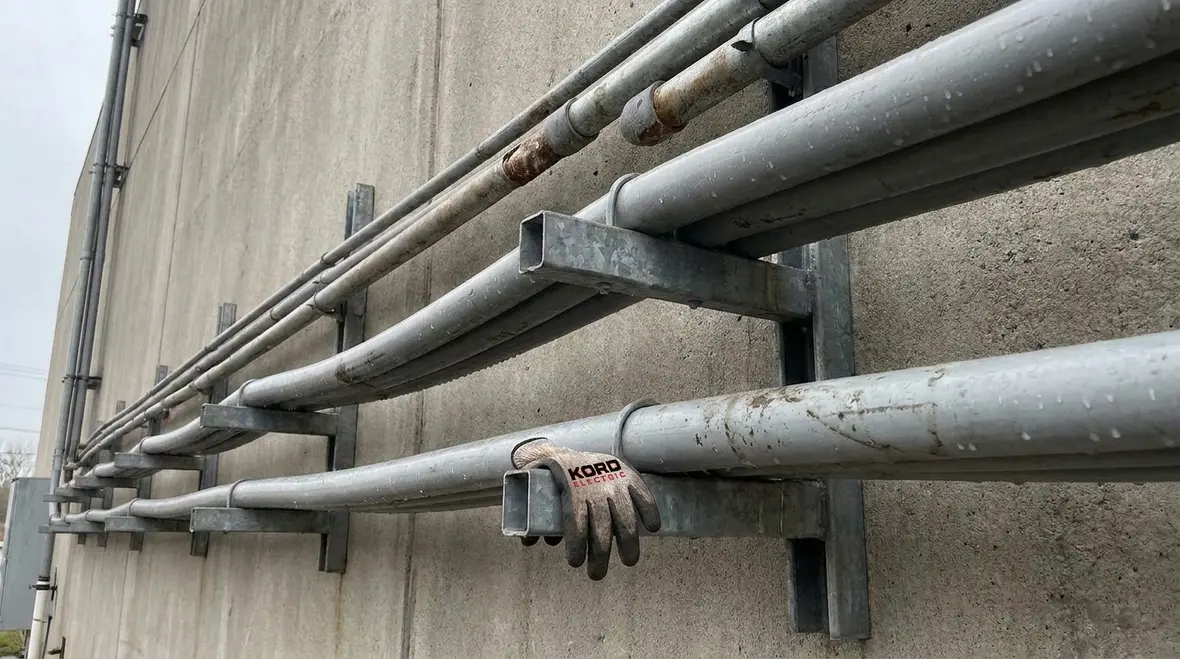
In practice, that means mapping out how conductors run across roofs, between structures, or through exterior yards, then stress testing the design against questions like, “What happens in high wind?”, “Where would snow, sun, or heat hit hardest?”, and “How could someone accidentally get close to this?” Section 268.6 becomes more than a line in the book; it becomes the framework for walking your site with a field-ready mindset.
Where NEC conductors outside building 2 kV show up in real power systems
Most commercial and industrial facilities do not think about high voltage conductors daily, until something changes. Maybe a new building joins an existing campus. Maybe a utility upgrade adds voltage headroom. Or perhaps a process area expands and the electrical room can only handle so much.
Then, conductors may run outdoors to connect transformers, switchgear, or primary distribution equipment. Additionally, facilities may use overhead or underground runs to reach remote loads. Either way, the installation must account for how the environment behaves across seasons.
Here is how our expert service staff typically frames it on site. First, we map where power travels. Next, we look at what is exposed outdoors. Then, we verify that the installation method supports safe operation, including how conductors are protected and how transitions are handled at building interfaces.
We also keep the client’s risk profile in mind. A major property with frequent maintenance access needs different practical controls than an area that is rarely visited.
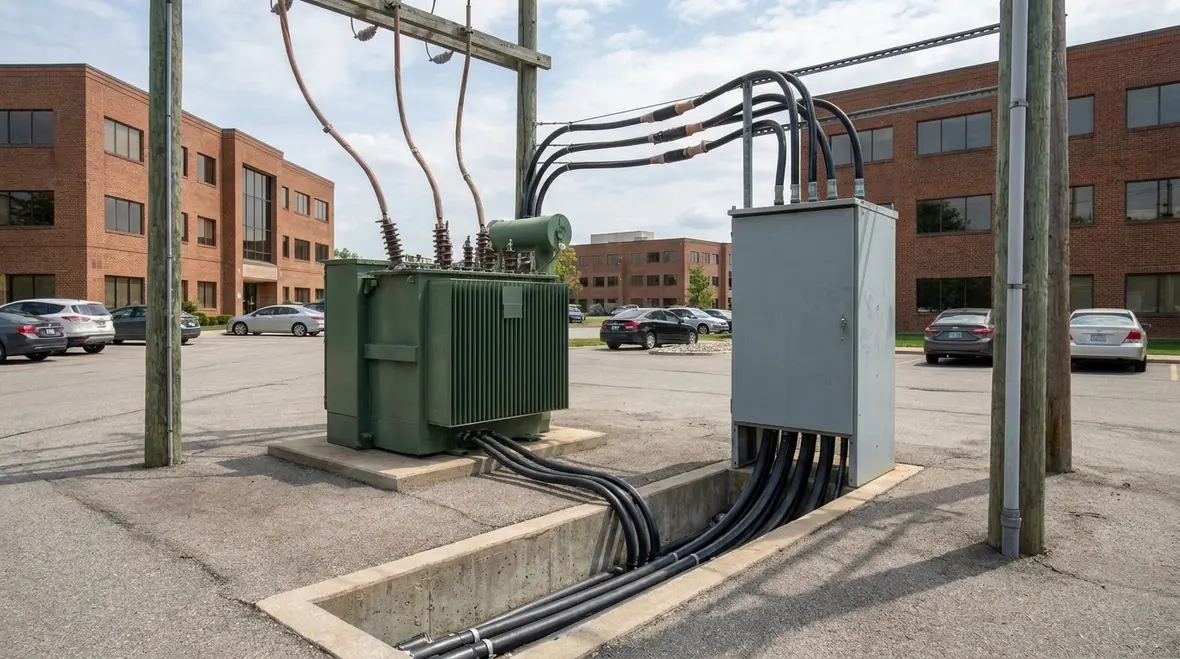
In some cases, these outdoor runs tie into larger upgrade projects where the whole electrical backbone is being rethought. That is where planning resources such as the Electrical Infrastructure Upgrade Planning Guide become useful companions. They help facility teams see how outdoor high voltage conductors connect to the bigger picture of feeders, panels, and long-term reliability.
Safety, spacing, and protection: the parts that inspectors look for
When we talk to facility teams, we focus on what inspectors commonly scrutinize for outdoor high voltage conductor installations. The biggest themes usually include physical protection, correct segregation from accessible areas, and proper support.
To keep the discussion grounded, we highlight the following points that our technicians check during field reviews:
- Guarding and placement: We confirm that conductors are located so accidental contact does not happen. Where people could approach, we recommend barriers or controlled access, aligned with the intent of NFPA 70.
- Mechanical support: We verify that supports and routing methods prevent sag, strain, and damage from vibration or thermal expansion.
- Insulation integrity at transitions: We inspect terminations and connections where conductors move from one environment to another, because transitions often fail first.
- Weather and moisture resistance: We check for conditions that can degrade insulation or create tracking risks over time.
- Clearances: We examine how close conductors get to structures, equipment, and other materials, using code aligned assumptions rather than guesswork.
Now, we will admit this part can feel like “measure twice, still be wrong” territory. But we keep it calming. Our process is systematic. We document, we compare to the code requirements, and we explain what matters in plain terms. That way, the facility team is not left interpreting electrical drawings like they are movie subtitles.
During these checks, we also connect the dots back to broader safety rules. Outdoor high voltage runs touch everything from work space guarding to general requirements. That is why many facility leaders pair a focused review of outdoor conductors with resources like the NEC work space guarding rules for safe electrical work and NEC 110.1 general requirements scope for electrical safety so the safety picture stays consistent from the service entrance to the farthest outdoor run.
Installation methods and practical choices for commercial and industrial sites
Code requirements do not exist in a vacuum. They connect to installation methods. At Kord Electric, we help facilities choose approaches that fit the site, the equipment layout, and the operational needs of the business.
For example, some sites prefer underground runs because they protect conductors from visible weather exposure. Others use overhead routing because it can simplify maintenance access and reduce excavation. Either way, we tie the method back to the safety requirements for conductors outside the building above 2 kV.
Additionally, we plan for how the system will be operated and maintained. Facilities with ongoing production schedules cannot afford long shutdown windows. Therefore, we coordinate work sequencing, coordinate shutdown scope, and plan inspection milestones early.
Also, we do not treat these projects as one size fits all. Major property developments, campuses, and industrial facilities often include multiple power pathways. So, we align the installation plan with how the site actually runs, not just how it looks on paper.
In many projects, those installation choices overlap with decisions about modernizing distribution equipment, feeders, and controls. If your team is considering upgrades while addressing outdoor conductors, it often helps to review planning guides such as Modernize Commercial Building Electrical Systems or data-centric resources like Data-driven electrical design for commercial and industrial facilities so every change serves both safety and long-term performance.
How we help teams stay compliant without turning life into a spreadsheet
We work with commercial and industrial clients, which means we care about both compliance and productivity. Our approach is not just “install and leave.” We verify. We document. Then we educate.
Our technicians and expert service staff walk the facility team through the “why,” not only the “what.” As a result, the client understands how NFPA 70 expectations for outdoor high voltage conductor runs translate into safer access control, durable installation, and fewer surprises later.
We also connect code understanding to broader NEC guidance for system design and safety. For additional context, many of our clients read the explanations we publish about NEC fundamentals and how the National Electrical Code supports safe construction practices. For example, our team has covered NEC concepts and practical interpretation on the Kord Fire and Kord Electric resources, because clients benefit when they can read the same message in more than one format.
And yes, we sometimes joke that electrical codes are like superhero origin stories. They begin messy, they get detailed, and then suddenly you realize the hero was always needed. In our world, the hero is safety.
When NEC conductors outside building 2 kV are part of your system, that hero story becomes very real. Those outdoor segments are where weather, mechanical forces, and human access all collide. So we keep the tone calm, the checklists clear, and the explanations practical, so nobody has to feel like they are reading the code with a magnifying glass just to make one decision.
FAQ for NFPA 70 Section 268.6 and outdoor high voltage conductor installs
Facility teams usually ask similar questions when they first review NFPA 70 Section 268.6 and realize how many outdoor conductors their site already depends on. To keep those answers in one place, we organize the most common topics into a concise FAQ so managers, engineers, and technicians can all reference the same guidance before they walk the yard or plan a shutdown.
Get a code aligned review for your high voltage outdoor conductor runs
If your commercial or industrial facility runs conductors outdoors above 2 kV, we recommend a code aligned review before a problem shows up. Kord Electric can help your team confirm installation protections, verify safe routing and support, and explain the “why” behind NFPA 70 Section 268.6 in a way your electricians and managers can both use. Reach out to us today, and let our technicians and expert service staff walk your site with calm confidence. We will turn confusion into clear next steps.
For facilities in Southern California, our dedicated Los Angeles County electrical services bring together code-aware design, disciplined installation, and responsive troubleshooting so you are not left managing outdoor high voltage conductors alone. Whether you are planning a new distribution run, upgrading existing equipment, or simply trying to verify that NEC conductors outside building 2 kV are still compliant, our team is ready to help.
When you combine a clear reading of NFPA 70 with practical field experience, outdoor conductors stop feeling like a mystery and start behaving like a well-managed part of your electrical backbone. That is the goal every time we step on site.


