
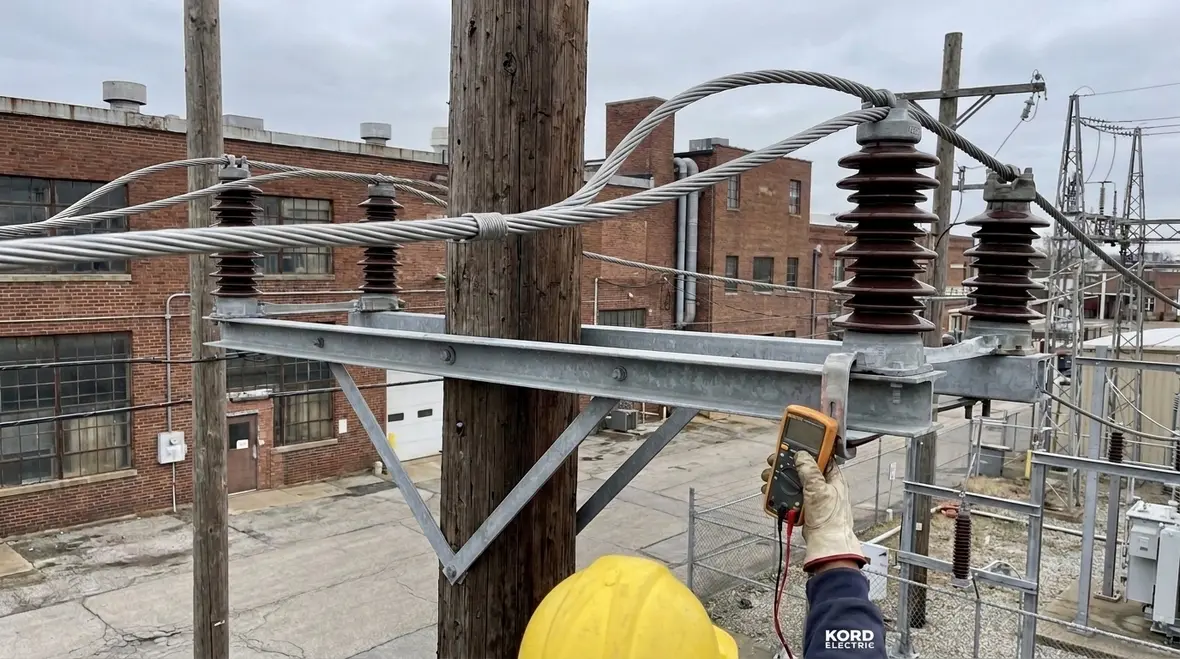
NFPA 70 Section 268.51 Open Conductor Support for High Voltage Services
At Kord Electric, we see high voltage work every day in commercial and industrial facilities, plus major property buildings where downtime is expensive and safety matters more than ego. In this guide, we focus on NFPA 70 Section 268.51, which covers open conductor support for high voltage services. Early on, we also address the real-world reality of NEC open conductor support 2 kV planning, because someone has to keep conductors steady when wind, vibration, and time try to loosen the whole system. And yes, we promise to explain it in plain language, not in legalese that sounds like it was written by a committee of robots.
Our expert service staff walks job sites, checks spacing, inspects hardware, and explains the “why” behind each requirement. Then we document it clearly so owners and facility managers can make decisions with confidence.
NFPA 70 Section 268.51 and NEC Support for High Voltage Services
To understand NFPA 70 Section 268.51, we start with the goal: the system must support conductors safely and reliably when they are exposed. These high voltage service conductors are not behind walls or tucked out of sight. Therefore, the support method must resist sag, movement, and physical stress.
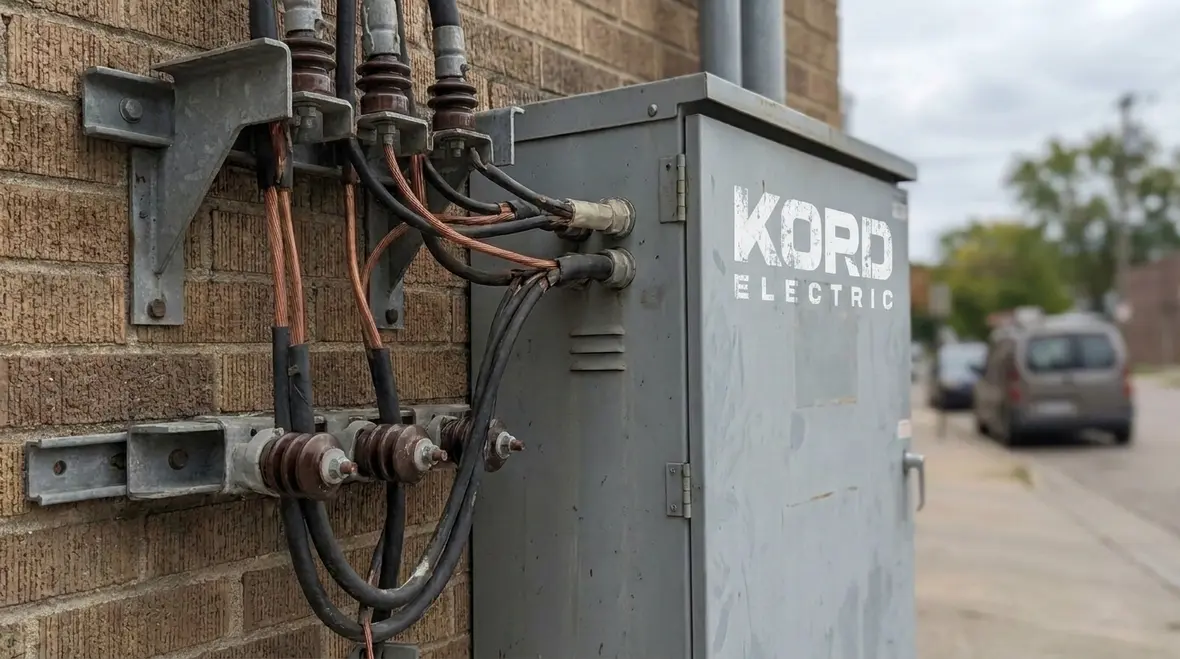
Section 268.51 focuses on how open conductors get held in place. Accordingly, it drives requirements for strength, proper installation, and suitable mounting for the service environment. If a support method looks “good enough,” that is often when failures begin. So, we treat this section like a seatbelt rule: it feels optional until the moment it is not.
Our technicians explain it this way during site walks. First, they identify the conductor type and service voltage class. Next, they review the support structure, such as poles, brackets, and messenger systems, along with how loads transfer through hardware. Then, they confirm the support method aligns with the NEC intent for secure placement over time, including weather effects and mechanical forces.
Why 2 kV Open Conductor Support Gets Treated as a System
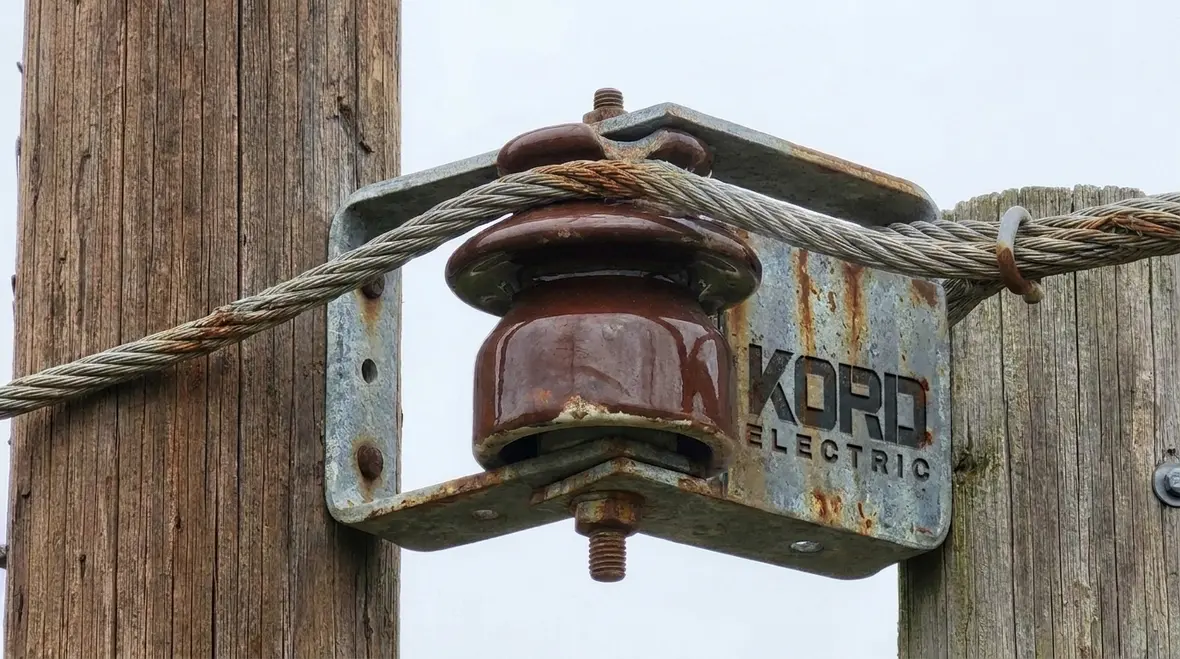
When facility teams hear NEC open conductor support 2 kV, they sometimes think it is only about a bracket or a strap. However, we treat it as a system, because the conductor does not stand alone. It connects to insulators, hardware, anchoring, and termination points that all work together.
Consequently, the support design must handle these pressures:
- Mechanical loads from wind and vibration that can slowly nudge hardware out of position
- Thermal changes that can cause expansion and contraction
- Installation errors that show up later as sag, misalignment, or strain
- Environmental exposure for exterior supports on major property buildings
So, our expert service staff does not just “check the box.” They verify alignment, check tensioning practices where applicable, and confirm the support plan does not create weak links at transitions. If the support system routes loads poorly, the conductor may still look fine today, and yet fail under the next storm. In other words, we prevent future trouble now, not later when it becomes an emergency meeting.
Key Installation Details That Keep Supports From Loosening
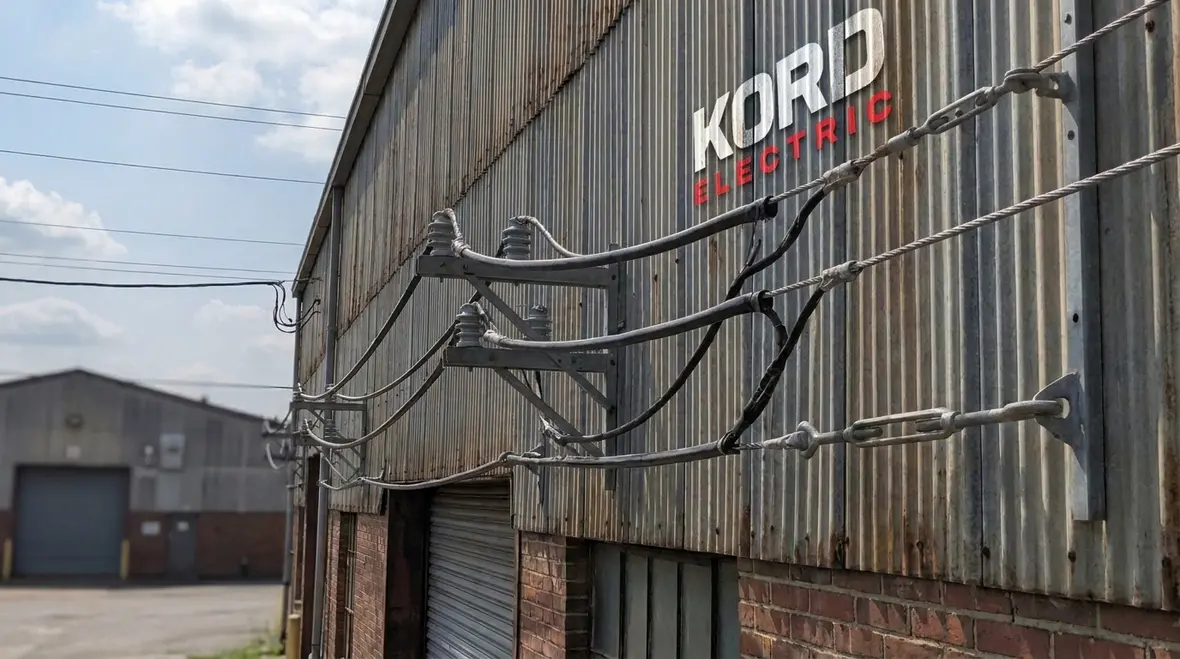
Most problems do not start as a big failure. They start as small compromises: a mounting point that is not rated, a bracket that shifts, or a setup that tolerates movement too easily. Therefore, we look closely at the details that help open conductor support stay stable.
Conductor alignment and sag control
We check that the routing matches the intended support intervals and that the conductor stays within safe limits under expected conditions. If sag is excessive, we do not shrug. We trace why it happened.
Hardware compatibility
Supports must work as a matched set, not as random parts from the same hardware aisle. That includes insulators, clamps, and connectors that handle both electrical and mechanical needs.
Secure fastening at attachment points
A support system depends on secure mounting to the structure. If attachment points do not hold under load, the whole system shifts. That is where routine inspection saves money and nerves.
Clearances and routing protection
Open conductors must maintain safe separation from other elements. Additionally, routing must avoid contact points that can rub or wear over time.
And yes, we sometimes tell clients that “if it moves now, it will move later.” That is not a threat. It is physics with manners.
How Kord Electric Supports Owners and Facility Managers
Commercial and industrial buildings run on schedules, budgets, and risk management. We respect that. At Kord Electric, we help facilities approach NFPA 70 with practical steps that reduce surprises during inspections or operations.

Here is how we typically guide teams. First, we review the service configuration and the way conductors run through the site. Then, we explain how NFPA 70 Section 268.51 influences the support approach for open conductor setups. Next, our technicians document key findings in clear language so that owners and maintenance teams can understand exactly what we changed and why.
We also coordinate with partners in the broader electrical and fire safety ecosystem. When systems interact, we want alignment across disciplines so the final result supports safe operations. That mindset reflects how we stay connected to training and industry resources across our network, including our sites at kordfire.com and kordfire.com.au, which expand on code and fire safety topics that commercial and industrial clients rely on.
For facility leaders who want a deeper dive into how NFPA 70 shapes their projects, resources like Understanding NFPA 70: The National Electrical Code Explained for 2026 connect the big-picture code story with decisions made at each piece of hardware. When you pair that understanding with focused topics such as working space access, supply side grounding, and conductor support, the NEC stops feeling abstract and starts looking like a practical design and maintenance roadmap.
In fact, we often see how fire protection planning and electrical support practices overlap in real life. When electrical hardware fails, it can create hazards that fire protection systems may not be designed to offset. That is why we treat safe support and clear documentation as part of a larger safety strategy. Organizations like firepumps.org reinforce how integrated thinking helps facilities protect people and assets.
What This Means for Compliance, Testing, and Ongoing Inspection
Compliance does not end after installation. It continues through testing, monitoring, and routine checks. In major property buildings, we expect support systems to hold up through storms, temperature swings, and long service lives.
So we advise facilities to plan inspection practices that focus on what matters most:
- Checking for movement at supports and attachment points during routine maintenance cycles
- Verifying hardware condition, corrosion resistance, and wear patterns
- Confirming that clearances still meet expectations after any renovations
- Documenting changes and keeping records ready for audits
Additionally, when renovations or utility upgrades occur, supports can be affected even if nobody touches the conductor directly. For that reason, our technicians review the update impact and explain any NEC driven changes that become necessary.
We keep the process steady and calm. We know facility teams do not need drama. They need clear steps that lower risk and protect operations. And we deliver that, with explanations that make sense the first time, not the tenth.
For facilities in Southern California and surrounding regions, that also means coordinating with local expectations and service needs. Our Los Angeles County electrical services support commercial and industrial clients who rely on high voltage services, open conductor support, and NEC-aligned installations to keep operations stable around the clock.
FAQ: NEC Open Conductor Support and Section 268.51
Final Word: Get the Support Plan Right Before It Becomes a Problem
In the end, safe high voltage service support is not a guess, and it is not luck. It is the result of proper design, strong installation, and ongoing inspection that aligns with NFPA 70 Section 268.51 and NEC expectations. If your facility operates with open conductor support systems, trust Kord Electric to evaluate, explain, and document the work so your team can operate with confidence. Call us today and let’s keep your power steady, your compliance clear, and your maintenance calendar calm.
If you want to connect conductor support planning with the broader NEC picture, resources such as Kord Electric’s NEC application guides, working space explanations, and high voltage service articles help you see how everything fits together. When conductor support, grounding, raceways, and clearance rules all point in the same direction, inspections feel calmer and operations feel more secure.
For facility leaders who prefer a single point of contact, our team can integrate support assessments with preventive maintenance, surge protection planning, and regional service coverage so that your open conductor systems, service entrances, and downstream gear share the same level of attention.


