
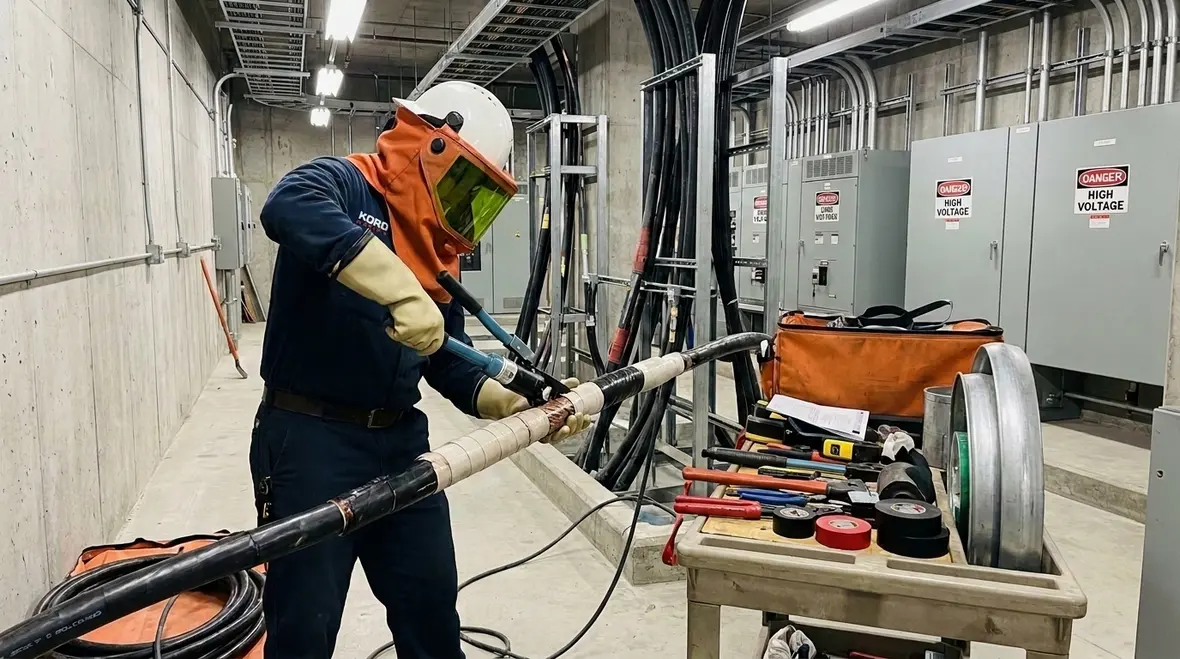
NEC High Voltage Splices Taps Explained for Crews
NEC high voltage splices taps, explained the way your crew actually needs
At Kord Electric, we often begin troubleshooting by asking one simple question: where did the NEC high voltage splices taps happen, and how were they made. In commercial and industrial facilities, a poor splice or an improvised tap can turn a quiet system into an expensive problem. So, we build our work around NFPA 70 Section 268.46, which focuses on splices and taps in high voltage conductors.
Our technicians and expert service staff explain this standard in plain language on site, because a code book should guide real wiring, not collect dust. And yes, electrical work is serious, even when the breaker trips like a sitcom character walking into the wrong room again.
NFPA 70 Section 268.46, what it requires in the field
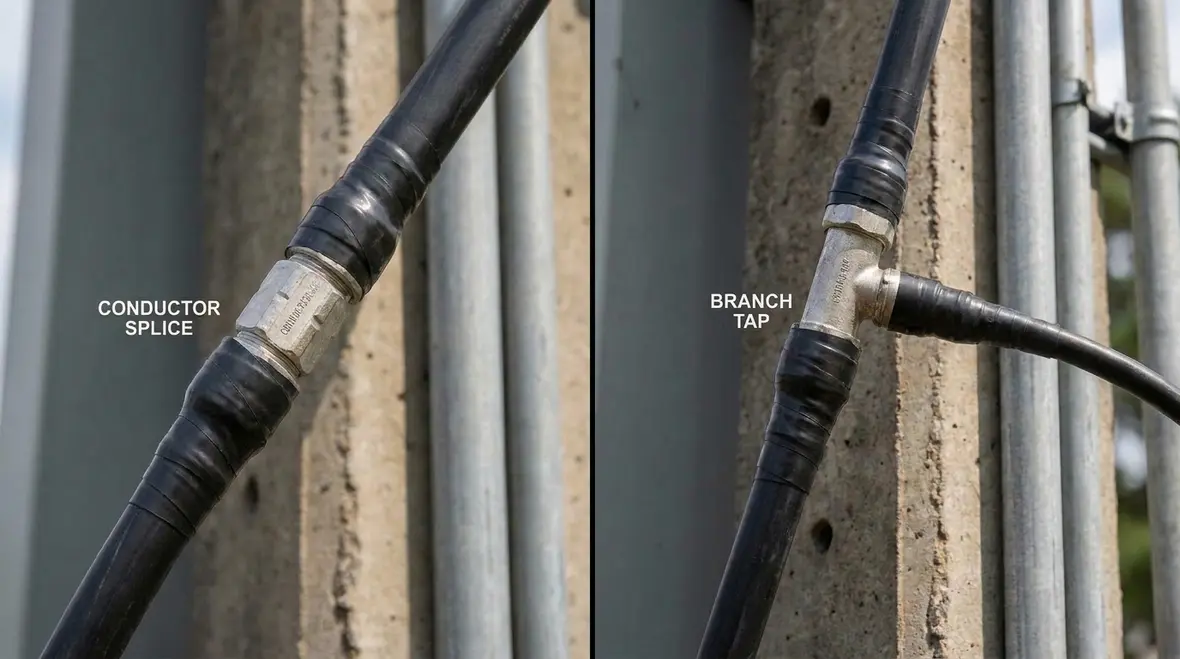
NFPA 70 Section 268.46 exists for a reason. High voltage conductors carry energy with high consequences, so the code limits how engineers and installers create connections. First, the section treats splices and taps as components of the system, not “little jobs” hidden inside walls or underground runs. Then, it pushes for proper materials, proper methods, and proper ratings.
In practice, we see three common failure paths. First, a splice made with the right idea but wrong parts. Second, a tap that reduces safety margins and then relies on luck. Third, a connection that survives installation but fails later due to heat, moisture, or mechanical stress. Therefore, our teams approach each connection point like a controlled system, not a guessing game.
How a splice differs from a tap, and why the difference matters
Splices join two conductor sections together so current can pass through without interruption. Taps, however, create a branch point that draws current from a main conductor. Both can be correct, but the inspection mindset differs.
When our technicians explain it, we tell teams to think in load paths. With a splice, the goal is continuity and equal performance across the joint. With a tap, the goal includes capacity for the branch load and the impact on the remaining run. Then, the code requirements guide how to maintain conductor integrity where the system changes.
In commercial and industrial buildings, this matters for feeders, substations, and distribution sections that power motors, HVAC systems, and process loads. Also, property owners expect uptime, and a bad connection does not care about your schedule.
Materials and ratings, the part people skip until it hurts
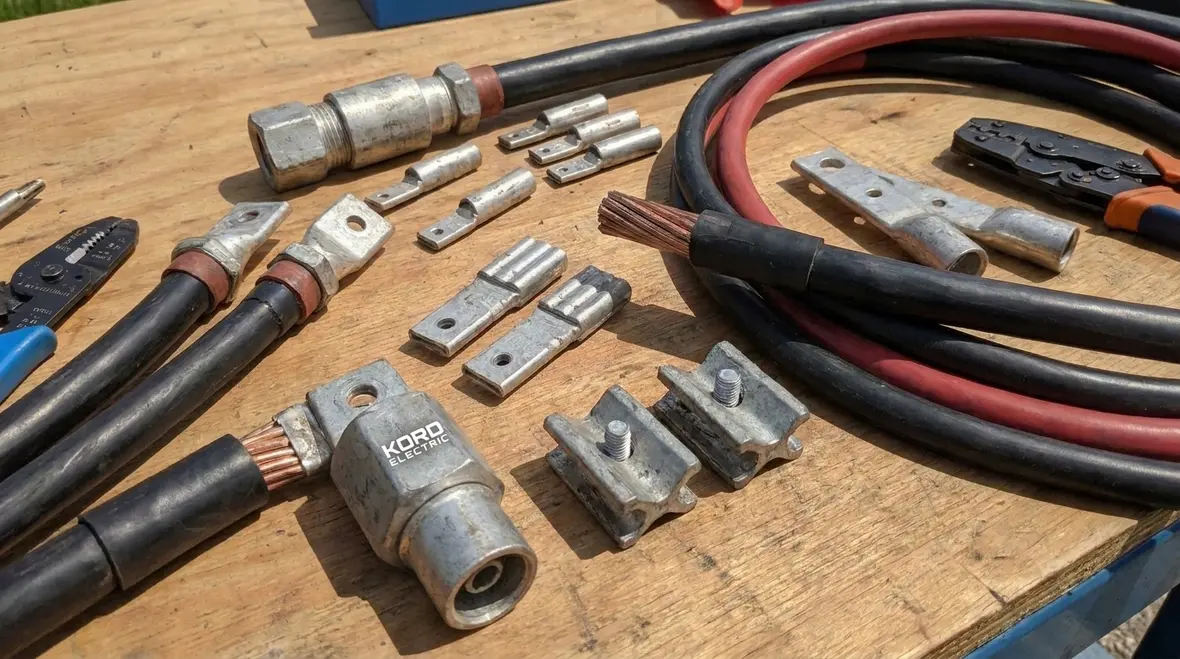
Section 268.46 focuses heavily on ensuring the connection uses parts that fit the conductor system. That means proper conductor type compatibility, proper insulation and weather protection, and proper voltage and ampere ratings for the application. If the connector is not rated for the system, then you get a mismatch that can overheat under load.
Here is what we look for during expert service visits. First, we confirm the conductor size and construction. Then, we match the splice or tap hardware to those details, including insulation type and required terminations. After that, we verify that the installation method matches the manufacturer instructions, because “close enough” is a phrase that belongs in comedy, not in high voltage work.
We also pay attention to environmental factors, especially in facilities with harsh conditions. Moisture, corrosive atmospheres, vibration, and temperature cycling all test the quality of a connection over time. So, we treat sealing and mechanical protection as core safety steps, not optional extras.
Installation methods that keep the connection stable over time
Even when the correct parts exist, installation method still decides the outcome. A splice made with the wrong technique can create voids, high resistance points, or weak stress relief. Likewise, a tap that does not distribute stress correctly can loosen during vibration or thermal expansion.
Our technicians use a deliberate process. First, they prep the conductor carefully, with the right cleaning and stripping steps. Then, they install the connection hardware using the correct tools and torque practices when applicable. After that, they check that the connection provides full coverage and proper insulation integrity.
To make this clear for facility managers, our expert service staff explains the “heat story.” When a joint has slightly higher resistance, it warms more than the conductor around it. Over time, that heat can degrade insulation and worsen the resistance further, like a slow burn that never gets the memo to stay small. In commercial and industrial facilities, where loads often run long hours, this effect accelerates. So, we design our checks for the long haul.
Common problems we see during commissioning and service calls
Because we focus on commercial and industrial sites and major property buildings, our field experience reflects the real world. And we see patterns. Not every issue is code related, but most trace back to process, planning, or documentation.
One frequent problem involves transitions between components. For example, teams may plan for a splice but install a tap where a splice belongs, or they may combine rated parts with an unapproved workflow. Another problem involves conductor condition at the connection point. If the conductor insulation gets damaged during prep, the connection may look fine at first and then fail later. Also, some crews rush the environmental sealing steps, which works until the first cycle of moisture and heat.
Then there is documentation. Owners want to know what was installed, where, and when. We help by supporting clear reporting from our crews, so others can trace the connection without turning every service call into a scavenger hunt. And nobody wants that. Not maintenance, not engineers, not the person who has to call Kord Electric after the third “temporary fix.”
Where teams should focus during inspection and maintenance
Inspection cannot end at visual checks. For high voltage systems, quality lives in the details. Our crews recommend facility teams plan inspections around connection points, especially where conductors change direction, where loads branch, and where the environment can attack insulation.
We also advise maintenance teams to track symptoms that often show up early. These include abnormal thermal patterns, intermittent power quality issues, or repeated alarms linked to feeder sections. When those signs appear, our expert service staff can evaluate the connection method, check for signs of overheating, and confirm that the installed configuration aligns with NFPA 70 requirements. For a deeper overview of how NFPA 70 shapes these expectations, many facility teams review resources like Understanding NFPA 70: The National Electrical Code Explained for 2026 alongside their site procedures.
Finally, we help teams keep procedures consistent. A splice or tap done correctly once can still fail if the same area gets disturbed later without understanding what it is. So, we coordinate with facility electricians and contractors to protect connection integrity during upgrades, cable pull events, or equipment replacement.
Dual-column checklist for planning NEC high voltage splices taps work
Planning and design steps
- Confirm conductor type, size, and insulation
- Verify voltage rating and ampacity expectations
- Pick splice or tap methods that match the application
- Plan for environmental protection and mechanical stress
- Document connection locations for future service
Installation and field checks
- Use correct prep, cleaning, and stripping
- Install hardware using required tools and method
- Maintain full insulation and stress relief
- Seal and protect against moisture and corrosion
- Verify workmanship before energizing
FAQ: NFPA 70 splices and taps for high voltage conductors
Why Kord Electric for commercial and industrial sites
When a high voltage connection fails, the cost shows up fast. Downtime, repairs, lost productivity, and the annoying extra inspections all follow. That is why we help facilities plan and execute NEC high voltage splices taps work with disciplined methods that match NFPA 70 expectations. Our technicians and expert service staff explain what they do, why it matters, and how to maintain reliability after energization.
For facility leaders coordinating broader power distribution, articles like Building Electrical System Design: Planning Power for Commercial Facilities can help frame how splices, taps, and NEC documentation fit into the bigger electrical story. And when you need field support, our dedicated Los Angeles County electrical services crews bring that planning into real equipment rooms, cable trays, and high voltage terminations.
Call Kord Electric today to assess your system connection points and protect your uptime, from NEC high voltage splices taps through to the feeders, panels, and protection equipment that keep your building running.


