
NFPA 70 Section 270.114 Grounding for 2 kV and Above
In commercial and industrial spaces, we do not treat grounding like a checkbox. We treat it like a life and asset safety system that has to work before trouble shows up. That is why Kord Electric focuses on the NEC grounding requirements that apply to higher voltage gear, including NEC equipment grounding 2 kV rules under NFPA 70 Section 270.114. These rules matter for 2 kV and above equipment because a small design mistake can turn into a large hazard during faults, storms, switching events, or equipment aging. And yes, we still get asked if grounding is “optional.” In our experience, the only thing optional in a facility is the snack drawer.
What Section 270.114 demands for 2 kV and above
NFPA 70 Section 270.114 sets clear expectations for how equipment grounding conductors get bonded and connected for NEC equipment grounding 2 kV and higher systems. In plain terms, it tells an installer and an owner what “good” looks like when you are grounding metal parts that can become energized. The goal stays the same: provide a low impedance path so fault current can move where the protective devices can act fast.
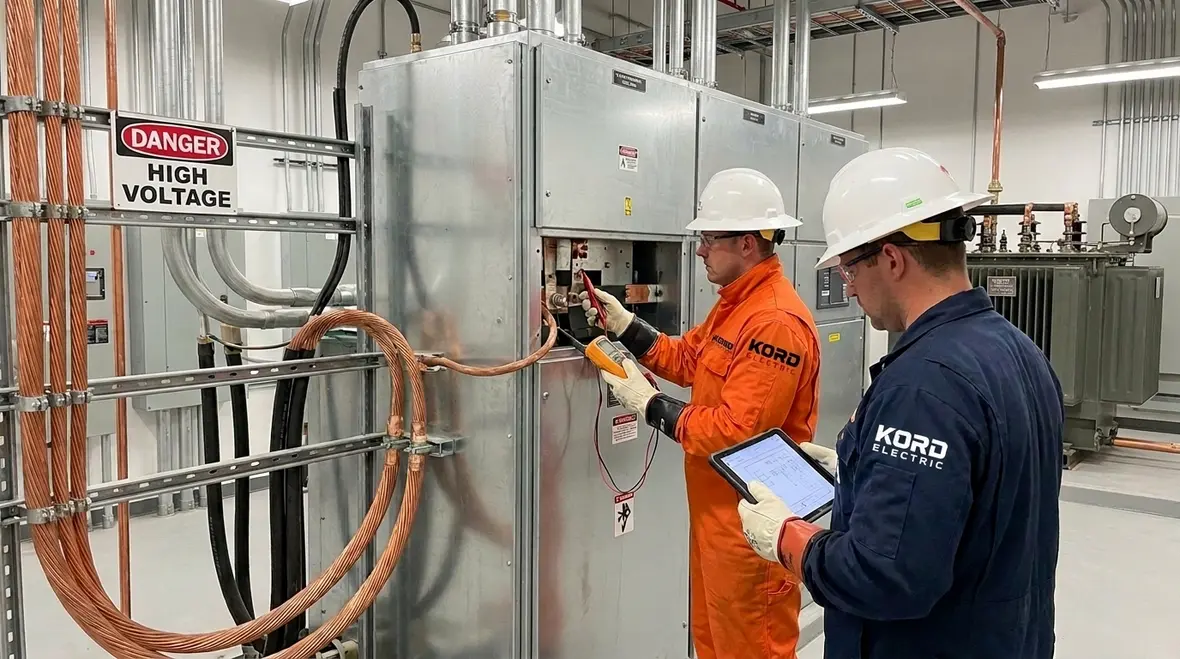
In the field, our technicians explain this with calm, repeatable logic. First, they look at how power arrives at the facility. Next, they confirm the voltage class and the equipment type. Then, they verify the grounding electrode system, the bonding points, and the routing and sizing of the equipment grounding conductors. Finally, they coordinate the grounding plan with switchgear, transformers, switchboards, and any auxiliary metallic structures in the yard or in the building.
To be clear, 270.114 does not exist to make electricians miserable. It exists because higher voltage systems create stronger fault conditions, and a grounding system that performs well at low voltage can still fail under higher fault energy. So we build for the worst case, then we test to prove it.
Equipment bonding: keeping metal parts at the right potential
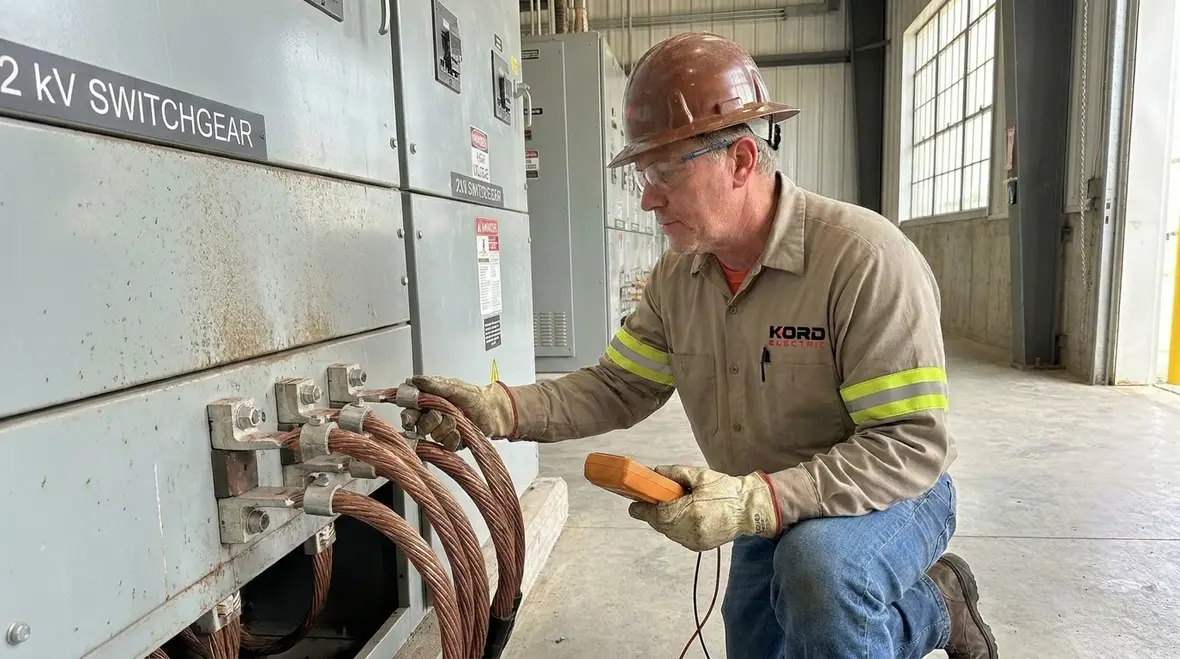
When people hear “grounding,” they often picture one conductor and one clamp. But for commercial and industrial facilities, grounding means bonding. Bonding ties exposed and conductive metal parts together so they stay at essentially the same electrical potential during a fault. This reduces shock risk for workers and it stabilizes the system response.
Our expert service staff often points out something that sounds simple, yet catches teams off guard. If metal parts are left floating or bonded through the wrong path, fault current may not flow long enough to trip breakers. Instead, it can energize structures and create hazardous touch voltage. That is how a grounding plan turns into a “mystery trip” or, worse, a “mystery energization.”
Also, bonding does not mean “connect everything everywhere.” Good bonding follows the NEC rules for where bonds must exist, where they must not create parallel paths, and how the system must handle conductor routing and termination integrity. In short, we bond to protect people and to protect equipment. We do not bond to collect corrosion.
Grounding conductor sizing and connections that hold up
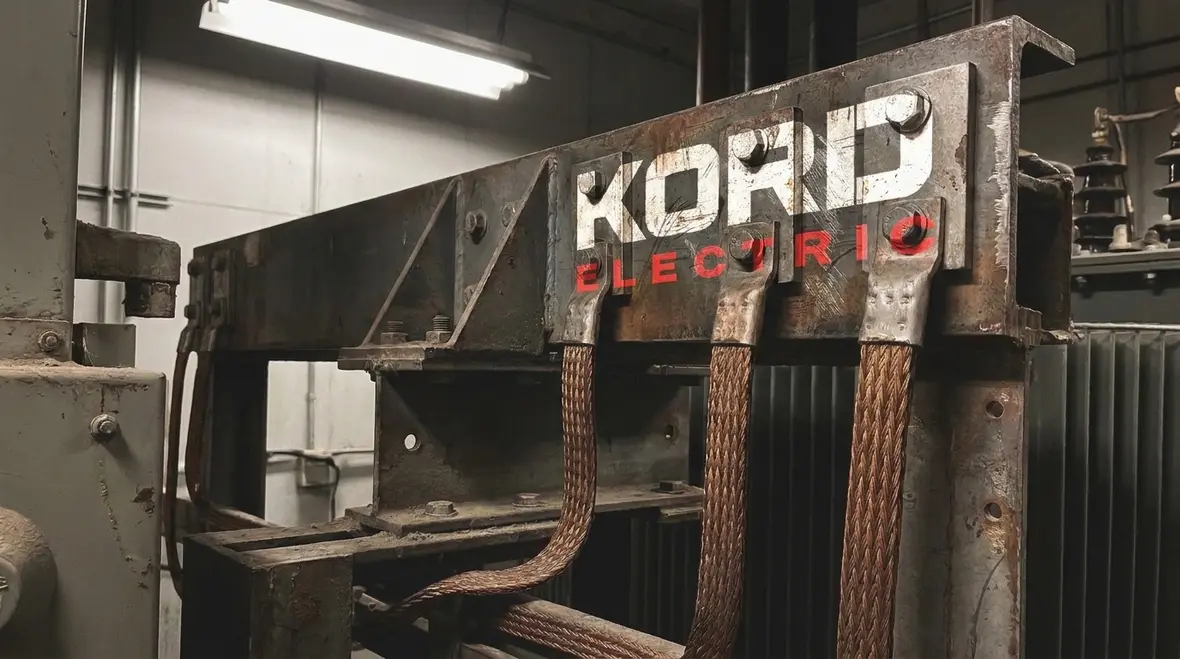
The reliability of a grounding system depends on more than the design. It depends on the actual installation details: conductor size, termination method, contact pressure, corrosion resistance, and mechanical support. For 2 kV and above equipment, we approach this with extra discipline.
When our technicians inspect a facility, they look for three things in each connection. First, the termination must be rated for the conductor material and the application. Second, the connection must remain secure over time, including vibration and thermal cycling. Third, the grounding path must stay low impedance. If a connection loosens, oxidizes, or gets installed on the wrong surface, resistance rises and protective devices may not clear faults as intended.
Additionally, we pay attention to transitions between conductors and metal enclosures. Where equipment grounding conductors connect to switchgear metal frames, cable sheaths where permitted, conduit systems, and other grounding points, the path must remain continuous. If the path breaks, the fault current route becomes unpredictable. And while electrical systems enjoy surprises about as much as anyone enjoys a pop quiz, the surprises in this case are not the fun kind.
How grounding supports protection and fault clearing
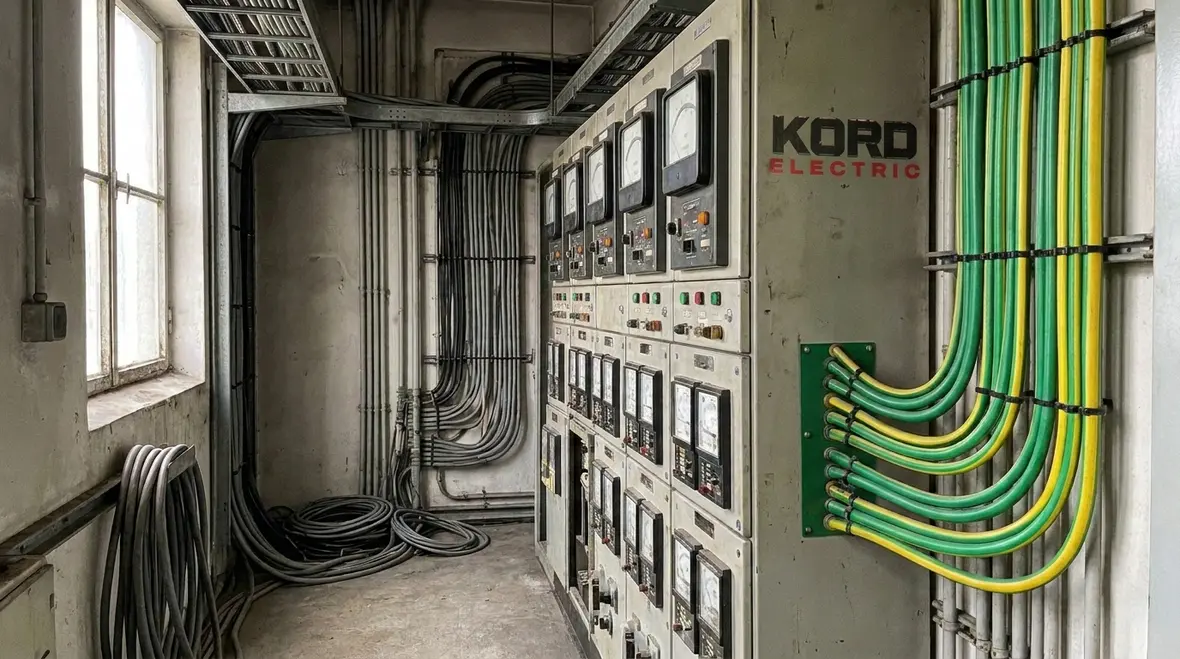
Grounding and protective devices work as a team. A grounding system supports protection because it helps route fault current to the point where overcurrent devices, relays, and fuses can operate. Therefore, NFPA 70 Section 270.114 ties directly to how fast and how safely the system clears faults for NEC equipment grounding 2 kV and above.
At commercial sites, the stakes increase. Facilities like hospitals, data centers, industrial plants, and large mixed use developments often run critical loads where power interruptions cause expensive downtime. Thus, a grounding system must do two jobs at once. It must protect people, and it must help the system behave predictably.
In practice, our approach involves reviewing coordination assumptions with the electrical engineer’s intent and the equipment manufacturer’s requirements. Then we verify the as built conditions. Our team also considers bonding to structures, grounding of secondary systems, and the impact of ground faults on equipment housings. That way, we do not just install a grounding system. We build a fault clearing system.
For facility leaders who want to see how grounding and bonding connect to the broader NEC framework, Kord Electric’s resource Understanding NFPA 70: The National Electrical Code Explained for 2026 walks through how code sections interact during real commercial and industrial projects.
Common mistakes we see on commercial job sites
Even teams with strong experience can make errors when they move from standard building wiring to higher voltage equipment grounding practices. Our service staff has seen enough patterns to name them, and yes, we laugh a little, because if we did not, we would charge therapy hourly.
Here are the most common issues we find at commercial and industrial facilities:
- Incorrect bonding points that leave enclosures effectively isolated during a fault
- Loose or poorly prepared terminations that raise resistance over time
- Improper conductor routing that creates physical damage risk near edges, heat sources, or vibration points
- Missed metallic paths between equipment frames and the grounding backbone
- Assumptions based on lower voltage systems that do not carry the same reliability to 2 kV class equipment
To prevent these, we document the plan, we verify materials, and we check terminations before the job moves to the next phase. Then we bring the right tests and inspection steps so the grounding system does not rely on “looks good from across the room.”

Compliance for owners: how Kord Electric helps large facilities
Kord Electric supports commercial and industrial customers and major property buildings. That focus changes the way we work. We treat grounding requirements like an operations and safety asset, not like a one time install. Our process starts with listening to the facility goals, then it moves into a grounding review tied to the NEC and the equipment involved.
Our technicians and expert service staff also explain the “why” behind each step, not just the “what.” For example, when we address grounding equipment for 2 kV and above, we show how the bonding and grounding path impacts fault clearing behavior and worker safety. Then we align the work with scheduling realities so operations stay stable.
Also, we do not stop at installation. We help owners plan for ongoing maintenance and future changes. Because a grounding system is like a foundation. If you ignore it after the build, it starts collecting problems the way a break room collects empty cups.
For more background on NEC and how it gets applied in the real world, Kord Electric points customers to its NEC education resources, including the company’s NEC explanation content and its broader guidance hosted on related properties like Kord Fire and industry references such as Fire Pumps and their public safety resources. Facility leaders can also explore practical “how to” guidance in articles like How to Read NFPA 70 and What Is NFPA 70? Understanding the National Electrical Code to connect grounding decisions with the bigger code picture.
If your facility is in Southern California, Kord Electric’s Los Angeles County electrical services team supports planning, installation, and verification for higher voltage grounding and bonding, so owners do not have to navigate NFPA 70 and NEC equipment grounding 2 kV requirements alone.
Featured FAQ: grounding 2 kV and above
FAQ: quick answers for featured snippets
What is the main objective of Section 270.114?
It guides how to bond and ground 2 kV and above equipment so fault current has a safe, low impedance path and protective devices can operate as intended.
Who should handle grounding work in commercial facilities?
Licensed, experienced electrical teams and technicians who understand high voltage grounding practices, can interpret NFPA 70 requirements, and can verify results with proper inspections and testing.
What should a facility owner prioritize first?
They should confirm system voltage class, review the grounding plan with the project team, ensure the as built grounding and bonding match code requirements, and document how NEC equipment grounding 2 kV rules are being applied across the site.
Is grounding maintenance required after installation?
Yes. Connections can loosen, corrode, or get altered during upgrades. Periodic inspections, testing, and documentation keep the grounding system reliable over the full life of the equipment.
Call Kord Electric to validate the grounding design now
Kord Electric helps commercial and industrial facilities build and verify grounding systems for equipment 2 kV and above. Our technicians explain the requirements in clear terms, then they confirm the as built work with careful inspection and the right verification steps. If a project involves switchgear, transformers, or higher voltage equipment, do not leave grounding to guesswork. Call us now and let our expert service staff review your setup before a fault turns into a costly incident.
For projects in Southern California, our field teams coordinate NEC equipment grounding 2 kV design and verification with broader services like panel upgrades, preventive maintenance, and emergency response, so your facility can rely on one partner from planning through energization.


