

NFPA 70 Section 305.42 NEC FMC Danger Signs Compliance
Kord Electric respects the seriousness of safety signage at FMC installations by aligning with NFPA 70 Section 305.42, including the requirement for NEC FMC danger signs placed where they belong. In plain terms, we make sure people notice warnings before they step into a hazard, and we do it with the kind of care you would expect from professionals. Our expert service staff also explains what the signs mean, why they matter, and how to keep them in good condition. Because yes, a faded warning sign is like a faded fire drill memory, and nobody wants to “relearn the hard way.”
What NFPA 70 Section 305.42 requires at FMC installations
NFPA 70 Section 305.42 focuses on danger signs at FMC installations and it connects those signs to the wider NEC safety approach. In this area, the rule exists to protect workers, inspectors, and anyone who could be near the equipment. Therefore, the signs do not live in a drawer, and they do not get treated like optional decoration.
Kord Electric approaches this with a practical mindset. First, our technicians verify the installation location and then they confirm the signage meets the intent of the standard. Next, they look at visibility, durability, and whether the meaning stays clear in real working conditions. As a result, facilities reduce the risk of confusion, and they show good faith during audits.
We also remind property teams of one simple truth: codes are written for busy, distracted days. Someone will show up after lunch, wearing the wrong PPE, and with the confidence of a sitcom character who just “knows what they’re doing.” The signage helps correct that storyline.
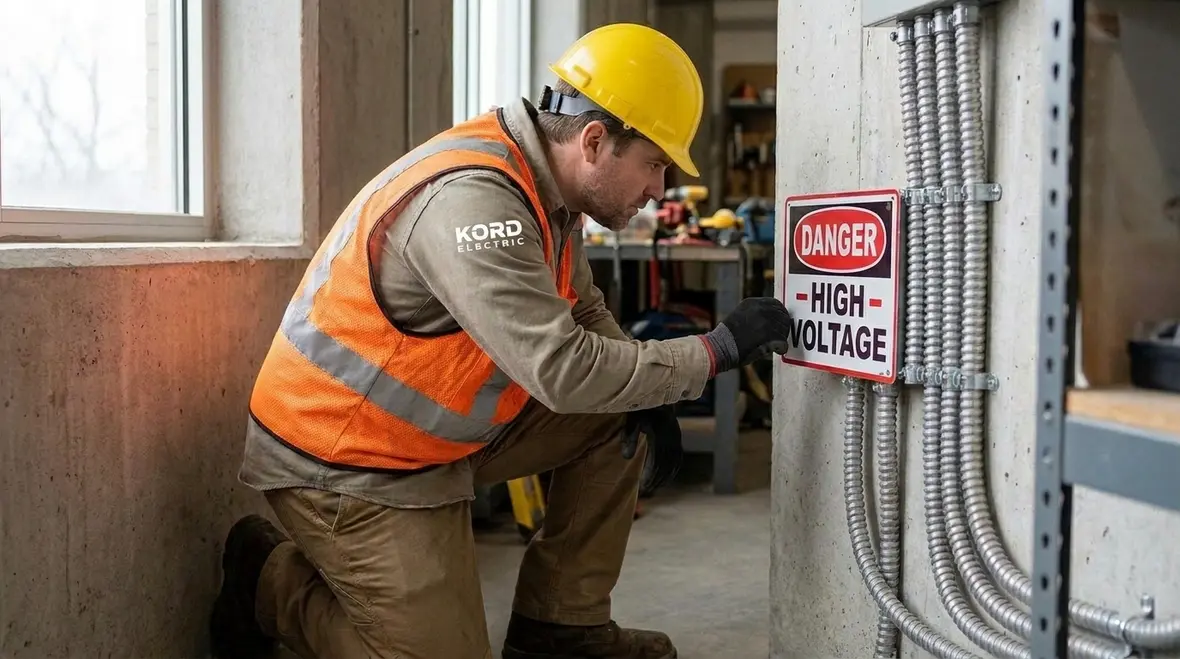
Why NEC FMC danger signs work when people are busy
In commercial and industrial environments, we all know how attention works. People move quickly, spaces change, and equipment gets maintained on tight schedules. However, the hazard does not take a break. That is why the NEC FMC danger signs exist as a steady message in the real world.
When Kord Electric installs or verifies signage, our expert service staff explains the purpose in a calm, direct way. We tell decision makers that danger signs are not just compliance items. They function like a last line of communication when training slips, when access points change, or when contractors rotate through a site.
Additionally, these signs support safer behavior around equipment that needs caution. They help reduce accidental contact, improper access, and careless work practices. And because we serve major property buildings, we treat this as part of the overall safety culture, not a one time checkmark.
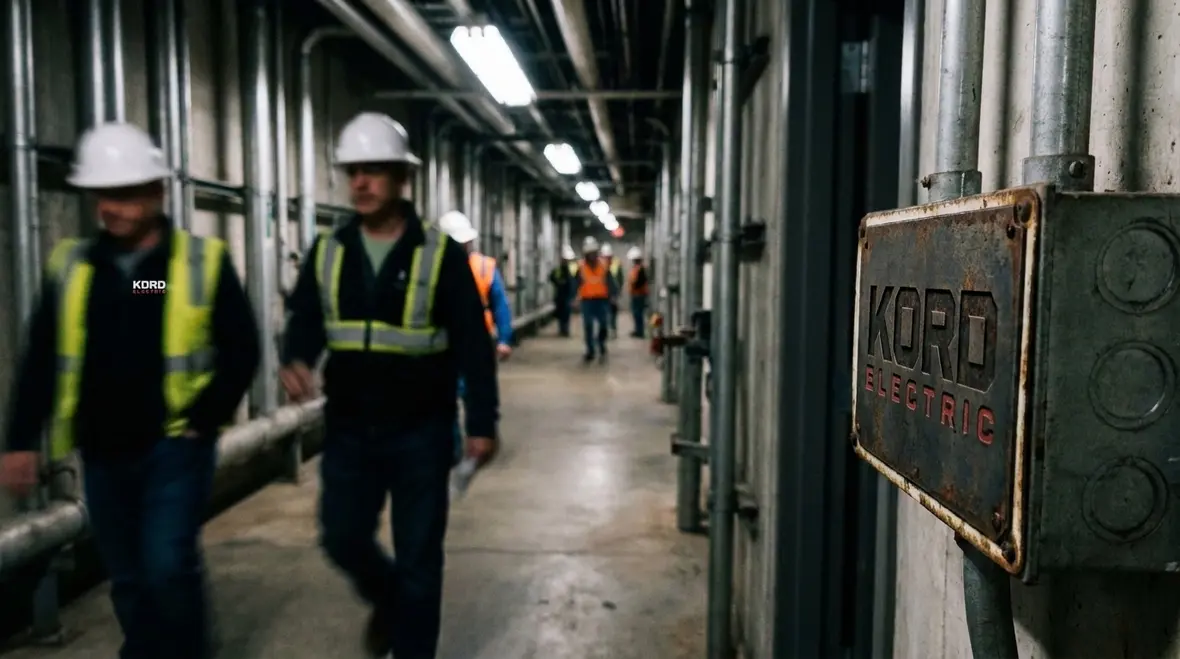
Where danger signs should be placed and how visibility matters
Kord Electric technicians focus on placement, viewing angles, and long term readability. Even if a sign technically exists, poor location can make it useless. Therefore, we treat visibility as a real safety variable.
During site review, we check for the basics that often decide whether a sign helps or fails. These include mounting height, distance from the hazard, lighting conditions, and whether equipment blocks the view. Then we consider how the area behaves over time, like whether vehicles pass nearby, whether maintenance crews cover the area, or whether moisture and dust dull the message.
In practice, we help facilities keep the message clear during normal operations. We also explain that damage and fading erode meaning. Once a warning becomes unclear, the installation can become a problem even when it started as compliant. It is like putting a “Do Not Enter” sign on a door that never opens, and then wondering why people walk into the room anyway.
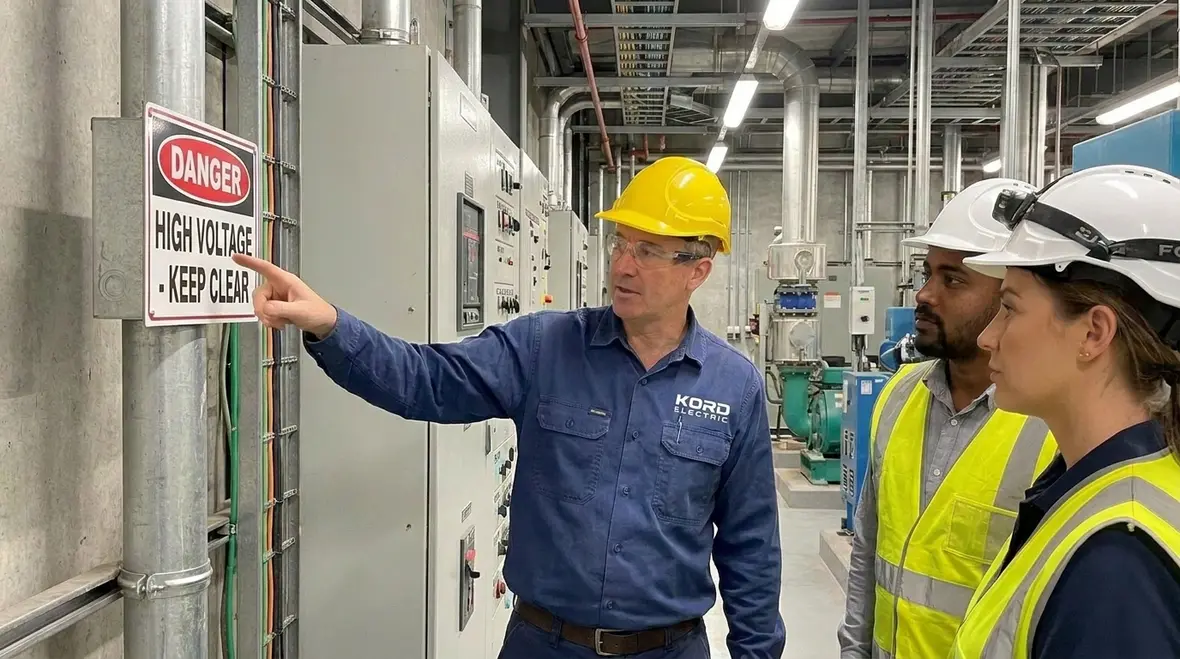
How our team explains compliance like real humans
Codes can feel dry, but safety is not. Our approach at Kord Electric is to keep things clear, step by step, so our commercial clients understand what they are getting and why it matters. Our technicians and expert service staff do not just state what the rule says. They connect it to day to day site behavior, maintenance workflows, and inspection readiness.
First, we walk the facility team through the requirement in accessible language. Then we show how the signage fits the broader NEC approach described across national electrical code guidance resources, including updates and interpretations found through our own research and service experience. For deeper background on the code itself, we often recommend reviewing our related resource Understanding NFPA 70: The National Electrical Code Explained for 2026, so teams see how FMC signage ties back to the larger NEC framework.
Finally, we document what we confirmed and what we recommend, so operations teams can plan next steps without guesswork. And if you think explanations are unnecessary, remember this: a well informed team makes fewer mistakes. A frustrated team tries to “power through.” We would rather help teams stay calm, prepared, and safe.

Common mistakes we see around FMC warning signage
Over time, we have noticed repeating patterns across commercial and industrial properties. These errors do not always come from bad intent. Sometimes they happen because people assume the original installer handled it. Other times, the area gets renovated and the signage gets overlooked. Either way, the risk shows up later.
- Signs that exist but are not visible due to location, obstructions, or poor lighting.
- Signs that become unreadable from fading, corrosion, peeling, or heavy grime.
- Missing signage during equipment changes where updates occur but warnings do not get reviewed.
- Confusion about the exact meaning because nobody explains the “why” to the facility team.
- Overreliance on outdated layouts after construction, cable runs, or access control changes.
To be clear, we do not point fingers. We help fix the problem. We also help teams build a repeatable habit: when the equipment changes, the warning communication gets checked too. That habit turns safety into a process, not a lucky moment.
One coordinated compliance approach for major facilities
Kord Electric serves commercial and industrial facilities and major property buildings, and we treat signage as part of an integrated safety program. That means our technicians coordinate their work with how the site operates. We also align with best practices found across national code education materials, including the broader NEC discussion themes that appear in our own technical resources.
To make this easier to understand, we sometimes map the compliance work in a simple two column view for facility leaders:
| What we check | What it helps prevent |
| Danger signage placement, readability, and condition | Accidental exposure, confusion, and risky access |
| Site visibility factors like lighting and obstructions | Warnings missed during normal operations |
| Documentation and clarity for the facility team | Rework, failed inspections, and unclear responsibilities |
Meanwhile, we connect the dots for clients so they know how a signage review fits into inspection readiness. In other words, we make sure it is not just compliant on paper. It is compliant where people work. For facilities across Los Angeles County and the broader Southern California area, this may include coordinating signage review with broader commercial electrical service and maintenance programs so upgrades, repairs, and code checks stay aligned.
FAQ about NFPA 70 Section 305.42 and FMC danger signs
Final word: keep your warnings clear, your site safer, and your inspections smooth
When Kord Electric handles NFPA 70 Section 305.42 danger signage for FMC installations, we do it with careful placement checks, readability reviews, and technician level documentation. Our expert service staff explains the “why” so your team maintains the safety intent long after the work is complete. If you operate a commercial or industrial facility, major property building, or facility that hosts contractors, now is the time to review your current signage. Call Kord Electric and let us help you stay prepared, not lucky.


