
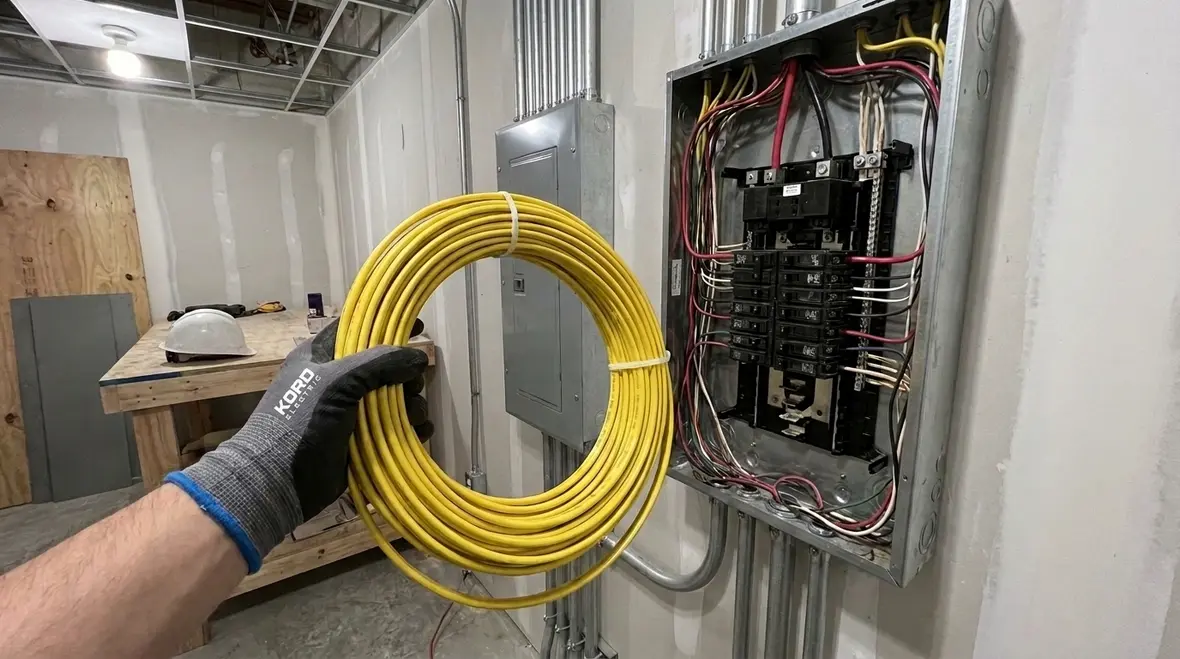
NFPA 70 Section 320.1 NEC Nonmetallic Sheathed Cable Scope
At Kord Electric, we help commercial and industrial facilities keep their electrical systems safe, clear, and code sound. That starts with understanding the NFPA 70 Section 320.1, the NEC’s opening rule for the Scope of NEC Nonmetallic Sheathed Cable Article. In plain terms, this NEC nonmetallic sheathed cable scope tells us what kinds of wiring this section covers and where it applies. Because we work with major property buildings, we do not treat code reading like bedtime stories. We treat it like a safety plan.
Now, let us walk through what the scope means, how it affects design and inspection decisions, and how our technicians explain the details so teams can act with confidence. And yes, you will hear it in a way that feels less like a tax form and more like the calm, steady voice of a professional who has seen every “creative” wiring idea in the book.
What NEC nonmetallic sheathed cable scope means in practice
NFPA 70 Section 320.1 defines the boundary for the NEC nonmetallic sheathed cable scope within the NEC. It tells installers and inspectors which rules cover nonmetallic sheathed cable, commonly called NM cable, and it sets expectations for the type of wiring methods described in the article.
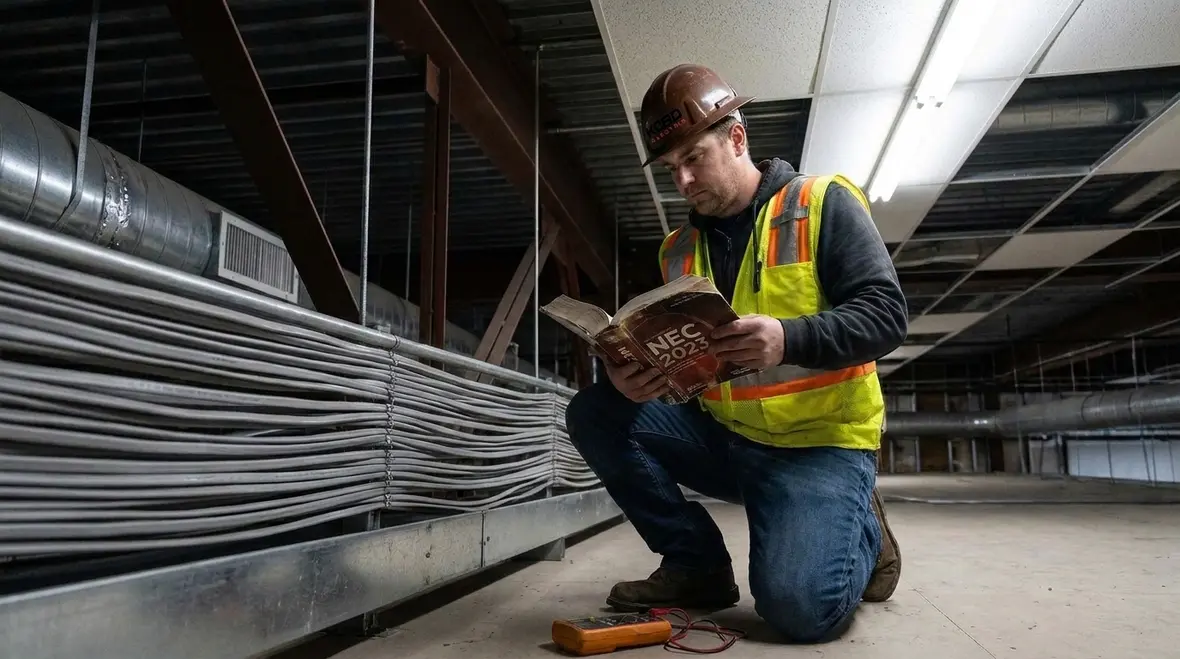
First, the scope is not about giving you “extra freedom.” It is about giving you the correct rules for the correct product. Second, when teams follow the scope closely, they reduce the odds of mismatches between wiring materials, installation conditions, and labeling requirements.
In a commercial or industrial facility, this matters because the wiring path is rarely simple. We may have renovations, tenant changes, ceiling modifications, and different building uses across the same property. Therefore, the wiring method must match the rule set, or else inspection teams will push back. And if you have ever watched an inspector pause, look at the job, and ask one question that sounds easy but changes everything, you know the feeling. We keep our work ready for that moment.
How Section 320.1 guides design, layout, and installation
Section 320.1 functions like a compass. It does not do the whole trip for you, but it keeps you pointed at the right rules. For engineers, electricians, and facility teams, the scope helps shape decisions such as routing, protection, and where the cable method stays within the intended coverage of the article.
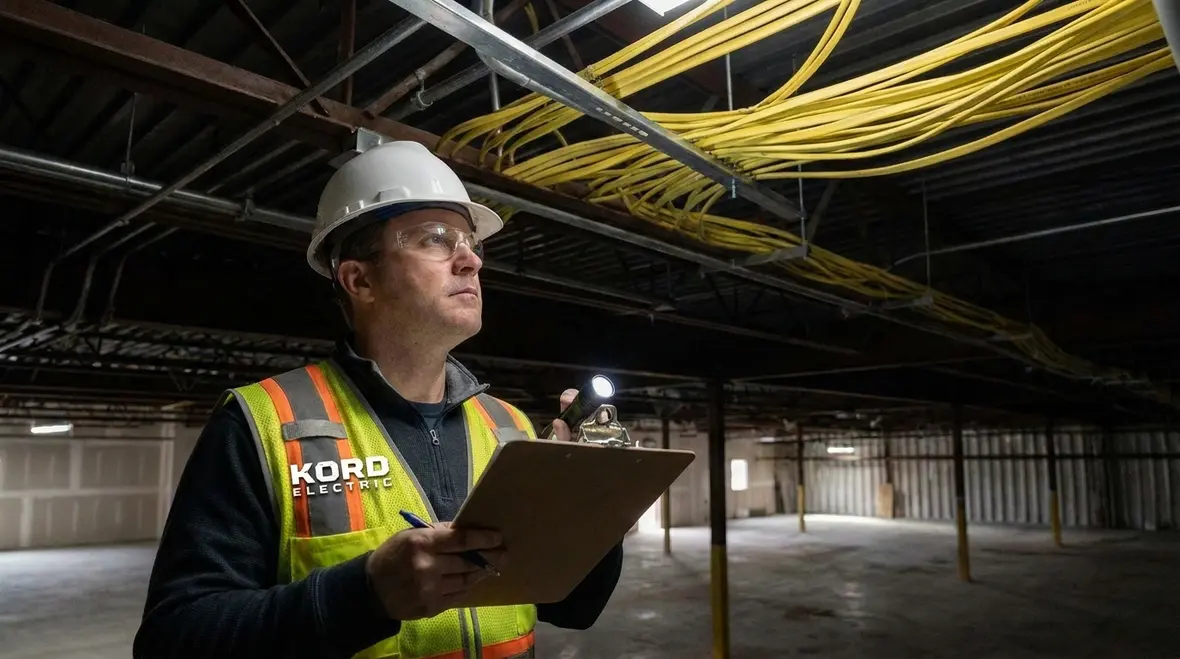
When we review projects for code alignment, our expert service staff look for how the building design affects the wiring method. For example, open spaces, fast changes in ceiling type, or areas with different exposure conditions can lead to confusion if a team assumes the same method always works. However, the scope helps prevent that assumption.
Also, the scope supports clean documentation. If a project uses the right wiring method under the right article, then plans and field notes stay consistent. In turn, this makes commissioning smoother and helps facility maintenance crews understand what they are looking at later. And we all know that one day, someone will stare at a wiring label and ask, “What is this, and why is it like this?” Our goal is to make sure the answer does not require guesswork.
Where the scope impacts inspections and approvals
In commercial and industrial work, inspection outcomes depend on more than “it was wired.” Inspectors check whether the method matches the NEC rules that apply. Therefore, the NFPA 70 Section 320.1 scope becomes a practical test: does the cable type and installation plan fit the article being used?
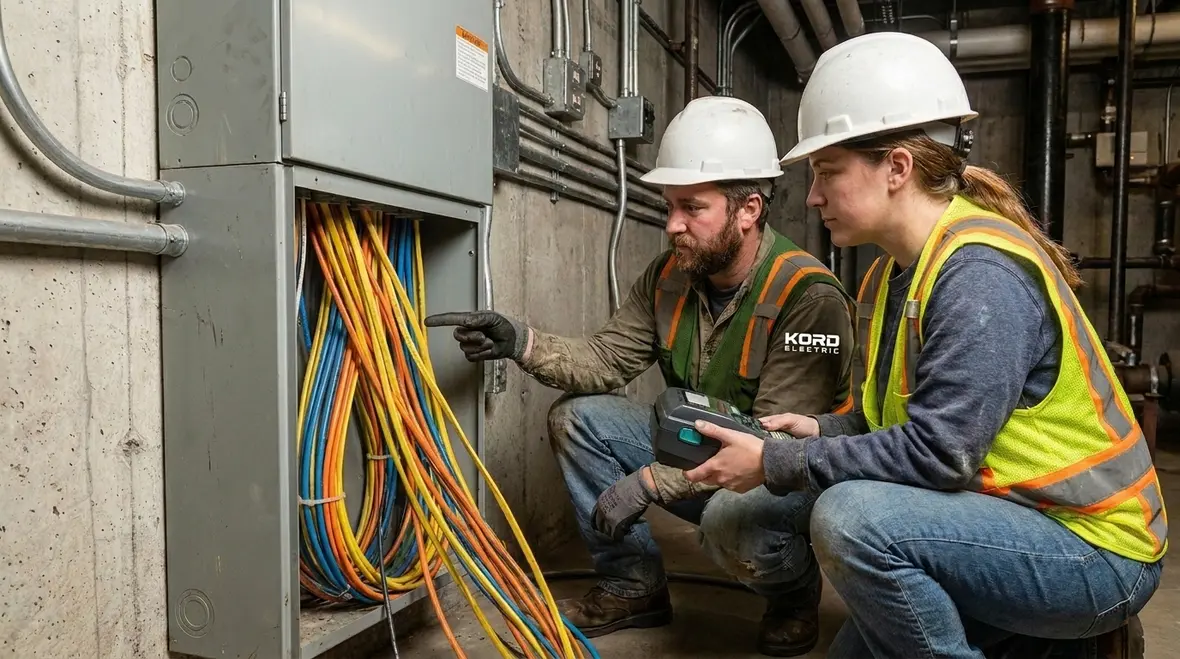
Our technicians often explain this part with a simple idea. They say that the NEC is not just a rulebook, it is a map of what applies in each situation. If you use the right map but wander off it, you still end up lost.
So we help teams align their field practices with the intended article coverage. That includes verifying that the cable is used in ways that fit the scope and that the installation details do not drift into a different rule set. When we keep the work within the scope boundaries, we reduce delays and costly rework.
Common misunderstandings in nonmetallic sheathed cable scope
Even smart teams can stumble when they rely on memory instead of the actual scope language. Here are the misunderstandings we see most often in commercial and major property buildings.
- Assuming “standard” always means “allowed.” Teams may treat NM cable as a default, but scope boundaries still matter.
- Mixing wiring methods without checking article fit. Renovations can accidentally combine methods in ways that confuse the inspection trail.
- Skipping the detail that ties product to condition. The cable method may look fine until it meets the real-world conditions in that area.
- Believing labeling ends the question. Labeling supports compliance, but it does not replace correct installation under the scope.
To keep everyone grounded, our technicians explain these issues step-by-step on site. We do not just say “follow the NEC.” We show how the scope affects what gets installed, where it goes, and how documentation should reflect the decisions. When crews understand the why, they install with fewer surprises.

Using the code correctly across commercial and industrial buildings
Commercial and industrial facilities do not behave like simple, uniform buildings. They include changing tenant needs, flexible layouts, utility corridors, and sometimes multiple building types under one ownership group. As a result, teams need a consistent code approach that still respects local conditions.
When we consult on projects, we connect the NEC requirements to the real building context. First, we consider how the electrical system must support equipment loads, life safety needs, and ongoing operational demands. Then, we confirm that wiring methods align with the appropriate rule coverage. Finally, we coordinate with the broader electrical scope of work so the installation remains neat, safe, and maintainable.
And because people often learn code by reading blogs, we make sure our explanations stay practical and grounded. We may reference trusted resources from the broader Kord network, including the National Electrical Code explainers from Kordfire, and we keep our own blog content updated with what facilities need for current and future practice. For those who like to study along, Kordfire’s NEC content and general fire safety focus can help. You can explore Kordfire at https://kordfire.com.au/ and related NEC guidance at https://kordfire.com/nfpa-70-all-about-the-national-electrical-code-nec/.
Also, for many facilities, life safety and fire pump systems run side-by-side with electrical decisions. So it helps to think in a connected way. If your property relies on fire pumps, you likely also value clear standards. Organizations that support fire pump knowledge, like https://firepumps.org/, can be part of a well-rounded compliance mindset.
If you want a deeper dive into how the broader NEC shapes modern installations, you can also review our extended explainer on the code itself: Understanding NFPA 70: The National Electrical Code Explained for 2026. It pairs naturally with this NEC nonmetallic sheathed cable scope overview for teams that want both the big picture and the article-level detail.
A clear compliance checklist for field teams
Field work succeeds when it stays organized. Therefore, we keep a simple checklist approach that ties back to the NEC scope. Our technicians use this to reduce errors and speed up review.
Before installation
- Confirm the project uses the correct wiring method for the intended article
- Verify cable type and intended routing conditions
- Review plans for any renovation or zone changes
- Document decisions so inspections track easily
During installation
- Follow installation details tied to the scope coverage
- Keep routing clean and consistent
- Label as required and confirm labeling matches plans
- Coordinate with other trades to avoid accidental method conflicts
And if you are thinking, “We already do checklists,” then congratulations. You are probably not the reason an inspection gets delayed. Still, we see how small misses happen. One wrong assumption, one rushed change order, and suddenly you are doing the electrical equivalent of rewinding a Netflix episode because you missed one critical scene.
FAQ about NFPA 70 Section 320.1
Conclusion and next steps with Kord Electric
When we treat the NFPA 70 Section 320.1 scope as a real guide, our commercial and industrial customers get safer installations and fewer surprises during inspection day. Our technicians and expert service staff explain the details in plain language, so your team knows what matters and why. If you are planning a build, handling a renovation, or aligning an electrical plan with NEC requirements, we will review the approach with you and help you keep the work compliant.
For properties that need more than a single project fix, you can also explore how our broader Los Angeles County electrical services support new installations, upgrades, troubleshooting, and long-range planning across multiple facilities. Code awareness, including the NEC nonmetallic sheathed cable scope, is built into that service from the start.
Contact Kord Electric to schedule a code-focused assessment today and keep your wiring methods, documentation, and inspections aligned the right way from the first pull to final sign-off.


