
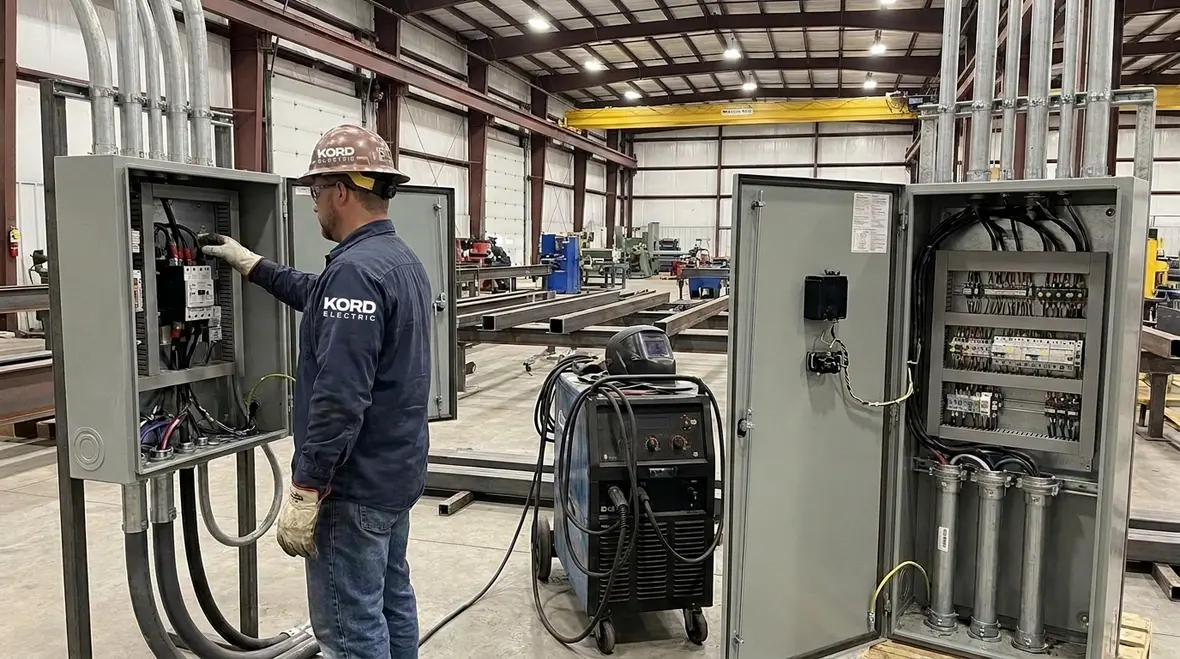
NFPA 70 Section 630.42 Welding Machine Installation Guide
At Kord Electric, we help commercial and industrial teams stay ahead of electrical risk, code gaps, and costly downtime. In this guide, we focus on NFPA 70 and how it shapes safe work for real facilities. Early on, we address one common task that triggers lots of questions: NFPA 70 Section 630.42 welding machine installation usage. We explain what the code expects, how we plan work on site, and why the details matter more than the “looks fine” crowd. After all, if a welding setup behaves like a surprise party, it is usually the wrong kind. And nobody wants that kind of surprise in a production area or a major property building.
What NFPA 70 does for commercial electrical safety
NFPA 70, also known as the National Electrical Code, sets practical rules for how we build, install, and maintain electrical systems. First, it reduces fire risk by setting limits on conductors, equipment, and wiring methods. Next, it supports consistent work quality across different trades and contractors. Then, it gives facility owners a clear benchmark for inspections, upgrades, and repairs.
For commercial and industrial buildings, NFPA 70 matters even more. These sites carry heavy loads, run in shifts, and often include tough environments like warehouses, pump rooms, and production floors. Therefore, we do not treat the code as paperwork. Instead, we treat it like a safety map that our technicians and expert service staff use while planning and verifying installations.
We also coordinate with other Kord teams when needed, because safe electrical work rarely lives alone. For example, Kord Fire resources help us connect electrical rules to broader fire safety planning for life safety systems and fire protection workflows. As a result, our approach stays consistent from wiring details to facility-wide safety expectations.
How NFPA 70 Section 630.42 welding machine installation works in the real world
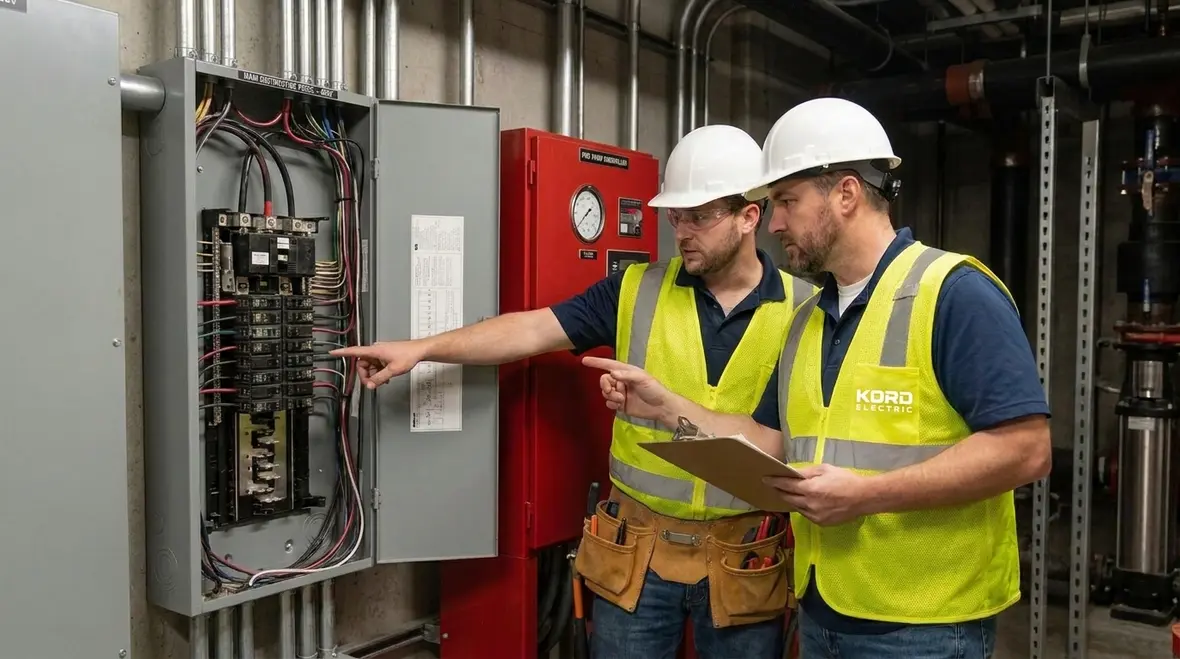
When teams plan the NFPA 70 Section 630.42 welding machine installation, we focus on the exact conditions that prevent shock, overheating, and fire spread. However, we also keep the job practical. We know welding loads change during operations, and the setup must handle real work, not a perfect test scenario.
Section 630.42 centers on how welding equipment gets installed and supplied, including the needed wiring and protection steps based on equipment requirements. When we handle this, we start with the welding machine data plate and the manufacturer instructions, then we line that up with code requirements for the electrical supply. After that, we verify the circuit behavior under expected loads, including starting and duty cycles.
Then comes the part everyone underestimates: physical installation. We confirm safe routing, proper enclosure choices, and the right protection for cables and connections. Also, we avoid shortcuts that create heat traps or loose termination points. Loose connections can turn into hot spots over time, and hot spots can turn into expensive emergencies. We like our clients alive and on schedule, so we do it right the first time.
We should also clarify a point that comes up often in the field. Some people think welding power rules only apply to the welder’s booth. In truth, the supply and installation choices affect the entire area where the welding equipment runs. Therefore, we plan the install to support the work zone safely, especially in major property buildings where multiple trades share space.
Wiring methods, protection, and shutdown planning for welding loads
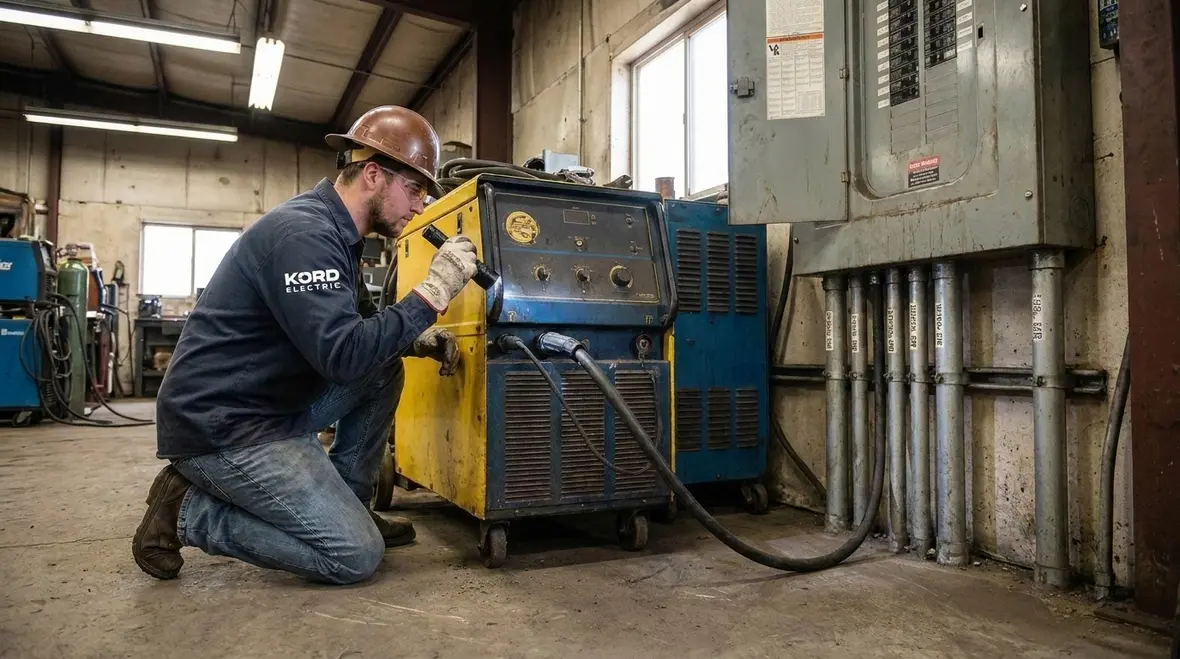
After the supply plan is clear, we move to wiring methods and protective devices. At first glance, the wiring path seems like a simple route from point A to point B. Yet in commercial and industrial settings, that path crosses real obstacles, including traffic, moving equipment, and vibration. For that reason, we use code aligned wiring methods and verify protection against damage.
We then focus on protective devices. In the field, many problems start when a circuit does not provide the right overcurrent protection or when the device choices ignore actual load conditions. As welding equipment draws power differently than some static loads, we confirm the circuit ratings and protection coordination so the system does what it should during faults.
Next, we plan shutdown and access. We coordinate with facility managers and safety leads so the right equipment can be isolated without killing unrelated systems. This keeps production running while still supporting safe lockout or maintenance work. Transitioning from installation to operations is where many contractors stumble, but our technicians build in that operational reality.
Finally, we verify grounding and bonding practices. Poor grounding can create unsafe touch voltages, and improper bonding can cause stray current issues. So, we inspect connections and continuity in a way that aligns with code expectations and real life behavior.
Field checks that keep welding circuits honest
In the field, our teams rely on repeatable checks instead of guesswork. We verify conductor sizes against the machine requirements, inspect terminations after torqueing, and confirm that disconnects stay accessible even after other trades finish their work. We also confirm that labeling will still make sense to the night shift technician walking in cold six months later. That practical view keeps NFPA 70 compliance from turning into a mystery puzzle during troubleshooting.
Coordination with other systems and inspections in major buildings
Commercial work does not happen in isolation. So, we coordinate NFPA 70 electrical requirements with the facility’s broader systems. This includes life safety planning, fire protection workflow, and maintenance procedures. If your facility has fire pumps, alarms, and emergency power systems, we make sure our electrical work does not create conflicts in testing schedules or operational assumptions.
For teams that also support fire pump systems, organizations like FirePumps.org emphasize the importance of correct electrical support for pumps and controls. We treat that guidance as a practical signal. It helps us think about power quality, control wiring behavior, and safe maintenance access, especially when emergency systems share routes or panels.
Similarly, when we reference the broader context of electrical and fire safety alignment, we lean on Kord Fire resources, including Kord Fire’s NFPA 70 overview. That helps us keep our conversations consistent when stakeholders ask, “How does this fit into our bigger safety plan?”
In short, we support inspection readiness. We document our decisions, label what needs labeling, and maintain clean as built work so inspectors and facility electricians can verify quickly. And yes, we also keep things tidy. Inspectors notice. Like cats, they notice everything.
Linking welding work to broader NEC education
Because welding installations sit inside the larger NEC framework, we connect project teams with educational resources that explain the rulebook in practical language. Articles like Understanding NFPA 70: The National Electrical Code Explained for 2026 help facility leaders see how specific sections, such as those addressing welding equipment, fit into their long term electrical strategy instead of living as one off tasks.
Common mistakes we see during upgrades and new installs
Even strong facilities can run into problems during upgrades. Over the years, our technicians and expert service staff have seen repeated patterns. First, teams sometimes select equipment wiring choices without fully matching them to welding power requirements. Then, they route cables in ways that seem convenient but fail during operations. Next, they skip or rush connection checks, and heat builds quietly until it becomes a safety issue.
Another common issue involves inconsistent documentation. Facility owners often inherit older installations with incomplete records. When we step in, we verify what is actually installed, not just what the paperwork claims. We then update labeling and schematics when needed so the site remains manageable during future maintenance.
We also see a “temporary setup that never becomes temporary” problem. Welding equipment gets moved, but the electrical install stays fixed and unplanned for new locations. As a result, cable strain and protection mismatches show up later. We help teams correct this by planning the setup around the real work pattern, especially in large commercial floor plans and major property buildings.
Finally, we see confusion between general electrical rules and the specific welding related requirements under NFPA 70. Therefore, we treat welding machine installations as a targeted task, not an afterthought. When teams handle it with care, the facility runs smoother and safer.
How better planning reduces surprise downtime
Downtime rarely announces itself with a drum roll. It usually shows up after a small oversight has had enough time to grow. By treating NFPA 70 Section 630.42 welding machine installation as a structured process with clear checks, we help facilities replace “surprise shutdowns” with planned, short maintenance windows that everyone can live with.
Our process for NFPA 70 compliance at Kord Electric
At Kord Electric, we keep our process clear, so commercial and industrial clients get reliable outcomes. First, we conduct a site review focused on equipment locations, power sources, and operational flow. Next, our team maps the electrical plan to NFPA 70 expectations, including details relevant to NFPA 70 Section 630.42 welding machine installation and related supply considerations.
Then we coordinate with facility stakeholders. We talk through shutdown needs, installation windows, and how maintenance teams will access equipment after work is done. After that, we install and verify using standard checks that our technicians can explain on site. We do not hide behind vague answers. If a requirement exists, we show why it exists and how it protects people and property.
Once installation completes, we test and inspect. We confirm terminations, verify safe operation conditions, and review labels and documentation. Finally, we hand off a clean package that facility teams can use. In major buildings, that handoff matters, because the next project will start with what we left behind.
We also build in ongoing support. When clients need service, upgrades, or troubleshooting, we show up prepared. That way, electrical compliance stays a living program, not a one time event.
Connecting welding work to broader electrical services
Because welding machines sit inside a larger power system, we often pair welding focused projects with broader evaluations of panels, feeders, and distribution. Facility teams in Southern California, for example, can align this welding work with regional support through Los Angeles County electrical services that keep upgrades, troubleshooting, and long term maintenance under one coordinated plan instead of scattered tasks.
FAQ
Conclusion and call to action
If your facility plans welding equipment upgrades, new installs, or electrical service changes, we can help you stay compliant and operationally ready. Kord Electric brings careful planning, code aligned execution, and technician led explanations that facility leaders can trust. You do not need guesswork, delays, or surprise failures. Contact us today, and we will review your site needs and outline a safe, practical path forward, aligned with NFPA 70 requirements and your real workflow. Let’s keep your production steady and your risk low.
Sources used for context: Kord Electric blog: Understanding NFPA 70 for 2026, Kord Fire: NFPA 70 overview, Kord Fire, FirePumps.org


