
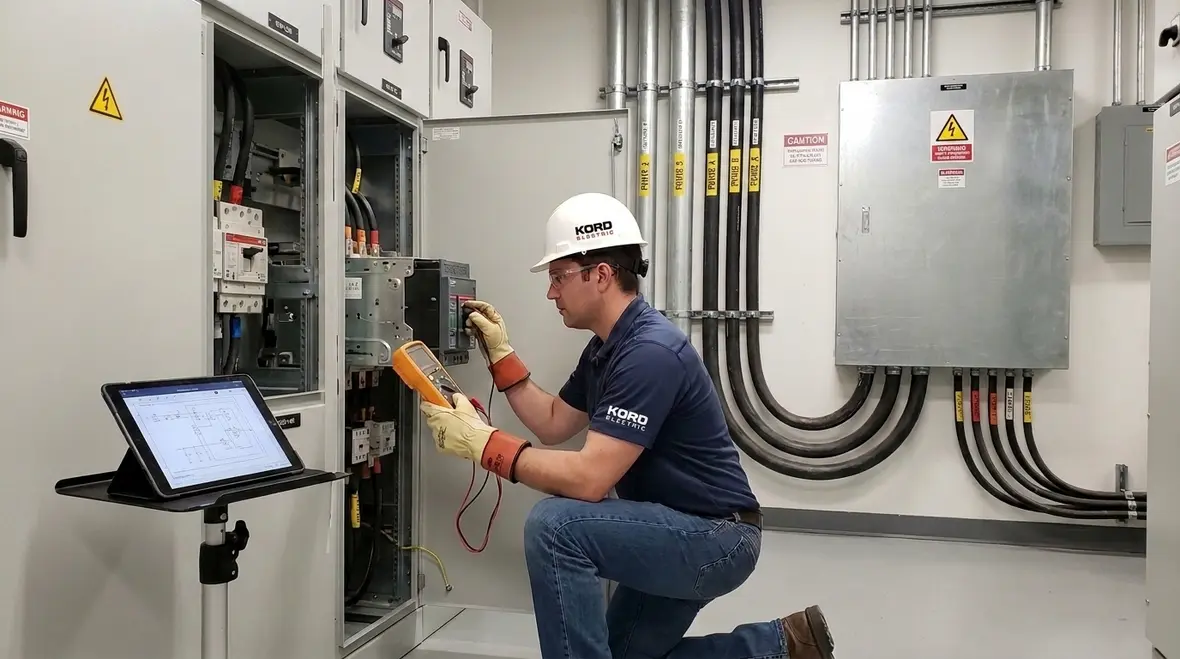
NFPA 70 Section 646.8 IT Short-Circuit Rating Explained 2026
NFPA 70 Section 646.8 IT short-circuit rating explained for 2026
In commercial and industrial facilities, we cannot treat electrical systems like a “set it and forget it” appliance. We build, test, and maintain them because outages cost money and safety failures cost lives. That is why our technicians at Kord Electric pay close attention to the NFPA 70 Section 646.8 IT short-circuit rating as the National Electrical Code continues to evolve for 2026.
In plain terms, the NFPA 70 Section 646.8 IT short-circuit rating helps define how IT power systems must withstand fault energy without losing safe performance. Therefore, when our expert service staff review plans and existing installations, we focus on the weakest links: enclosures, switchgear ratings, protective device behavior, and how quickly faults get cleared. And yes, while electricity is dramatic, we do not let it improvise on site like a bad sitcom.
Why the NEC rules matter to commercial and industrial electrical systems
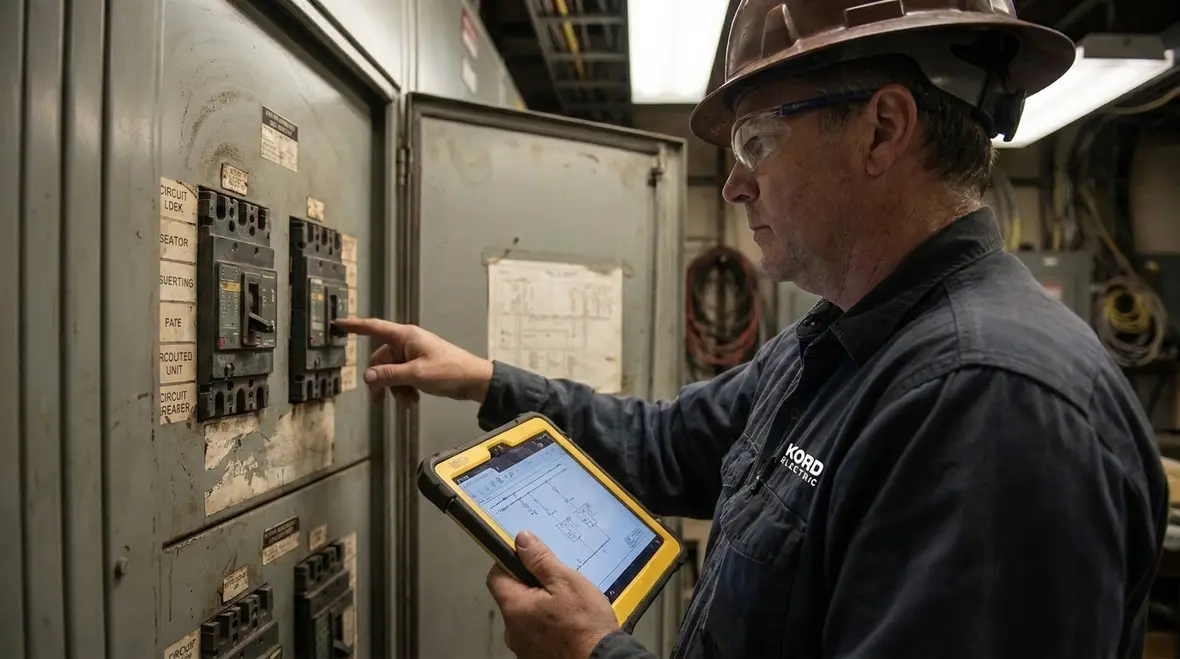
We often hear people say the NEC is “just code,” but in our world, code is a risk management plan. When we follow NFPA 70 requirements, we reduce the odds of fire, electrocution, and downtime. Moreover, for major property buildings, a small electrical design flaw can ripple into tenant complaints, permit delays, and costly retrofits.
Additionally, the NEC does not only speak to what you want installed. It also addresses performance under stress. That includes short-circuit withstand, grounding approaches, labeling, and coordination. Consequently, when we plan electrical upgrades for offices, campuses, warehouses, hospitals, data rooms, and large mixed-use buildings, we design for how the system behaves during faults, not just during normal operation.
Even so, many teams get tripped up by terminology. So, our technicians explain the “why” in meeting rooms and in the field, using language that helps facilities managers make better decisions. Because if we can prevent one emergency call at 2 a.m., we will gladly do it.
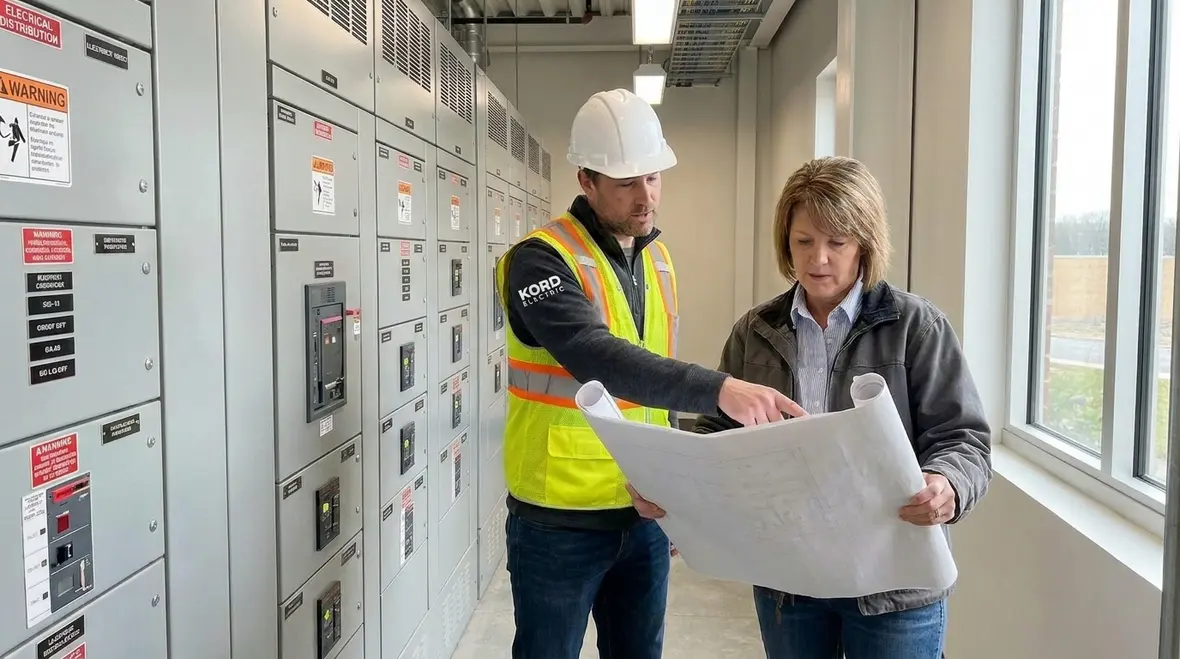
What an IT power system needs to withstand during faults
An IT power system aims to keep power available or limit hazards during first faults. However, “first fault” does not mean “no fault.” It means the system must behave predictably when something goes wrong. Therefore, the NFPA 70 Section 646.8 IT short-circuit rating becomes crucial because it connects design intent to physical reality.
In practice, we evaluate components that carry fault current and energy. For example, we check conductor integrity, busbar and cable thermal limits, switchgear withstand capabilities, and the protective device coordination strategy. Then we confirm that the system continues to meet its safety goals until the fault is cleared. If equipment cannot handle the fault energy, protective devices may operate too slowly, or hardware may fail anyway.
Moreover, our expert service staff often see mismatches between nameplate claims and actual application conditions. That is why we do not rely only on manufacturer brochures. Instead, we verify the site details that affect performance: upstream sources, grounding connection style, fault pathways, and how quickly breakers interrupt current.
And yes, the electrical system will still act like electrical system. But at least we act like professionals and set boundaries.
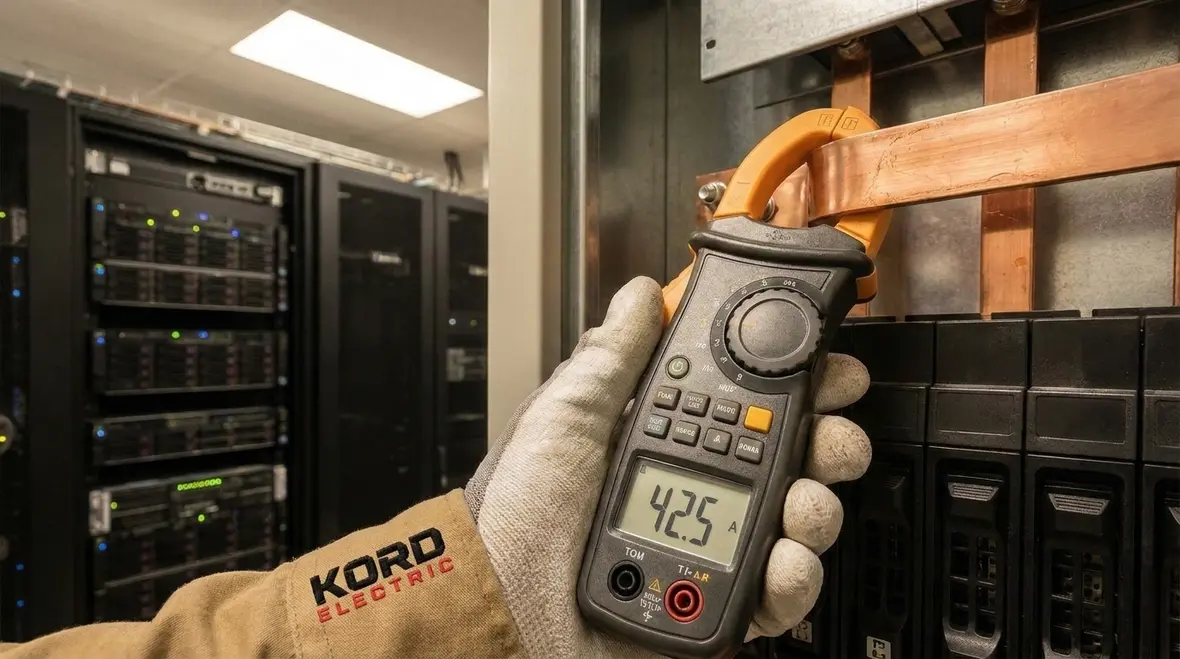
How facilities teams should apply short-circuit rating checks
Many facilities assume short-circuit ratings are a one-time calculation done at design time. However, we know that real buildings change. New loads get added, transformers get swapped, and power paths get reworked. Therefore, we recommend periodic reviews for major property buildings, especially when there are expansions or electrical system renovations.
When we perform these reviews, we follow a clear flow. First, we confirm the system configuration used for the design basis. Next, we verify the fault current available from the utility or generator source. Then we compare the calculated fault duty against the installed equipment capability.
After that, we check protective device behavior. We look at time current curves, breaker and fuse characteristics, and coordination settings so the system clears faults in the required time window. Finally, we document the results for compliance, maintenance planning, and troubleshooting.
As a result, our clients gain more than “a code stamp.” They gain a dependable basis for operations, budgeting, and capital planning.
Common mistakes we fix during inspections and upgrades
We have supported many commercial and industrial projects, and a few errors show up again and again. First, teams sometimes use incorrect equipment ratings due to outdated submittals or mislabeled switchgear. Second, they may assume the upstream source data stays the same even after transformer taps or generator settings change. Third, they sometimes ignore the actual cabling and connection methods that affect withstand.
Also, people sometimes confuse ratings that look similar. For instance, one label may reflect continuous duty while another reflects fault duty. Therefore, our technicians explain the difference clearly: continuous rating supports long-term operation, but fault withstand rating addresses sudden fault energy. Both matter, but for different reasons.
We also see coordination gaps. If protective devices do not interrupt faults quickly enough, equipment can experience stress beyond its safe limits. Consequently, we help facilities align their protection scheme with the required performance expectations of the NEC framework.
In short, we prevent the “it should be fine” mindset, because electricity does not care about optimism. It only cares about physics, and physics always wins.
Coordination with grounding, protection, and labeling for major buildings
Electrical code compliance does not live in one clause. Instead, it connects many parts of the system so they work together. In IT power arrangements, grounding method and fault pathway behavior matter. Protection strategy matters too. And labeling and documentation matter because people need to understand how the system operates during events.
At Kord Electric, we coordinate these topics during design review and field support. We align grounding details with the intended IT behavior. Then we confirm that protective devices and controls operate as expected. We also ensure that labeling reflects the real installation, so troubleshooting happens fast and safely.
For larger property buildings, we pay extra attention to how changes spread across floors and equipment rooms. A modification in one distribution area can alter fault duty downstream. Therefore, we ask the practical questions: what loads were added, what devices changed, and what power path now carries the fault energy?
Our teams approach this with a steady method, and our technicians explain each step, so your maintenance staff know what to look for. Calm, clear communication prevents confusion. And in a building environment, clarity is as valuable as the breaker itself.
Dual-column checklist for NEC aligned electrical readiness
To help commercial and industrial facilities prepare for review cycles, we use a quick readiness list. This does not replace engineering judgment, but it helps teams stay organized.
| What we verify | Why it matters |
Existing equipment fault duty data vs field configuration |
We confirm the installation can handle fault energy under the intended system design |
Available fault current source assumptions |
We ensure the calculation basis matches the current upstream conditions |
Protective device coordination and clearing times |
We reduce the risk of prolonged fault stress on conductors and equipment |
Grounding approach consistency with IT operation goals |
We support predictable behavior during first faults |
Labeling, documentation, and maintenance access |
We help teams troubleshoot quickly and safely during alarms and faults |
FAQ about NFPA 70 Section 646.8 and IT short-circuit rating
Connect IT short-circuit work to your broader NEC strategy
NFPA 70 Section 646.8 IT short-circuit rating does not live in isolation. It fits into a wider NEC roadmap covering scope, organization, feeder sizing, overcurrent protection, and equipment examination. Facility leaders who treat IT short-circuit work as part of this bigger picture gain more predictable projects and fewer surprises during plan review or commissioning.
If your team wants a deeper, big-picture walkthrough of how the National Electrical Code behaves across 2026 projects, you can pair this discussion with Kord Electric’s guide Understanding NFPA 70: The National Electrical Code Explained for 2026. That resource zooms out to the full NEC framework while this article zooms in on the NFPA 70 Section 646.8 IT short-circuit rating details your critical systems depend on.
In practice, this means tying your IT short-circuit checks to feeder minimum ratings, conductor sizing rules, overcurrent device locations, and examination practices. When those threads line up, your IT systems behave more like calm, well-trained performers and less like an unscripted drama that shows up on the worst day of the month.
For facilities in and around Los Angeles County, that broader NEC strategy also needs a partner who understands your jurisdiction, inspection climate, and existing infrastructure. That is where dedicated commercial and industrial electrical service support becomes crucial.
If your campus, industrial facility, or major property portfolio needs hands-on help aligning this IT focused work with local expectations, you can explore how our team supports complex projects through our Los Angeles County electrical services offerings that connect code language to field-ready solutions.
Call Kord Electric for a compliance focused electrical review
If your facility runs on complex power systems, you need electrical compliance that holds up under real-world faults. We at Kord Electric use a practical review process to check short-circuit withstand, protection coordination, and documentation so your team can operate with confidence. Our technicians explain findings in plain language, then we help you plan upgrades before problems show up. Reach out to us for an NFPA 70 focused assessment and a calmer, safer electrical future. Trust us, electricity loves chaos. We do not.
From IT system short-circuit rating checks to NEC 2026 planning, our team treats your building like the critical asset it is. We coordinate with your operations staff, align our work with inspection expectations, and keep the technical details grounded in schedules, budgets, and long-term reliability. When your next code cycle or expansion arrives, you will not be guessing. You will be ready.


