
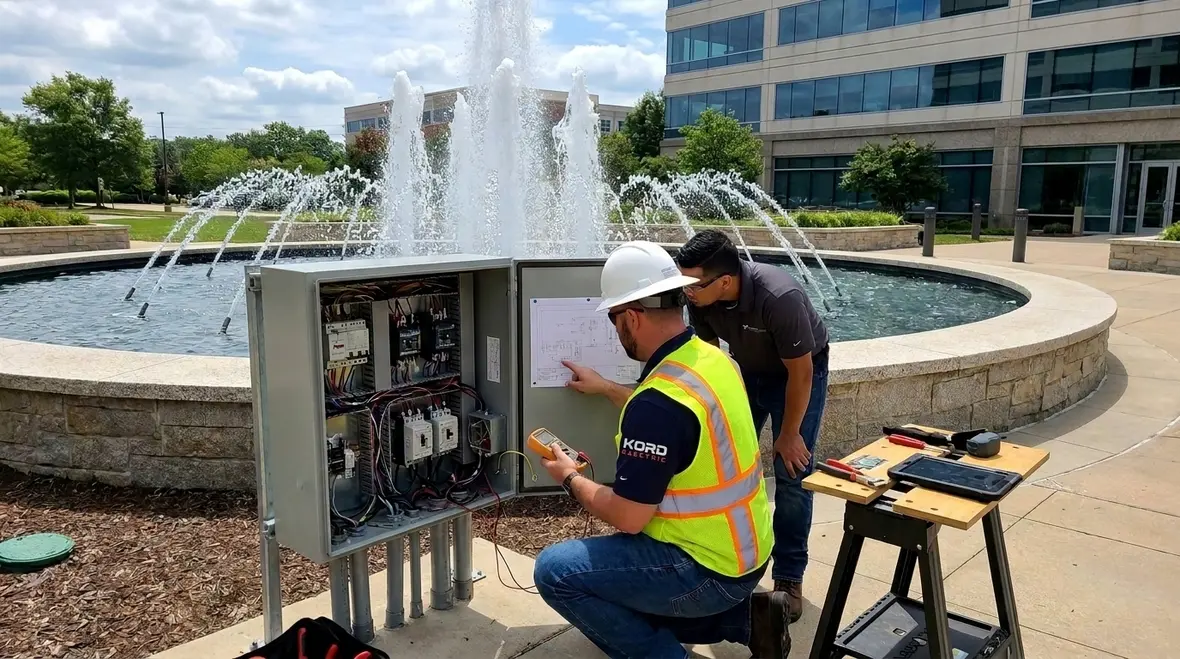
NFPA 70 Section 680.50 Fountain Electrical Requirements
NFPA 70 Section 680.50 fountain electrical requirements set the rules for how electric systems should be built, protected, and maintained around outdoor water features. In our work with commercial and industrial facilities and major property buildings, we often see fountains installed with the best intentions and the worst assumptions. So, we slow things down, read the code like it is a user manual, and then we build the safety plan that keeps people protected and assets running.
In this article, we explain what the 2026 National Electrical Code focuses on, how compliance actually shows up in real projects, and why our expert service team treats these jobs with the seriousness they deserve. If anyone tells you electricity is “simple,” we politely smile, because electricity has a sense of humor, and it usually charges per laugh.
What the National Electrical Code requires for water feature power
When our technicians design or evaluate fountain electrical systems, we follow the National Electrical Code because it is the common language between safety and inspection. NFPA 70 Section 680.50 fountain electrical is not just a line in a book. It drives real decisions: where equipment sits, how conductors get routed, what protection gets used, and how bonding and grounding get handled.
Additionally, code sections around pools, fountains, and similar installations often target the same core risks. Water changes how electricity behaves and how people experience fault conditions. Therefore, we build systems so a fault does not become a shock, and so a fault does not become a fire event. Furthermore, our expert service staff explains the “why” behind the requirements so your team understands what we did, not just what we touched.
In practice, we coordinate the electrical scope with site layout, lighting, and controls. Then we verify that the design matches the installation method. Finally, we document the results so the facility owner, managers, and inspectors have clear proof of compliance. That is not glamorous work, but it is the work that keeps operations stable.
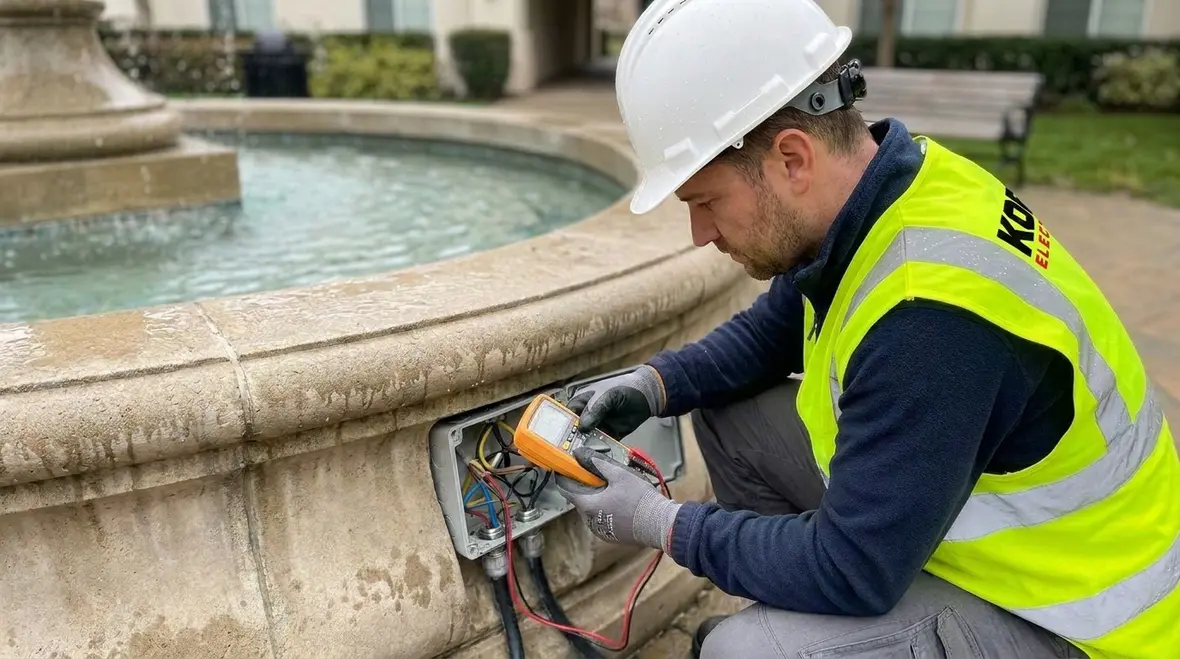
How Section 680.50 fountain electrical shapes design and protection
NFPA 70 Section 680.50 fountain electrical focuses on safe electrical practices for fountains that fall under the scope of the NEC provisions for water-related installations. So, the design cannot be a “good enough” plan. We treat it like a safety perimeter.
Our team usually addresses the following design outcomes. First, we ensure the electrical supply supports safe operation and fault interruption. Next, we manage wiring methods to reduce exposure to damage from water, weather, and maintenance activity. Then, we pay close attention to bonding and grounding. After that, we verify that any luminaires, pumps, and related controls follow the same safety logic.
- Fault protection that limits how long dangerous conditions can exist
- Equipment placement so components are not placed where maintenance or water exposure makes them vulnerable
- Routing and wiring methods that protect conductors from abrasion, moisture intrusion, and impact
- Bonding and grounding strategies that keep exposed conductive parts at safer potential
- Verification and documentation to support inspection and long term maintenance
Meanwhile, we also consider how the fountain will be operated. If the facility runs it daily, we adjust our expectations around wear and inspection intervals. If the fountain cycles seasonally, we account for shutdown and restart practices. Either way, our technicians do not just “meet the code.” We help the facility maintain compliance as the system ages.
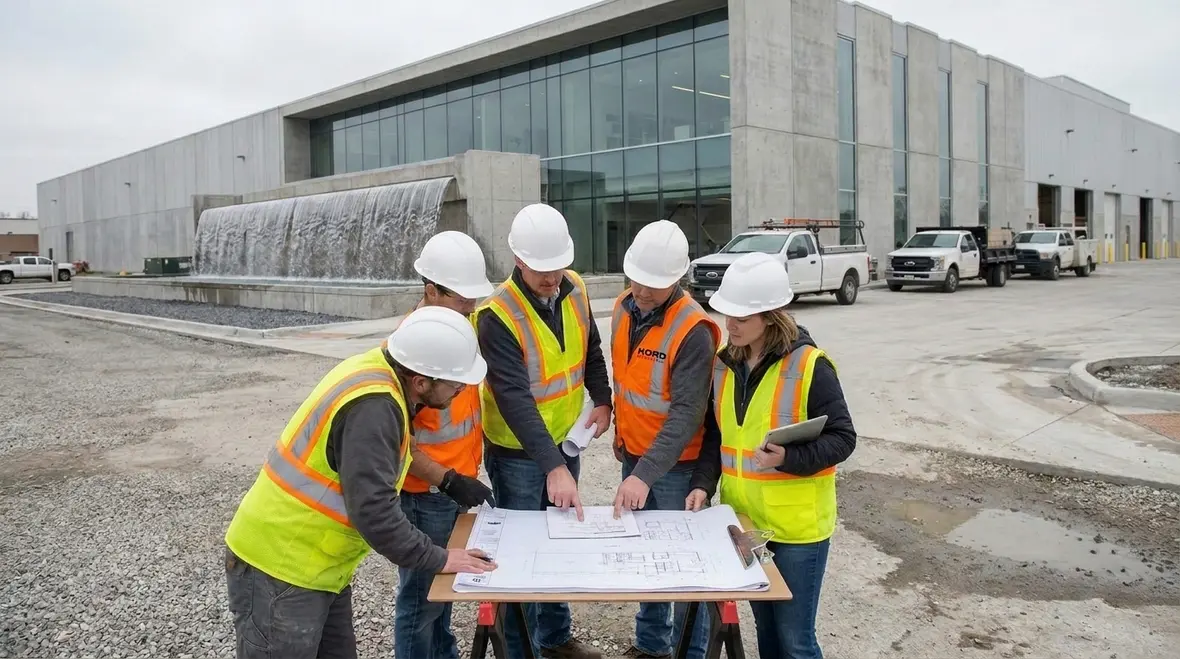
We map the NEC to real commercial and industrial building needs
Commercial and industrial environments rarely behave like textbook diagrams. So, we map the National Electrical Code to the actual site layout, power availability, and operational workflow. That means we coordinate with building systems, site controls, and existing electrical distribution.
To make the connection clearer, our expert service team explains how code intent translates into field steps. For example, even if a design meets a requirement on paper, a contractor might install wiring in a way that increases risk. Therefore, we verify during installation and again during acceptance testing. In addition, for major property buildings, we look beyond just the fountain. We consider how the rest of the site’s protection scheme interacts with the fountain circuit.
Our process tends to follow a predictable rhythm. First, we review the scope and determine which systems fall under NEC rules for water-related installations. Next, we confirm equipment ratings and installation conditions. Then, we check how bonding and grounding gets implemented in the real structure. Finally, we test and document so the facility can keep running with confidence.
And yes, we do use checklists. People sometimes roll their eyes at checklists, until an inspector asks a question and the answers arrive in a neat folder like a well timed sitcom reveal. That is the goal.
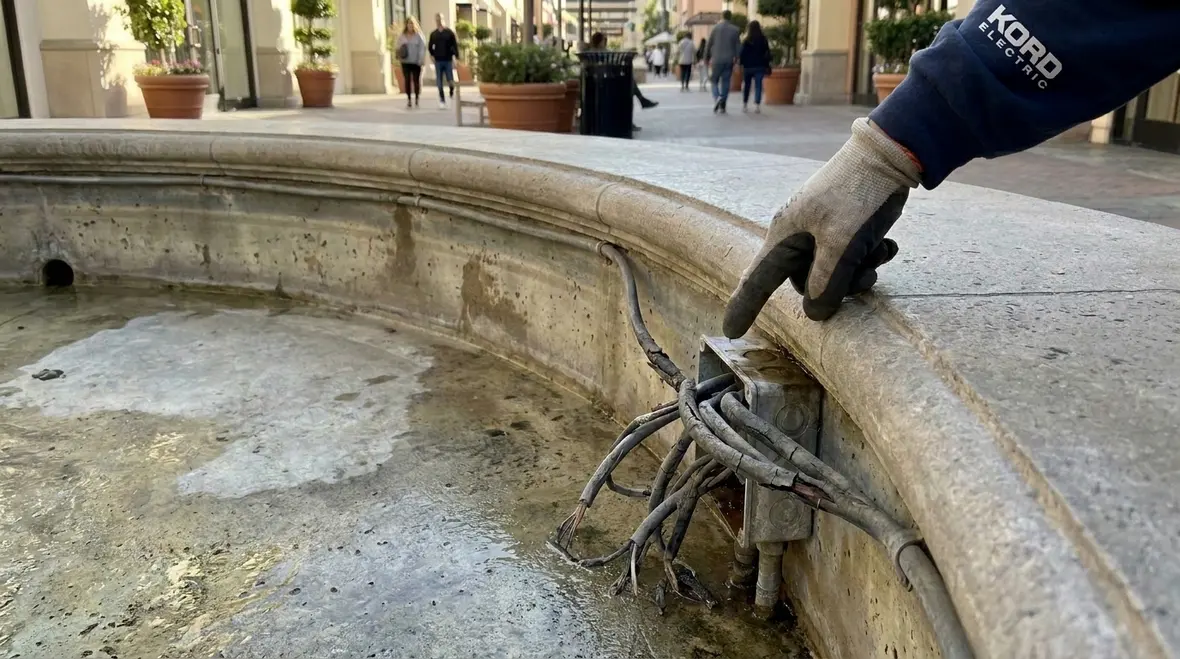
Typical mistakes we prevent during fountain electrical installs
When we support commercial and industrial facilities, we often see recurring issues. They typically come from shortcuts, unfamiliarity, or a lack of coordination between electrical, landscaping, and mechanical teams. Because fountains blend multiple disciplines, gaps appear when responsibilities get blurry.
One frequent mistake involves improper wiring methods around wet locations. If conductors run through areas that collect water or allow damage during maintenance, the risk rises quickly. Another mistake involves missing or weak bonding and grounding connections. When exposed conductive parts are not handled correctly, a fault can create unsafe conditions.
We also see problems with controls and protection devices. Sometimes the circuit protection does not match the load characteristics or the operating schedule. At other times, field-installed components do not match what the design assumed. Then there is documentation drift: the installed system does not match the submitted drawings.
Our technicians prevent these problems through clear scope alignment and hands-on verification. Additionally, we train the facility team on inspection basics, because compliance does not end at startup. It continues through maintenance and operational changes.
- Wrong or exposed wiring paths that create moisture and abrasion risks
- Incomplete bonding and grounding around pumps, housings, and metal parts
- Protection that does not match the duty or the fault protection goals
- Component mismatch between design documents and field installation
- Weak documentation that slows inspections and confuses future service
Why inspection and maintenance keep systems compliant
Even a properly installed fountain electrical system can drift out of compliance if maintenance practices ignore safety details. Therefore, we encourage facility owners and managers to treat the fountain like any other life safety-adjacent asset. It needs planned inspections, not last-minute troubleshooting.
Our expert service staff builds maintenance support around what actually changes over time: seals wear, fittings loosen, and water chemistry can affect surfaces and enclosures. Moreover, landscaping work can disturb wiring paths. In addition, operational changes such as pump swaps or lighting upgrades can alter the electrical characteristics of the system.
We also recommend a structured inspection approach. First, we check physical condition and enclosure integrity. Next, we verify connections and conductor condition where access allows. Then, we review the protection devices and control behavior. Finally, we document findings and recommend next steps that match the facility’s risk tolerance and operating schedule.
If your property runs on tenants, guests, or steady daily operations, you already know downtime costs money. So, we plan service to minimize disruption, while still delivering safe work. In other words, we fix it like adults, not like someone trying to hide a banana peel.
How Kord Electric supports compliance across the full lifecycle
At Kord Electric, we focus on commercial and industrial facilities and major property buildings because that is where disciplined electrical execution matters most. We support projects from planning through installation oversight, and then we continue with expert service when the system needs attention.
During planning, we help teams understand the NEC structure and how it applies to fountain electrical and related water feature systems. Then, during execution, our technicians verify that field conditions match the design intent. After that, our service team handles ongoing maintenance and targeted upgrades when the facility evolves.
We also coordinate with partners and specialties in fire and safety ecosystems. For example, our broader network of knowledge supports the kind of safety thinking you see in resources aligned with NEC coverage and related fire pump and fire life safety contexts. If your site includes fire protection systems, water features, and facility controls under one electrical umbrella, it becomes even more important to keep the electrical story consistent. That is where our experience helps.
And if you want a deeper look at how the National Electrical Code is explained for modern installations, you can review our internal guidance and related resources. For more background, we point teams to our blog content at kordelectric.com and related code coverage discussions hosted through our partner platforms at kordfire.com and kordfire.com.au. Additionally, for fire pump education and practical system understanding, firepumps.org offers helpful context.
For facility leaders who want an accessible deep dive into the current code cycle, our article Understanding NFPA 70: The National Electrical Code Explained for 2026 walks through how the standard shapes real-world planning and upgrades in 2026 conditions.
If your operations are based in Southern California and you need on-the-ground support that understands NFPA 70 Section 680.50 fountain electrical usage in the context of your broader power distribution, our Los Angeles County electrical services team can coordinate fountain work with panels, feeders, and life safety systems across your property.
FAQ on fountain electrical and NFPA 70
Conclusion and next step with Kord Electric
If you manage a commercial or industrial site, you already know the fountain is more than decoration. It is an electrical system with safety obligations, and NFPA 70 Section 680.50 fountain electrical rules guide how we design, install, test, and maintain it. Kord Electric can review your existing setup, support new installations, and help your team stay compliant as conditions change. Reach out to us, and we will map the requirements to your real site, with expert technicians who explain every step in plain business language.


