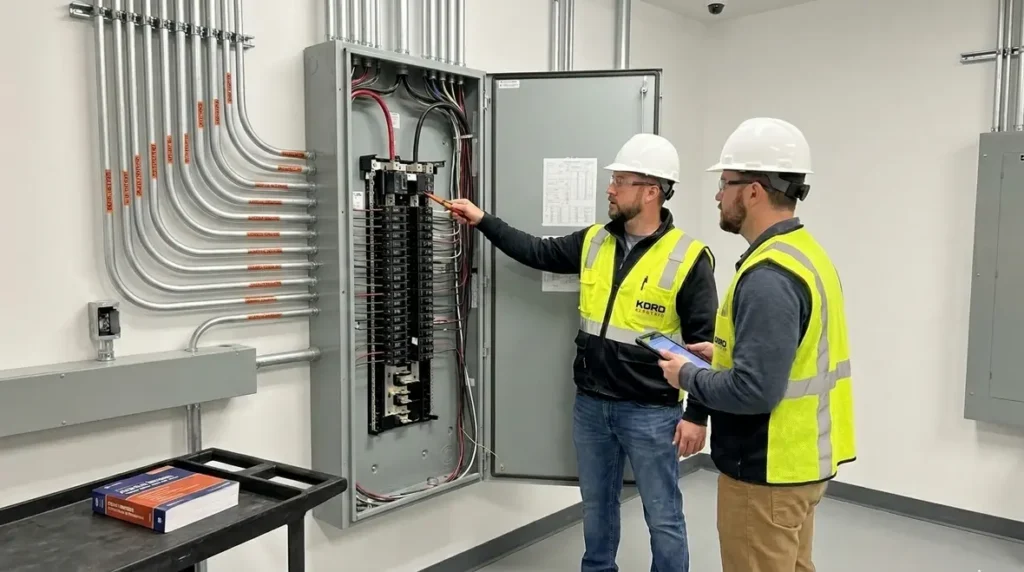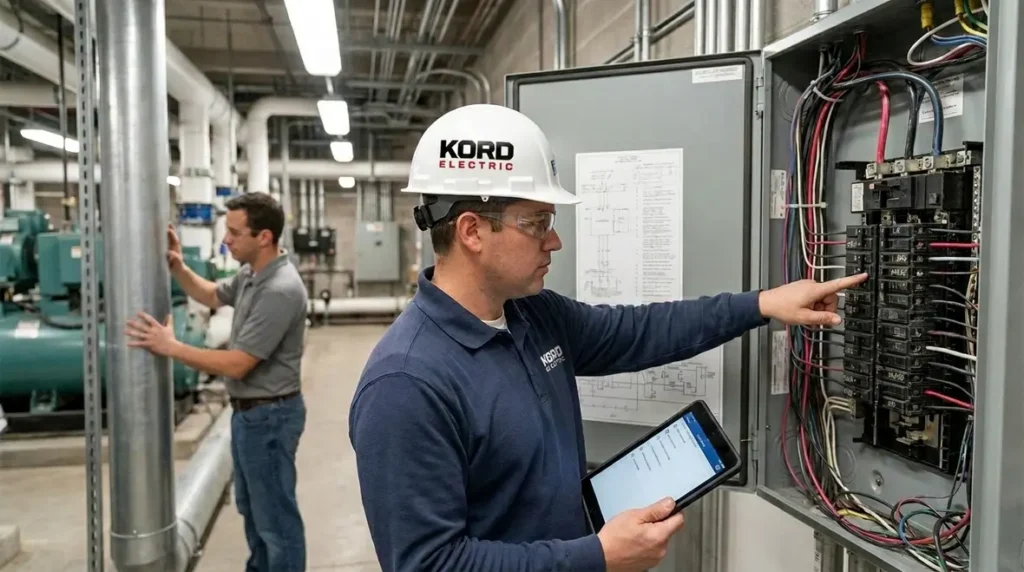
NFPA 70 Section 690.34 PV Box Access for Compliance
When a facility installs solar or other electric supply equipment, access and safety are not optional. In NFPA 70 Section 690.34 PV box access, the code explains that the PV box and its wiring terminations must stay reachable for inspection, testing, and safe service. So, right away, we tell owners and facility managers: plan the pathway, plan the clearances, and do it before the equipment is buried behind walls and perfectly painted panels. Because yes, we have seen “temporary access” become permanent, and then troubleshooting turns into an expensive scavenger hunt. At Kord Electric, our technicians and expert service staff guide projects like this with calm precision, so commercial and industrial sites stay compliant and operational.
In this article, we break down how NFPA 70 and the National Electrical Code (NEC) approach PV systems, what 690.34 means in real life, and how Kord Electric helps major property buildings handle the details without drama. We keep it practical, facility focused, and built for teams that run businesses, not hobbies.
NEC basics for commercial electricians and facility managers
The NEC is the baseline standard for safe electrical installations in the United States. Additionally, it covers how wiring, overcurrent protection, disconnecting means, grounding, and equipment interfaces should work together. For large buildings and industrial sites, this matters even more because the system often serves many loads, runs 24 7, and connects to utility and standby power plans.
Importantly, Kord Electric supports commercial and industrial facilities and major property buildings. That means our conversations focus on how your electricians, your maintenance crews, and your engineering team coordinate during design, commissioning, and later service. When we review the NEC, we do not treat it like trivia. Instead, we treat it like a set of guardrails that keeps your people safe and keeps downtime from turning into a monthly “surprise bill.”
Also, our technicians explain the “why” behind the rules. In plain terms, NEC rules reduce shock risk, help prevent fire spread, and support reliable repairs. Therefore, when your electrical system needs service, you can get in, verify what you need, and get out without guesswork.
Why NFPA 70 Section 690.34 PV box access matters in practice
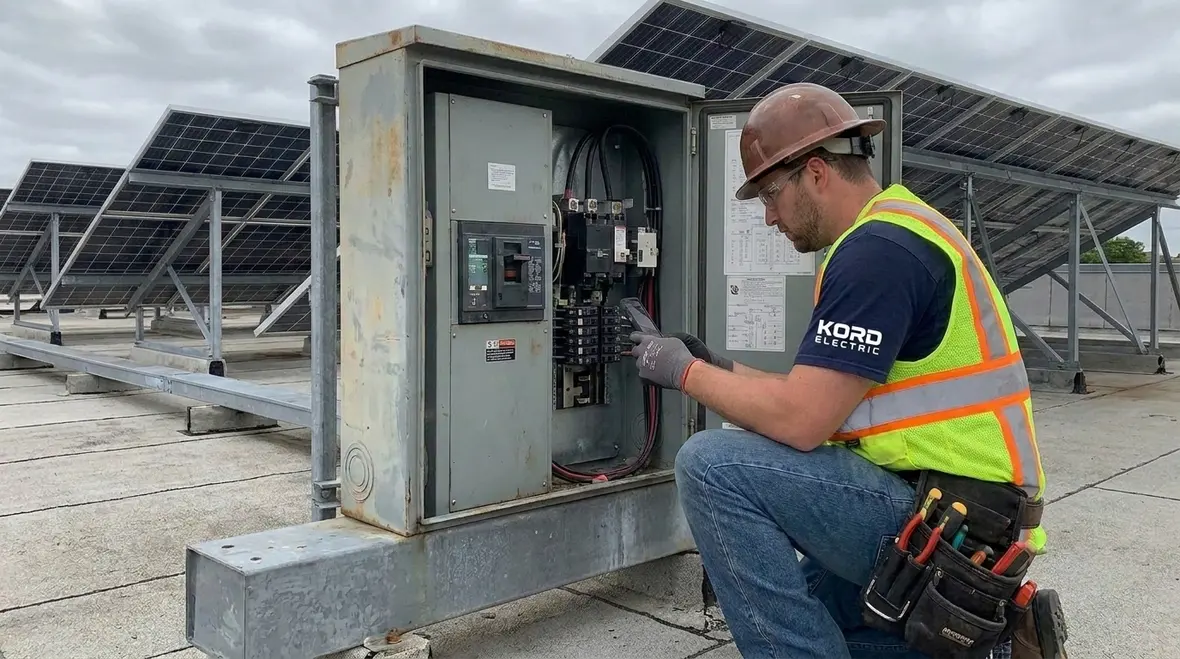
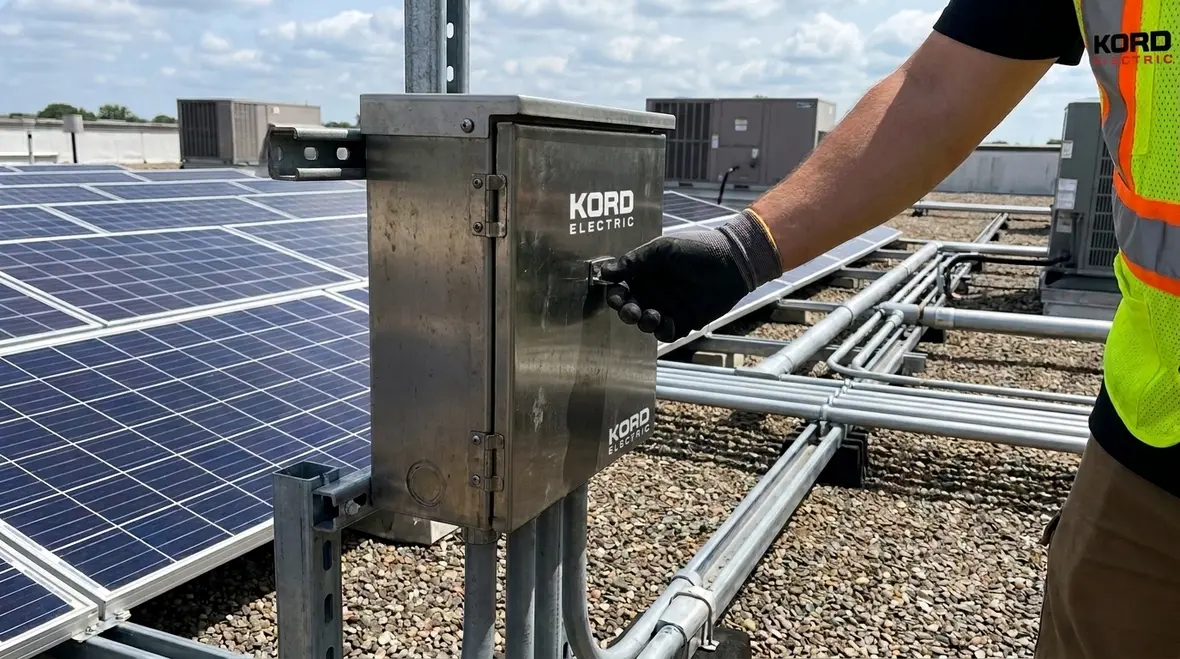
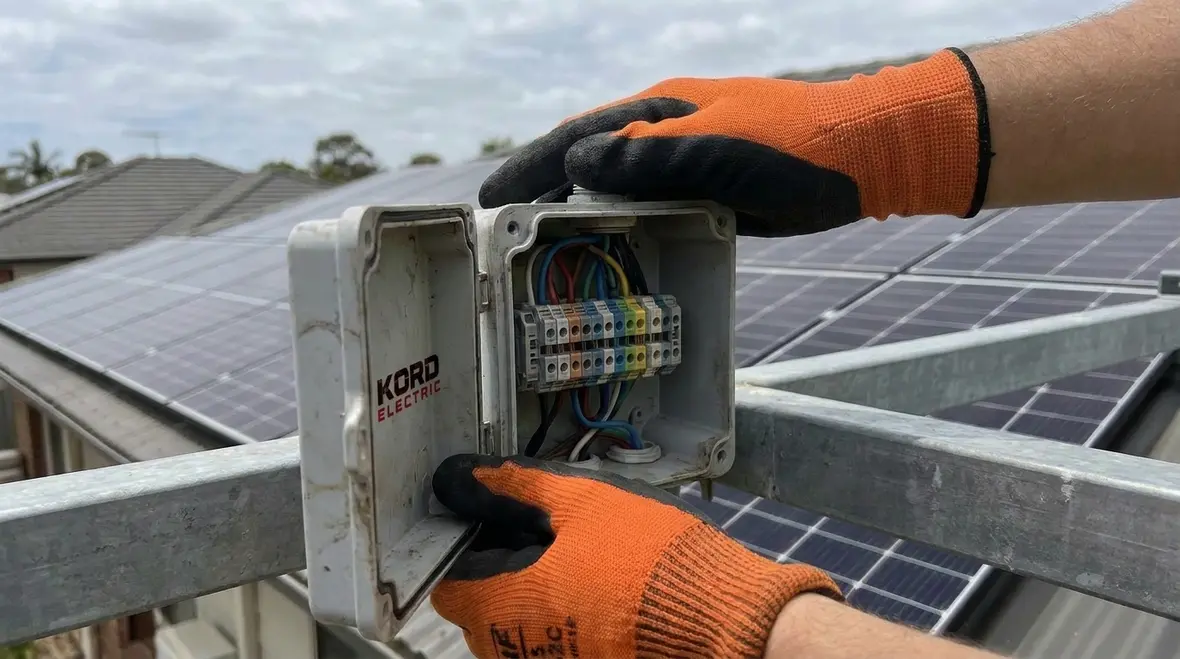
Now we get to the heart of it: NFPA 70 Section 690.34 PV box access. This requirement focuses on the practical ability to reach PV boxes and junction points that connect photovoltaic circuits. In other words, the code requires that installers and building teams provide working access where needed, so trained personnel can inspect connections and test conditions.
To make it real, we often see PV boxes installed near roof areas, equipment rooms, or mounting points. Then later, when something needs attention, access becomes a maze of conduits, roof coatings, cable trays, and weatherproofing details that were installed with good intentions. However, if the PV box access requirement is ignored, service becomes slow, and slow work becomes risky work.
Furthermore, our expert service staff tells teams to think beyond day one. The NEC anticipates that connections can change over time due to thermal cycling, environmental exposure, and normal aging. Consequently, access requirements help ensure the system can be maintained without cutting, removing, or damaging building components.
As a result, 690.34 is not just a rule. It is a design promise: we build the system so it can be checked, repaired, and verified.
How NFPA 70 ties this to broader NEC strategy
PV systems do not live in isolation. They tie into service equipment, distribution panels, emergency power interfaces, and often building management systems. That is why many facility teams pair focused PV access work with a broader review of how the NEC fits together across their building. Resources like Kord Electric’s article “Understanding NFPA 70: The National Electrical Code Explained for 2026” help owners and managers see how rules like 690.34 sit inside a full code framework for commercial and industrial facilities.
When your team understands that framework, PV box access stops feeling like a “one off” detail and becomes part of a consistent approach to working clearances, equipment labeling, and safe isolation across the site. That consistency is what keeps inspections predictable and downtime under control.
Plan the access path before construction hardens the walls
Here is where good project management pays off. Once a major property building is under construction, changes become harder and more expensive. Therefore, teams should coordinate the PV layout with the building access plan early, including pathways for electricians, maintenance staff, and inspectors.
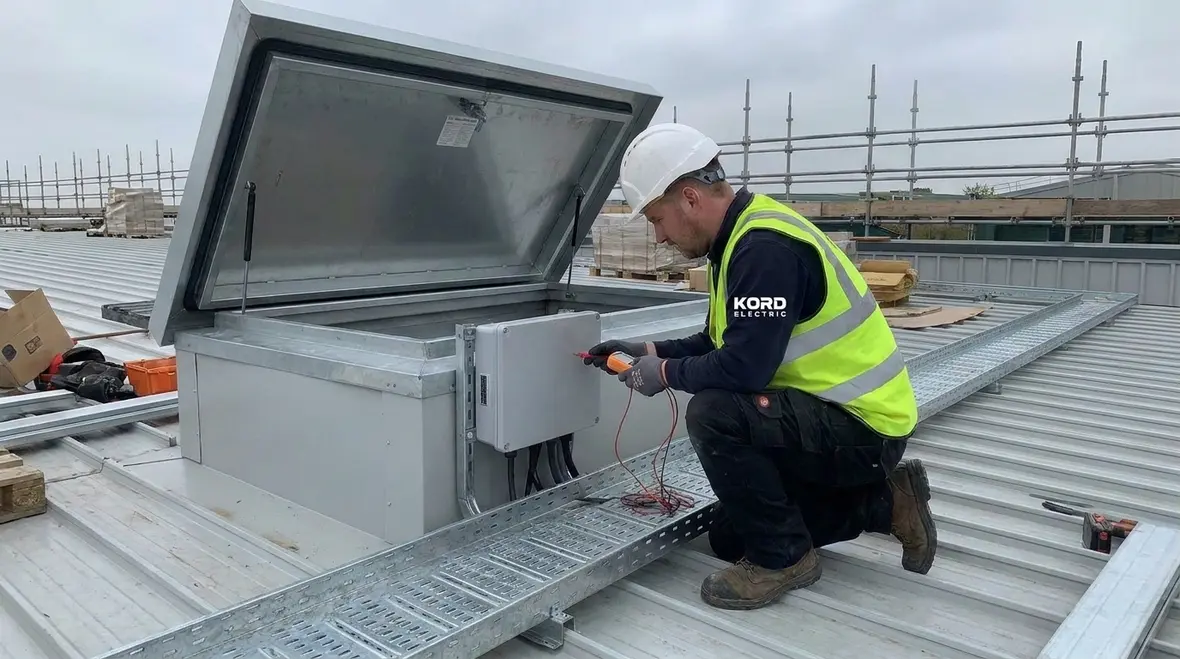
At Kord Electric, we help facilities align electrical design with real service workflows. For example, we review where the PV box sits relative to roof hatches, ladder access, cable tray routes, and any nearby mechanical equipment. Then we map service clearances so technicians can open the PV box without fighting confined space conditions.
Also, we pay attention to weatherproofing interfaces. If a PV box is inside a roof structure, we confirm the sealing approach and access cover design. On the other hand, if the PV box is outdoors, we confirm how protective covers will be removed and re installed without compromising the enclosure.
And yes, we know it is tempting to “make it work later.” But later is usually when a facility is busy, staffing is tight, and the weather is never cooperative. So we build access planning into the schedule instead of leaving it to chance. Think of it as putting a seatbelt on before the car moves, not after you already hit the brakes.
Coordinating with other NEC-driven priorities
PV box access is one part of a much larger NEC-driven coordination effort. While one group lays out equipment locations, another is managing service disconnects, overcurrent protection, and conductor sizing choices. Articles like Kord Electric’s overviews of service disconnecting means and conductor requirements show how code compliance decisions stack up across a project, and PV access planning fits right into that stack.
The earlier those groups talk to each other, the less rework you face. Nobody wants to be the team explaining why a freshly waterproofed roof now needs another opening because the PV box can’t be reached without a ladder ballet.
Coordinate PV circuit terminations with safety and labeling
Access alone does not finish the job. When a technician can reach a PV box, they also need clear identification of circuits, safe exposure control, and a setup that supports correct testing.
As part of NFPA 70 compliance efforts, we encourage facilities to maintain accurate labeling at PV box covers and at associated disconnect and overcurrent protection points. When labels are correct and legible, troubleshooting becomes faster and safer. Additionally, clear labeling supports training for maintenance staff who did not install the system.
In practice, our technicians confirm that terminations inside PV boxes are organized, secured, and consistent with installation instructions. We also verify that conduit and cable support methods do not create strain on the terminations. Consequently, the system holds up under heat, vibration, and mechanical wear.
We also recommend that facilities document circuit maps. This step helps during outages, roof work, and planned maintenance. Therefore, when a team needs to isolate a portion of the PV array, they do it correctly the first time. That means fewer disruptions and fewer “let’s check again” moments that waste productive hours.
Documentation that outlives the original project team
On complex sites, the people who designed and installed the PV system are not always the ones who service it five or ten years later. That is why we push for circuit maps, labeling standards, and inspection notes to be written in everyday language that other electricians and facility managers can understand quickly.
By tying those documents back to NEC references and site-specific drawings, you make it much easier for future teams to interpret what 690.34 compliance looks like in your building, not just in the abstract. That is especially helpful when you are comparing multiple buildings in a portfolio or preparing for larger NEC-driven upgrades.
Integrate NEC compliance with fire and water management planning
Solar installations touch both electrical safety and broader site risk. As a result, facilities need coordination with fire protection planning, roof drainage, and structural considerations.
We also take into account how electrical design connects with fire safety guidance and local emergency response needs. In many major property buildings, fire pumps, fire alarms, and life safety systems sit close to electrical pathways, and coordination prevents conflicts during installation and later service.
That is why we work with the rest of the team. Others handle building fire protection details, but we make sure electrical routing, penetrations, and enclosure placements do not create hazards. Meanwhile, we confirm that access to PV boxes does not block fire walkways, equipment clearance, or safe egress routes.
When the site includes fire pump systems, it becomes even more important to keep clear separation and correct routing. Groups like Firepumps.org focus on fire pump knowledge and system design. Meanwhile, teams like ours focus on the electrical side that supports dependable operation. With both sides aligned, facilities reduce the chance that a “fix” in one system creates a new problem in another.
And for a quick pop culture moment, think of it like a film set. If the electrical crew does their work without telling the stunt team where the safe zones are, someone will get hurt. Nobody wants a real life sequel.
Using NEC and fire protection content together
Because electrical reliability and fire protection performance are connected, many facilities lean on both electrical code explainers and fire-protection-oriented resources. Kord Fire offers NFPA 70 overviews for fire-side teams, while Kord Electric focuses on the distribution, equipment, and maintenance that keep power steady for alarms, egress lighting, and pumps. When you review PV box access, pulling both perspectives into the conversation makes it easier to avoid blind spots.
How Kord Electric supports inspection readiness and long term maintenance
Commercial and industrial facilities need service plans that last. So, we do more than install and move on. We guide teams through what to document, what to verify, and how to keep compliance on track.
First, our technicians explain inspection expectations in plain language. Then we help facilities create practical checklists that align with ongoing maintenance. Instead of relying on memory, teams use documented access points, circuit maps, and labeling verification steps.
Next, our expert service staff walks through safe service procedures. We cover how to isolate circuits properly, how to handle PV box covers, and how to avoid damaging seals when access is required. Consequently, when an inspector arrives or when maintenance is needed, the system is ready.
Finally, we support major property buildings with scheduling that respects tenant operations and industrial production windows. Therefore, we coordinate work hours, access routes, and safety controls so your site stays productive.
If you want a broader view of how NEC guidance ties into system design and real fire electrical coordination, our related resources also help. For instance, Kord Fire’s materials discuss NEC concepts and the broader code context in practical terms. Visit kordfire.com.au and kordfire.com for additional background. These sources help teams connect the dots across electrical and safety planning.
Bringing PV access into your wider service plan
PV box access is a natural fit for your electrical preventive maintenance and inspection schedule. The same discipline that keeps panels, switchgear, and disconnects in shape should apply to PV junction boxes and combiner enclosures. Regular checks on labeling, enclosure integrity, and clearances keep 690.34 compliance “baked in” instead of treated as a one time construction topic.
For facilities across Southern California, our Los Angeles County electrical services team builds that mindset into ongoing support. Whether you are expanding a PV array, reworking a roof, or planning upcoming NEC-driven upgrades, we help line up access, documentation, and testing so inspections are straightforward and downtime stays controlled.
FAQ
Conclusion: Make access part of the plan, not the problem
At Kord Electric, we build electrical systems for commercial and industrial facilities where reliability matters and downtime costs money. We also help teams understand how NFPA 70 Section 690.34 PV box access supports safe inspection and service long after the install crew leaves the site. If you are planning a PV project or updating an existing system, contact us now. Our technicians and expert service staff will review access, labeling, and service workflows so your facility stays compliant, safe, and ready when service day shows up.
If you want to see how these PV access principles fit into a larger NEC picture for your facility, pair this guidance with broader code explainers like Kord Electric’s NEC overview for 2026 and related Kord Fire content. Together, they help your team treat NFPA 70 as a practical toolkit instead of a mystery rulebook, and they turn details like PV box accessibility into everyday habits your crews can sustain.
When you are ready to fold PV access checks into a full maintenance and upgrade strategy, Kord Electric is ready to help plan the work, document the details, and keep the system inspection-ready year after year.