NFPA 70 Section 695.5 Fire Pump Power Continuity
At Kord Electric, we work with commercial and industrial facilities and major property buildings where safety and uptime are not “nice to have.” They are the job. That is why we build our electrical reviews around NFPA 70 Section 695.5 fire pump power continuity, which focuses on keeping power available so the fire pump can run when it matters most. In plain terms, we make sure the electrical system does not act like a fair weather friend during an emergency.
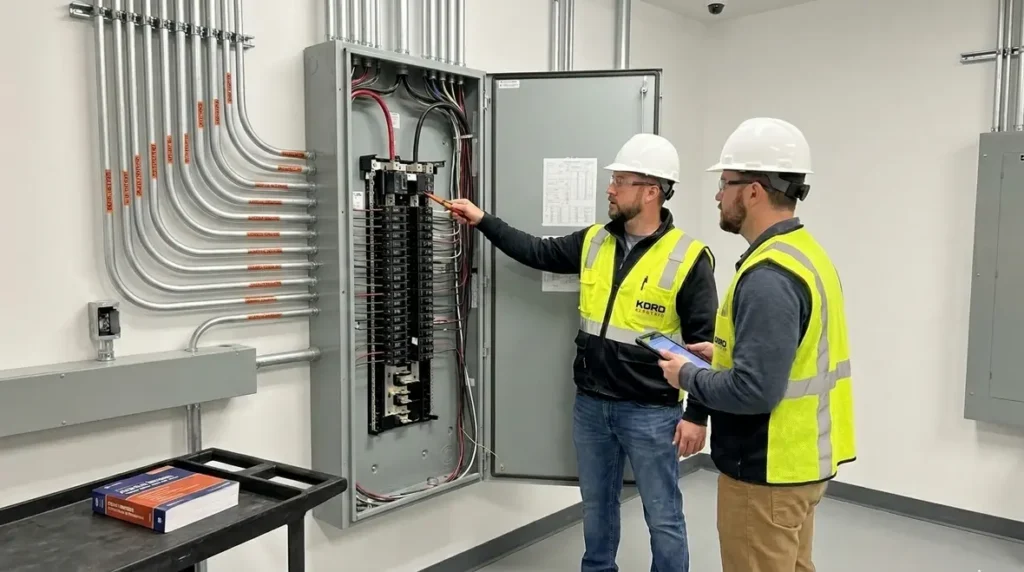
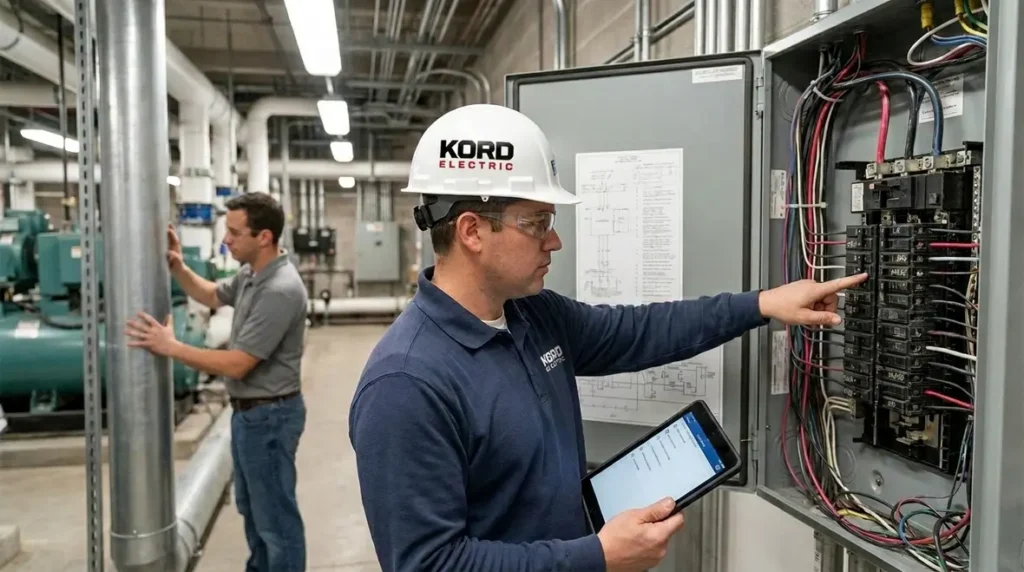
So, whether we are reviewing designs, troubleshooting existing systems, or preparing for inspections, our technicians explain the code in a calm, clear way. They do it step by step, like they are walking a client through a control panel without the panic. And yes, we do mean calm. The last thing anyone needs is an alarm sounding while someone is still trying to understand what the wiring does.
NFPA 70 fire pump power continuity: what it protects in real jobs
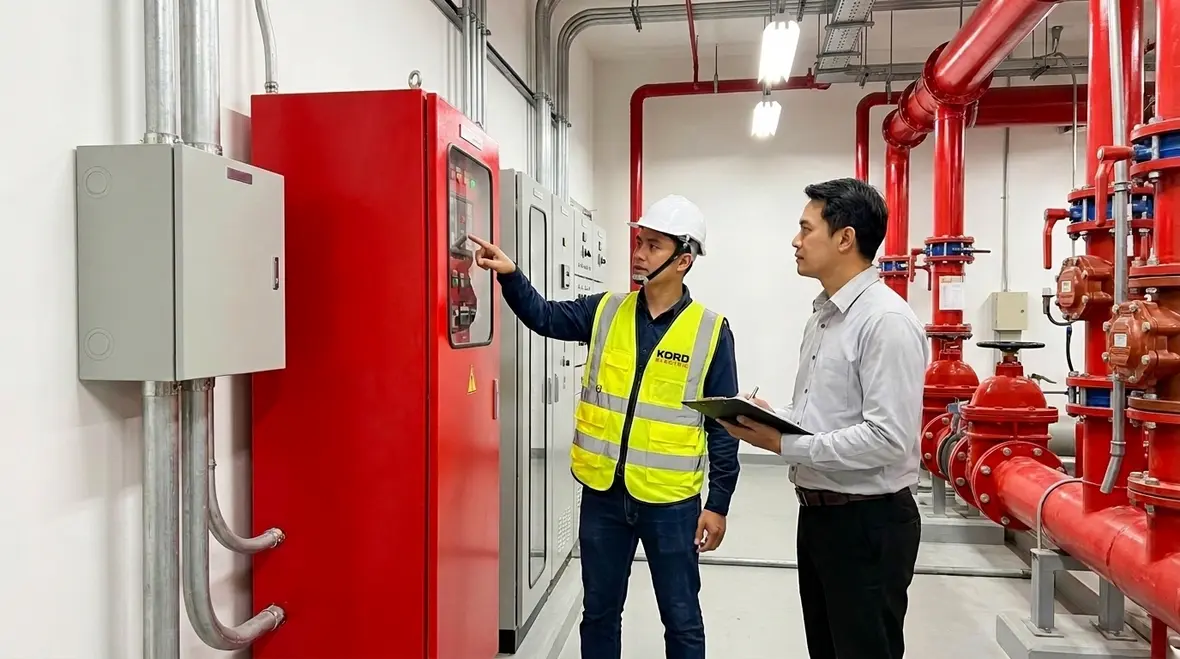
When a fire starts, seconds can decide outcomes. Consequently, fire pumps must receive reliable power and start without delay. NFPA 70 Section 695.5 fire pump power continuity addresses the need to avoid power interruptions and to maintain continuity to the fire pump controller and its supporting circuits.
In commercial and industrial settings, this requirement connects to the way facilities coordinate feeders, transfer methods, monitoring devices, and protective gear. Therefore, the code does not just say “keep power on.” Instead, it pushes the system designer to plan for how power will behave during normal operations, fault conditions, and abnormal events.
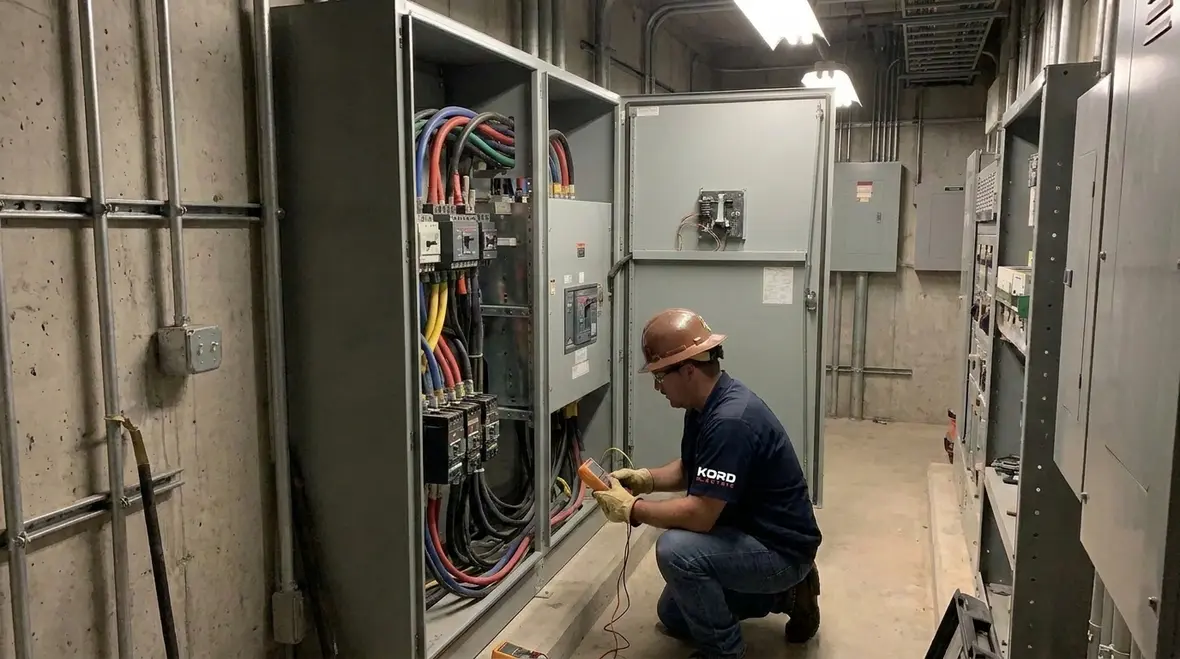
Here is where our team’s expert service staff helps. We do not treat the code like a puzzle box. Instead, we translate it into what you will see in the field, including how equipment is connected, what happens during switching, and what “continuity” means for that specific pump system. And if someone tells us “it should be fine,” we calmly ask to see the documentation. Fine is great, but fire pumps need dependable.
When we explain these requirements, we often connect them to broader NEC guidance that facility teams may already know from our code education resources. For instance, Kord Electric’s article Understanding NFPA 70, the National Electrical Code Explained for 2026 helps clients see how focused topics like fire pump power continuity fit inside the overall NEC framework they use during design and upgrades.
How we interpret Section 695.5 for commercial and industrial buildings
To apply the intent correctly, we start with the real electrical path. First, we confirm the power source and its protection scheme. Then we examine how the fire pump controller receives power and how that power remains available under likely scenarios.
Next, our technicians map the continuity expectations across the system. They look at components such as disconnecting means, overcurrent protection, transfer switches, and any logic or monitoring that could interrupt operation. After that, we check whether the installation matches the design documents and the required operational mode.
At this stage, our process becomes very practical. We review the one-line diagram, then we compare it to what is actually built. Moreover, we verify that the control wiring does not undermine the power path. A fire pump can be “powered” yet still fail if the controller does not receive what it needs to start.
Because our focus stays on commercial and industrial facilities and major property buildings, we also consider how the facility runs day to day. For example, a campus with multiple electrical services or a high-rise with complex distribution needs continuity strategies that align with its power architecture.

Along the way, we connect these Section 695.5 reviews to related NEC topics that affect reliability, such as specific purpose load calculations and feeder diagram accuracy. Articles like our breakdown of NFPA 70 Section 120.4 specific purpose load calculations and our guide to NEC feeder diagram requirements under NFPA 70 Section 266.7 give facility teams a consistent picture of how design math, documentation, and continuity all support the same life safety goals.
Power continuity across feeders, transfer methods, and protection
Fire pump systems live inside the broader facility distribution system. Therefore, continuity is not only about one cable. It is also about the network of equipment that supports that cable.
We commonly see these continuity pressure points during field reviews. First, protective devices must clear faults without cutting off the fire pump in a way that contradicts continuity goals. Next, switching or transfer methods must transition in a controlled manner, not like a movie villain flipping a breaker at the last second.
Where transfer equipment exists, we verify it supports the intended pump operation. Then we check whether the system architecture keeps the fire pump controller supplied during the transition. If any monitoring device or supervisory circuit can interrupt operation, we flag that early. After all, an “alarm-only” system is very different from a system that can block the start command.
Additionally, we look at how the facility handles maintenance. Lockout and tagout procedures, planned outages, and equipment replacement all matter. While the code focuses on life safety performance, we make sure the design and installation can still be managed without turning the fire pump into a project that takes weeks to restore.
Our work is supported by the same type of guidance you find in the NFPA 70 education materials we follow, including the nationwide explanations on how the code is structured and how key sections are applied in the field. And when the details get dense, our technicians slow down. They explain the “why” as well as the “what,” so facility teams can make decisions confidently.
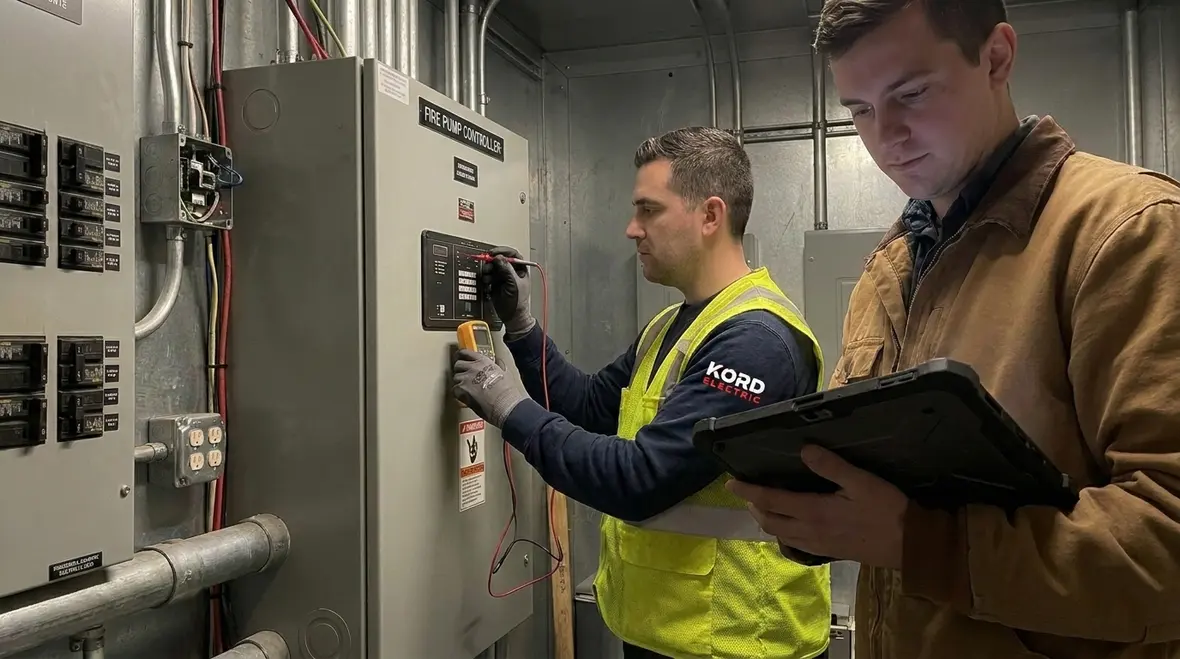
Because these decisions touch so many parts of a distribution system, we often pair fire pump continuity reviews with other reliability checks such as NEC working space clearances under Section 110.26 or industrial power surge protection planning. That way, the same project that confirms NFPA 70 Section 695.5 fire pump power continuity can also tighten up access, labeling, and surge resilience around the equipment that feeds the pump.
What our technicians check during commissioning and inspections
Once equipment is installed, we do not just “sign off and move on.” Instead, we validate the system like it will be tested under real stress. That is why we support commissioning and inspections with a methodical approach.
During commissioning, we confirm proper wiring, controller configuration, and correct behavior under expected conditions. Then we verify that the fire pump can receive power continuously as required by NFPA 70 Section 695.5 fire pump power continuity and related NEC provisions.
Our technicians also check sequence and logic. For instance, we verify that startup signals and control functions do not depend on optional power paths that could fail during an event. Furthermore, we review coordination between the fire pump controller and facility systems so the equipment performs as the design intended.
In inspections, we focus on documentation too. If the one-line diagram does not match what is installed, the project becomes harder to defend. Therefore, we help facility managers close gaps early, so the review process stays smooth and professional.
To keep things clear, we explain our findings in business terms that decision makers can act on, and we explain the engineering details that maintenance teams need. If someone says the code is “hard,” we agree it can feel that way. However, we also point out that fire pumps are not powered by vibes. They run on well-designed electrical work.
Common mistakes that reduce continuity and how we prevent them
Even strong designs can struggle in the field if the installation details drift. We often see a few repeating issues that threaten continuity performance.
Mistake one: power path assumptions. Teams sometimes assume that because the feeder is “up,” the fire pump controller is properly supported. However, continuity depends on the actual path, including any switching or protection devices that may operate differently under fault or transition conditions.
Mistake two: control circuits tied to interruptible sources. If a control supply or supervisory circuit can drop during a transition, the pump may not start. Therefore, we check controller power and control interlocks carefully.
Mistake three: mismatch between drawings and wiring. When the one-line diagram does not reflect reality, continuity analysis becomes guesswork. So we compare the documentation to the installation and update records where needed.
Mistake four: maintenance blind spots. Some facilities plan maintenance in a way that makes fire pump restoration slower than it should be. In that case, the system may meet code at installation but fail operational expectations during real life events. For that reason, we help teams plan for maintenance that respects the fire pump’s role.
Meanwhile, our expert service staff also uses real-world experience to coach teams on what to ask. Think of it like having a stand-up comic explain the punch line. It is still technical, but it becomes understandable, and understanding prevents mistakes.
Because these mistakes often show up alongside other design oversights, we also look for related NEC issues such as exterior multiconductor cable compliance, conductor type selection, and noncoincident load demand factor assumptions. By aligning NFPA 70 Section 695.5 fire pump power continuity with topics we cover in articles like our NEC USE cable ampacity guide or our overview of exterior multiconductor cable compliance, we give facility teams one consistent playbook instead of disconnected rules.
Working with Kord Electric for fire pump power system reliability
For commercial and industrial facilities and major property buildings, reliability is not a slogan. It is a system outcome. That is why Kord Electric supports clients through design review, upgrades, troubleshooting, and commissioning guidance that aligns with NEC expectations.
We also coordinate service planning with the broader fire protection ecosystem. For related fire pump considerations, we stay consistent with the learning that comes from specialist fire pump groups and code education resources, including fire pump focused organizations such as FirePumps.org. Additionally, we follow the same educational approach available through fire code explainers like kordfire.com, including resources such as NFPA 70: All About the National Electrical Code (NEC) 2026, because understanding the code structure makes field decisions easier.
When clients choose us, they get more than wiring. They get technicians who can explain the system, document the logic, and help teams reduce risk before it becomes an emergency. And because we are commercial and industrial focused, we keep our attention on the realities of large facilities, such as load behavior, distribution complexity, and multi-zone coordination.
If your building is in a highly populated region like Southern California, you can also align this fire pump continuity work with broader service coverage through our Los Angeles County commercial and industrial electrical services. That way, the same team helping with NFPA 70 Section 695.5 fire pump power continuity can also support surge protection, working space clearances, and preventive maintenance across your wider power system.
FAQ
Ready to verify your fire pump electrical system?
Ready to verify your fire pump electrical system? If you manage a commercial or industrial facility and you want dependable startup performance, we recommend a continuity focused review aligned with NFPA 70 requirements. Kord Electric can assess the power path, transfer behavior, protection, and controller readiness, then explain the results in clear business terms. Contact us to schedule an assessment for your building’s fire pump power continuity strategy. Let us help you avoid surprises when the stakes are highest.
For facility teams building a long-term NEC strategy, this is also a good moment to explore related resources such as our NFPA 70 explainers on Kord Fire and the Kord Electric blog. Treating NFPA 70 Section 695.5 fire pump power continuity as part of a bigger, code-driven reliability plan keeps your electrical system prepared, documented, and ready for the next review cycle.