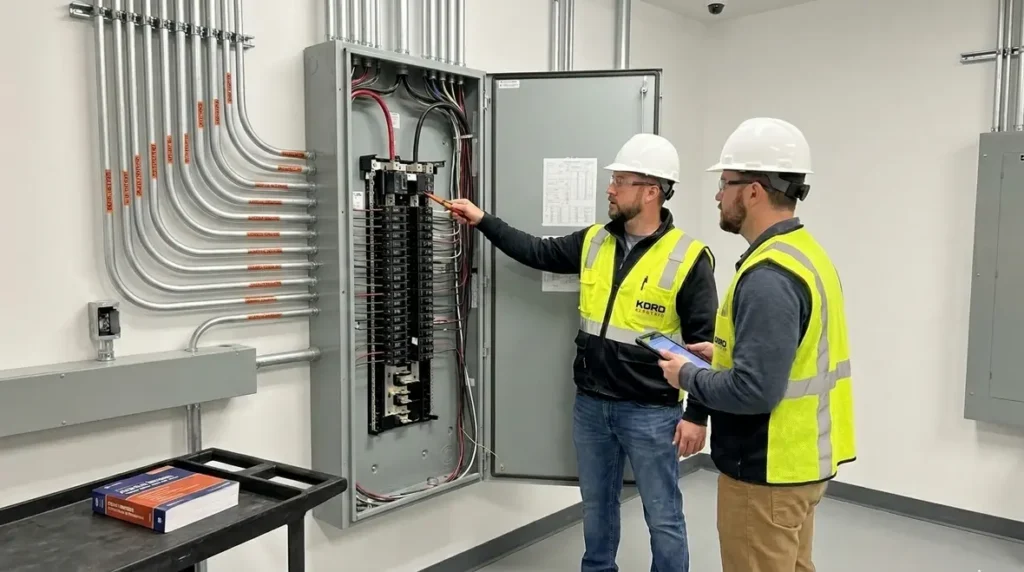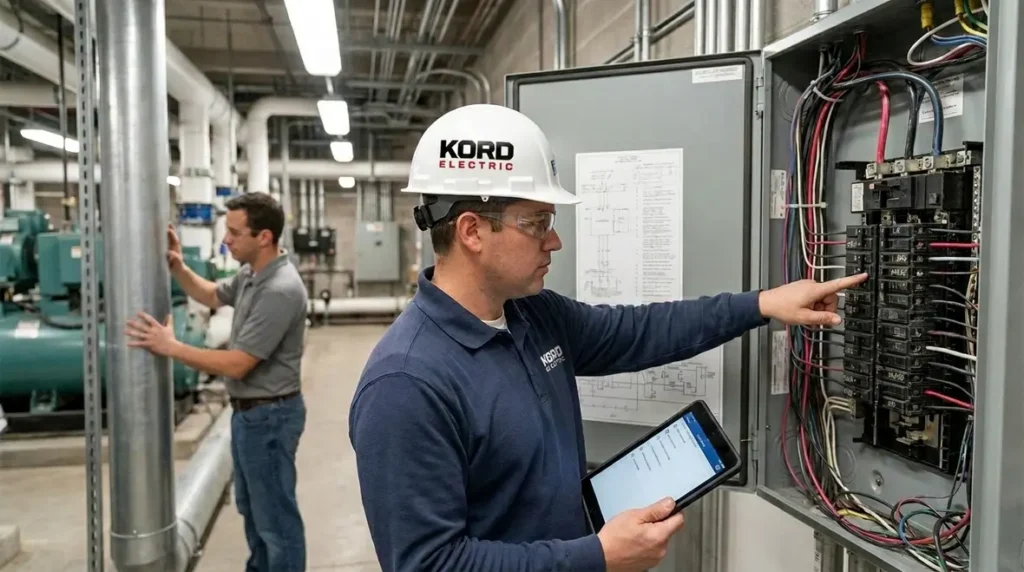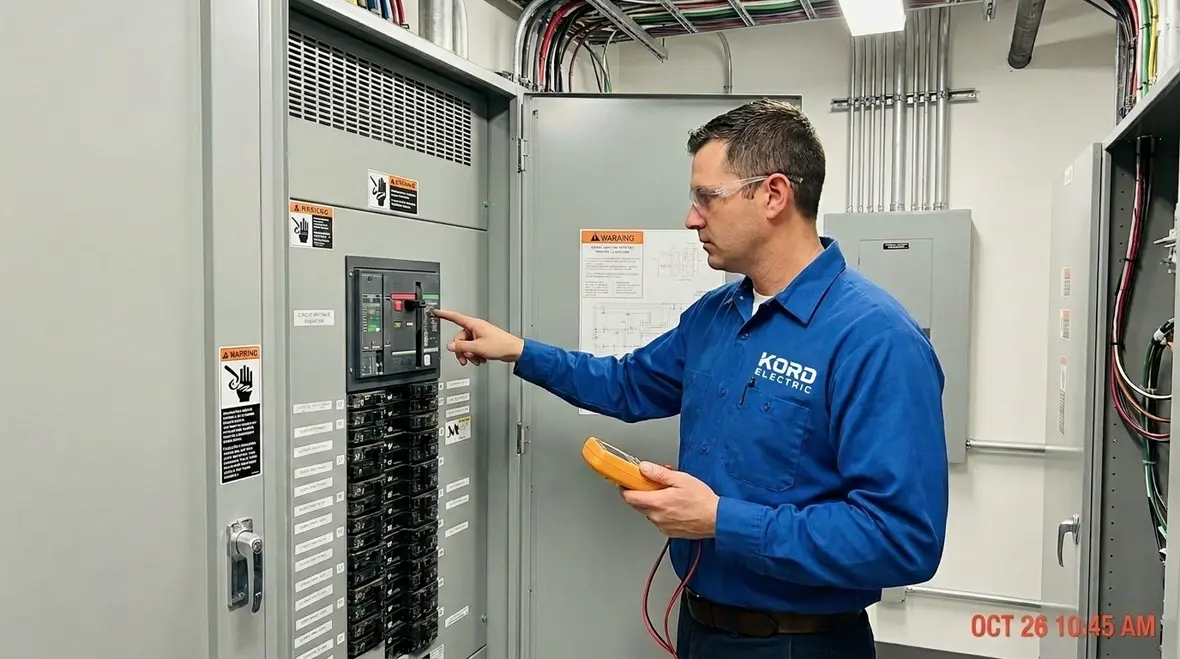
Overcurrent Protection for Building Safety
At Kord Electric, we design our work around a simple idea: safe power starts with overcurrent protection. When current rises beyond what a circuit can handle, heat builds, components age fast, and failures can follow. We take this seriously for commercial and industrial facilities and major property buildings, because the consequences are not theoretical. They can be financial, operational, and frankly, painful.
In this article, we explain why overcurrent protection matters for building safety, and we do it the way our expert service staff and field technicians do on site: clear, practical, and calm. Sometimes we even throw in a joke, because electricity already has enough drama. Think of us as the friendly referee that keeps your electrical system from turning into a pop culture disaster scene.
Why overcurrent protection prevents dangerous failures
In commercial buildings and industrial spaces, electrical systems operate hard and run for long hours. As a result, even small issues can escalate. Overcurrent protection stops that escalation by limiting what the system allows to flow.
Here is the core behavior: when a fault occurs, or when a circuit pulls more current than designed, the protection device responds. It interrupts the power flow before the wiring, busway, panels, or connected equipment overheat. Therefore, it helps prevent damage that can start as a scorched connector and end as a full outage.
Our technicians often tell clients that safety is not about reacting after smoke. Instead, safety is about preventing the conditions that lead to smoke. And yes, that means we take coordination and settings seriously. Otherwise, you get the electrical equivalent of “everyone runs together during a fire drill” and hopes for the best.
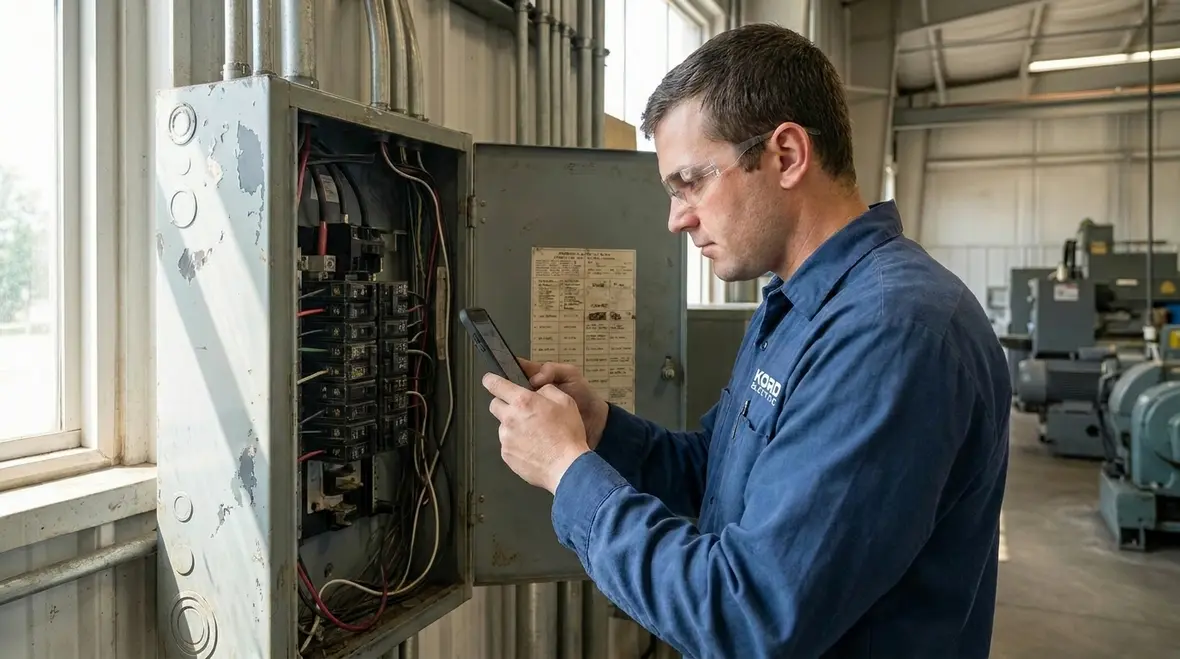
What causes overcurrent events in commercial and industrial sites
People often blame “bad luck,” but most overcurrent conditions come from identifiable causes. For commercial and industrial facilities, the usual suspects include:
- Overloads from new equipment, seasonal demand, or poorly planned expansions
- Short circuits caused by damaged insulation, moisture, or mechanical impact
- Ground faults from insulation breakdown, contamination, or aging conductors
- Inrush current from motors, transformers, and HVAC systems during startup
- Improper connections or degraded terminations inside panels and distribution gear
Then, a key detail matters: the system does not fail all at once. First, performance drifts. Next, components run warmer. After that, a breaker might trip early or fail to trip on time. So, while a trip can look like an interruption, the right response can also be the system preventing a bigger problem.
Our expert service staff helps teams map these causes to the building’s real loads. We review schedules, motor loads, and operating patterns. Then we connect that information to protection design and maintenance, so the protection acts when it should, not when it feels like it.

How protection devices work together to reduce risk
In major property buildings, multiple layers of protection handle different portions of the system. However, the layers only help if they coordinate correctly. Coordination means the protective device nearest the fault operates first, while upstream devices act as backup. This reduces damage, shortens downtime, and limits heat spread.
We frequently see coordination problems when one part of a facility changes and the rest stays behind. For example, a tenant adds equipment, or a production line gets upgraded. As a result, the load profile changes, and the original protection settings may no longer fit.
Our approach focuses on the whole system, not just a single breaker swap. We evaluate device types, ratings, trip characteristics, and time settings. Then we ensure the protection strategy supports selective operation where appropriate. In a calm voice we say it, but it is still serious: the “right” device must trip at the “right” time.
Think of it like a well run team. If everyone tries to do the same job at the same instant, nobody gets anything done. Electricity responds the same way. It needs coordination, not chaos.

Why correct settings matter during faults and startups
Overcurrent protection is not only about having a breaker or fuse present. It is also about setting it for actual conditions in the building. That includes both faults and normal high-current events like motor startup.
Motors and transformers create short, high current inrush. If protection settings do not account for that normal behavior, nuisance trips become common. Those trips hurt operations and can lead to unsafe “workarounds,” like bypassing protection or resetting too quickly. Meanwhile, if settings are too slow or too high, a real fault can damage equipment before the device acts.
Therefore, we spend time on engineering details. Our technicians verify load data, look at equipment specifications, and consider the operating environment. Then we recommend settings that match the site reality, including acceptable trip margins and duty cycles.
In short, correct settings help the system do two things at once. First, they protect wiring and gear when a fault happens. Second, they allow the building to start and run equipment without constant interruptions. Nobody wants an electrical system that trips like it is allergic to normal operations. Yet we also do not want it to “tough it out” when it should shut down.

What safety failures look like when protection is wrong
If protection does not work as intended, damage spreads. That is when building safety becomes a major issue, not a maintenance item. In commercial and industrial environments, the failure chain often includes heat, insulation breakdown, and arcing risk.
Here are examples of what we look for during inspections and service calls:
- Burning at terminations and bus connections from prolonged overcurrent
- Insulation cracking that appears years later but starts early
- Repeated trips that cause teams to reset devices without solving root causes
- Tripped protection that does not isolate the fault zone, increasing downtime
- Uneven heating patterns in panels and distribution gear
Moreover, safety is not only about the electrical room. Fault conditions can affect life safety systems, critical processes, and emergency operations. If a protection scheme fails during high demand, a building might lose power to pumps, controls, HVAC, or life safety components depending on design.
Our expert service staff explains the “why” in plain terms, and we document findings clearly. We also help facility teams understand what changes reduce risk, such as load balancing, insulation checks, and protection reviews after upgrades. If your facility is already thinking about structured maintenance, dedicated programs like electrical preventive maintenance and broader commercial and industrial electrical maintenance plans can keep those corrections on schedule instead of waiting for the next outage to force the issue.
Preventive maintenance and inspections that keep protection reliable
Even well-designed protection can drift over time. Components age, settings get changed, and upgrades happen without updating the protection plan. So we treat maintenance as a safety tool, not a seasonal chore.
For commercial and industrial sites, we recommend service actions that fit the building’s risk level and usage profile. We typically focus on:
- Inspecting panels, distribution gear, and terminations for heat damage and loose connections
- Verifying breaker condition, ratings, and interrupting capabilities
- Reviewing trip settings against current loads and equipment schedules
- Checking for signs of moisture, contamination, and mechanical stress in electrical rooms
- Documenting changes after repairs, equipment additions, or control upgrades
Then we communicate with your team. We explain what we found, what it means for overcurrent protection performance, and what we recommend next. Our technicians work with facility managers and site leads so operations stay stable. In the real world, we know a building cannot shut down like a movie set. It needs power tomorrow.
So we schedule work, coordinate with operations, and keep the process straightforward. And if a joke slips out, it is usually aimed at the idea that breakers are “set it and forget it.” Breakers can forget, but they do not do it kindly. When you pair thoughtful overcurrent protection reviews with ongoing electrical preventive maintenance, you give your building a quieter, more predictable electrical life.
FAQ
Final call: let Kord Electric protect your operations
When overcurrent protection is right, your building runs with less risk, fewer surprises, and better uptime. If it is wrong or outdated, small faults can grow fast, and safety planning turns into firefighting. We at Kord Electric serve commercial and industrial facilities and major property buildings with expert service staff, practical inspections, and thoughtful protection reviews. Contact us today to schedule an assessment, and let’s keep your power steady, calm, and dependable.
If your facility is already planning larger reliability work, we can integrate overcurrent protection assessments into broader projects like electrical preventive maintenance, voltage fluctuation correction, and other targeted upgrades. This way, your protection strategy, maintenance plan, and real-world operations stay aligned instead of competing for attention.
For sites that need rapid help because protection has already tripped or equipment has gone offline, our dedicated emergency electrical services team can respond quickly, stabilize conditions, and then help you build a calmer long-term plan around overcurrent protection and system reliability.