Planned Electrical Maintenance ROI for Commercial Buildings
At Kord Electric, we see it every day: a facility runs smoothly until it does not, and the “it” usually involves electrical surprises. That is why our planned electrical maintenance program benefits for commercial properties start with steady, scheduled attention instead of emergency reactions. With our approach, we help owners reduce downtime, control repair costs, and protect critical systems that keep production moving. As a result, the numbers improve, the risk shrinks, and the building stays dependable. Others wait until the lights flicker, the equipment slows, or alarms start speaking in a language no one wants to learn. We prefer calm, predictable operations over that kind of excitement. (It is funny once. Then it becomes expensive.)
Planned Maintenance ROI: The Money Trail You Can Actually Track
In commercial and industrial facilities, ROI is not a theory. It is a trail you can follow. When Kord Electric schedules planned electrical maintenance, we focus on the hidden sources of cost: failing components, loose connections, worn insulation, overheating at terminations, and control issues that turn small problems into major outages. Then, we document what we find and what we correct, so your team knows what changed and why performance stays stable.

To understand ROI, we look at a few measurable inputs. First, we reduce unplanned downtime. A plant stoppage, a kitchen outage, or a logistics facility delay costs real money fast. Next, we lower the repair bill by replacing parts before they fail. Finally, we support energy efficiency by keeping electrical systems within safe operating conditions, which reduces unnecessary heat and strain.
Our technicians do not simply “check and move on.” Instead, they explain what the condition means and how it affects load, safety, and reliability. If your facility runs on uptime, our job is to help you treat downtime like a problem with a solution, not like weather you must endure.

Where Electrical Failures Start, Before They Become Outages
Most electrical failures begin quietly. Over time, connections loosen from thermal expansion, moisture finds its way into enclosures, dust builds up on panels, and harmonics stress electrical gear. In large buildings, the system rarely fails in one dramatic moment. Instead, it degrades in layers, and then an outage happens when multiple stressors stack up at once.
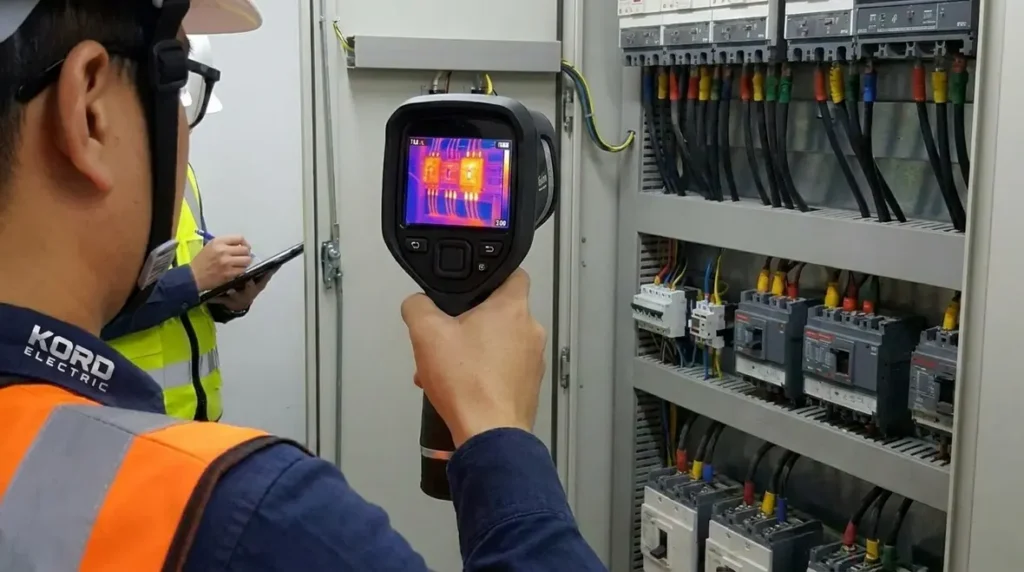
As Kord Electric works with commercial kitchens, manufacturing spaces, and other major property buildings, we pay attention to the “small” warning signs. For example, a breaker that trips more often than it should, a panel that runs warmer than expected, or a motor feed that shows signs of overheating. Then, our team addresses root causes rather than replacing parts without context.
We also help the facility team understand load behavior. When loads change, wiring and protective devices must match the reality of the operation. If they do not, your ROI turns into a slow leak. And like any leak, it keeps draining money until someone tracks it down.

How Our Technicians Turn Inspections Into Clear Results
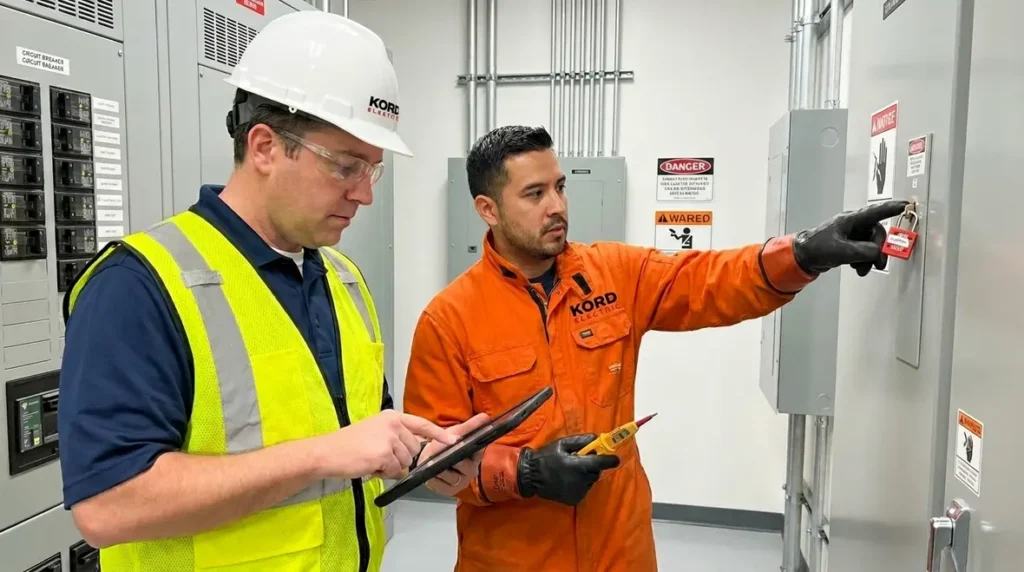
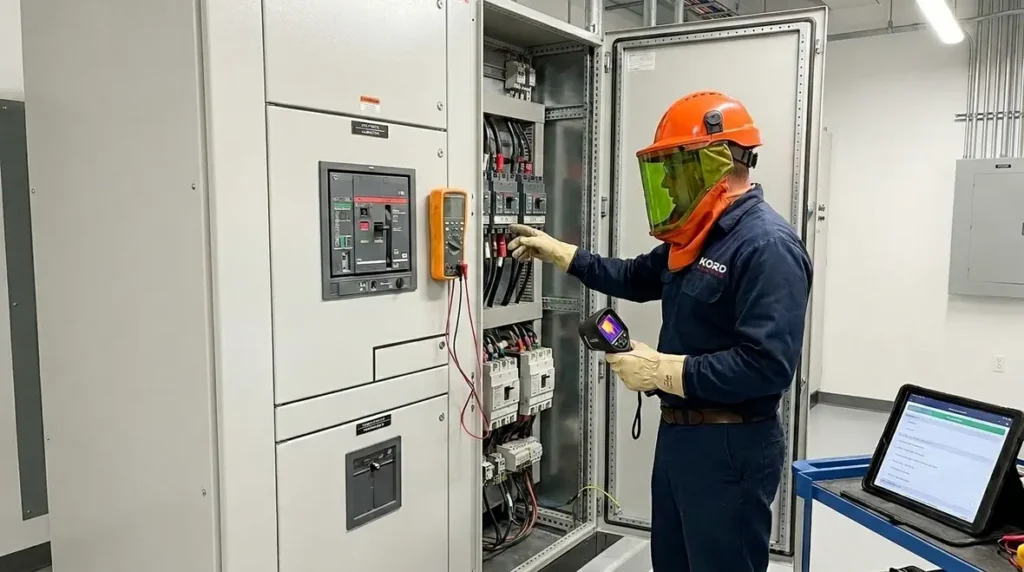
Planned maintenance works only when the inspection leads to real action. That is where our expert service staff earns their pay. Our technicians evaluate electrical systems with a practical mindset: what can fail, what is already showing stress, and what will impact reliability during peak operation.
After that, we communicate findings in plain language. We do not drown owners in jargon. Instead, we translate conditions into decisions. For instance, if we see signs of deterioration in wiring terminations or irregularities in panel components, we explain the likely impact on heat, stability, and safety. Then we help prioritize work based on risk and business needs.
Additionally, we schedule maintenance around the operating rhythm of the facility. We understand commercial and industrial environments do not pause for paperwork. Therefore, we plan service windows and coordinate with site leadership to reduce disruption. In other words, you keep running, and we keep the electrical system healthy.
And yes, sometimes a client asks, “Do we really need to look that closely?” Our answer is calm and direct. Because the cost of prevention is usually smaller than the cost of replacing everything after it breaks. The building does not care whether you were “busy.” It just fails when conditions say it should.
Commercial Kitchen Electrical Upgrades: A Practical ROI Example
Commercial kitchens provide a strong real-world example of why proactive care pays off. Heavy use, frequent equipment changes, high heat, and strict operational demands create a tough environment for electrical systems. If wiring and distribution systems are not maintained and updated appropriately, performance becomes inconsistent, and breakdowns arrive right when service volumes peak.
In our experience, electrical upgrades often deliver ROI when they align with current load needs and equipment layout. A facility may add cooking appliances, refrigeration, ventilation, or point of sale systems. When the electrical infrastructure does not match the updated load, the result can include breaker nuisance tripping, overheating, voltage issues, and difficult troubleshooting that delays service.
That is why we support planned maintenance alongside smart upgrades. We assess the condition of panels and feeders, verify protective device performance, and look for wiring issues that can worsen under high demand. Then, we apply improvements based on what the kitchen actually uses, not what it used years ago. For a deeper dive into how these upgrades work in practice, explore our related guide on commercial kitchen electrical upgrades and wiring.
To connect this to planned electrical maintenance program benefits for commercial properties, the value shows up in reduced interruptions, faster recovery when issues do occur, and fewer repeat failures. In a kitchen, “we will handle it later” rarely stays true until later arrives.
Risk Reduction: Safety, Compliance, and Lower Insurance Pain
Planned maintenance ROI is not only about money spent. It also involves money not spent, and risk not realized. Electrical hazards can create severe consequences: fire risk, shock hazards, equipment damage, and operational shutdowns. By maintaining components in safe condition and addressing weak spots early, owners reduce exposure to incident-related costs.
In addition, commercial and industrial facilities often deal with compliance requirements tied to electrical safety practices. When a facility maintains records of inspections and corrections, it can strengthen readiness for audits, inspections, and internal safety reviews. Our team helps create a clear paper trail of what we did and what we corrected.
Many property leaders also see a connection between risk reduction and insurance outcomes. While every policy differs, safer electrical systems and documented maintenance usually support healthier risk profiles. So, even when insurance does not change immediately, you reduce the chance that a claim becomes a bigger fight than it needs to be.
Meanwhile, the best part is that the facility stays calm. Alarms and failures do not become a regular routine. And nobody wants their night shift manager to become an unwilling electrician with a flashlight and a prayer.
Building a Maintenance Plan That Fits Your Loads and Schedule
ROI improves when maintenance matches the facility reality. A distribution-heavy manufacturing site does not need the exact same schedule as a commercial office building. Similarly, a property with critical production lines cannot schedule service at random and hope for the best. Therefore, Kord Electric builds planned electrical maintenance around what the facility uses, how it operates, and where risk concentrates.
We typically structure a program around the systems that matter most. That includes panels, switchgear, feeders, grounding, motor control, and areas that experience harsh conditions such as dust, moisture, or high heat. Then, we align service frequency with observed wear, load cycles, and historical issues.
As the plan runs, we refine it. Planned maintenance should not feel like a fixed ritual with the same results every year. Instead, our technicians update priorities based on findings. This approach keeps costs predictable while improving system health.
And here is the quiet truth: when owners can forecast maintenance budgets and avoid emergency repairs, ROI becomes easier to manage. It becomes a business advantage, not a surprise expense.
For facilities that want to go deeper into structured maintenance strategies, our dedicated electrical preventive maintenance services page walks through how we design, schedule, and document programs for complex commercial and industrial properties.
FAQ: Planned Electrical Maintenance for Commercial and Industrial Buildings
Planned Maintenance ROI: The Simple CTA That Pays Off
If your facility runs on electrical systems, it deserves a plan, not a reaction. Kord Electric builds planned electrical maintenance that protects reliability, reduces downtime, and supports safer operations for commercial and industrial buildings. We work with your team, explain what we find in clear terms, and help you prioritize work that improves performance. For facilities exploring broader upgrades as part of their maintenance strategy, our team can also coordinate projects like recessed lighting installation for commercial and industrial spaces so lighting improvements and electrical reliability move forward together.
When you are ready to move from reactive fixes to a structured, data-driven approach, we are here to help you build a maintenance plan that fits your loads, schedule, and risk profile. Call Kord Electric today to set up a maintenance review and get a real ROI path for your property. Let us keep your power steady, so your operations stay focused.
To learn more about how we protect critical systems and operations with ongoing service, visit our dedicated page on electrical preventive maintenance for commercial and industrial facilities, or reach out directly to discuss a custom program for your building.