Precision Industrial Lighting Layouts for Safety
Precision Industrial Lighting Layouts Begin With a Plan
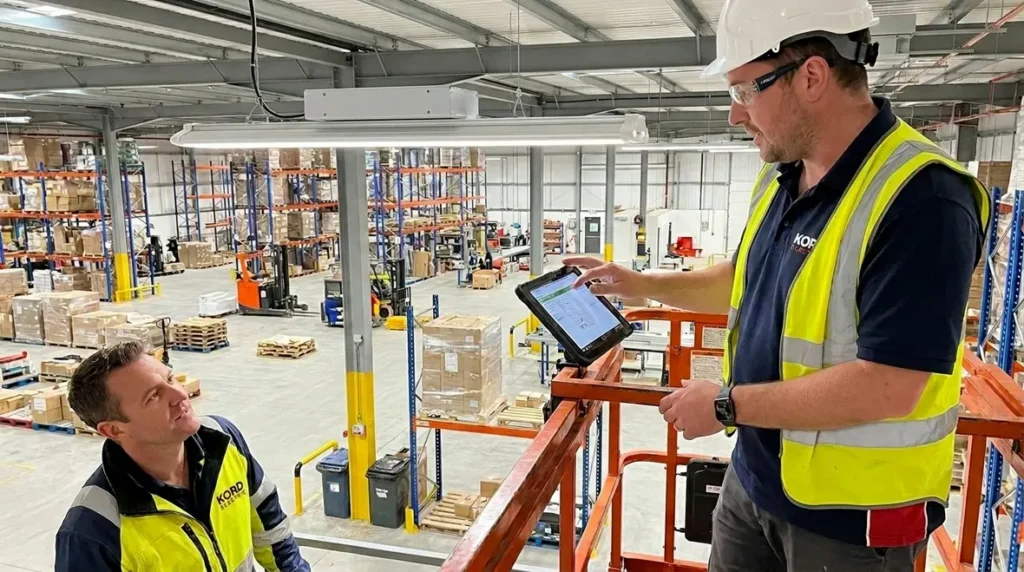
At Kord Electric, we follow an industrial lighting layout design guide the way a captain follows a route in fog: slowly, carefully, and with a clear sense of where hazards hide. In the first place, our team maps the work, the traffic, and the tasks that happen across the floor. Then we measure glare, spacing, mounting height, and surface reflectance so the light lands where eyes need it most. Finally, we review safety rules and maintenance realities before anyone installs a single fixture. Because in commercial and industrial facilities, poor lighting is not just ugly. It is risky, and it costs more than it should.
Of course, we also know what many managers think. They picture “more lights” and call it a day. Then the night shift shows up, the shadows behave like they have a personality, and suddenly everyone wants answers. That is where our expert service staff steps in, explains the plan in plain terms, and helps others make confident choices.
How Precision Layouts Improve Workforce Safety

When we design an industrial lighting plan, we build safety into the layout, not around it. First, we reduce blind spots near loading docks, stairwells, and exit paths. Next, we improve visibility around moving equipment and pedestrian routes so workers can see hazards before they get close. Then we control glare and harsh contrast, which helps people read visual cues on floors, labels, and machine panels.
In commercial and industrial spaces, visibility is not one thing. It is layers. It is task lighting for inspections. It is ambient lighting for wayfinding. And it is emergency lighting that guides people when power drops. As we help clients, our technicians explain how each layer supports the next, so the site does not rely on luck. Lighting should act like a well trained safety partner, not like a coin toss.
And yes, we have seen what happens when a “quick fix” turns into a patchwork. A forklift operator cannot judge distance well under poor contrast. Someone slips because a wet floor blends into the background. A worker feels forced to squint at a control panel. These issues do not stay small. They grow into incidents, insurance headaches, and downtime. Precision layout work reduces those outcomes.

Designing for Real Traffic Patterns and Task Zones
Most facilities look busy in daylight. Still, the real story shows up when we watch flow patterns and talk with the people who work there. Therefore, our process starts by identifying zones: walkways, material staging, machine operation areas, storage, and service corridors. After that, we define task zones where fine work happens, such as inspection benches, electrical panels, labeling areas, and control rooms.
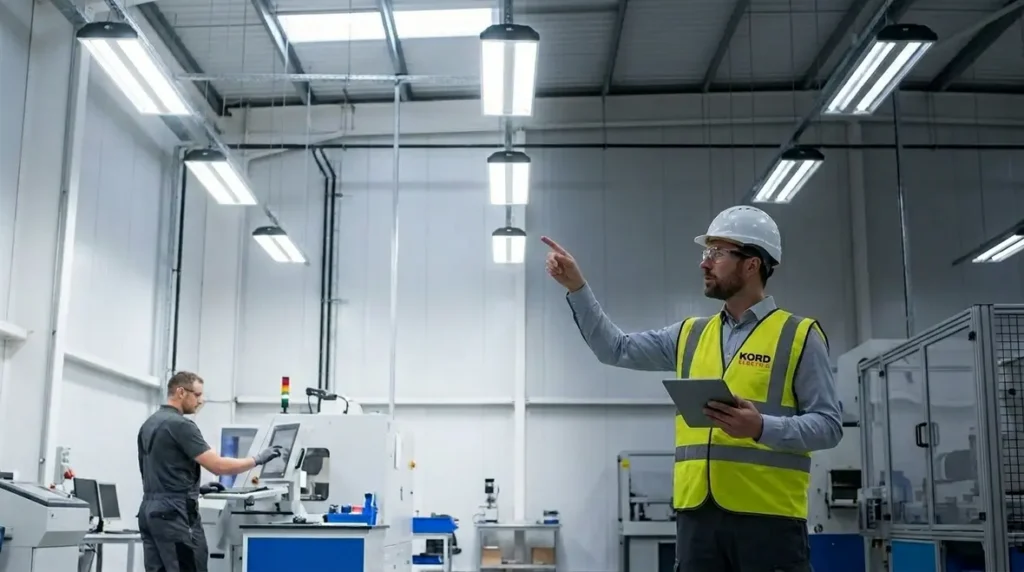
Then we set spacing rules and aim angles that match the site geometry. For example, a beam pattern that works in a warehouse bay may fail near mezzanines or shelving where light bounces off uneven surfaces. Consequently, we consider wall color, floor finish, and ceiling height. We also account for changes over time, such as when a site expands, adds equipment, or rearranges racking.
At Kord Electric, our expert service staff does not hide behind jargon. They break down what we find and why it matters. Then they connect it back to safety. When we adjust lighting near crossings and corners, we explain how it improves visibility and reduces confusion. That is how we keep planning grounded in day to day operations.

Meeting Standards Without Guesswork
Good lighting does not come from guessing. It comes from verifying. For commercial and industrial facilities and major property buildings, we support safety and compliance by using clear design intent and field checks. We look at illumination levels for key tasks, then we review uniformity so the brightest areas do not create harsh shadows next to dark zones. We also evaluate glare control because comfort matters, and so does the ability to spot hazards quickly.
Even when a site “looks fine,” it can fail in the details. A corridor might meet minimum output on paper, yet workers still trip because fixtures fall short where people slow down, such as doorways and turning points. That is why we treat the layout like a system. We do not just place lights. We coordinate placement with movement, surfaces, and viewing angles.
If anyone says compliance is just paperwork, we politely disagree. Paper does not guide a worker’s eyes. Light does. And when our technicians walk the site during inspections, they point out those subtle gaps in real terms, the way you would explain a map to someone who needs to arrive safely, not just quickly.

Integrating Lighting Plans Into Maintenance Strategies
Lighting performance drops when maintenance lags. Dust builds up. Lamps and drivers age. Lenses get cloudy. And reflectors lose efficiency over time. So in the real world, even a strong industrial lighting layout design guide needs a maintenance rhythm to stay effective.
Kord Electric supports this with commercial and industrial electrical maintenance plans that keep systems reliable. We reference the logic behind these plans because they match what facilities need. Our approach focuses on preventing problems before they cause outages or safety issues. Then we schedule checks that align with the environment, such as higher dust loads, vibration, humidity, or frequent cycling. For a deeper dive into how these programs work, many facility leaders explore our detailed article on commercial and industrial electrical maintenance plans.
Because lighting depends on more than the fixture, we also track supporting electrical components. We verify connections, monitor performance patterns, and review control behavior for dimming and occupancy systems. When we spot early warning signs, we explain the risk and the option to correct it before it becomes an emergency. And that is where managers appreciate the value: predictable work, less disruption, and fewer surprises.
Where we focus first
- Exit paths and wayfinding so staff can move safely
- Loading and material handling where visibility matters most
- Machine access routes to reduce blind spots
- Task stations for inspections and reading controls
How we protect performance over time
- Maintenance scheduling for dust and aging effects
- Electrical checks for stable operation
- Performance reviews so layouts stay effective
- Documentation that helps future upgrades
Upgrade Paths That Reduce Downtime and Disruption
Facilities do not pause production just because lighting needs an update. So we design upgrade paths that fit operations. First, we collect site constraints and schedule work when traffic is low or when operations can tolerate brief shutdowns. Then we plan phased installs so the safety benefits begin early, not at the end of a long project.
We also evaluate whether to retrofit existing fixtures or replace them. In some cases, updating controls and drivers restores performance without full fixture replacement. In other cases, the beam pattern and mounting setup no longer match the layout goals, so replacement makes more sense. Either way, our technicians explain the tradeoffs clearly so decision makers can choose with confidence.
And look, we get the “we will do it later” plan. That plan rarely gets better with time. Dust keeps collecting, components keep aging, and shadows keep forming. Our expert service staff helps clients treat lighting like a safety system. You do not ignore safety systems. You maintain them, and you improve them.
Why Facilities Choose Kord Electric for Lighting Safety
Commercial and industrial sites need more than product knowledge. They need practical execution. Kord Electric supports those facilities with a process that combines on site assessment, layout design, and service follow through. We do not just deliver fixtures. We help clients build a lighting environment that supports safe movement, clear task visibility, and reliable operation.
Our approach stays business casual in tone but serious in outcomes. We talk like humans. We walk the facility with the people who work there. Then we translate the lighting layout into safety results that leadership can understand and staff can feel. When workers can see exits clearly, read controls faster, and move without constant uncertainty, the site becomes safer without adding extra friction.
In short, we help facilities stop treating lighting as a background detail. We elevate it into a safety asset. And if you want a joke, here is one: bad lighting is like leaving the “check engine” light on. It will not fix itself. It will just keep getting worse while everyone pretends it is fine.
FAQ
Let’s Build Safer Lighting for Your Facility
If your facility has dark corners, inconsistent lighting, or recurring maintenance issues, Kord Electric can help. We build precision layouts that support safe movement, clear task visibility, and dependable performance. Then we connect lighting work to maintenance so safety stays real, not temporary. Our technicians and expert service staff explain each step in plain language, and we plan upgrades with your operations in mind.
For facilities ready to move from planning into action, our dedicated Lighting Installation Services are built specifically for commercial and industrial environments that cannot afford guesswork. From detailed layout design to code compliant installation, commissioning, and ongoing support, we help you turn an industrial lighting layout design guide into a working, reliable system on your floor.
If you would like a closer look at how structured care keeps that system strong over the long term, you can also explore Kord Electric’s article on Commercial and Industrial Electrical Maintenance Plans and see how lighting, power quality, and preventive maintenance work together to protect your operation.
When you are ready, Kord Electric can review your site, map out risk areas, and create a lighting safety plan that fits real traffic, real tasks, and real maintenance conditions—not just ideal drawings. Safer lighting starts with a clear layout and a practical path to installation, and it continues with a maintenance strategy that keeps every fixture pulling its weight.