Preventative Electrical Maintenance Checklist Guide
Commercial buildings do not fail in silence. They fail in slow motion, one overlooked detail at a time. That is why we at Kord Electric start with a preventative electrical maintenance checklist guide, then we build a schedule that fits how your property actually operates. In the next sections, our expert service team walks through the essentials managers should check before a small issue becomes a big outage. We keep it practical, because other people can write policies, but our field technicians write the notes that stop the lights from going out. And yes, we have heard the joke that “it will fix itself.” The electrical system did not laugh.
Why commercial buildings need preventative electrical care
In commercial and industrial facilities, electrical systems serve people, production, security, and comfort. Therefore, the cost of downtime is not just a repair bill. It often includes lost revenue, tenant complaints, safety risks, and rushed emergency work. When property managers treat electrical upkeep as an occasional task, they invite hidden wear, loose connections, and aging components that quietly drift out of spec.
At Kord Electric, our technicians and expert service staff explain what they find in plain language. They do not talk like a textbook. Instead, they translate field observations into clear actions that help managers plan budgets and avoid surprises. In addition, preventative electrical maintenance improves system reliability and can extend the useful life of key gear such as panels, feeders, and disconnects.

Inspection cadence and documentation managers must keep
First, managers need a cadence that matches the risk level of the building. Next, they need documentation that holds up when someone asks, “When was the last time we checked that?” Our expert service team recommends a structured approach that includes both routine checks and periodic deeper inspections. Then you can link each finding to a date, location, and corrective step.
A solid process typically includes the following:
- Seasonal visual reviews for moisture, corrosion, and abnormal heat signs in outdoor and wet locations
- Quarterly reviews of accessible breakers, panels, and control wiring
- Annual or semi annual testing for high risk systems based on load and usage
- Event based checks after storms, equipment replacements, major tenant work, or power events
To keep the record useful, we ask managers to store photos, test results, and correction dates. As a result, when maintenance decisions come up, the team can act with confidence instead of guesswork.
Start with the panelboards and switchgear, not the lights
Many people assume an electrical problem begins at the outlet. However, in commercial settings, the real drama often starts higher up: in panelboards, switchgear, and distribution gear. When a bus bar loosens or a connection heats up, the building may still function. Yet the system is already wasting energy and building risk.
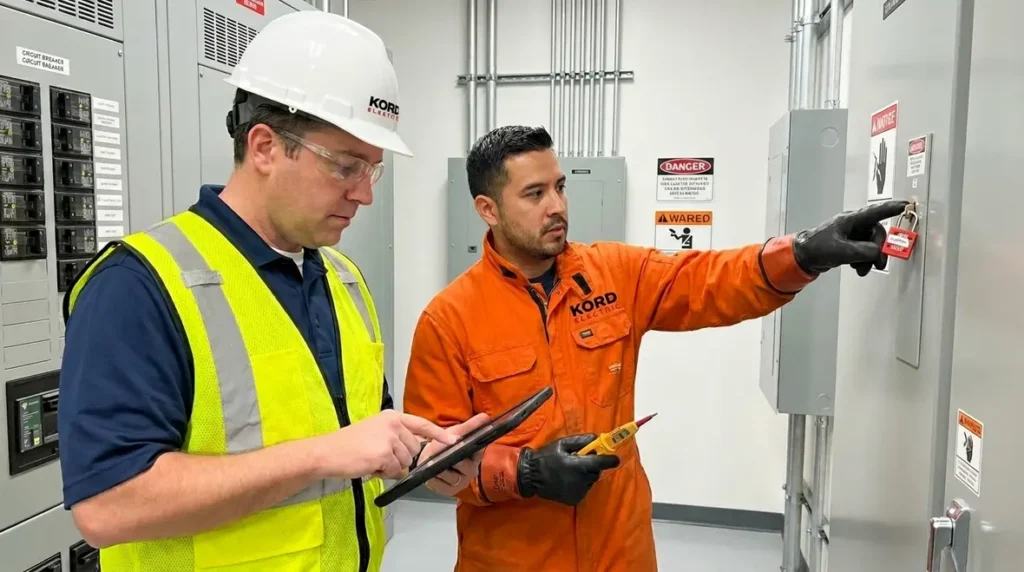
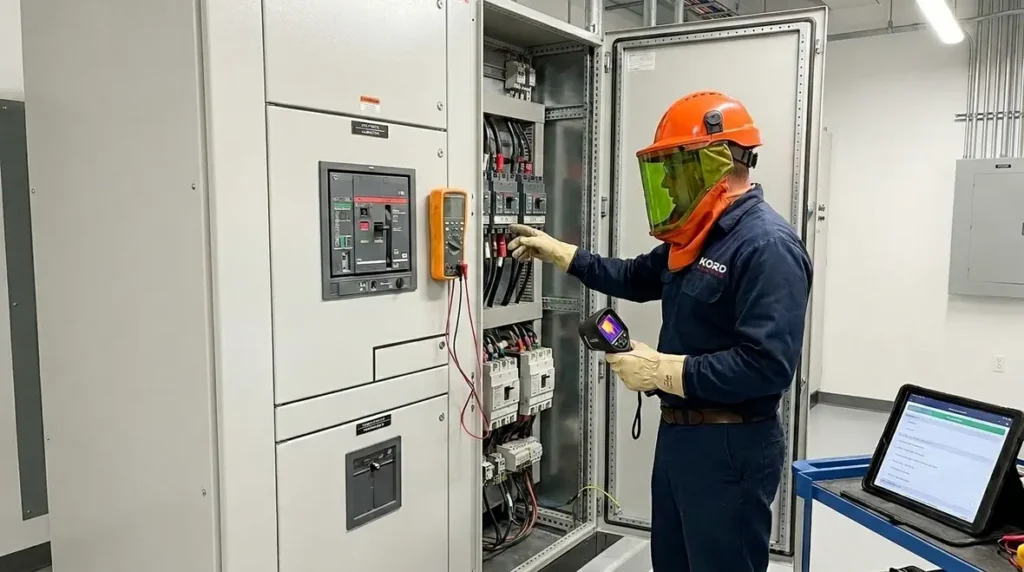
Our technicians focus on the preventative electrical maintenance checklist guide topics that matter most for distribution health. They verify torque on terminations where appropriate, check for signs of overheating, confirm labeling accuracy, and inspect for moisture intrusion. Also, they look for outdated or mismatched components that can cause nuisance trips or uneven load sharing.
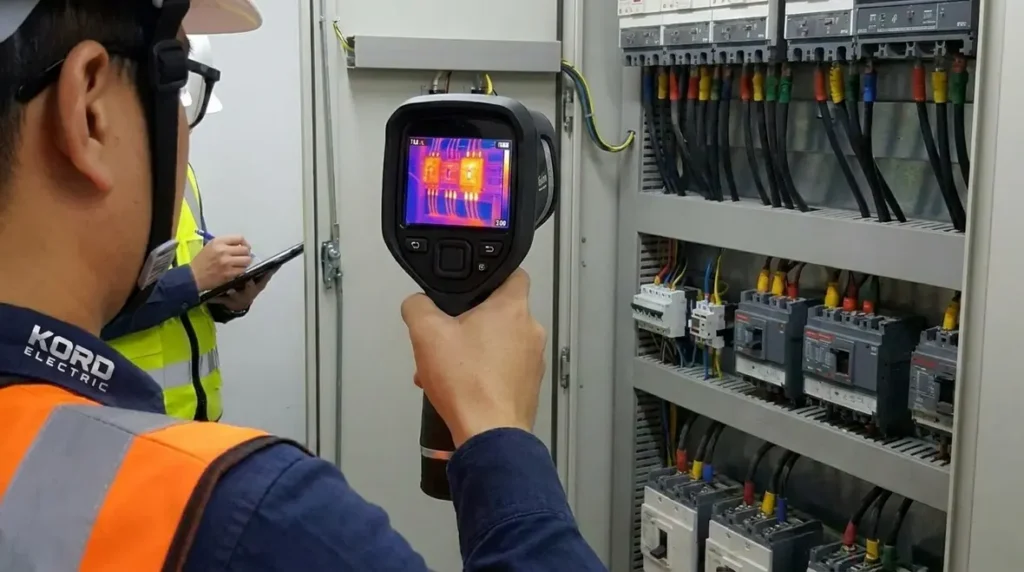
Then they add detail managers can use. For example, if thermal imaging shows hot spots, the report notes likely causes, affected circuits, and recommended corrections. In plain terms, it tells you what to fix first, what to monitor, and what can wait without creating a future emergency.

Electrical safety checks that reduce risk fast
Safety is where managers earn trust. Yet safety checks take discipline, because they do not always “announce” themselves. For instance, a ground fault protection device may still operate sometimes, while its performance drifts out of the safe range. Additionally, some hazards appear only when certain loads run at the same time.
During preventive electrical visits, our expert service staff confirms:
- Proper grounding and bonding at main equipment and critical circuits
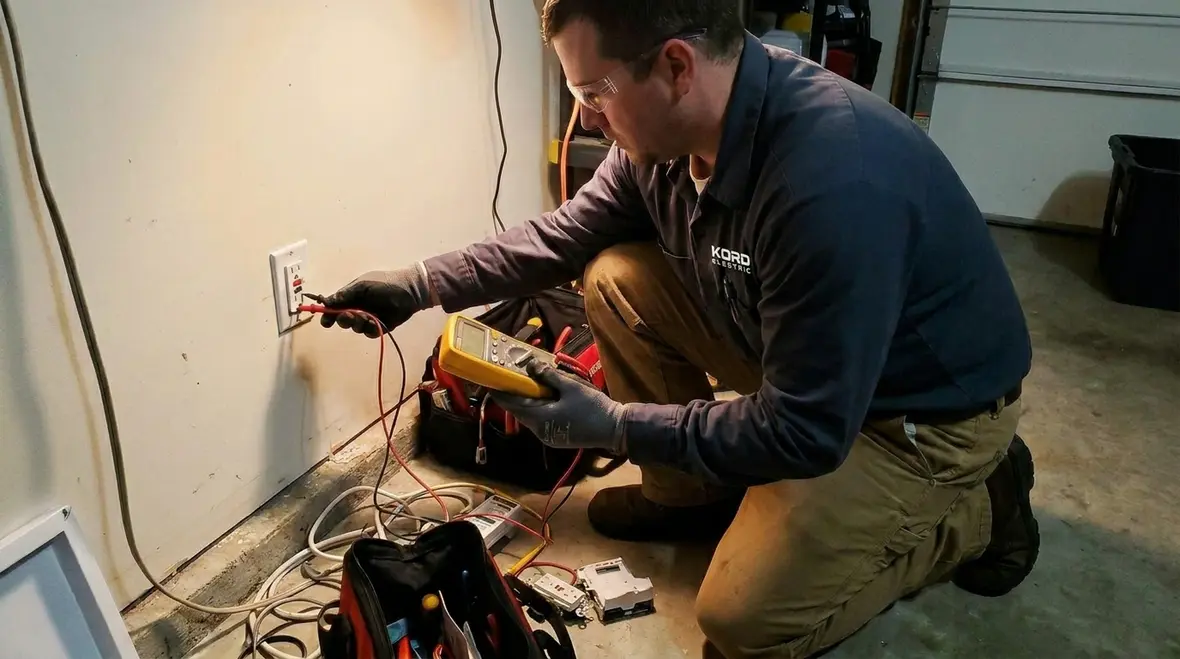
- Correct operation of protective devices such as GFCI and other fault protection where applicable
- Panel and enclosure integrity, including covers, gaskets, and secure latches
- Clearances and working space that meet code intent for safe access
- Arc flash risk awareness through correct labeling and condition checks
And we always explain what we did. We do not just hand over results like a vending machine. Instead, our technicians walk managers through the “why,” so the next maintenance decision stays grounded in evidence.
Preventive maintenance for power quality and reliability
Now we talk about power quality. In commercial and industrial buildings, sensitive equipment can suffer from voltage dips, harmonics, and unstable supply. While staff may blame computers, HVAC controls, or production tools, the root cause can sit upstream in the electrical distribution path.
When Kord Electric builds a preventative plan, we also account for reliability. We evaluate common stressors such as overloaded neutrals, loose conductors, and equipment aging. Moreover, we check how the building behaves under load, not just when the system feels calm.
To connect this to real costs, it helps to understand how distribution issues can cascade into larger spending. Our rewiring cost guide for commercial electrical systems explains that older wiring, higher loads, and repeated repairs often drive up total project costs over time. While every facility varies, the takeaway is clear: addressing failing components earlier can cost less than restoring everything later. So instead of waiting for the lights to flicker like a bad sitcom, managers can plan work with steady, measurable steps.
Facilities with motors, UPS systems, and life safety loads
Commercial properties rarely rely on a single electrical function. Many facilities use motors for HVAC, pumps, and doors, and they may also include UPS systems for critical loads. These are not “set it and forget it” systems. Instead, they demand targeted preventive attention.
Our technicians inspect motor starters and variable frequency drive conditions with care. They look for signs of overheating, abnormal vibration indicators, and control panel issues. For UPS systems, we verify that batteries and related components remain in healthy condition and that the system’s intended protective behavior stays accurate.
Life safety loads require extra seriousness. If an emergency system fails a test, managers need clarity fast. Therefore, our expert service staff supports life safety readiness by maintaining the distribution pathway and verifying that the connected equipment performs as designed. And if you want a small joke to relieve the stress, consider this: life safety gear should not work “in theory.” It should work in real life.
How to prioritize repairs using the checklist guide findings
Managers often ask how to rank issues when the site team finds many items at once. The answer is simple: prioritize by risk, impact, and likelihood. However, the real value comes from turning observations into a repair order that matches building operations.
Here is a practical way to sort findings into action:
- First priority: hazards that can cause shock, fire, or loss of life safety functions
- Second priority: issues that can cause repeated trips, equipment failure, or power interruptions
- Third priority: component aging, labeling issues, and corrective maintenance items that reduce future failure risk
Then, our technicians help managers map the work to downtime windows. As a result, the building stays productive while maintenance teams handle fixes in an orderly way. When the plan includes clear next steps, fewer surprises land on the desk at 4:55 PM on a Friday. And if you have ever dealt with that timing, you know why that matters.
FAQ for commercial property managers
Need a plan built for your property, not a generic template
At Kord Electric, we support commercial and industrial facilities with a preventative electrical maintenance checklist guide approach that stays realistic for your operations. Our technicians and expert service staff inspect distribution gear, safety components, and critical loads, then we explain findings in a way your team can use right away. If you want a schedule that reduces risk and supports clear budgeting, contact Kord Electric today. We will review your building needs, then we will outline next steps that keep your power steady and your work orders calm.
If you are ready to turn this preventative electrical maintenance checklist guide into an active program, consider pairing it with a structured electrical preventive maintenance service plan. This combination turns one time inspections into a living strategy that protects uptime, supports compliance, and keeps your long term capital planning grounded in real field data.