Commercial Subpanel Installation Best Practices
At Kord Electric, we treat commercial subpanel installation best practices like the quiet hero of every reliable building electrical system. We plan the panel location early, size the circuits with real equipment data, and verify torque and labeling so nothing turns into a “mystery breaker” later. Then we manage load with a clear path: we forecast demand, balance phases, and document changes so the facility team can maintain the system without guessing. Finally, our technicians do the field work with disciplined testing and code-aligned inspection readiness. In other words, we bring calm, not chaos, to projects where power must show up like it promised. Because in commercial and industrial facilities, “close enough” is not an option.
Choosing a subpanel layout that works in the real world
First, we evaluate where the subpanel will live. In offices, warehouses, and mixed-use commercial properties, the best location is not just convenient. It is safe to access, easy to service, and protected from damage. For example, we avoid installing panels in spots that collect water, take constant impacts from equipment movement, or force technicians to stand in awkward angles during maintenance. Then we consider ventilation, ambient temperature, and the routing path for feeders and branch circuits.
Next, we focus on how the layout affects future changes. We design for expansion when tenants add loads or operations shift. However, we avoid the trap of installing “just in case” circuits everywhere. Instead, our expert service staff explains the tradeoffs and helps owners plan for likely growth. This keeps the system clean, and it keeps budgets from getting hit like a pop quiz you studied for in a different class.
Finally, we use practical panel organization rules: clear labeling, smart grouping by function, and circuit numbering that matches the facility’s electrical one line. As a result, the facility team can troubleshoot faster, and our technicians can support modifications without tearing through the entire panel like it is a mystery novel where everyone dies in chapter three.
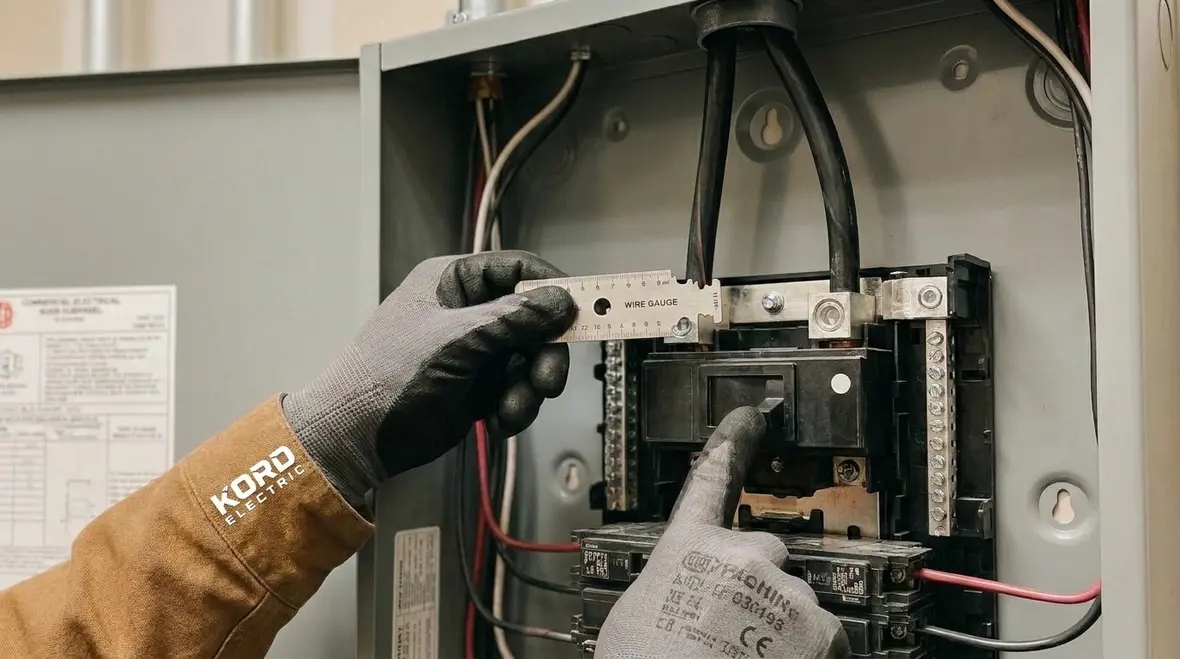
For facility managers who want to go deeper on how panel organization impacts safety and speed during outages, our dedicated guide on electrical panel labeling best practices walks through how clear directories and consistent naming turn every panel door into a real-time safety tool.
How we size feeders and breakers for true demand
Subpanel performance depends on what feeds it. Therefore, we start sizing with accurate load calculations based on actual equipment schedules, not vague assumptions. We gather information on HVAC loads, lighting types, process equipment, motors, EV charging, and any specialized machinery. Then we account for diversity where appropriate and we plan for starting current on motor loads. This step matters because commercial and industrial systems often experience momentary surges that can stress components if the design ignores them.
After that, we size feeders and select breakers with the right ratings for continuous and non continuous loads. We also verify conductor sizing for temperature rating, insulation type, and installation method. Moreover, we check voltage drop targets to prevent issues like nuisance alarms, dimming, or equipment underperformance. If you have ever seen a building light flicker every time a forklift turns on, you know how fast small electrical mistakes become operational headaches.
When our technicians explain sizing decisions on site, they do it in plain terms. They show what happens when overloading occurs and why “bigger breaker” is not always the fix. By the time we finish, facility managers understand how the system will behave under normal and peak conditions.
If your facility is also considering solar or other on-site generation, the way subpanels and main panels are sized matters even more. Our article on commercial solar panel electrical integration shows how we coordinate breakers, feeders, and protective devices so new generation does not overload existing infrastructure.
Load management strategies that prevent nuisance trips
Once feeders and breakers are sized correctly, we move into load management. In a commercial subpanel installation, load management means more than adding up watts. We design circuit grouping so similar types of loads share sensible control paths. We separate high draw loads from sensitive electronics where needed, and we plan panel capacity so one department does not starve another during busy hours.
We also balance phases where the service design supports it. Balanced phases reduce overheating and help protect motors and distribution equipment. In addition, we implement thoughtful circuit assignment so that if a tenant adds equipment, the system can adapt without turning into a breaker lottery. To keep things orderly, our expert service staff updates documentation and labeling whenever we make changes.
Furthermore, we plan for future power needs in a realistic way. We talk through likely expansions for major property buildings, such as new refrigeration units, additional HVAC stages, more warehouse racks, or upgraded lighting systems. Then we choose panel configurations that support safe growth.
For facilities already seeing unexplained flicker, nuisance trips, or equipment resets, our voltage fluctuation repair services help uncover whether the problem is a panel configuration issue, an upstream supply problem, or aging infrastructure that needs structured upgrades.
Wire, torque, and terminations: the details that make the system last
Commercial and industrial environments demand durable workmanship. So we treat termination quality like a core requirement, not a box to check. First, we verify conductor stripping length, insulation condition, and compatibility with the termination type. Next, we ensure that conductors land properly on the correct lugs without strain or torque issues.
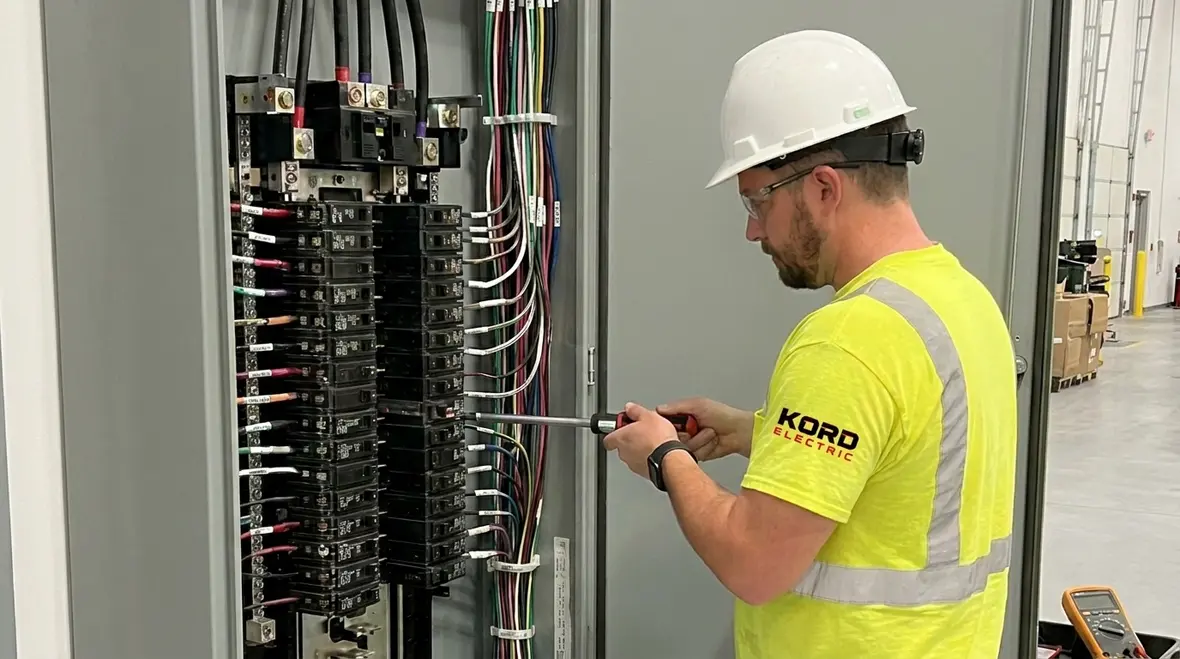
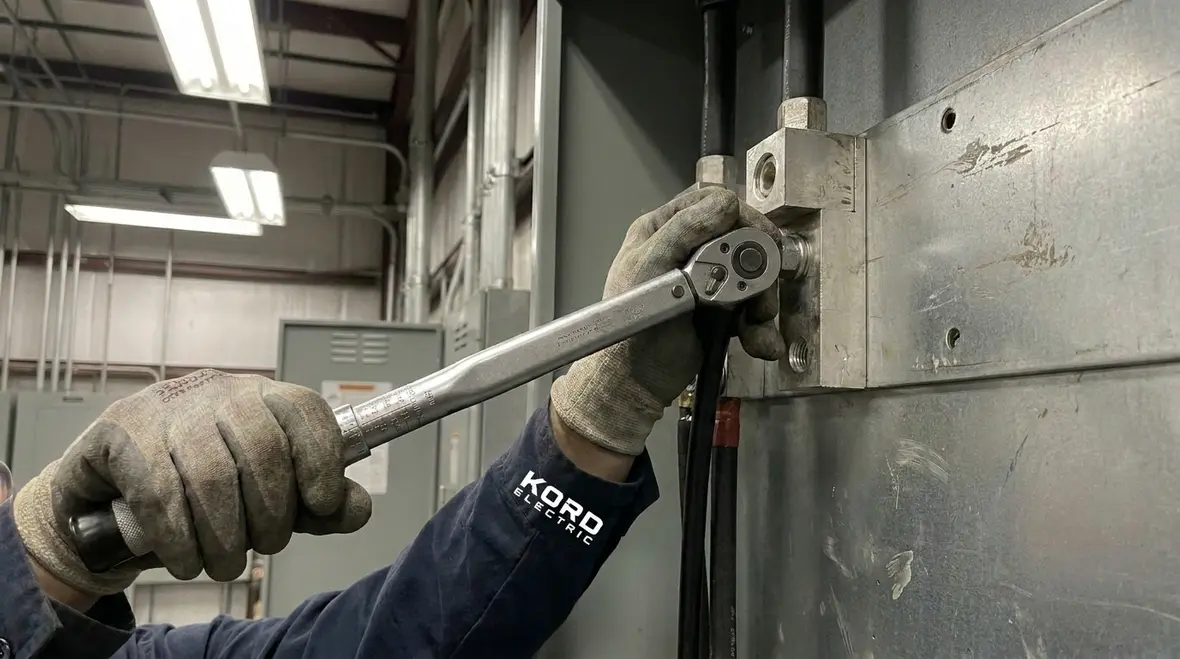
Then we apply torque to manufacturer specifications. This matters because a connection that is slightly loose can heat up, and heat up long enough can lead to failure. On the other hand, over tightening can also damage components. So we balance it correctly. After that, we perform checks and testing that match the scope, including continuity and insulation verification where applicable, plus operational verification after energization.
Because we support facilities where downtime costs money, we build in quality control steps before energizing. As a result, we reduce call backs and extend service life. Our technicians take time to explain the “why” behind each step, so your team knows what we did and why it matters.
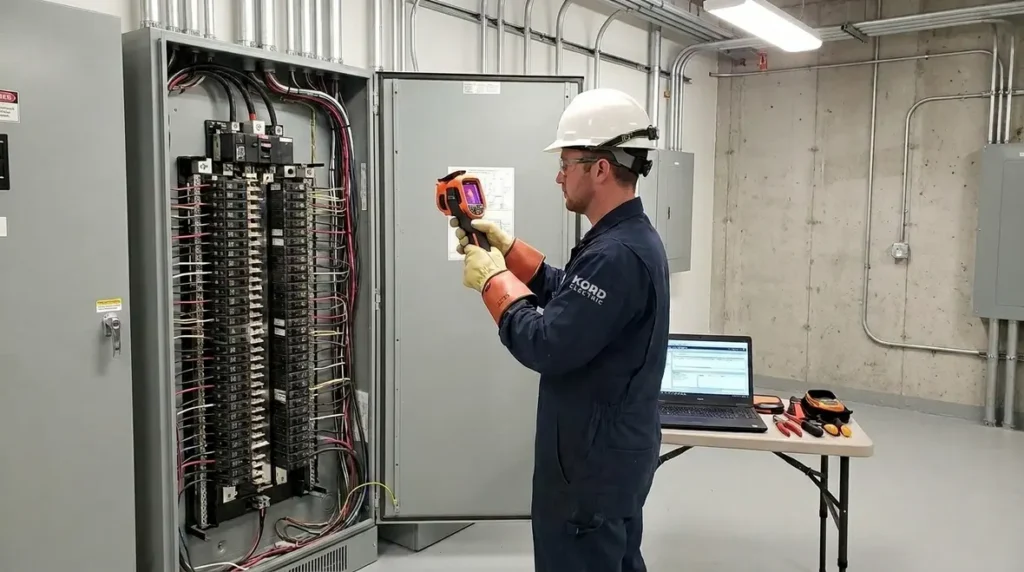
These same principles extend across our broader electrical maintenance work. In our overview of commercial and industrial electrical maintenance plans, we show how torque checks, thermal imaging, and structured inspections keep panels running cooler and safer year after year.
Documentation and labeling that help everyone, not just electricians
Even the best design fails if people cannot use it. Therefore, we include documentation in the project scope. We provide clear labeling for breakers and circuits, and we align the panel directory with the one line diagram and field walkthrough notes. Then we make sure the facility team can understand it quickly during routine checks, after tenant improvements, or during emergency troubleshooting.
We also add practical notes when the electrical setup includes special conditions such as dedicated circuits for life safety interfaces, equipment shutoff sequences, or motor control feed requirements. Additionally, we update records when field conditions differ from original plans. This is where our service staff shines: they talk with site staff, confirm what equipment actually exists, and ensure the records match reality.
In commercial property management, the electrical system changes over time. A clean paper trail prevents confusion and helps the next contractor move faster. It also keeps maintenance from becoming a scavenger hunt where the prize is a working circuit and the villain is unclear labeling.
If you have ever opened a panel door and found faded handwriting and mystery abbreviations, our electrical panel labeling guide offers a practical roadmap to transform that confusion into a clear, standardized system.
Maintenance planning after installation and during upgrades
After installation, we plan for how the facility will operate. That includes recommendations for inspection intervals, terminations checks as allowed by the environment, and load verification when new equipment enters service. Moreover, if the building undergoes remodeling, tenant turnover, or process upgrades, we encourage a pre change review so the subpanel stays properly balanced and sized.
When clients ask about upgrades, we approach it like a system, not a patch. We examine the entire distribution path, including upstream panels and transformers where relevant. Then we evaluate whether the subpanel has room, whether feeder capacity supports growth, and how the new loads interact with existing circuits. This helps prevent scenarios where a “small added load” quietly pushes the system past comfortable limits.
Our technicians also explain safe operating practices in business language. For example, we show how to avoid repeated resets, how to recognize overheating signs, and when a breaker trip indicates a design issue rather than a one time event.
For facilities that want these reviews on a schedule instead of only when something goes wrong, our electrical preventive maintenance programs bundle inspections, testing, and documentation into a predictable plan that keeps subpanels and main distribution equipment ready for growth.
Commercial and industrial code readiness and safety checks
Safety drives our process, so we follow code requirements and project specifications throughout. First, we verify clearances, mounting, grounding and bonding, and the suitability of equipment for the environment. Then we confirm correct breaker type, panel rating, and protection methods that match the intended use. We also coordinate with other trades to avoid conflicts that could compromise access or safe routing.
After installation, we run verification steps to ensure the system behaves as designed. We focus on how the panel performs under realistic conditions, including correct identification of circuits and safe operation of protective devices. Meanwhile, our team prepares documentation needed for inspection readiness and future maintenance.
In short, our approach keeps commercial facilities dependable. And unlike a bad sitcom plot, the electrical system should not rely on luck to get through the day.
For owners and managers who want a broader view of how the National Electrical Code shapes panel installations, upgrades, and maintenance, our explainer on NFPA 70 and the 2026 code cycle highlights where commercial buildings most often run into trouble and how to stay ahead of those issues.
FAQ
What happens if a facility adds new equipment later?
We recommend a capacity and load review before adding loads. New equipment can alter demand, change phase balance, and impact starting current. If we rework the subpanel with proper planning, the facility avoids trips, equipment stress, and repeated service calls that nobody wants, including the technician who has to come back. We can help manage the upgrade, update labeling, and document the changes so the system remains trustworthy.
For many property teams, these changes arrive steadily over time—new tenants, process tweaks, expanded hours. That is why pairing commercial subpanel installation best practices with a structured preventive maintenance plan gives you a long-term framework to review loads, confirm torque, and catch small issues before they become major outages.
Ready to upgrade or install a subpanel for your commercial or industrial facility? Kord Electric brings disciplined planning, load management, and workmanship that stays reliable under real operating conditions. Our technicians explain decisions clearly, and our team documents everything so your maintenance staff can support the system confidently. If you want a power setup built for growth, safety, and fewer surprises, contact us today to schedule a site evaluation. We will map the load, size the components, and install with precision from start to energization.
If you are planning a broader upgrade alongside your subpanel work—such as new lighting, equipment additions, or a full distribution refresh—our commercial services extend from industrial and commercial lighting to complex power troubleshooting and design-build projects, so one team can coordinate the entire electrical picture.