Preventative Electrical Maintenance for Warehouses
Kord Electric walks into industrial warehouses the way a good mechanic does: not to panic, but to prevent the breakdown that always shows up when nobody has time. That is why we start with a preventative electrical maintenance checklist for warehouses, focused on the systems that keep material moving, lights on, and safety controls alive. In this article, our team, along with our expert service staff, explains what we inspect, why it matters, and what we do when something looks “fine” but actually is not. And yes, we will talk about electricity like it is a living thing, because in a warehouse, it behaves like one. It will cooperate, until it does not.
Why industrial warehouses need scheduled electrical care
Industrial warehouses run on tight schedules, high loads, and constant motion. Therefore, electrical wear happens faster than most people expect. Motors start and stop all day. Conveyors pull surge current. Lighting switches, controls, and automation gear cycle again and again. Over time, that repeated stress loosens connections, heats components, and builds up defects behind walls or inside panels.
At Kord Electric, our technicians treat this like a risk management plan, not a chore. We inspect early, we find patterns, and we reduce the chance of downtime. Meanwhile, property managers often only notice the problem after the alarms blare or the lights flicker like a bad stage effect from a low budget thriller.
So we plan work ahead of failure, because failures do not politely wait for business hours. They arrive at the worst possible time, like a pop quiz nobody studied for.
Electrical systems that typically get overlooked first

Many facilities focus on what they can see: lighting, visible panels, and obvious outages. However, most reliability issues hide in the details. For example, warehouse feeder circuits can lose connection quality at terminals, even when the breakers still operate. Bus bars can show heat discoloration that is subtle but serious. Neutral bars may carry unexpected load imbalance in large distribution systems.
Also, industrial buildings often include power distribution for dock equipment, HVAC units, refrigeration, compressed air controls, and sometimes charging infrastructure. As a result, the distribution network becomes more complex over time. We see older installations that were built for one phase of growth and later expanded with new loads, without full coordination checks.
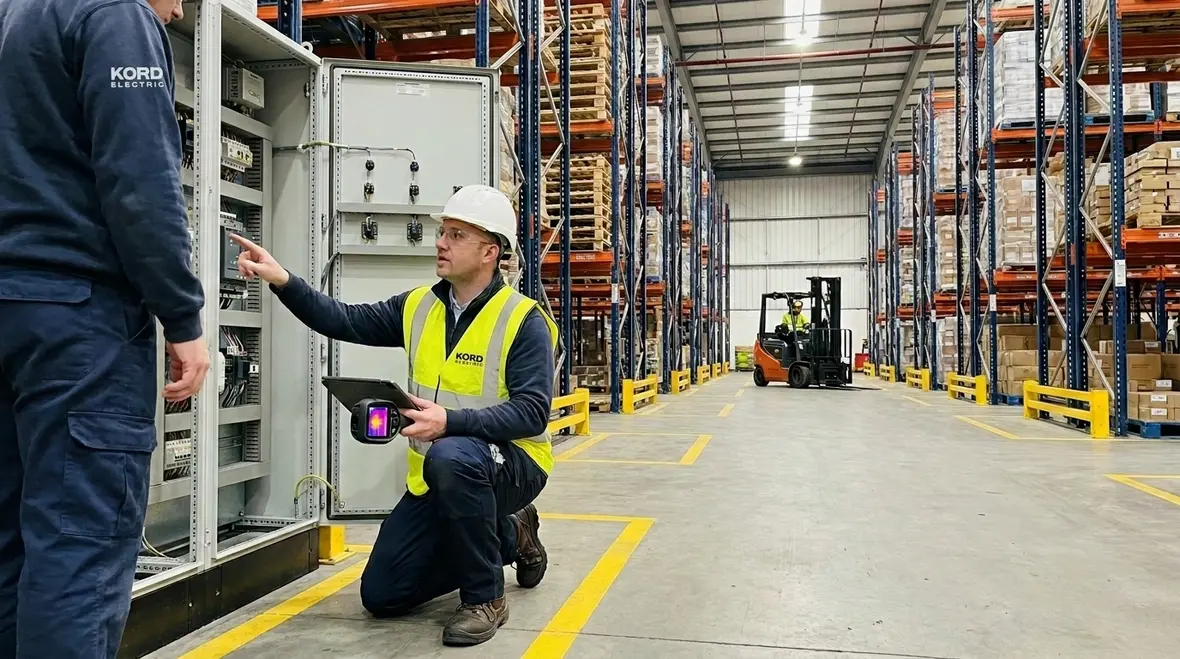
Our expert service staff makes this clear during site walks. They explain what we find, how it can fail, and why a small change today can prevent a major repair later.
How a warehouse inspection keeps reliability high
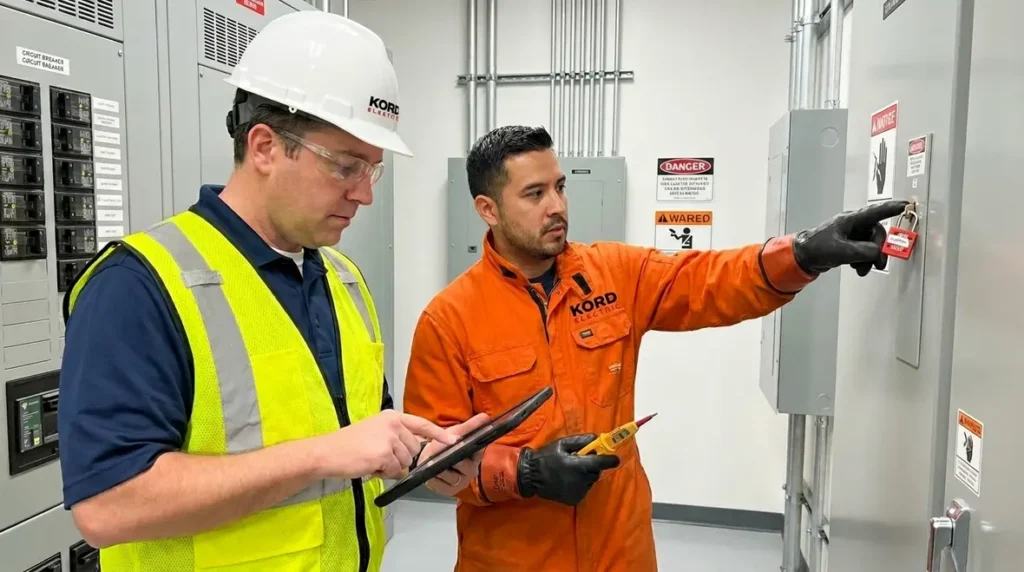
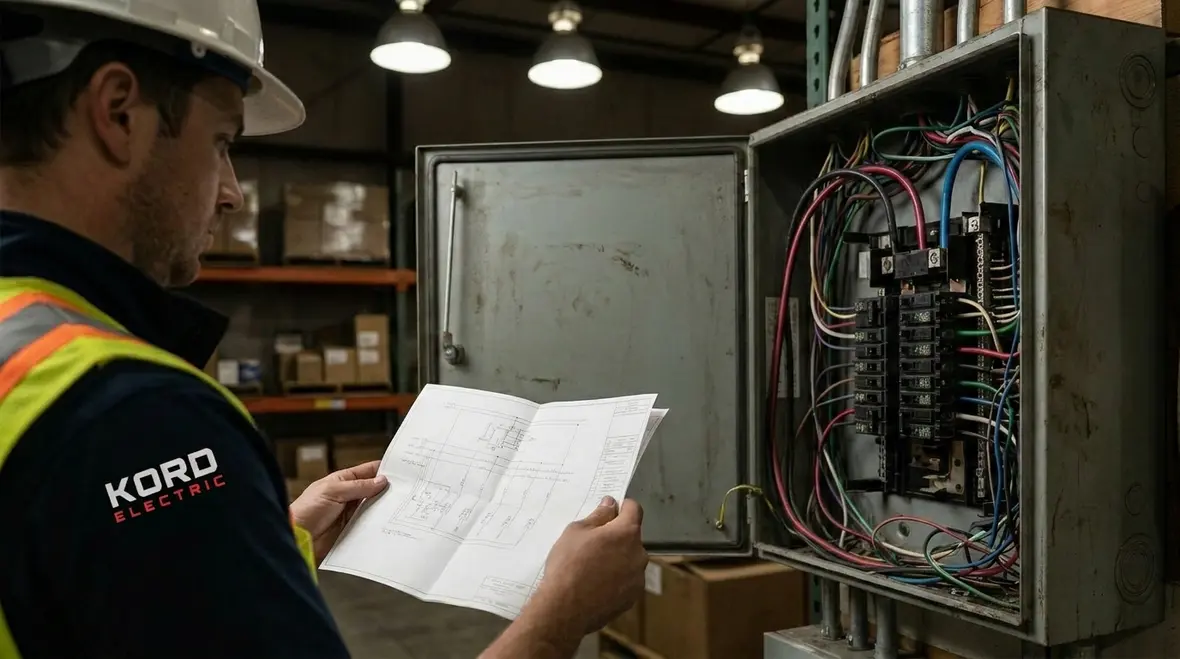
To keep reliability high, our technicians follow a structured approach. First, we review electrical one line diagrams and as built documentation where available. Then we verify that field conditions match the design intent. Next, we inspect the physical system and perform targeted testing where it makes sense.
In practice, we build the work around the same core items, while adjusting to each facility. For instance, high bay lighting tied to dimming controls needs different attention than basic on off lighting. Likewise, a facility with automated racking and robust monitoring needs more disciplined checks on control power and surge protection.
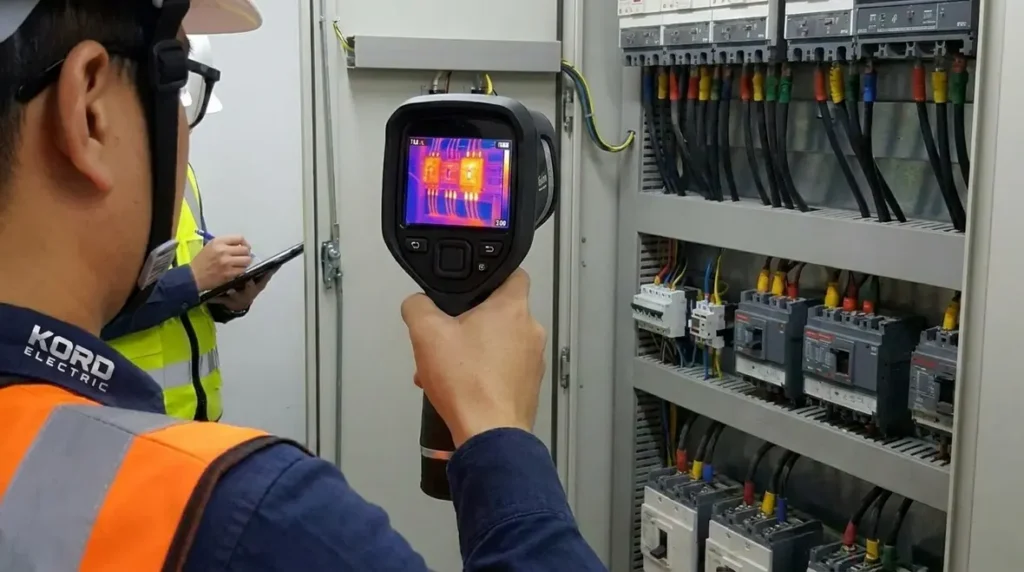
Meanwhile, we do not just “check boxes.” We look for early signs of stress such as loose terminations, overheating, corrosion, worn insulation, and abnormal torque marks. We also watch for signs of water intrusion in conduits and enclosures. In warehouses, that can start small and grow fast, especially near loading areas.
When our team explains findings to others on site, we translate test data into plain language. We show what the reading suggests, where it occurs, and what schedule we recommend to address it.
Common failure points in distribution and panels
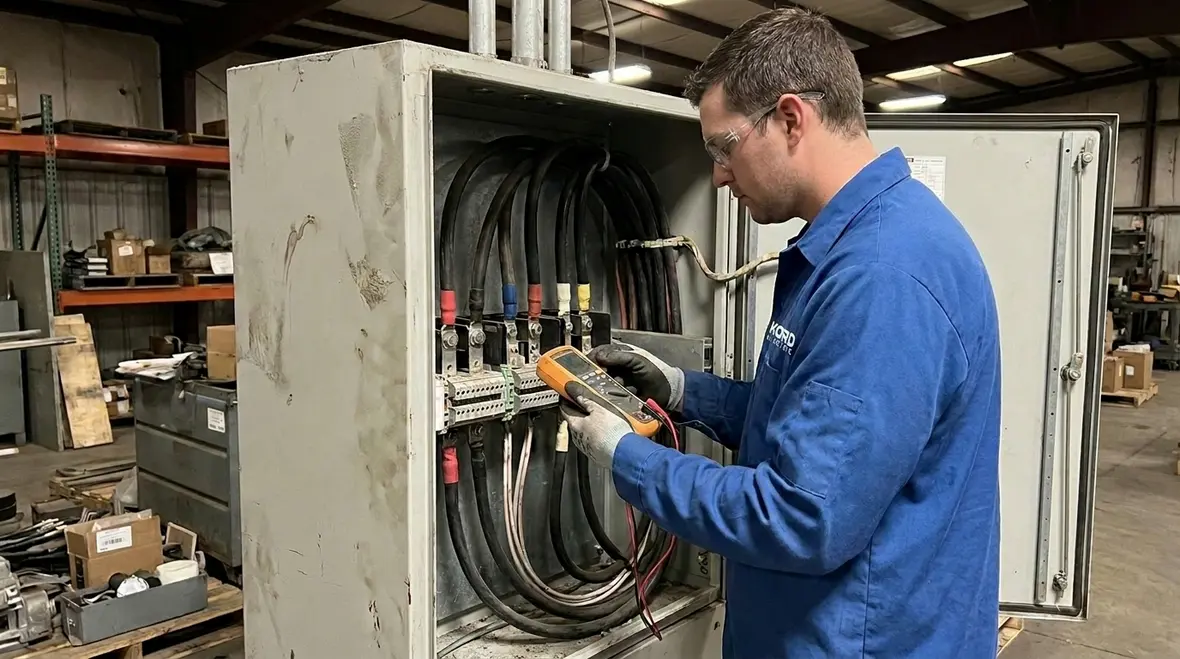
Distribution systems and panelboards carry the highest value loads, and they fail in ways that look calm until the moment they do not. Therefore, we focus on the points that create heat and resistance. Thermal cycling loosens connections. Dust settles into enclosure vents. Moisture creeps into seals and gaskets. And when the warehouse adds new loads, the system can exceed what it was meant to handle.
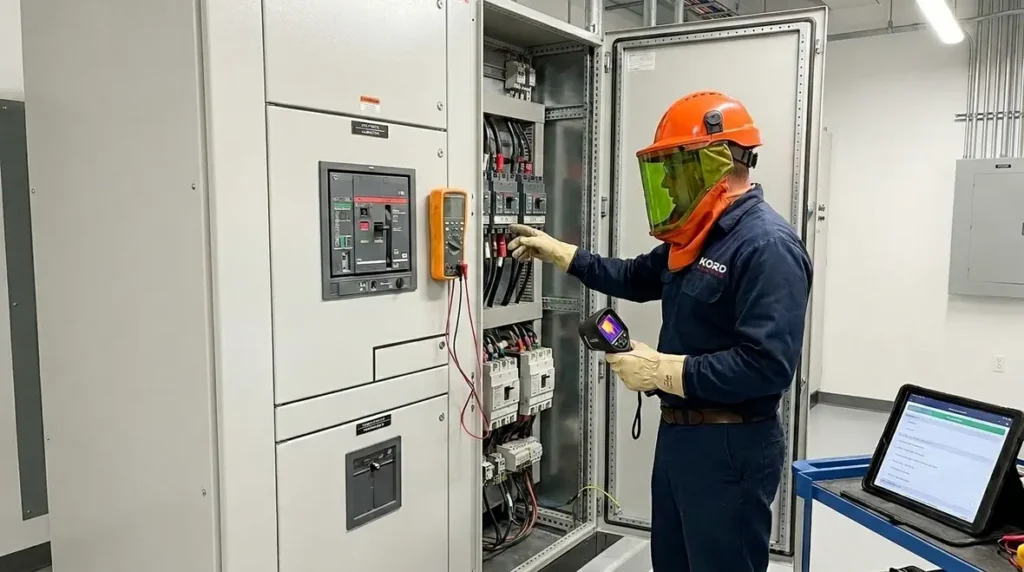
We also treat panel integrity seriously. Improper breaker torque, corrosion on bus interfaces, aging insulation, and failing components all show up as measurable risk. In addition, arc flash hazards can increase when maintenance falls behind, because deterioration changes how energy can travel in a fault condition.
Our technicians describe these risks directly, not in a fear based way, but in a practical way. We explain how a targeted service plan reduces danger, improves uptime, and protects people. If that sounds like “boring safety talk,” that is okay. Boring is good when it keeps a facility running.
Testing and documentation that keep teams aligned
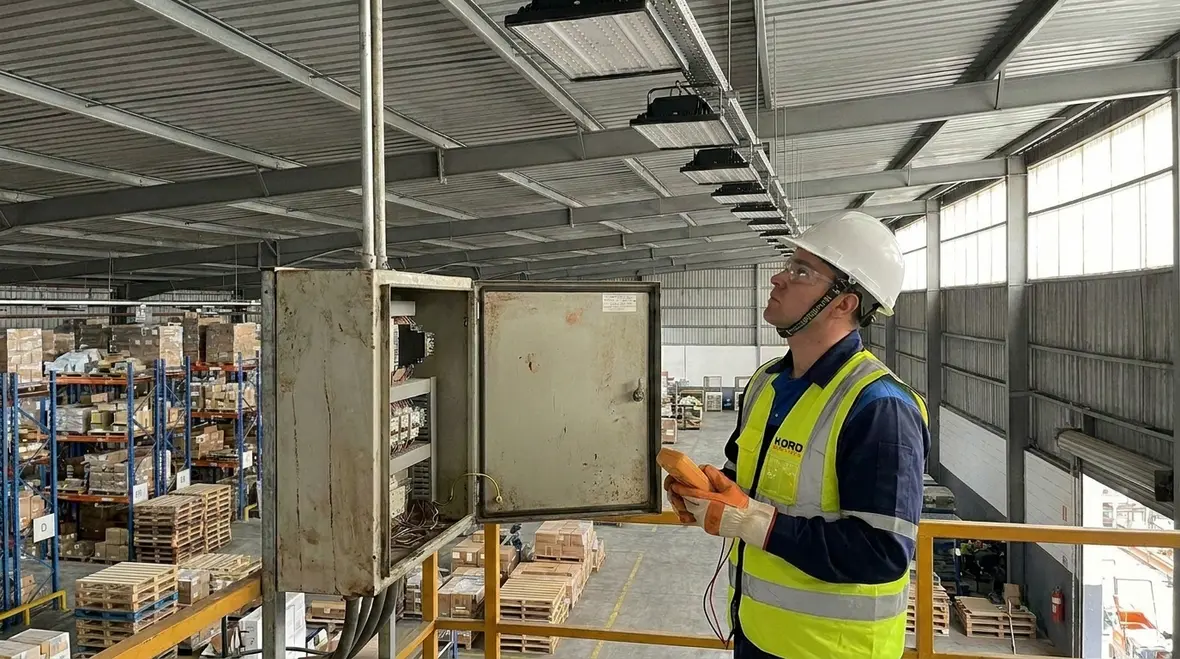
Industrial clients often ask for two things: fewer surprises and cleaner records. We provide both. Testing does not just verify performance today. It also creates a baseline for future comparison. As a result, when issues begin, we can spot trends instead of guessing.
At Kord Electric, our preventive electrical maintenance checklist for warehouses includes documentation that others can use. We log test results, note visible defects, track recommendations, and outline priorities. Then we align recommendations with operational needs so maintenance does not disrupt workflows more than necessary.
For example, certain testing can be scheduled during low activity windows. Other tasks can be grouped by equipment location so teams move efficiently across the site. Meanwhile, our expert service staff explains the why behind each step, so stakeholders understand what we do and why we recommend specific actions.
We also encourage coordination with building operations. That coordination matters when warehouses share power with office sections, security areas, or maintenance workshops. It matters even more in major property buildings where multiple tenants rely on a stable electrical backbone.
Data center style thinking for industrial power backbone
Many warehouse facilities now host sensitive systems such as network equipment, security monitoring, access control, and sometimes data rooms for operations. Therefore, we apply a data center approach to the electrical infrastructure when the building includes similar requirements. That means focusing on the power path, the stability of distribution, and the reliability of upstream components.
Kord Electric references our broader electrical infrastructure essentials guidance for these scenarios, because the same logic holds true: clean power, correct protection, and disciplined maintenance reduce downtime risk. In warehouses, this thinking shows up as stronger attention to switchgear readiness, generator related coordination when present, and careful evaluation of surge protection and distribution health. For readers who want to explore this mindset in more depth, you can review our related insights in Data Center Electrical Infrastructure Essentials.
Also, we consider how the system handles transient events. Motors, welding equipment, and heavy machinery create electrical noise and surges. However, if protection devices and grounding systems fail to perform as expected, those disturbances can travel into sensitive loads. So we inspect grounding connections, bonding, and protective device performance to help keep the entire backbone stable.
And yes, in case you are wondering, electrical stability matters even when the only thing humming is the HVAC system. The building does not care that it is “just a few motors.” Electricity cares.
Preventative maintenance schedule and scope that fit real operations
A great plan fails if it ignores real operations. That is why we recommend schedules that match risk levels and usage patterns. Some tasks can occur on a routine cycle, while other checks depend on load changes, equipment age, and environmental conditions.
For commercial and industrial facilities and major property buildings, our approach typically includes a mix of visual inspection, mechanical checks on enclosures, targeted electrical testing, and documentation updates. We also expand scope when we see signs of stress, such as recurring hot spots, nuisance tripping, or abnormal load imbalance.
Importantly, we coordinate with others on site. We schedule around receiving windows, shift changes, and any operations that cannot pause. Then we communicate findings in a way that helps decision makers plan budgeting and corrective work.
If a facility has growth plans, we also help plan electrical capacity. That includes reviewing how future loads may stress feeders and panels, and it includes recommendations to prevent last minute emergencies. Because nothing ruins a rollout like an electrical bottleneck. Not even a surprise holiday rush, and those can get chaotic.
FAQ
Conclusion: choose reliability before the lights flicker
Kord Electric helps commercial and industrial warehouses protect uptime through preventative electrical maintenance checklist for warehouses planning, testing, and clear documentation. Our technicians work with your team, we explain findings in plain language, and we schedule service around real operations. If you want fewer surprises and a safer electrical system across your major property building footprint, contact Kord Electric today. Let us review your site, set a maintenance plan, and keep your warehouse running with calm certainty.
For facilities leaders who want to extend this approach beyond a single building, our broader commercial and industrial electrical maintenance programs provide the same structured, proactive mindset at scale. You can learn more on our dedicated service page for Electrical Preventive Maintenance, then bring those principles directly into your warehouse operations.