Preventing Electrical Harmonics in Industrial Sites
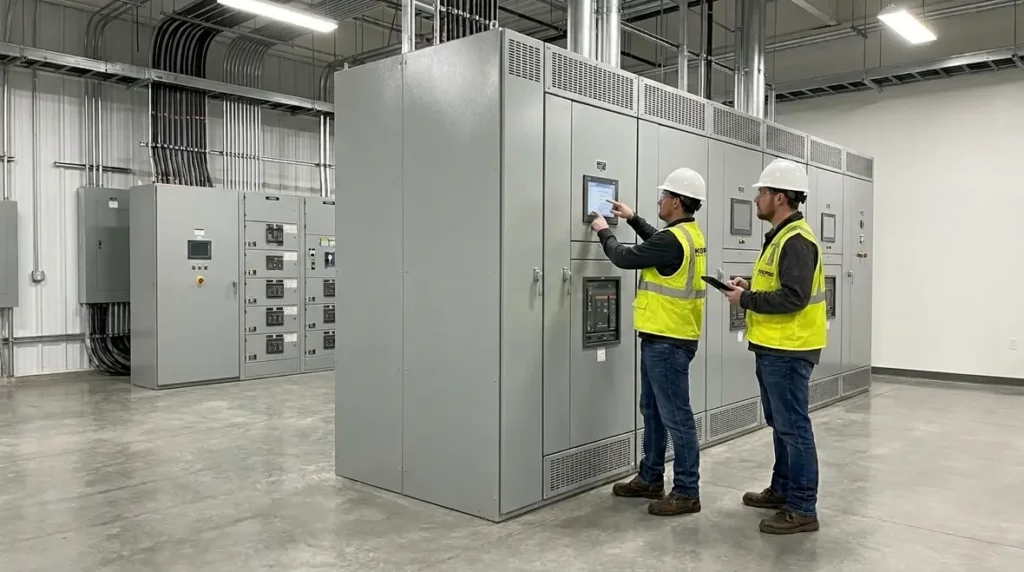
In commercial and industrial facilities, power rarely stays “clean” for long, and that is where preventing electrical harmonics issues becomes a serious, everyday job. Harmonics can quietly stress drives, transformers, motors, capacitors, and wiring long before anyone sees visible damage. As a result, plants experience nuisance trips, overheating, higher energy use, and annoying maintenance calls that show up like an uninvited guest who insists they “just came by for a minute.” At Kord Electric, we focus on commercial and industrial electrical maintenance, so our team helps property owners reduce harm early, not after the equipment starts acting like it is haunted.
Why harmonics show up in industrial sites even when power looks fine
Many facilities assume that if the voltage and frequency read “normal,” the electrical system must be healthy. However, the truth is more complicated. Harmonics often come from loads that do not behave like simple, steady resistors. In modern buildings, this includes variable frequency drives, soft starters, LED lighting drivers, uninterruptible power supplies, welding equipment, and large rectifier systems. While those devices do their jobs, they can also inject distorted currents into the electrical network.
Then, instead of a smooth sine wave, current becomes chopped and reshaped. That, in turn, creates additional frequency components that travel through conductors and equipment. Consequently, motors can run hotter, transformers can vibrate, and panels can experience extra losses. Even if nobody smells smoke, that heat is still happening. Moreover, harmonics can cause voltage distortion that affects sensitive controls and communications.
Our experienced technicians at Kord Electric explain this in plain terms during site walks. In many cases, they show clients the difference between “power that measures okay” and “power that behaves okay.” And yes, we keep it calm, because arguing with an electrical diagram is like debating a blender.
Spot the early warning signs before equipment pays the price
When harmonics build up, they usually leave clues long before a failure. First, look for symptoms that seem to come and go. For example, crews may notice tripped breakers, erratic behavior in control circuits, or intermittent faults that do not match a single obvious cause. Next, monitor temperature trends. Equipment that runs hotter than usual often indicates excess losses created by distorted currents.
Power factor also tells a story. Many teams track it during commissioning, but they stop watching once things “settle.” Yet harmonics can keep power factor depressed or unstable, especially when additional loads come online. In addition, look at neutral currents. In some installations, triplen harmonics increase neutral loading, which can overheat neutral conductors in panels.
We also recommend reviewing event logs and maintenance history. Then we compare those patterns to changes in production schedules, lighting upgrades, or new equipment installations. Our technicians frequently find that harmonic conditions shift after a project, not because someone “did it wrong,” but because the electrical system absorbed new non linear loads without enough planning.
Preventing electrical harmonics issues with smarter design and installation
Preventing electrical harmonics issues starts before problems arrive. When Kord Electric plans and supports upgrades for commercial and industrial facilities, we encourage a system approach rather than a quick fix. For example, we consider where non linear loads connect, how the grounding and bonding are arranged, and how the distribution system responds under load.
One practical step involves selecting appropriate harmonic tolerant equipment, especially for sensitive drives and power supplies. Another step focuses on panel design. Proper conductor sizing, neutral routing, and distribution layout matter because harmonics follow the paths you build for them. Additionally, we evaluate transformer connections and consider how they handle distorted currents.
We also emphasize the importance of coordinated protection. Protective devices must clear faults without creating nuisance operations. Therefore, we align breaker and relay settings with the system characteristics, not just with generic guidance. Our expert service staff often explains the reasoning behind these decisions during walkthroughs, using simple comparisons so clients feel confident, not confused.
And if you are wondering whether this is just “electrical paperwork,” think of it as industrial seatbelts. You do not test them by crashing. You design for the moment when reality shows up.
Maintenance plans that reduce harmonics stress over time
Even the best design cannot ignore real-world changes. Loads get replaced. Production schedules shift. Facilities add servers, compressors, HVAC upgrades, or new manufacturing lines. That is why Kord Electric supports electrical maintenance plans tailored to commercial and industrial sites.
When we use our commercial and industrial electrical maintenance plans, we help teams stay ahead of system drift. First, we schedule inspections that look beyond a quick visual check. Then we include measurements that uncover distortion and temperature risk. After that, we document findings so future work connects to past performance.
In many buildings, the “maintenance” everyone remembers is the occasional outage repair. However, the work that matters happens in the quiet period. We verify terminations, evaluate connections that experience heat cycling, and check for conditions that can make harmonics effects worse. Loose connections, corrosion, and aging components increase resistance, and that amplifies heat. Consequently, harmonics can push a marginal condition past the breaking point.
Our technicians also help facilities standardize how they log power quality notes, so teams can spot trends. And yes, once the trend lines start talking, maintenance becomes less like guessing and more like reading.
For properties across the region, pairing harmonics testing with structured maintenance and broader Los Angeles County electrical services keeps everyday operations calmer, safer, and easier to plan around.
Power quality testing and corrective actions that actually move the needle
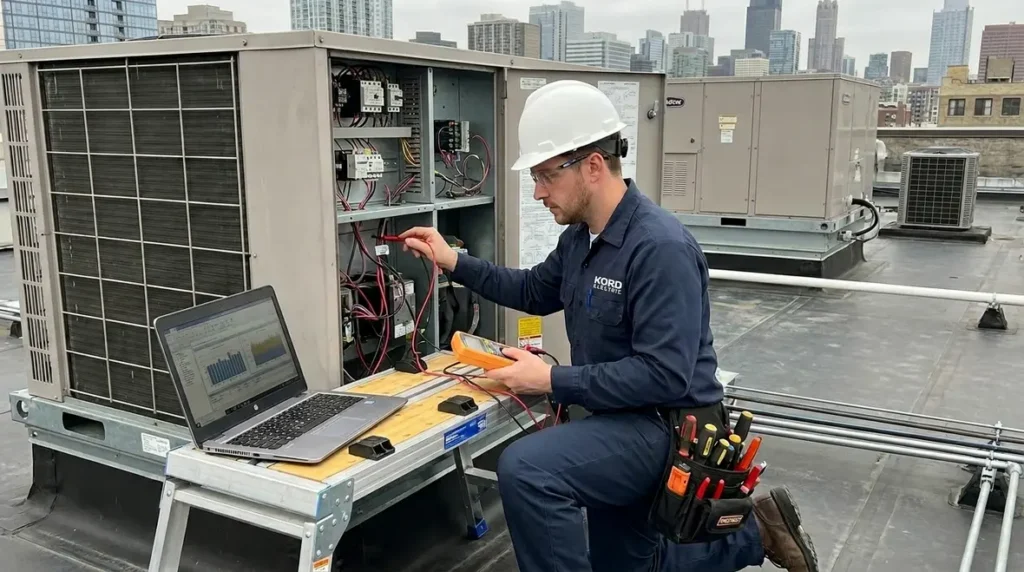
To manage harmonics, you need more than assumptions. Kord Electric uses power quality testing to quantify the distortion and identify which loads contribute most. Then we interpret those results in context: the facility’s operating profile, equipment list, and distribution layout.
Based on findings, corrective actions may include filter solutions, targeted mitigation for specific equipment, and operational adjustments. For instance, if certain drive installations push distortion, we evaluate whether their configuration can be improved or whether additional conditioning is needed. If capacitors contribute to resonance or amplify specific harmonic orders, we address that risk with proper selection and coordination. In addition, we look at how the system behaves during different load levels.
We also ensure that corrective work does not create new issues. In other words, we do not treat harmonics like a single villain. We treat it like a group project where every device affects the final grade. Therefore, our technicians coordinate the electrical changes with the site’s requirements for uptime and safety.
And if someone tells you harmonics are “only a theory,” we invite them to stand near overheated neutral conductors. That is not a lab experiment. That is the real world, and it has a way of correcting opinions fast.
How we keep major properties stable during upgrades and expansions
Commercial and industrial facilities often expand in phases, and that is where harmonic issues can sneak in. New tenants add loads. New production equipment changes demand. Lighting retrofits can alter driver behavior. Meanwhile, existing infrastructure remains in service.
Kord Electric supports these major property upgrades by planning electrical integration carefully. We review one line diagrams, load schedules, and available capacity. Then we verify that the distribution system can handle new non linear currents without overloading neutrals, overstressing transformers, or increasing thermal risk.
During construction or retrofits, we also reduce harm by controlling how and when equipment gets energized. Proper commissioning matters. We test after installation, confirm settings for drives and power supplies, and validate that protective devices operate as intended. As a result, facilities avoid the common pattern where “everything works” during commissioning, then slowly deteriorates as usage changes.
Our expert service staff explains the plan in direct language. That means facility managers understand what we test, why we test it, and what actions come next. They get clarity, and teams get fewer surprises.
For many sites, harmonics mitigation also ties into broader reliability planning, from emergency power strategies to ongoing preventive maintenance that keeps changes on paper aligned with how equipment behaves on the floor.
FAQ
Final CTA: Schedule a harmonics risk review with Kord Electric
If your facility runs drives, converters, or modern power electronics, harmonics risk is not a future problem. It is a current condition that can build quietly. Kord Electric helps commercial and industrial facilities prevent electrical issues through testing, maintenance planning, and practical corrective actions. When we send our technicians to your site, we explain what we find and what we recommend, step by step. Reach out today to schedule a power quality and harmonics risk review, and keep your electrical system steady for the long haul.
If you also want a broader strategy around stability, reliability, and preventing electrical harmonics issues from showing up again, connect this work with a structured maintenance program such as our commercial and industrial electrical maintenance plans so your next upgrade, expansion, or retrofit builds on a strong electrical foundation.