Preventive Maintenance for Factories That Protects Output, Not Just Equipment
At Kord Electric, we believe preventive maintenance for factories is not a nice-to-have. It is a daily discipline that helps commercial and industrial facilities keep machines running, power quality stable, and production schedules on track. When teams wait for a failure, they pay twice: first in downtime, then again in emergency repairs that cost more and take longer. In contrast, when we prevent issues early, we keep motors, drives, switchgear, and control panels healthier for longer. And yes, nobody wants their plant to behave like a pop quiz no one studied for, especially when orders are due.
How downtime quietly steals profit in industrial spaces
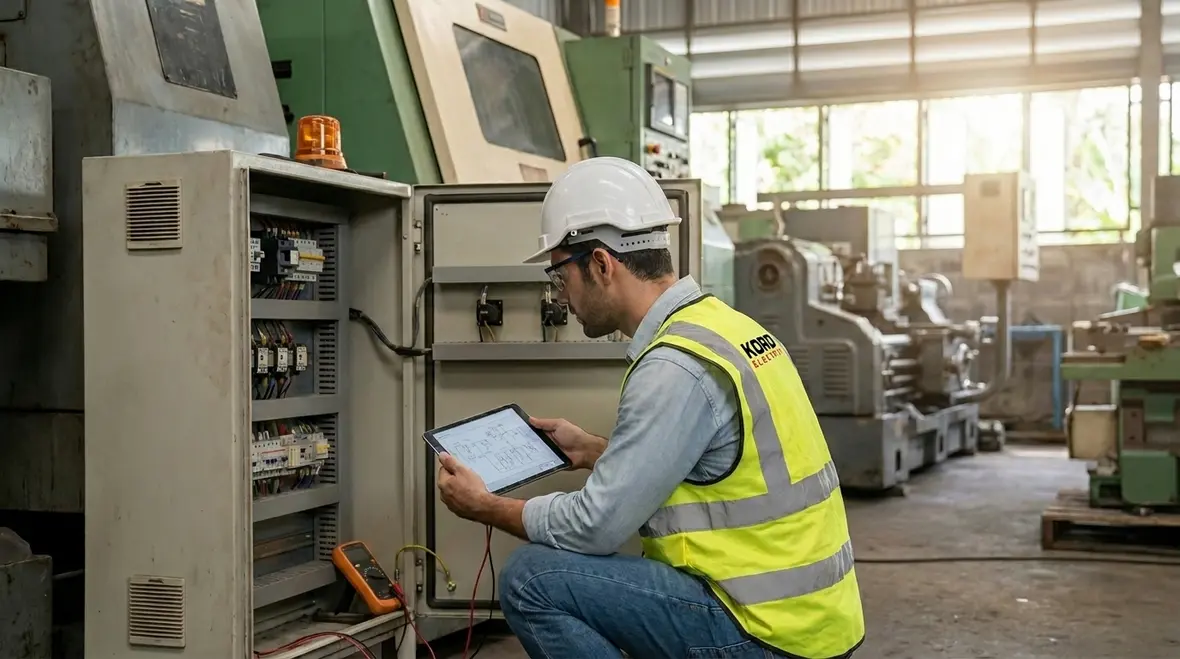
In factories, downtime rarely looks dramatic at first. Instead, it shows up as slow starts, short stops, nuisance trips, and “we will fix it later” decisions. Over time, these small interruptions add up. Consequently, productivity drops, quality suffers, and shift handovers turn into blame games that waste more time than the original failure.
Others see only the outage clock, but we track the full picture. When equipment stops, material can pile up. Operators pause processes that create bottlenecks downstream. Meanwhile, maintenance teams scramble for parts, tools, and access. So the schedule slips, and the cost grows beyond the repair bill. In short, preventive work is how we protect output before the plant gets hit with a surprise.
Our technicians and expert service staff explain this plainly: electrical issues often start as patterns, not disasters. For example, a control contactor that sparks slightly more than usual might still work today, but it can degrade fast under real industrial load. By addressing early signs through preventive maintenance for factories, we reduce the odds of a full production stop.
These kinds of hidden electrical problems do not always announce themselves loudly. They develop quietly across panels, feeders, and control wiring, just as they do in large commercial buildings with concealed risks waiting behind the walls and ceilings. That is one reason many facility teams explore structured inspection programs that look past the obvious symptoms and into the true condition of distribution gear, switchgear, and critical branch circuits.
For leaders responsible for multiple sites, this also means tracking downtime cost beyond a single event. Lost batches, rework, missed shipment windows, and creeping overtime all connect back to how reliably power reaches every motor, drive, and PLC. When we measure downtime only by minutes of outage, we undercount the impact. When we pair electrical maintenance with production data, we see just how much quiet instability drains profit from the plant floor.
What preventive maintenance for factories covers in real life

Our approach is not a generic checklist. We build maintenance activities around how each facility runs, how often equipment cycles, and how long parts have been in service. Therefore, preventive maintenance stays practical, not theoretical. In many major property buildings and industrial plants, we focus on key electrical and controls areas where failures cause the biggest operational pain.
Typically, Kord Electric preventive work includes these categories:
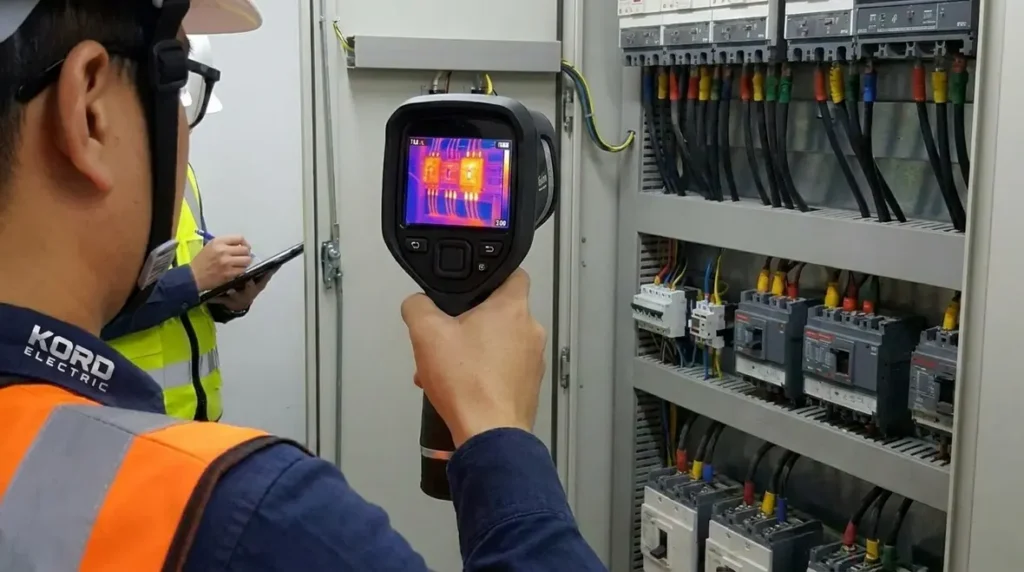
- Electrical power system health such as switchgear inspections, breaker checks, and visual and thermal reviews to find hotspots early
- Motor and drive reliability including inspections for overheating, abnormal vibration patterns, and component wear that precedes failure
- Control and safety circuits where testing helps reduce nuisance trips and supports safer operations
- Connections and terminations since loose or damaged connections can create arcing, heat, and power instability
- Grounding and protection to support stable fault performance and reduce equipment stress
Then we verify results. We do not just “look and guess.” We document findings, track trends across visits, and help teams plan repairs during appropriate windows. That is how preventive strategies turn into sustained productivity instead of a seasonal activity that gets forgotten like last year’s holiday decorations.
In larger commercial properties or multi-building campuses, this kind of structured approach often becomes part of a broader commercial and industrial electrical maintenance plan. Rather than treating each inspection as a one-time event, we help facilities build a rhythm: system evaluation, maintenance planning, service execution, then reporting and optimization. Over time, that rhythm becomes the backbone of both reliability and compliance.
We also keep an eye on where preventive work overlaps with other priorities. For example, facilities planning lighting retrofits, EV charger installation, or rewiring projects can use our inspection findings to time upgrades intelligently. If a panel shows signs of stress, we account for that before adding new loads. If an area already has future projects scheduled, we coordinate maintenance with those windows, so technicians are not opening the same equipment twice in a short span of time.
For teams that want a deeper dive into structured electrical preventive maintenance beyond the factory floor, Kord Electric’s dedicated service page on electrical preventive maintenance explains how planned inspections, thermal imaging, emergency lighting checks, generator and ATS inspections, and compliance documentation all connect into a single program that protects operations across commercial, industrial, and government facilities.
Using skilled technicians to catch issues before they spread
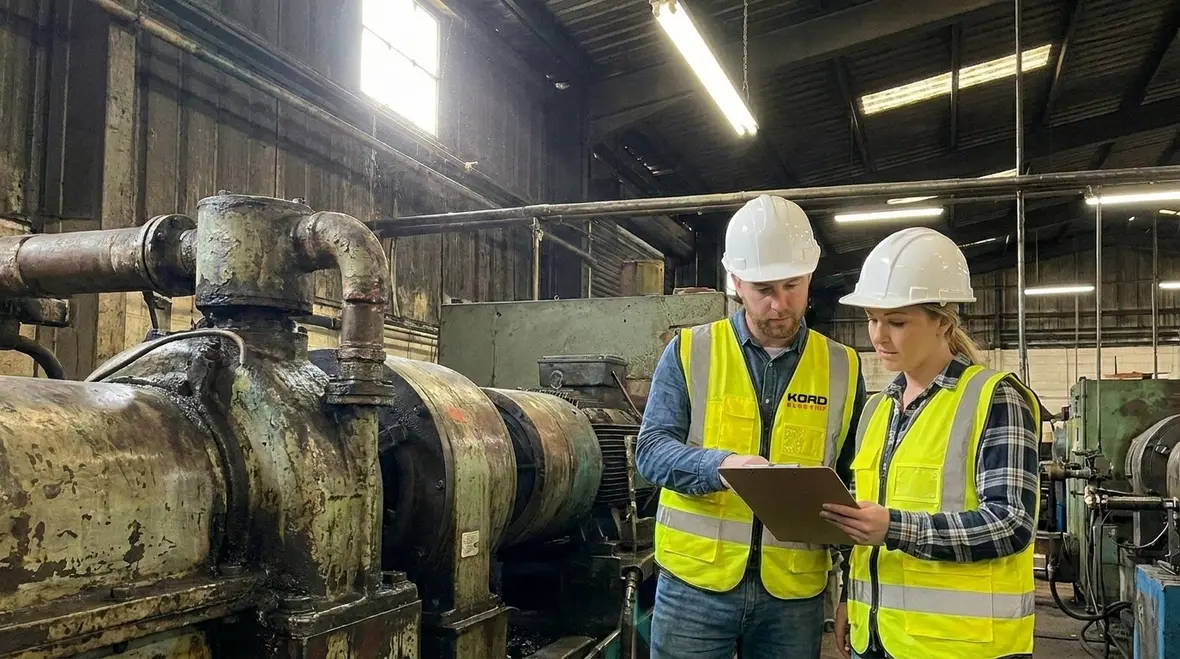
Even the best plan fails if the people executing it do not have the right experience. This is where our technicians and expert service staff make the difference. They speak the language of industrial equipment: they understand loads, operating cycles, plant constraints, and the difference between harmless wear and the start of a real electrical problem.
Moreover, our team explains what we find in plain terms. We do not bury maintenance reports under mystery jargon. Instead, we walk facility managers and maintenance leads through what matters, what can wait, and what needs attention immediately. For example, if an inspection shows increasing thermal stress on a specific panel, we explain the probable cause and the likely impact on reliability. After that, we recommend next steps aligned with downtime tolerance.
Finally, we coordinate with plant teams so maintenance work does not accidentally create new risks. We schedule tests and checks so production keeps moving as much as possible. In other words, we protect uptime while we protect the equipment. It is a rare pairing, like finding a coffee shop that actually respects decaf. Still, it happens.
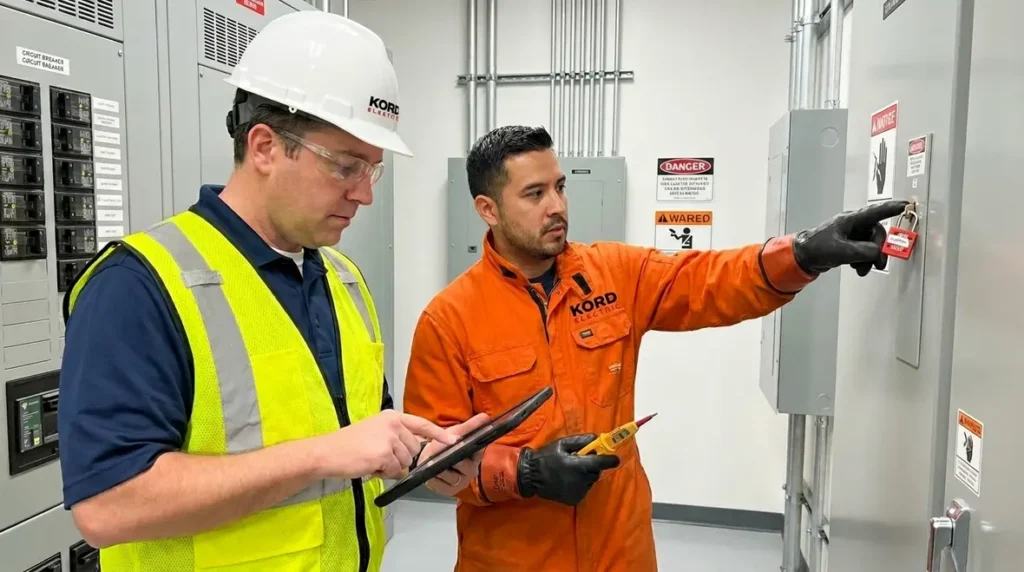
In practice, that coordination can range from brief inspections during lunch breaks to full shutdown maintenance tied to holidays or planned outages. Our technicians map test sequences in advance, confirm lockout-tagout expectations, and clarify which equipment must stay energized. When a facility has multiple stakeholders—from operations managers to safety coordinators—we pull everybody into the loop so no one is surprised when a breaker is open or a line is offline for testing.
Because many of our industrial clients also operate commercial office or logistics spaces under the same umbrella, our technicians carry that same discipline into those environments. Whether they are checking switchgear that feeds production lines or panels supporting data rooms and lighting grids, the goal stays the same: apply trained eyes, careful testing, and straightforward communication so electrical risks do not grow quietly in the background.
How preventive maintenance for factories improves safety and compliance

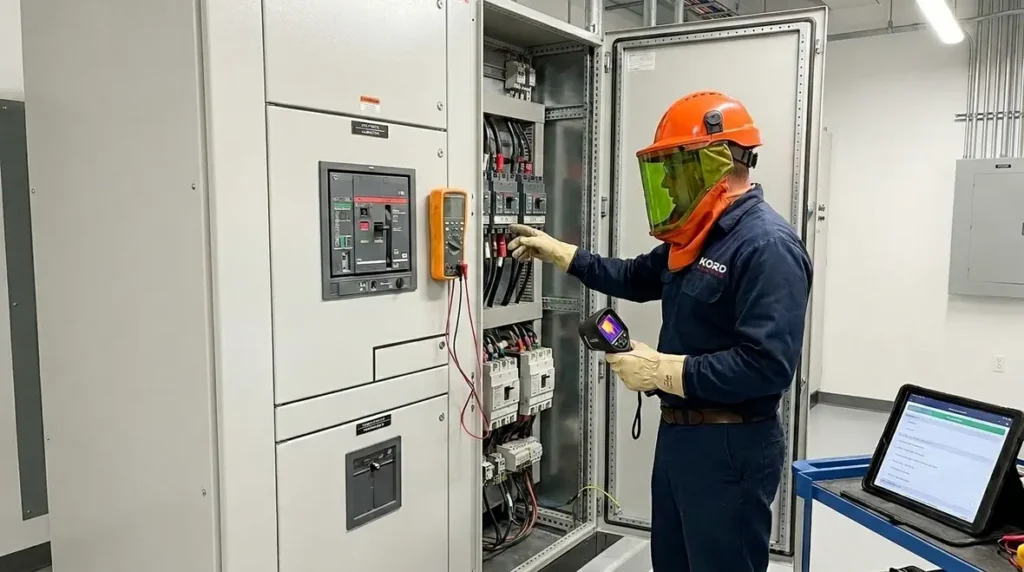
Productivity matters, but safety matters first. Industrial electrical failures can lead to arc flash risk, overheating events, and unexpected equipment behavior. When plants run without preventive controls, they often accumulate hidden hazards in panels, drives, and distribution components. Therefore, structured maintenance helps reduce unsafe conditions and supports consistent protection performance.
Additionally, commercial and industrial facilities usually face strict expectations from internal standards and external regulations. Preventive programs help teams demonstrate responsible practices through documentation, testing records, and corrective action history. This matters during audits, incident reviews, and insurance discussions, because a well-run maintenance approach shows that others did not ignore the signs.
Our service staff helps facilities keep those records organized and readable. Instead of a pile of scattered notes, we provide clear findings and action plans. As a result, managers can make confident decisions, and operators can work with trust. And when the unexpected does happen, the plant has a history that helps engineers respond faster.
As standards like the National Electrical Code and NFPA 70B continue to evolve, this documentation also becomes a bridge between everyday work and formal requirements. Maintenance logs, thermal images, breaker test results, and corrective action reports all tell a story: that the facility did not rely on luck. Instead, it followed a plan. For organizations operating across multiple jurisdictions, this becomes especially important when local inspectors, insurers, or corporate safety teams review how electrical systems are managed.
In some environments, preventive electrical maintenance also supports other safety programs. For instance, clean, well-maintained panels and properly labeled circuits make it easier to follow lockout-tagout procedures. Reliable emergency lighting and documented generator tests back up life safety systems. When the same maintenance mindset extends to data centers, hospitals, or mission critical sites, it directly supports uptime requirements and risk management frameworks alike.
Planning maintenance without disrupting production schedules
Industrial managers do not ask, “Should we do maintenance?” They ask, “When can we do it without losing a shift?” That is why we help facilities plan preventive work around operations, holidays, staffing, and production rhythms. We also help teams prioritize actions so the highest risk gets attention first.
In practical terms, we help define maintenance intervals based on equipment usage and operating conditions. Some assets run near continuous duty, so they need tighter review cycles. Others see lighter load or fewer cycles, so they can follow a more relaxed schedule. Either way, planning beats guessing. It prevents the common problem where maintenance is performed on a random calendar date and ignores real equipment wear.
We also support coordination across teams. For example, if a facility requires shutdown access for a deeper electrical inspection, we align the scope with plant windows. Then we communicate clearly about what to expect, how long the work takes, and what operating states are needed during checks. Consequently, we reduce surprises and keep productivity steady. Because in the real world, a plant outage is like skipping the gym and then acting surprised you feel tired. It is avoidable, yet it keeps happening.
For multi-site operations, we often stagger preventive maintenance so that not every building or line is offline at once. That might mean rotating quarterly checks between facilities or pairing deeper annual inspections with slower production periods. Whatever the pattern, the goal is the same: build preventive maintenance into the calendar so it becomes a recognized part of the production story, not an unscheduled interruption.
This intentional planning also helps connect plant-level work with strategic initiatives such as energy efficiency programs, system upgrades, or code-driven improvements. By understanding when equipment will already be open for inspection, leaders can bundle projects, minimize disruptions, and stretch maintenance budgets further, instead of scattering small, isolated visits across the year.
Power quality, reliability, and steady output
Factories do not just need machines that run. They need power that behaves. Poor power quality can increase motor stress, cause controls misreads, and create nuisance alarms that waste time. When preventive programs include inspections of distribution, connections, and protection behavior, they reduce the chance that electrical instability will disrupt operations.
Also, reliability improves when teams reduce recurring small issues. A plant that experiences frequent nuisance trips often wastes labor on resets and troubleshooting. Yet the root cause is commonly avoidable: heat at connections, component wear, or protection settings that drift out of alignment with actual conditions. With preventive maintenance for factories, these patterns surface early. Then we act before they become a recurring schedule killer.
In addition, preventive maintenance supports smoother scaling. When a facility adds lines, expands shifts, or upgrades equipment, the electrical system must handle new loads. Our service staff can review how existing distribution performs and suggest preventive upgrades where needed. That helps facilities grow without forcing managers to fight electrical problems while they are trying to meet demand.
Many of the same principles apply to other high-demand environments such as data centers, logistics hubs, or mixed-use commercial campuses. Voltage stability, harmonics, and transient events can all impact sensitive equipment. Preventive maintenance that includes targeted testing, voltage monitoring, and inspection of power conditioning gear gives facilities early warning before small fluctuations turn into costly downtime.
When we zoom out, the thread becomes clear: preventive electrical maintenance, whether in a factory, a high-rise, or a mission critical site, is really about protecting output. Product that ships on time, tenants that stay comfortable, servers that stay online, and teams that can trust the systems powering their work—all of that starts with stable, well-maintained electrical infrastructure.
FAQ about preventive maintenance for industrial facilities
Choose Kord Electric to keep your plant productive
When industrial teams invest in preventive maintenance, they protect more than equipment. They protect schedules, safety, and the day-to-day ability to meet demand. Kord Electric brings skilled technicians and expert service staff who explain findings clearly and help you plan maintenance around production. If you run a commercial or industrial facility or a major property building, we can help build a preventive strategy that fits your operation and reduces the surprise outages nobody enjoys. Contact Kord Electric today and let us protect your uptime.
If you are developing a broader reliability strategy that goes beyond a single factory, Kord Electric’s commercial and industrial electrical maintenance plans and dedicated electrical preventive maintenance services give you a structured path forward. From routine inspections to emergency response, the same preventive mindset carries through: protect output, protect people, and keep critical electrical infrastructure ready for the real demands of your operation.
For facilities that want to align preventive maintenance with long-term upgrades, our team also supports projects such as recessed lighting installation, EV charger installation, and targeted voltage correction in commercial and industrial spaces. Each of these services is planned with your existing electrical system, production needs, and compliance requirements in mind, so upgrades complement reliability instead of competing with it.
To explore how a dedicated electrical preventive maintenance program can support your facilities year-round, visit our Electrical Preventive Maintenance service page at https://kordelectric.com/electrical-preventive-maintenance/ and connect with our team for a tailored plan that fits your operation.