Office Electrical Surge Protection for Buildings
Why office electrical surge protection starts every modern upgrade
At Kord Electric, we treat office electrical surge protection like the quiet guard at the door. While equipment runs, systems stay stable, and your teams focus on the work, not the repairs. In modern commercial and industrial facilities, surges do not always announce themselves. They arrive as voltage spikes from utility switching, nearby lightning events, motor starts, and even the dramatic moment someone “just plugs it in.” We design protection that helps keep critical devices calm and reliable, even when the power grid acts like it forgot its homework.
We will explain what surge protection really does, how it should be designed, and what our expert service staff checks during commissioning. Yes, we also make time for your questions, because surprise outages are already stressful enough without mystery answers.
What causes damaging surges in commercial power systems
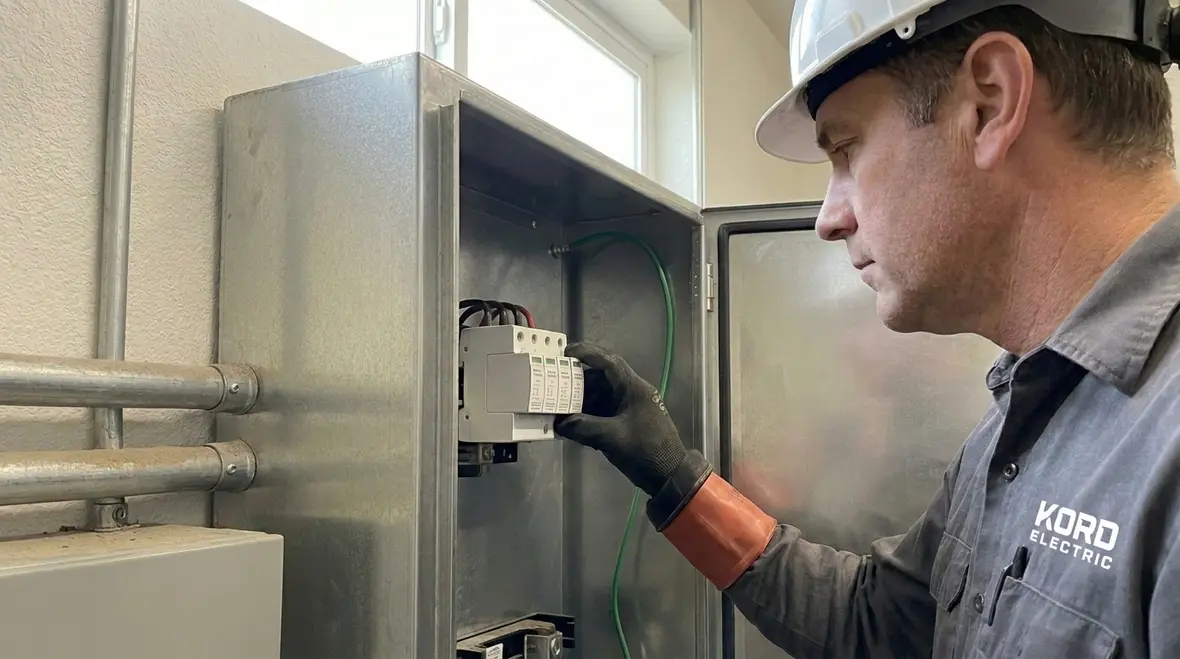
In a major property building, the electrical environment has more moving parts than most people realize. However, the most common surge causes usually fall into a few predictable buckets. First, utility events can create brief voltage surges when the utility changes load or isolates a feeder. Second, internal switching events generate spikes when motors, compressors, elevators, and HVAC control panels start or stop. Third, lightning related activity can induce surges through overhead lines even if the strike never touches your building.
Because commercial and industrial sites share power across many panels and devices, disturbances travel. For example, a motor start on one floor can create a short-lived change in voltage on adjacent circuits. Then, sensitive electronics downstream may see the impact as stress. Moreover, power quality problems rarely show up as a dramatic failure right away. Instead, components degrade over time, like a tire that is slowly losing air while everyone pretends the ride is fine.
That is why surge strategies often appear alongside other reliability upgrades. For example, when a facility explores a rewiring cost guide for commercial electrical systems, surge protection becomes part of the broader plan to stabilize voltage, protect new infrastructure, and avoid reliving the same failures on updated gear.
How surge protection works in plain terms that still matter
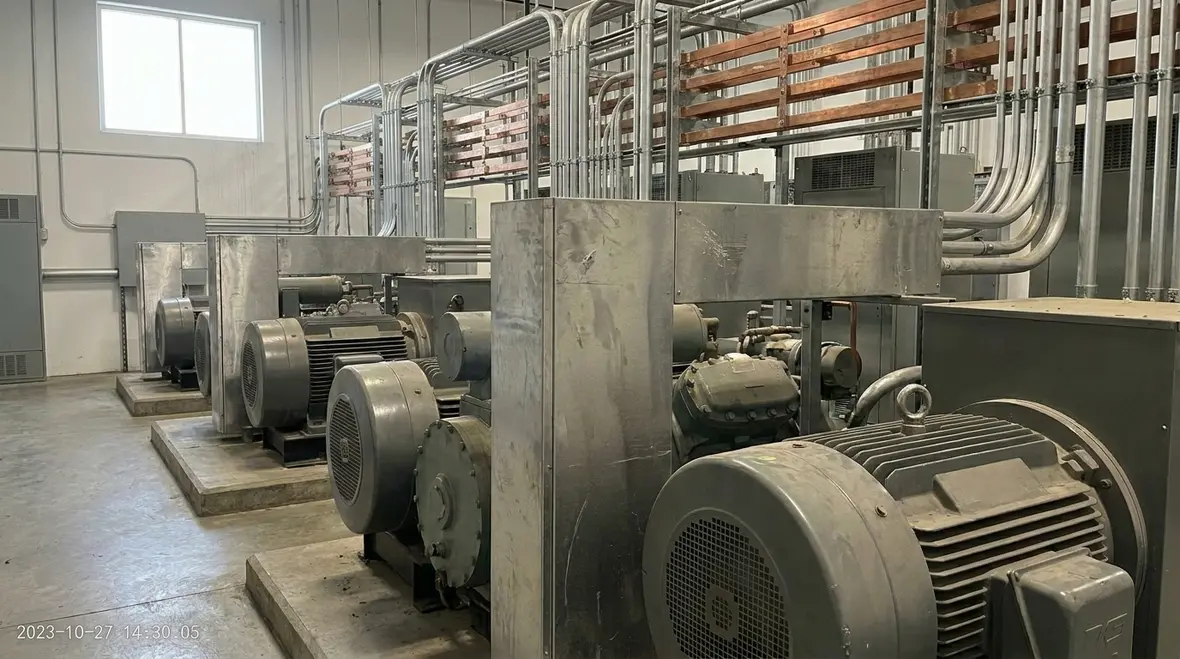
Our technicians explain surge protection in a simple way: it gives excess voltage a controlled path to ground so sensitive equipment does not become the path. In practical terms, surge protective devices, or SPDs, monitor the line voltage. When they detect a spike beyond safe limits, they redirect that energy away from protected equipment.
That is only the start. We also focus on coordination. In many office and industrial setups, you want a layered approach. You place protection at key points so the energy has staged routes. For instance, surge protection at the service entrance can reduce stress at the source, while additional devices at panelboards or critical subpanels help protect smaller loads. This reduces let-through voltage, which is the portion of the surge that still reaches the equipment.
Just like you do not wear one raincoat and call it “weatherproof,” you do not rely on a single device installed anywhere and everywhere. Proper design matters, and we build it that way.
In many facilities, surge protection also supports larger system goals. When owners pursue upgrades like a commercial solar panel electrical integration, coordinated SPDs help protect inverters, monitoring gear, and building management systems that now handle both grid and renewable sources.
Designing a protection plan for modern office and industrial loads
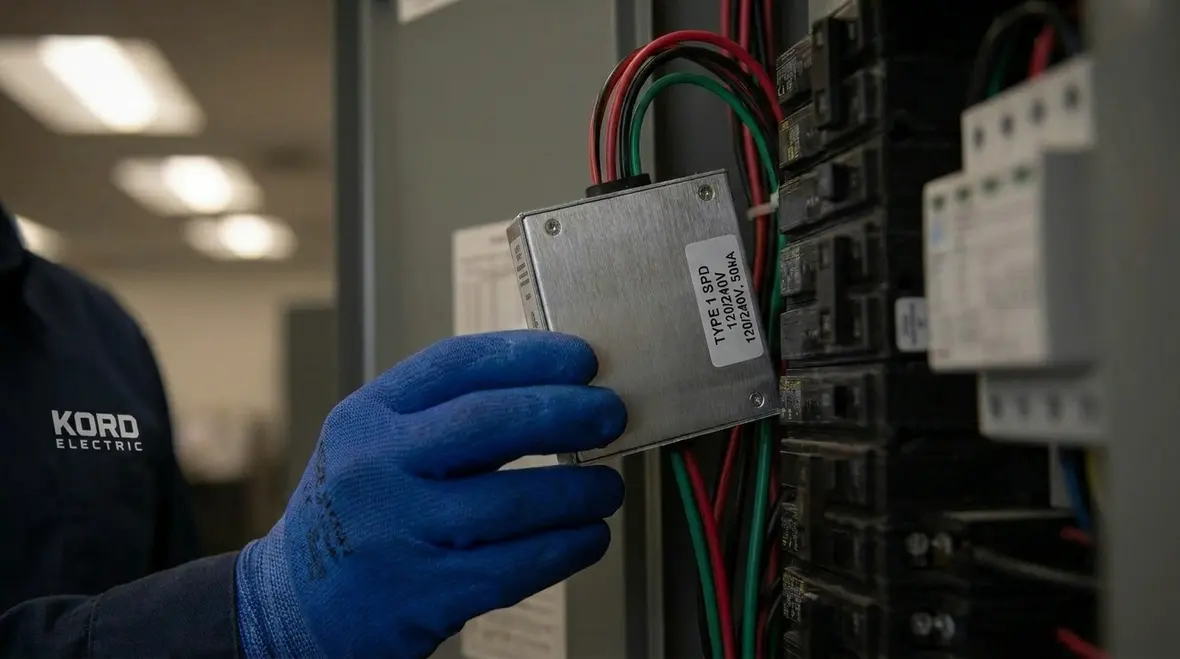
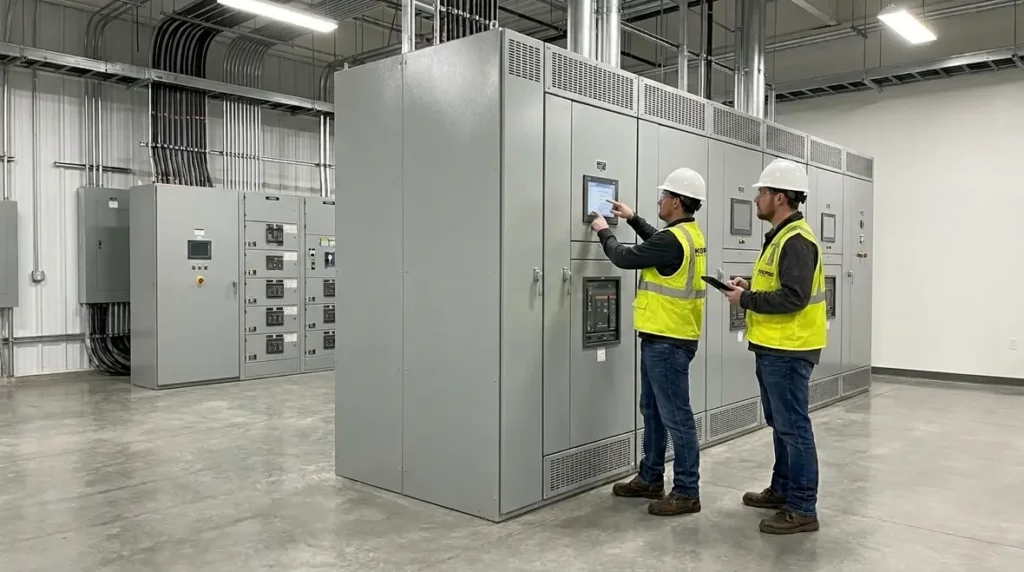
We build surge protection plans around the actual loads you operate, not a generic template that fits every building like a one size fits all suit. First, our team maps critical equipment categories such as data and communication gear, fire alarm and life safety systems, building management systems, server rooms, access control, and industrial controllers.
Then we review power distribution layouts. We identify where surges enter, where they travel, and which panels feed sensitive devices. After that, we choose the right SPD type and placement. We also check the electrical system components that make surge protection work properly, including grounding paths, bonding, and conductor routing.
In commercial and industrial facilities, bonding and grounding cannot be treated as an afterthought. Surge energy needs a stable reference point, and weak grounding can turn protection into a weak suggestion. Additionally, we verify that the protective devices align with the available fault current and coordination requirements, so the system behaves during abnormal conditions instead of during normal office hours when everything looks fine.
In short, we design for real-world operation, not for a brochure.
For owners considering larger electrical modernization, office electrical surge protection often sits alongside upgrades described in our guide to commercial electrical systems for modern buildings, where surge protection and grounding standards play a central role in code compliance and uptime.
Field checks and commissioning our technicians perform on every project

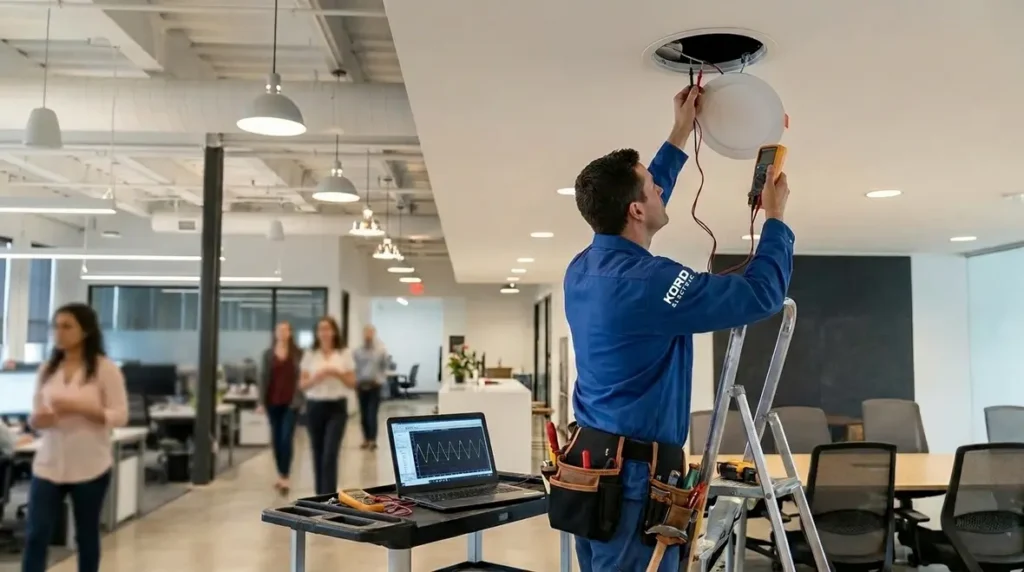
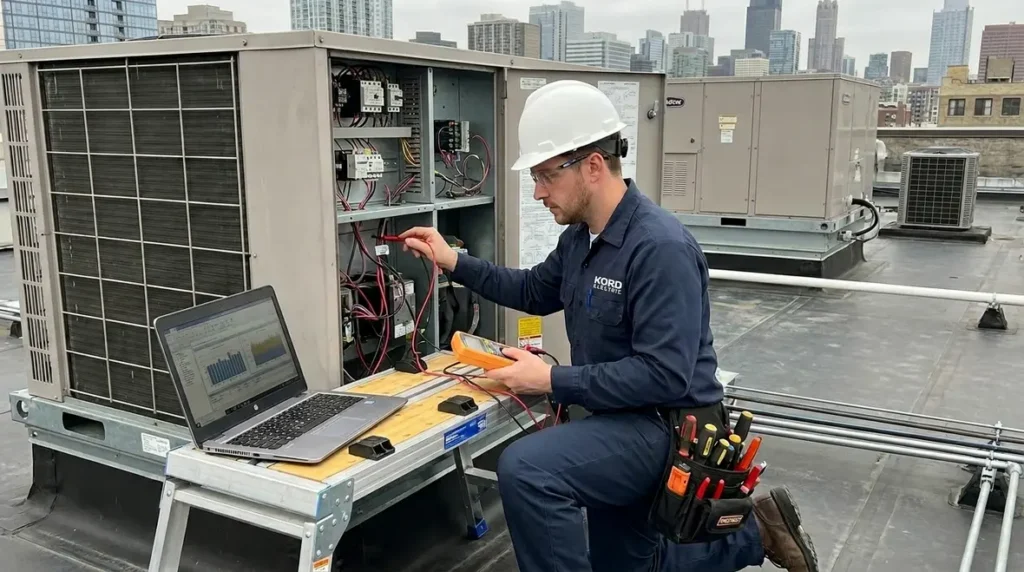
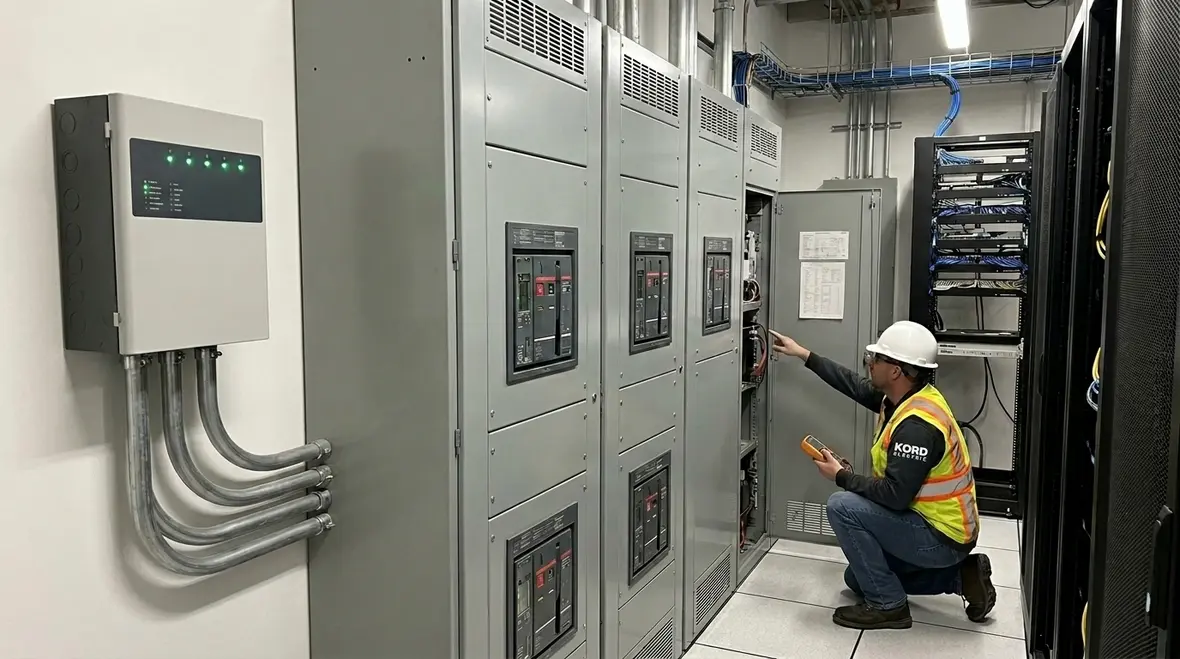
Others may “install and move on.” Kord Electric takes a more disciplined approach because we understand that surge protection is only as good as the details. Our expert service staff typically performs field verification after installation. We review labeling and inspection points, verify wiring connections, and confirm that protection devices match the design intent.
We also check grounding continuity and bonding integrity. Then we document the setup so your facility team can understand what is protecting what. If you have ever tried to find the correct breaker or device label during an emergency, you already know why this matters.
Because many sites run under demanding schedules, we plan work to reduce downtime. Even so, we maintain thorough checks. If something does not meet the expected configuration, we fix it before the system gets handed back. That is not a sales pitch. It is how we keep your operations stable.
And yes, we sometimes find issues that were “probably fine.” “Probably” is not a protection strategy, and power systems deserve better.
Common mistakes that leave commercial equipment exposed
When surge protection fails to perform, the reasons are often predictable. One mistake is placing SPDs only at the service without any local protection for sensitive devices. Another is using components with mismatched ratings for the site conditions. Then there is the classic problem: poor grounding and bonding. If the grounding path has resistance or is poorly connected, the surge energy does not move where it should.
Facilities also make scheduling errors. Some teams rush the installation and skip proper documentation. Later, when maintenance crews arrive, they cannot tell what is connected, what is protected, or what should be inspected first. That slows response time and increases the chance of incorrect changes.
We also see overlooked panel routing issues. Conductor placement and separation matter when you want to control how energy and noise couple into nearby circuits. Moreover, some buildings have older distribution equipment that needs a review of compatibility with modern SPDs.
Our approach reduces these risks through planning, clear labeling, and field verification. If you want fewer surprises, you start by preventing the ones that are avoidable.
That same philosophy shows up in other high-demand spaces. Commercial kitchens, for example, depend on sensitive control boards in ovens and refrigeration units. As outlined in our overview of commercial kitchen electrical upgrades and wiring, layered surge protection at the panel and equipment level keeps those electronics from becoming the most expensive fuses in the building.
What maintenance looks like after installation
After installation, surge protection is not a one-time event. We plan inspections around your facility’s risk level and operating schedule. In many cases, SPDs include indicators that show operational status. We also review expected service life and verify that the system remains coordinated with the electrical distribution you run today.
Then we consider operational changes. If your facility adds new production equipment, increases load, upgrades the data center, or changes HVAC controls, the surge profile can shift. In response, we may recommend a re-evaluation. That is how you keep office electrical surge protection aligned with actual conditions.
Additionally, we check for any signs of prior events. Even if the building did not experience a catastrophic failure, a prior surge can contribute to long-term stress. We help your team understand what to watch for, and we schedule inspections that keep critical systems protected.
Think of it as periodic health checks for the electrical backbone. Your building does not age in a straight line, and neither should your maintenance plan.
For coastal and high-exposure locations, this maintenance mindset pairs naturally with practices described in our piece on Santa Monica electrical safety for coastal properties, where corrosion, storms, and grid disturbances make layered surge protection a frontline defense.
FAQ about surge protection for commercial and industrial buildings
Final word: protect your facility before the next “surprise”
Surges may look brief, but the damage can linger. At Kord Electric, we help commercial and industrial facilities plan and install office electrical surge protection that fits real loads and real power distribution. Our technicians explain findings clearly, coordinate protections across key panels, and verify grounding so your systems stay steady. If you want fewer shutdowns, fewer repairs, and more confidence in your critical equipment, contact us today for a site review and a protection plan you can stand behind.
If you are coordinating surge upgrades with other improvements, our broader commercial and industrial electrical services can align panel work, rewiring, solar integration, and preventive maintenance into a single, predictable project plan that respects your schedule and your budget.