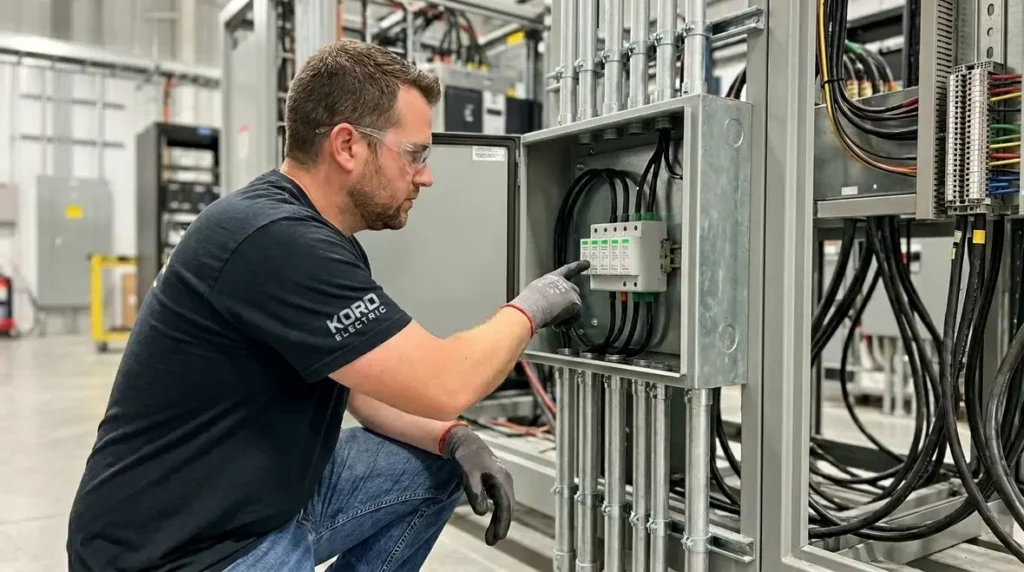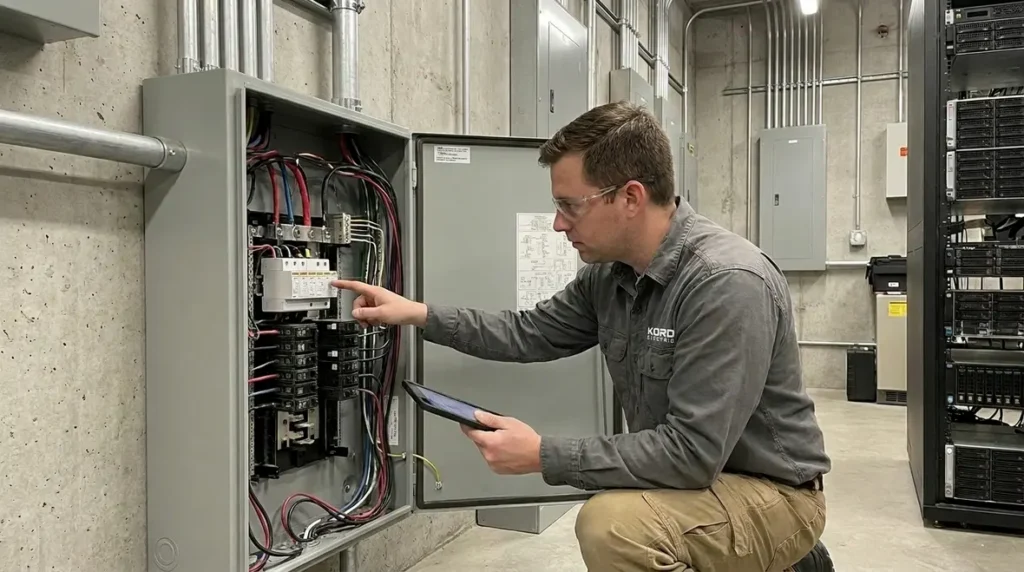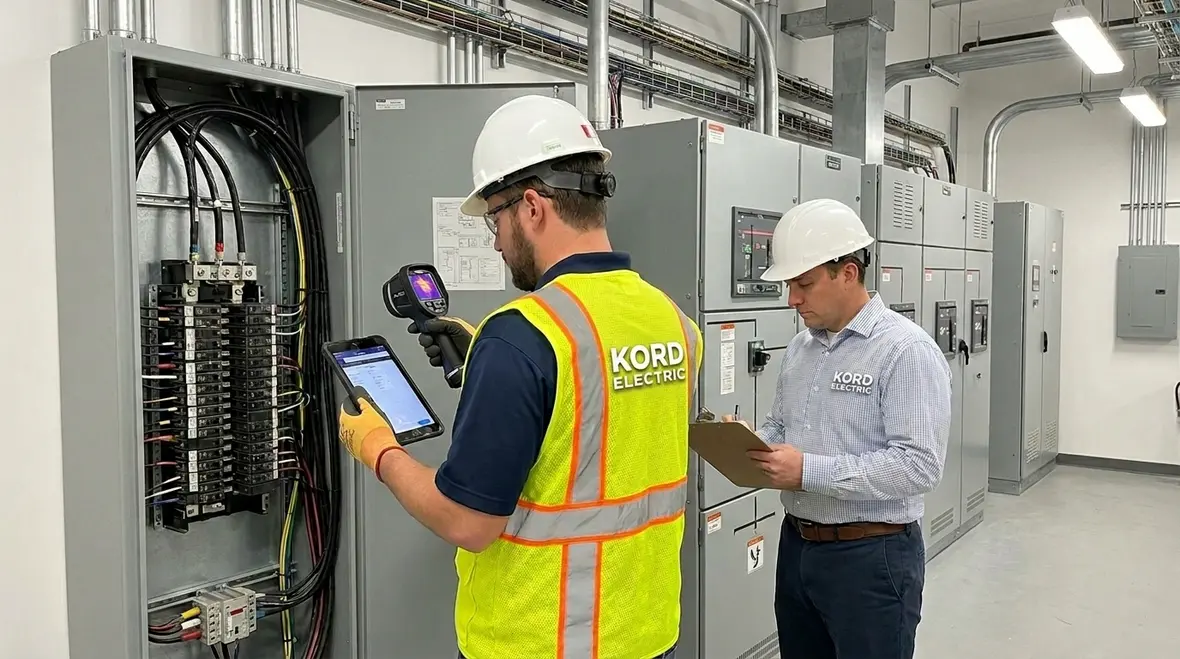
Proactive Commercial Electrical Safety Audit
At Kord Electric, we do more than react when an inspector shows up. Instead, we run a commercial building electrical safety audit protocol as a steady, proactive habit for commercial, industrial, and major property buildings. Our expert team follows a clear flow: we review records, inspect key electrical systems, test where it counts, and document findings in a way that helps ownership teams make decisions fast. Then, we help others plan upgrades that reduce risk now and help prevent expensive downtime later.
Yes, we know audits can sound like paperwork with a hard hat. However, our technicians explain what they see in plain language, so facility managers do not get lost in a sea of jargon. And if compliance is a baseline, our proactive approach is the part that keeps the lights on when real life happens.
Why a proactive electrical safety audit still beats compliance
In commercial and industrial spaces, safety problems rarely appear as a dramatic movie moment. More often, they show up as tiny warning signs: heat marks, nuisance trips, loose terminations, or circuits that run hotter than they should. As a result, teams often think, “We meet the rules, so we are fine.” Yet rules do not always stop the next failure.

When we apply the commercial building electrical safety audit protocol, we look beyond the minimum. We connect the dots between what the system currently does and how it will behave after load changes, tenant buildouts, or equipment upgrades. Furthermore, our technicians check how well protective devices coordinate and whether labeling, panel layout, and grounding practices still make sense as the building evolves.
That is the difference between passing a test and preventing the next emergency call. Compliance can be like putting a seatbelt on. We support that, of course. But our audits also look for worn buckles, faulty latches, and loose seats before someone decides to trust luck.
What our audit protocol focuses on inside major buildings
Our approach fits how real facilities operate, not how drawings look on a calm day. In each major building we serve, we build a safety picture from three angles: system health, installation integrity, and operational risk.
System health: how hard your electrical backbone is working
System health covers whether equipment operates within safe limits. Therefore, we examine panels, distribution gear, bus connections, switchgear, and critical loads tied to production, life safety systems, and property operations.
Installation integrity: the field details that quietly matter
Installation integrity checks the details that matter in the field. For example, we look at torque evidence on terminations, condition of insulation, signs of arcing, and the way conductors route and support under stress.
Operational risk: how the building runs day in and day out
Operational risk measures how the building runs day to day. We assess load patterns, prior modifications, emergency power readiness, and how staff responds to alarms. Then, we translate those observations into actions that ownership and facility teams can fund in steps.
And because our expert service staff speaks with the same clarity they bring to the job site, we explain why a single overlooked component can push stress into the rest of the system over time.

How testing and documentation reduce surprises
Let’s be honest. No one enjoys surprise downtime. While many companies focus on what fails first, we focus on what makes future failure more likely. That is why our technicians combine targeted testing with detailed documentation, so decisions rest on data, not guesses.
During the audit, we often review records like one line diagrams, equipment nameplates, maintenance logs, and prior repair history. After that, we compare the paperwork to what we see in the field. When drawings lag behind the real install, risk rises quietly.
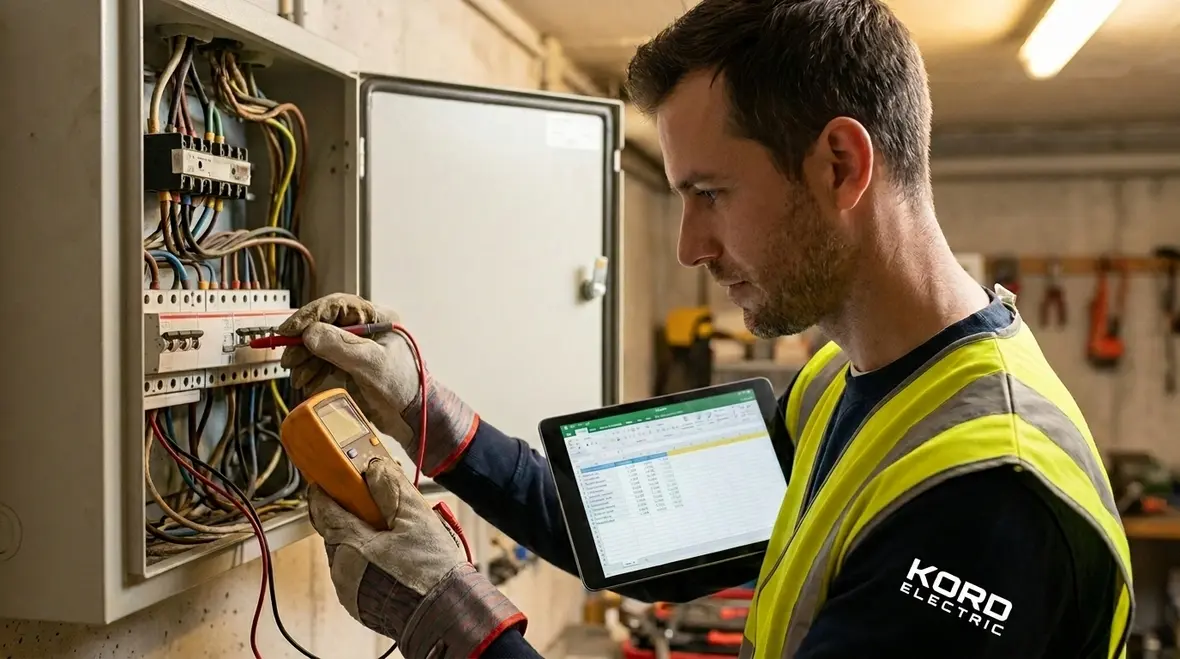
Next, we use tests that help detect hidden trouble. If a connection runs hotter than it should, it can fail sooner, especially when the building cycles through seasons and tenant load changes. Likewise, if grounding and bonding do not hold up as built, they can reduce system protection and raise shock risk.
Finally, we document results in a clear format. In most facilities, the real value comes after the inspection, when leadership needs to plan corrective work. We support that planning with a prioritized list, recommended next steps, and notes that help others understand cost and timeline drivers without a fight.
That is where our team’s “explain it like you manage people, not circuits” style pays off. Our goal is simple. When our technicians finish a review, the building team should feel calmer, not confused.
Common commercial and industrial issues we uncover
Commercial electrical problems have patterns. Once you see enough buildings, you stop blaming “bad luck.” Instead, you recognize the usual suspects and you address them before they turn into real threats.
Overloaded panels and feeders
Overloaded panels and feeders: In tenant heavy spaces, load creep is steady. Even when it starts small, it can push components toward heat stress.
Loose or degraded terminations
Loose or degraded terminations: These issues often hide behind “it still works.” Yet heat and vibration can loosen connections over time.
Grounding and bonding gaps
Grounding and bonding gaps: When grounding paths do not match the original design intent, protection can weaken.
Poor labeling and panel identification
Poor labeling and panel identification: This one feels harmless until someone has to troubleshoot at 2 a.m. A mislabeled breaker can turn a simple problem into a long outage. And yes, that is the exact moment your team does not want to guess.
Outdated lighting and control setups
Outdated lighting and control setups: While this article focuses on safety audits, lighting affects electrical load, heat, and switchgear demand. In fact, many facility teams bring us questions about lighting upgrades when they notice older fixtures, mismatched controls, or uneven coverage. Kord Electric has a cost guide for those upgrades, and we use similar cost and planning thinking during safety recommendations, so teams can align upgrades with safety work. For a deeper dive into that topic, explore our Commercial Lighting Upgrade Cost Guide, which walks through how lighting decisions shape long term cost and performance.
When our service staff spots these issues, we connect them to risk and recommend actions in a sequence that protects operations while reducing cost over time.

Planning upgrades after the audit: from risk to budget
A good audit should lead to a workable plan. Therefore, we help facility owners and property managers connect electrical safety findings to practical upgrade paths. We also account for how construction work impacts tenants, operations, and production schedules.
In many major buildings, teams ask the same thing: “How do we prioritize?” We answer with a clear process. First, we group findings by urgency and potential impact. Then, we recommend corrective steps that reduce risk quickly, while setting up longer term improvements that align with capital budgets.
We also support sequencing. For example, if a building needs panel work and lighting upgrades, we help teams evaluate whether certain changes can occur together. That can reduce mobilization costs and downtime, and it can help avoid rework.
If teams want a starting point on upgrade planning and cost thinking, our lighting upgrade guide helps them understand what drives pricing and how to estimate total project scope. Then, our technicians translate that kind of planning mindset into safety work, so decision makers can budget with confidence.
And if anyone tells you upgrades must be “all or nothing,” we respectfully disagree. In the real world, buildings run. We plan in stages, and we keep safety moving forward.
Staying calm during the audit: what your team can expect
When we enter a facility, our goal is to protect your people and keep operations steady. Our process is structured, and our technicians handle the work with focus and respect for your building rules.
To start, we coordinate access, safety requirements, and any operational constraints. Next, our team inspects and tests in areas tied to both normal power and critical loads. Then, we review results with key staff and explain each item in plain language.
After that, we deliver a report that supports action. We include what we found, why it matters, what the risk looks like in practical terms, and recommended next steps. Importantly, we make sure facility managers and others involved in property decisions can understand the plan without needing an electrical engineering degree.
So yes, an audit still takes time. However, our approach can save far more time by preventing unplanned failures. It is like doing a tune up before the engine starts knocking. Nobody celebrates engine knock. It ruins the whole vibe.
Dual-column checklist: audit to action
During the audit
- System and record review for commercial and industrial sites
- Field inspection of panels, feeders, terminations, and grounding
- Targeted testing and condition checks for risk signals
- Clear notes and evidence gathered by our technicians
After the audit
- Prioritized findings mapped to urgency and impact
- Action steps explained by our expert service staff
- Upgrade sequencing aligned to operations and budgets
- Documentation that supports planning for leadership
FAQ
Conclusion
When we run a proactive electrical safety audit, we help your building move from guesswork to confidence. Our technicians follow a clear process, document risk in plain language, and guide your team toward upgrades that protect people and keep operations stable. If you manage a commercial or industrial facility, we invite you to schedule a review with Kord Electric. Let us help you prevent the next failure before it finds you. Contact us today and let’s build a safer electrical future.
If your facility also needs support with lighting performance, energy use, or visibility in critical areas, our team can connect your audit findings with targeted upgrade work. To explore how dedicated lighting services support safety and reliability, visit our Lighting Installation Services page and see how commercial and industrial lighting improvements can align with your broader electrical strategy.