Smart Lighting Retrofits for Warehouse Efficiency
Smart lighting retrofits that cut waste in busy warehouses
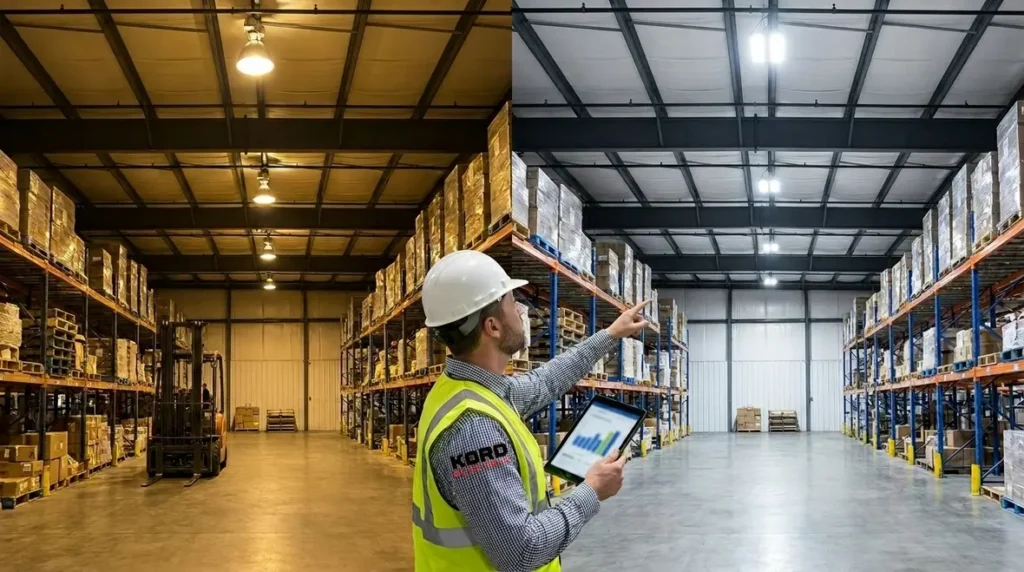
In our experience, warehouses run on time, movement, and attention. When lighting systems fall behind, people move more slowly, forklifts work by guesswork, and managers lose hours chasing avoidable issues. That is why Kord Electric integrates smart lighting retrofits for warehouse efficiency into modern operations. We replace old, power-hungry lighting with controls that sense reality on the floor, not just what a timer thinks is happening. As a result, facilities use less energy, reduce glare, and keep safety standards consistent across aisles, docks, and staging zones. And yes, your warehouse stops feeling like a factory from a 90s movie where everyone squints and hopes for the best.

Why lighting upgrades matter more than people think
Lighting is not just “comfort.” It is operational performance. When we plan a retrofit, we look at where work actually happens: picking lanes, high racking, maintenance zones, conveyor areas, and loading bays that see fast change throughout the day. Then we match illumination levels to task needs so workers can find labels, scan barcodes, and spot hazards sooner.
In many industrial spaces, older fixtures waste power because they stay on at full output long after activity ends. Moreover, uneven light can force people to adjust their pace and posture, especially at night shifts. Consequently, productivity dips quietly, and incident risk can rise. Good lighting also supports camera visibility for security and analytics, which matters for commercial and industrial facilities. When cameras see clearly, systems work as intended and teams spend less time reviewing blurry footage.
Our technicians also explain one important point in plain language: controls do not “turn lights off to be cheap.” Controls turn lights off or down to be precise, so energy savings do not come at the cost of safe visibility. Think of it like turning down a radio when you are on the phone, not turning it off while you still need to talk.

How Kord Electric designs a retrofit plan that fits real traffic
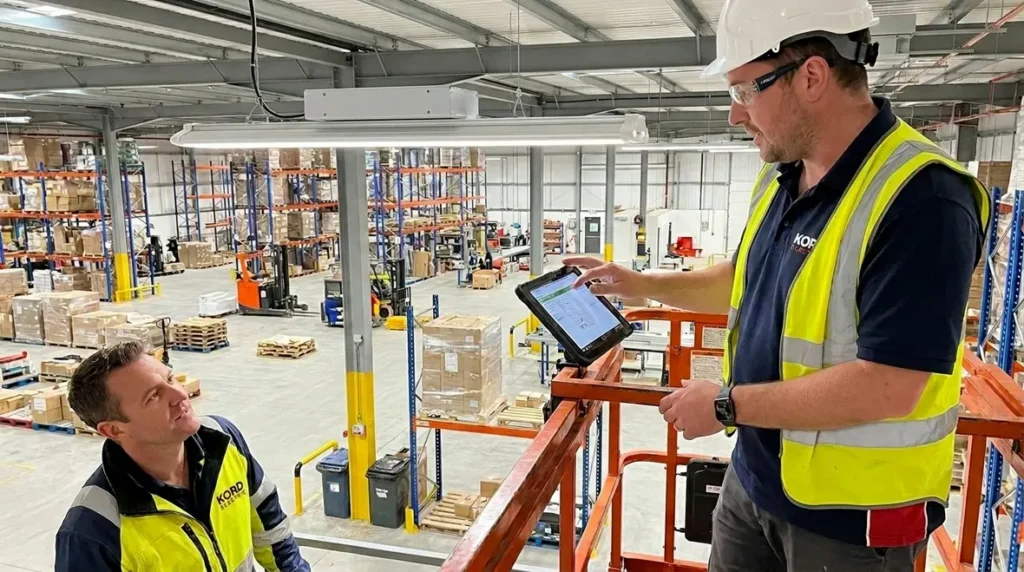
We start with a walkthrough and measurements that reflect warehouse flow, not showroom demos. First, our expert service staff identifies lighting problem zones such as dark corners, high glare near entrances, and areas where shadows appear from racking layouts. Then we review schedules, shift patterns, and the typical work rhythm: receiving spikes in the morning, picking concentrates during mid-day, and maintenance runs late.
Next, we map occupancy and activity patterns. Instead of a single “on or off” approach, smart systems can use layered control strategies. For example, we can hold baseline light for safety, then boost output only where people and vehicles concentrate. After that, the system smoothly returns to efficient levels when the floor quiets down.
We also coordinate with facility teams to plan downtime windows. For many major property buildings and larger industrial sites, lighting work needs to happen in phases so operations keep moving. Our approach stays practical: we schedule installs around production, we test performance before fully opening a zone, and we document settings so your team does not inherit mystery settings like a cursed vending machine.

Smart controls that reduce energy without creating usability problems
Once a retrofit is installed, the main goal is simple: maintain safe visibility while lowering energy waste. We use controls that respond to occupancy, daylight contribution, and time based schedules. In other words, the warehouse does not burn electricity just because the clock says it is daytime. If skylights or warehouse windows provide enough light, the system can dim fixtures accordingly.
Also, we pay attention to human factors. Lighting transitions must feel smooth and predictable. If lights flicker or drop too abruptly, workers lose confidence and start adjusting their own behavior. So our technicians calibrate the system to reduce that “why did it just change” moment that nobody wants during a high volume shift.
Furthermore, we design for maintenance reality. Smart lighting systems can report operational status, so teams can spot failed drivers, sensor issues, or communication problems early. That means fewer surprise repairs and faster restoration of proper illumination. And when your facility runs on strict throughput targets, fewer surprises are not a luxury, they are business protection.

Integrating sensors, zoning, and daylight for better floor visibility
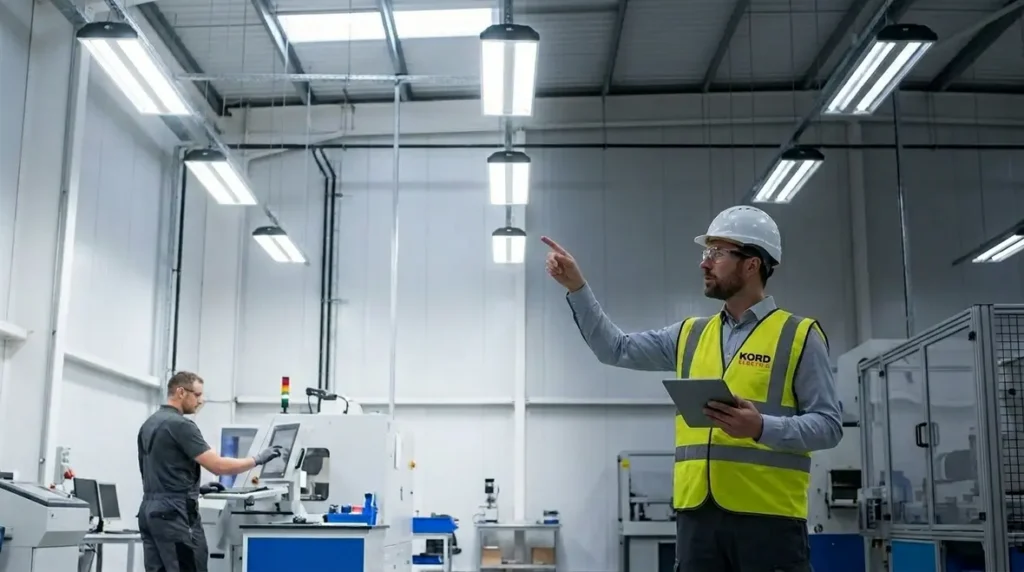
Warehouses are rarely uniform. Therefore, we treat lighting as a zoned system tied to usage. Our retrofit programs typically include sensor placement that matches movement routes and equipment paths. Motion sensing works best when sensors align with how people walk and how forklifts travel. When placement is off, sensors miss activity and lighting changes can feel random.
We also account for daylight zones near doors, dock areas, and skylights. During sunny hours, daylight can contribute enough illumination for parts of the warehouse, which allows us to lower artificial output. Meanwhile, interior aisles can stay on efficient baseline lighting until activity increases. The result is a balanced plan where every area receives the right light at the right moment.
In addition, zoning helps managers control performance during special events. Some facilities need extended lighting coverage during peak inventory checks or seasonal promotions. Others require strict limits for energy budgets. Smart controls let Kord Electric configure settings so your site can adapt without rewiring or replacing hardware every time leadership changes priorities.
And if you are thinking, “This sounds great, but does it really work?” Our expert service staff explains it step by step during commissioning. We show the zones, explain the logic behind the scenes, and confirm the system behavior during typical shift patterns.
If you are evaluating lighting changes with an eye on code and safety, this planning work often pairs well with resources like Kord Electric’s workplace lighting safety hazards guide and the lighting installation code compliance guide, which unpack how lighting affects both risk and inspections.
Dual column impact: cost, safety, and operations you can measure
Operational impact
- More consistent visibility across aisles, docks, and staging zones
- Smoother transitions for occupancy based lighting
- Better conditions for scanning, picking accuracy, and hazard awareness
- Improved camera clarity when security systems rely on lighting
Business impact
- Reduced energy use by cutting unnecessary full output
- Lower maintenance surprises through status monitoring
- Faster fault detection and targeted service visits
- Configurable schedules that match real warehouse demand
Service, commissioning, and training for facility teams
Installing hardware is only part of the job. We also make sure the system performs the way it should during real operations. During commissioning, our technicians verify sensor response, confirm zone behavior, and validate brightness levels against safety expectations. Then we test scenarios such as night shifts, low activity hours, dock traffic spikes, and scheduled maintenance windows.
We also train facility teams. Not with a 40 page manual they will never open, but with practical walkthroughs. Our expert service staff explains how to review system status, how to interpret alerts, and how adjustments can be made for changing workflows. When staff understands the system, they can solve minor issues faster and avoid unnecessary calls. This approach supports commercial and industrial facilities that need stable uptime and quick recovery.
Moreover, we help align the retrofit with your broader building goals. Major property buildings often have multiple systems that interact, including energy management and building automation. We coordinate where possible so the lighting strategy supports the bigger picture rather than competing with it. That is how we keep the upgrade from becoming “one more thing to manage.”
Common mistakes we help clients avoid before the retrofit
Even good lighting upgrades can disappoint if planning is weak. We frequently see these issues in industrial sites. First, some teams choose controls without mapping warehouse movement. That leads to zones that light up late or dim too early. Second, some upgrades focus only on fixtures and ignore zoning and sensor layout. Then the facility gets “better bulbs” but not better operations. Third, teams sometimes install the system but skip calibration and commissioning, leaving settings that do not match actual tasks.
We also caution against overcomplicated setups. Smart lighting should reduce complexity, not add it. Our goal stays grounded: make the system easy to understand, easy to maintain, and reliable enough to support day to day work. When we build the retrofit plan, we keep your team’s workload in mind. After all, your operators do not need another software problem to solve during a busy shift.
And yes, we have heard the jokes about “lights that act like they are in a mood.” With proper design and commissioning, that does not happen. Lights should behave predictably, like a dependable coworker who shows up on time and does not steal your lunch.
For facilities in California and similar regions, our retrofit plans often tie directly into commercial lighting code requirements and broader lighting compliance strategies, so upgrades improve both day to day performance and inspection readiness.
FAQ
Ready for a warehouse lighting upgrade that pays you back
If you want smarter operations, better visibility, and energy savings that do not harm safety, Kord Electric is ready to help. Our technicians plan smart lighting retrofits around how your warehouse actually runs, then commission the system so it performs predictably from the first shift. Contact us to schedule a site assessment for your commercial or industrial facility or major property building. We will map the zones, explain the upgrade in plain language, and build a plan your team can trust. Let’s make your warehouse work as hard as it already does.
To see how our broader lighting expertise supports large facilities, explore our dedicated Lighting Installation Services, designed specifically for commercial buildings, warehouses, and industrial sites that need reliable, code-conscious upgrades.