Quarterly Emergency Power System Testing Guide
When a storm hits, a hospital wing goes dark, or a data room starts acting like a haunted house, emergency power system testing decides whether your backup system saves the day or just looks good on paper. At Kord Electric, we treat quarterly emergency power system testing like a scheduled visit from a calm, reliable professional, not a last minute “please fix it” scramble. And yes, we know nobody wakes up excited to test generators, transfer switches, or controls. However, we also know that failures love two things: long gaps and bad assumptions.
In this article, our technicians and expert service staff explain why testing matters, what you should check, how to plan a clean maintenance rhythm, and how to document results for serious compliance and serious peace of mind. Think of it like a fire drill for power systems, except your lights stay on and your coffee stays warm.
Why quarterly checks prevent expensive downtime
Commercial and industrial facilities run on timing. Therefore, when you wait too long between tests, problems grow teeth. Quarterly emergency power system testing helps catch issues early, when repairs still feel manageable and parts still feel available.
During normal operation, your emergency generator may start only occasionally. Yet components still age: batteries discharge, valves stick, fuel quality changes, and sensors drift. Meanwhile, the transfer switch can develop contact issues that do not always show up until you ask it to switch under real conditions.
Our technicians often find that the most damaging failures come from small things that were never forced to prove themselves. A control setting that changed during a software update. A breaker that trips intermittently. A wiring connection that looks fine until load increases. Testing quarterly forces reality to show up on the calendar.
Also, we have to be honest. Emergency power systems sometimes fail the way bad Wi Fi does. You only notice after you really need it. Quarterly checks reduce that risk, and they protect the areas your business cannot afford to lose: life safety circuits, critical processes, and essential operations.
What our expert team actually tests in the field

At Kord Electric, we use a structured approach because we serve commercial and industrial facilities and major property buildings. We do not treat emergency power systems like one-size-fits-all appliances. Instead, we test to your equipment and your risk profile.
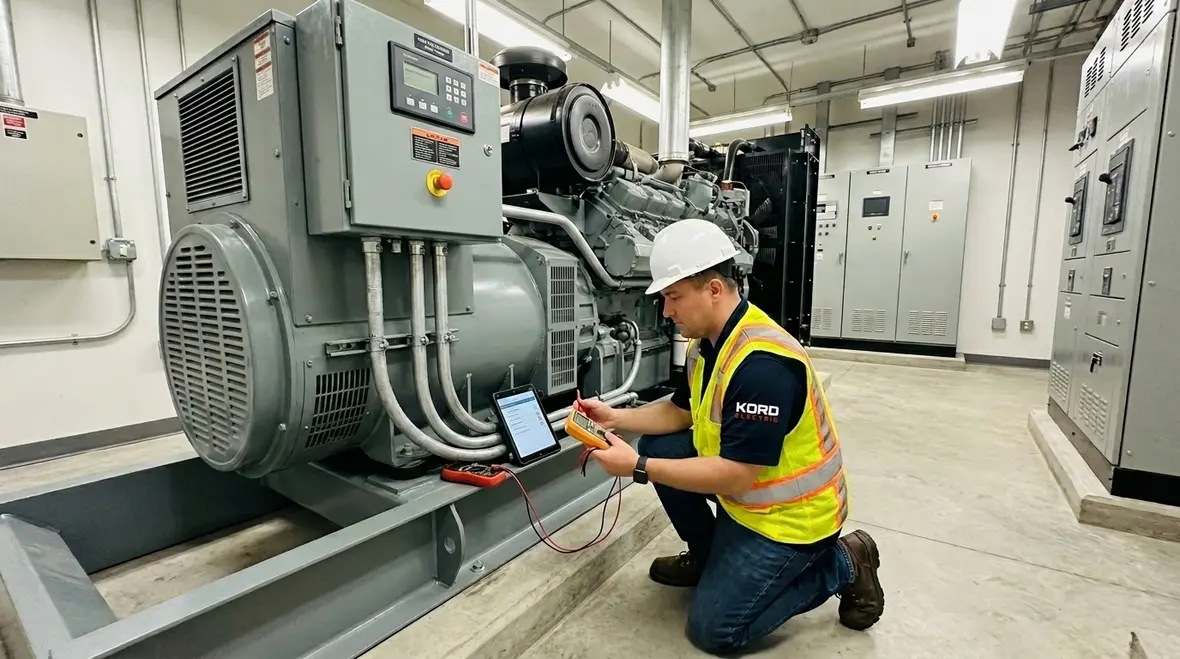
Our expert service staff typically focuses on these areas during emergency power system testing:
- Generator start and transfer behavior to confirm it moves quickly and correctly
- Voltage and frequency response under load so critical equipment stays stable
- Automatic transfer switch operation, including sequencing and timing checks
- Battery health and charger output because starting power matters most
- Fuel system inspection for supply stability, contamination risk, and pressure behavior
- Exhaust and cooling performance indicators to avoid overheating surprises
- Protective devices settings to ensure trips happen for the right reasons
Then we validate the system after the test. That means documenting what occurred, confirming return-to-normal operation, and flagging items that need follow up. In other words, we do not just push a button and call it a day. If that sounds like a joke, it is only because we have heard “we tested it once” stories before.
How maintenance plans connect testing, repairs, and compliance
Testing alone is not a strategy. Repairs, corrections, and consistent scheduling matter too. That is why we connect emergency power system checks to broader commercial and industrial electrical maintenance planning.
Kord Electric outlines practical maintenance plans in our blog post about commercial and industrial electrical maintenance plans, and the logic holds here as well. We treat testing as part of a living plan that tracks equipment condition over time.
So, how does this help you? First, it reduces the chance that a small issue becomes a major outage. Second, it builds a paper trail that supports audits and internal reviews. Third, it helps teams plan budgets with fewer surprises, because we can forecast repairs based on observed trends, not guesses.
When you work with a clear maintenance plan, you get more than periodic visits. You get a system that learns. If battery capacity declines across two quarters, you schedule replacements before failure. If transfer timing drifts, you correct settings before it causes nuisance alarms. That steady rhythm keeps your facility from playing roulette with critical power.
What happens when facilities skip quarterly testing
Let’s talk about what everyone hopes will never happen: you need emergency power, and it refuses to cooperate. When quarterly emergency power system testing gets skipped, equipment drifts quietly. Then, during a real event, the system fails under stress.
Common failure patterns include:
- Generators that start late or do not start at all because starting power weakened
- Transfer switches that hesitate, chatter, or transfer incorrectly due to contact wear
- Voltage and frequency instability that can damage sensitive electronics
- Fuel delivery issues that show up only when load demands increase
- Control board problems hidden until the test forces full sequencing
In commercial and industrial environments, the consequences spread fast. A delayed transfer can interrupt operations. Voltage instability can harm drives and processors. And if life safety systems rely on emergency power, risk levels rise immediately.
We also see operational knock-on effects. Teams get forced into emergency procurement. Facilities take on extra labor to troubleshoot under pressure. Even when the issue gets fixed, the stress lingers, and business momentum slows. Skipping testing is rarely “free.” It simply turns costs into the future.
How to prepare your site and reduce testing disruption
Quarterly emergency power system testing can be smooth when the facility team prepares. That is where our technicians shine. We coordinate with building managers and operations teams so testing stays controlled and predictable.
First, we confirm readiness: access needs, safety requirements, and the areas affected during transfer and load simulation. Then we review the test scope so everyone knows what we will observe and what we will document.
Next, we coordinate with schedules. Our goal is to avoid unnecessary downtime on critical circuits. We can also align testing with low activity windows when that helps. Meanwhile, we keep communication clear so your operations staff is not left guessing, like watching a movie without subtitles.
Finally, we review results promptly. If we notice a trend, we flag it early and recommend next steps. That reduces surprises later. You do not want to discover a recurring issue after the generator has already performed poorly under real conditions.
Dual-column clarity: testing, results, and follow up
Clear records help you act faster. Here is how Kord Electric organizes the essentials once testing and observation complete:
Testing outcome
What we confirm on site during and after transfer and load behavior.
- Start reliability and sequencing
- Voltage and frequency stability
- Transfer switch timing
- Battery and charger indicators
- Fuel system response signs
Recommended action
What we suggest based on what we found, not based on guesswork.
- Adjustments and configuration checks
- Component service or replacement
- Follow up testing windows
- Spare parts planning
- Documentation updates
In the end, we keep it simple: test, document, act, and repeat. That is how quarterly emergency power system testing earns its value.
FAQs about emergency power system testing
Final call to action from Kord Electric
Quarterly emergency power system testing is not just a checkbox. It is how we protect critical operations in commercial and industrial facilities and major property buildings. Kord Electric coordinates clear schedules, performs focused testing, and delivers results your team can use. If you want emergency power readiness you can trust, contact us to plan your next service visit. Let our technicians handle the details, so your business stays steady when the unexpected shows up. And yes, we will keep it boring in the best way.
For facilities that want to extend this reliability mindset beyond generators and transfer switches, Kord Electric also provides structured electrical preventive maintenance to keep distribution equipment, panels, and switchgear in step with your quarterly testing program.
If your property is located in Southern California and you are looking for an experienced partner to support testing, maintenance, and everyday electrical service needs, you can explore our broader Los Angeles County electrical services to see how emergency power support fits into a complete commercial and industrial strategy.
When you combine disciplined quarterly emergency power system testing with preventive maintenance and responsive service, you give your facility a calm, predictable electrical backbone that supports uptime, safety, and long term planning.