Restaurant Fire Safety Requirements California
In California, restaurant fire safety requirements can feel like a moving target, especially when owners juggle health code worries, rush hour chaos, and inventory that somehow always runs late. Yet we have to get this right. In the first place, restaurant fire safety requirements California business owners need to know do not only live in a binder on a shelf. They show up in how electrical systems get installed, inspected, maintained, and corrected before a small problem grows into a kitchen story nobody wants to finish.
At Kord Electric, we focus on commercial and industrial facilities and major property buildings. So when we talk about restaurant safety, we do it with the same discipline we bring to warehouses, campuses, and multi tenant structures. And yes, our technicians and expert service staff explain things in plain language because most people do not need a fire drill to understand what a circuit should do.
Why electrical hazards drive restaurant fires in California
Electrical fires in restaurants often start quietly. A loose connection overheats, a damaged cord creates a spark, or water gets into equipment where it does not belong. Then, because kitchens are busy and temperatures run high, those early warning signs can get ignored until they become a real emergency. Naturally, the risk rises when equipment runs nonstop, staff move around frequently, and maintenance gets rushed.
For business owners, the goal stays simple: we prevent ignition sources and we reduce how fast a fault can spread. We also make sure the electrical design matches the load. In other words, if the wiring is under sized or the panel is crowded, the system works harder than it should. And when systems work harder than they should, they fail at the worst time, which is usually right when the dinner rush hits and everyone suddenly becomes an expert in firefighting. Nobody wins that game.
Our approach starts with understanding the building, the equipment, and the reality of day to day operations. Then we coordinate with the site’s safety plan and other trades so electrical protections match what regulators expect.
Key electrical prevention measures that align with code
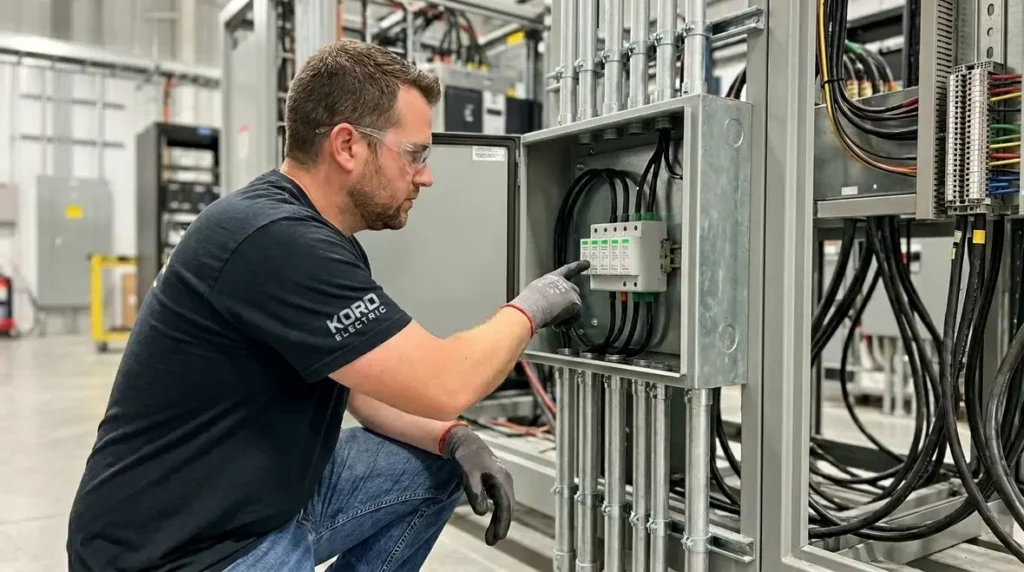
California rules expect that owners maintain electrical systems in safe condition, and in restaurants, that means more than just “it turns on.” First, wiring must be protected and installed correctly. Second, equipment must have proper overcurrent protection. Third, grounded systems must work reliably.
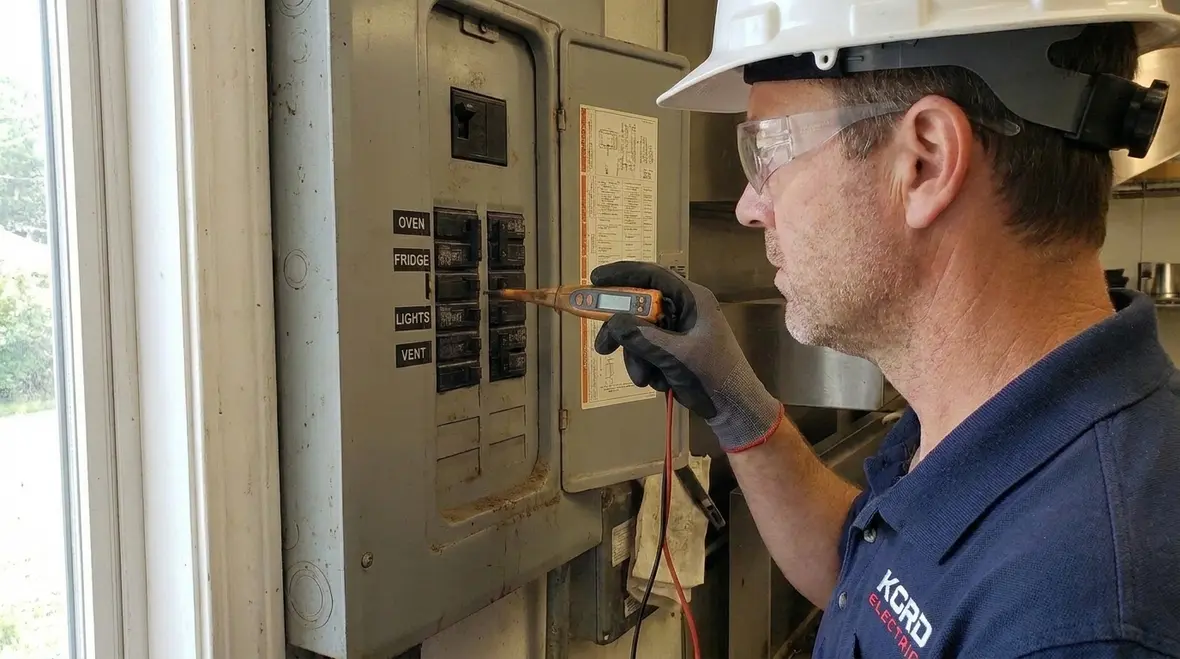
In commercial kitchens, circuits serve heavy loads like hoods, refrigeration, fryers, and ventilation. Therefore, Kord Electric reviews the electrical layout and supports owners with practical upgrades when needed. For instance, we look for damaged insulation, improperly routed conductors, and signs of overheating in panels and junction points. Even small discoloration can signal an ongoing issue.
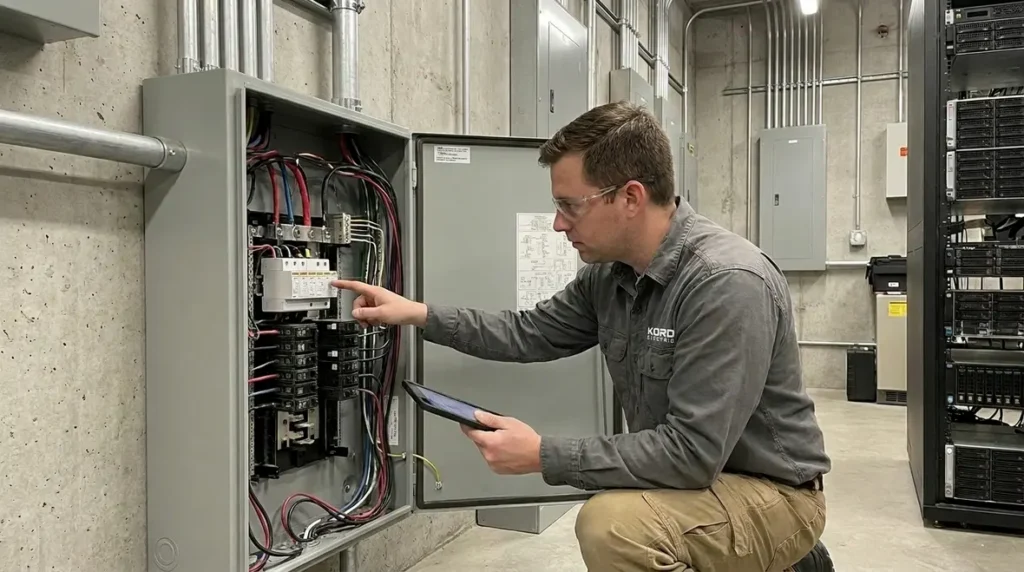
We also verify the performance of key protective devices. That includes circuit breakers and fuses that stop excessive current before it ignites wiring. Additionally, we check bonding and grounding because grounding helps protective devices trip when faults occur. When grounding is weak or missing, fault current can behave unpredictably.
And because owners need clarity, our expert service staff explains how and why these measures reduce risk, so managers know what to ask for during inspections and maintenance calls.
For restaurant teams that want to go deeper on preventing electrical ignition in larger facilities, it can help to pair these practices with broader strategies covered in our guide on electrical fire prevention for commercial buildings, especially when your kitchen lives inside a major property building.
How inspection, documentation, and maintenance should work
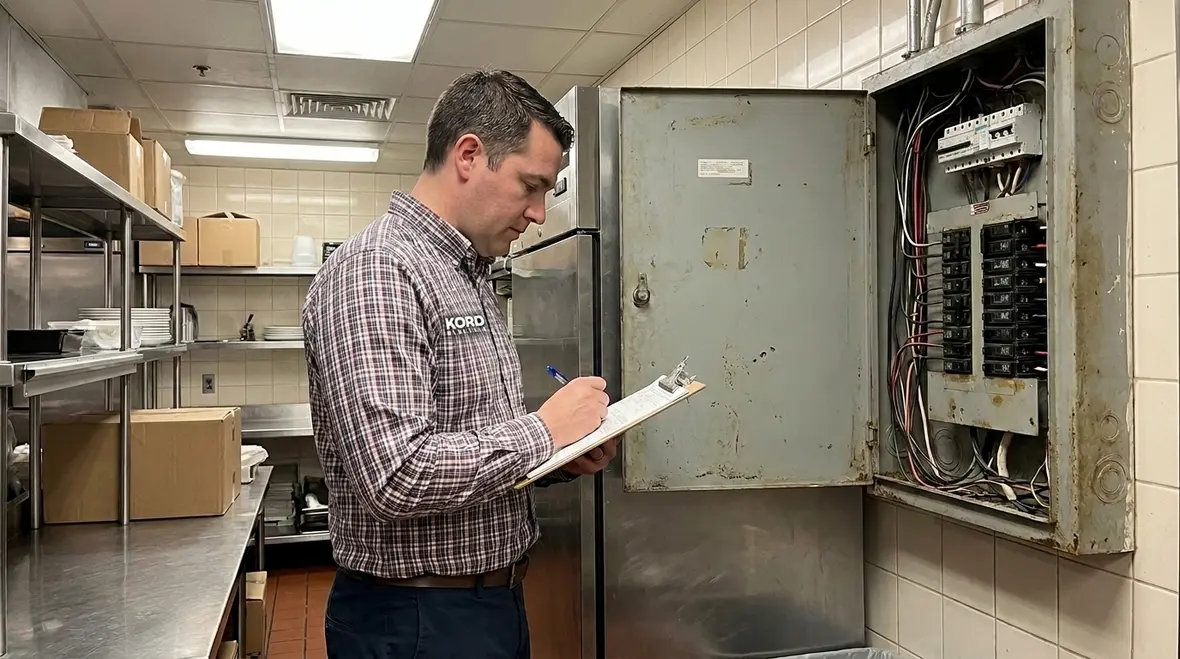
Many fires get blamed on “bad luck,” but in the field we see a pattern. Problems repeat because they were never documented, or because corrective action never reached the finish line. Consequently, the best restaurant fire safety requirements California owners can follow include an inspection rhythm and maintenance records that prove work happened.
Owners should expect scheduled checks for panels, connections, and high heat areas. They should also require a process for resolving findings. If a technician flags an issue today, it should be corrected and logged, not just photographed and forgotten. Then, during follow up inspections, the documentation should show completion, not a hope.
At Kord Electric, we help facilities build a maintenance workflow that fits commercial operations. We identify critical circuits, we recommend targeted service windows, and we provide clear reporting. Furthermore, we coordinate safety work so restaurants can keep operating while still addressing hazards.
Need a joke to make it easier? The fire prevention file should not look like a mystery novel. It should read like a checklist with receipts.
Vent hoods, cooking equipment, and electrical interfaces
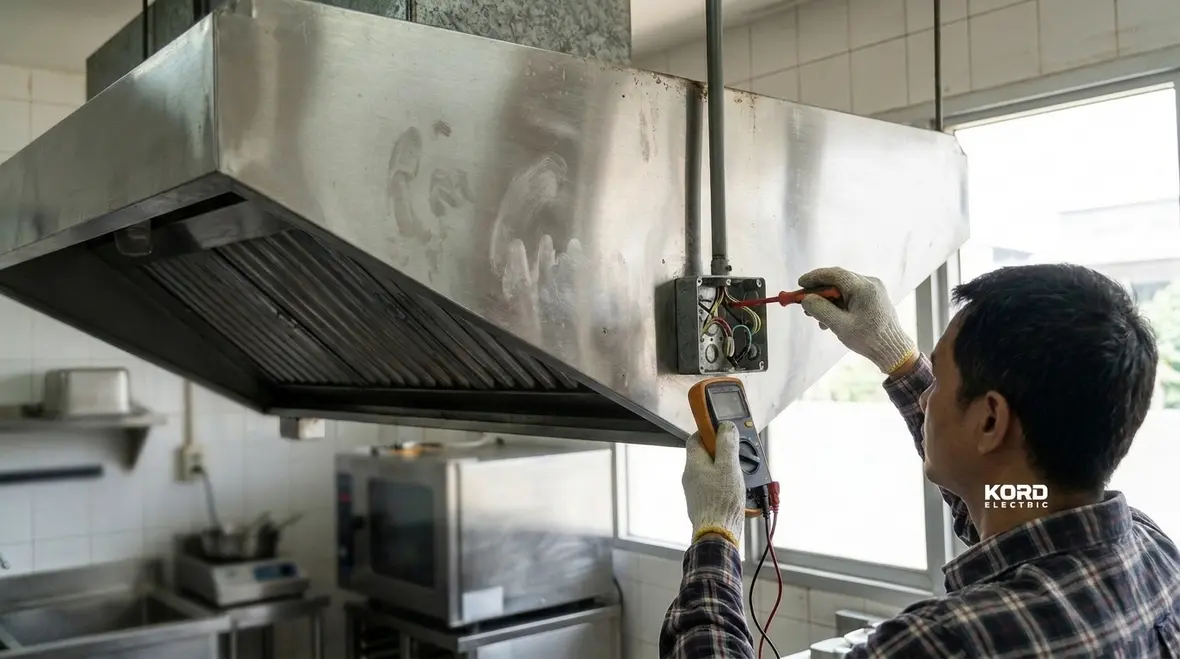
Ventilation and cooking gear do not just move smoke. They also create heat, moisture, and airflow effects that influence electrical performance. Moreover, restaurants often connect hood systems, make up air, fire suppression interfaces, and specialty controls in close physical spaces. That means electrical faults can hide where people do not look often.
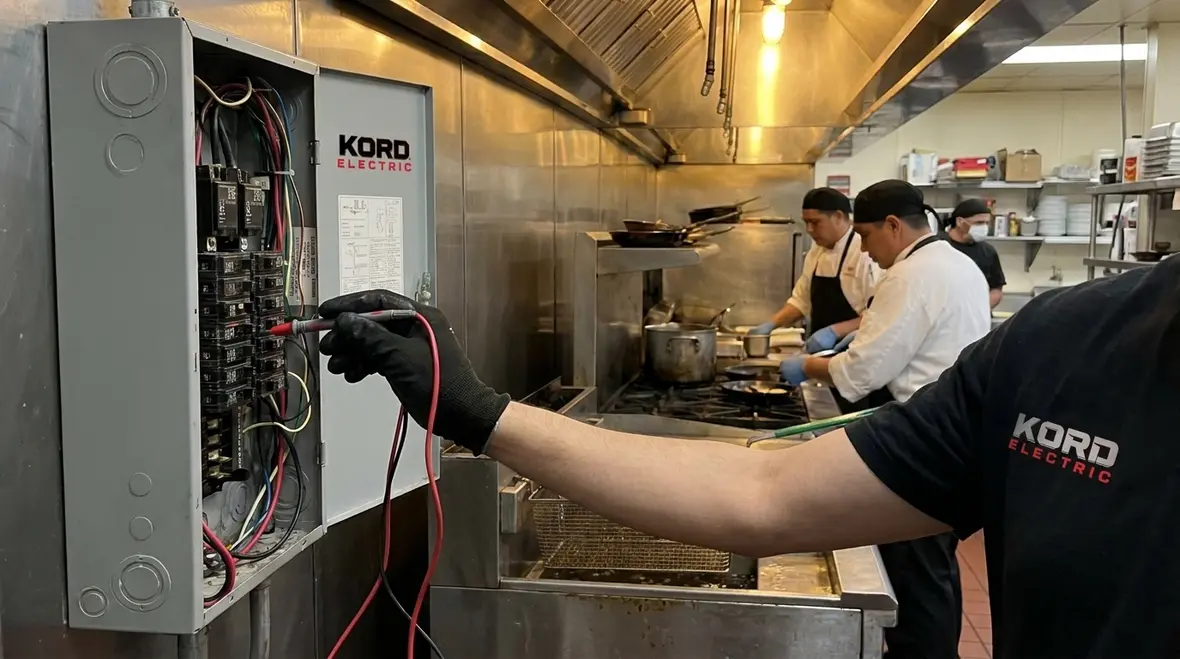
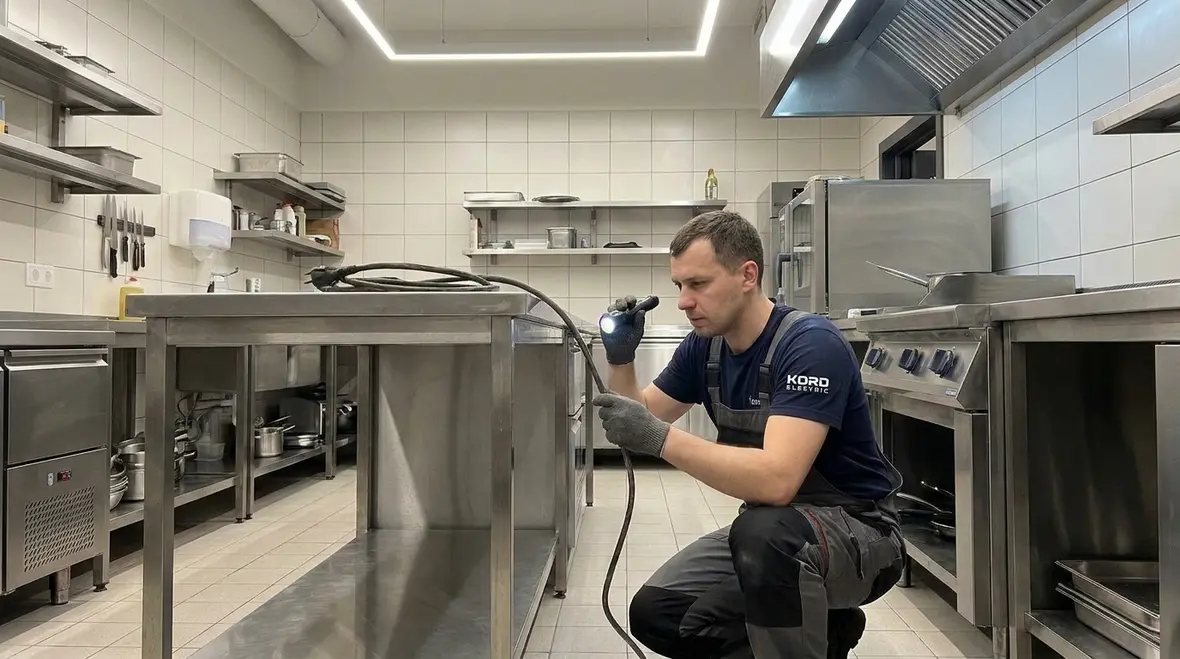
When staff use fryers and griddles all day, thermal cycling can loosen connections. Over time, vibration and heat can degrade terminations inside junction boxes and panels. Therefore, Kord Electric focuses on the interfaces between kitchen equipment and building power. We inspect conduit routing, verify strain relief where required, and check terminations that are exposed to heat and humidity.
We also pay attention to control circuits. Modern kitchen equipment relies on control transformers, relays, and interlocks. If those components fail, they can create abnormal current paths or leave protective devices less effective. By the way, abnormal current paths do not care if it is lunch, dinner, or late night. They just do what physics tells them to do.
Our technicians explain those risks in plain terms to managers and maintenance teams, so the fixes feel practical rather than mysterious.
Staff training that actually reduces risk
Training matters, but only when it connects directly to electrical hazards. For restaurant fire safety requirements California owners deal with, staff actions influence outcomes every shift. For example, staff should recognize signs of trouble like frequent breaker trips, flickering lights near kitchen areas, and odors that smell like hot plastic. Then they should report the issue immediately instead of turning it off and waiting until tomorrow.
Also, training should cover safe response. If a circuit shows overheating indicators, staff should avoid using makeshift solutions like taped cords or “just wiggle it until it works.” Instead, they should follow the site’s emergency plan and notify the right parties.
Kord Electric supports training by giving owners and facility leads simple, specific guidance. For example, we show how to interpret what a technician sees during service calls and we explain what maintenance staff should document. In the end, well trained teams reduce downtime and prevent small problems from turning into expensive repairs. More importantly, they prevent smoke from becoming a full building event.
Common electrical red flags Kord Electric finds on site
Even well run restaurants can collect hidden risk over time. Yet certain signs show up again and again in commercial and industrial facilities. First, owners notice nuisance trips but assume it is “just the kitchen load.” Second, they see scorched marks around panel doors or junction covers. Third, they find loose conduit, missing covers, or cables that run where they should not.
We also see issues linked to temporary power. Temporary runs become long term habits when no one schedules proper replacement. In kitchens, moisture and heat degrade temporary connections faster, so these “temporary” items can become serious.
Another red flag is over stacking of devices and unclear labeling inside panels. If operators cannot identify circuits quickly, they delay proper shutoff during emergencies. Therefore, Kord Electric helps owners improve labeling, organize circuits, and document what powers critical kitchen loads.
For major property buildings, we extend that discipline to shared systems. That means we coordinate electrical protections with the broader building infrastructure so the restaurant does not rely on luck. It relies on engineering and maintenance.
And yes, we know people want the easiest fix. Unfortunately, the fire does not care how easy anything feels.
FAQ: Restaurant fire safety requirements and electrical service
Partner with Kord Electric to protect the business
Restaurant fire safety requirements California owners follow matter most when electrical systems stay reliable under real operating stress. Kord Electric helps commercial and industrial facilities and major property buildings reduce ignition sources through careful inspections, corrected connections, and well planned maintenance. If a restaurant owner wants fewer nuisance trips, safer equipment interfaces, and better documentation, we can help set up a practical electrical safety plan. Call Kord Electric today and let our technicians walk the site, explain the findings, and chart the next steps.
For restaurant operators located in and around Los Angeles County, our dedicated Los Angeles County commercial electrical services team supports everything from panel corrections and kitchen circuit upgrades to coordinated fire safety projects with building management.
When you are ready to move from reacting to electrical issues to preventing them, our broader commercial and industrial services can align fire safety work with power quality, troubleshooting, and maintenance programs so your restaurant is protected not just for the next inspection, but for the long term.