Scalable Commercial EV Charging Infrastructure Roadmap
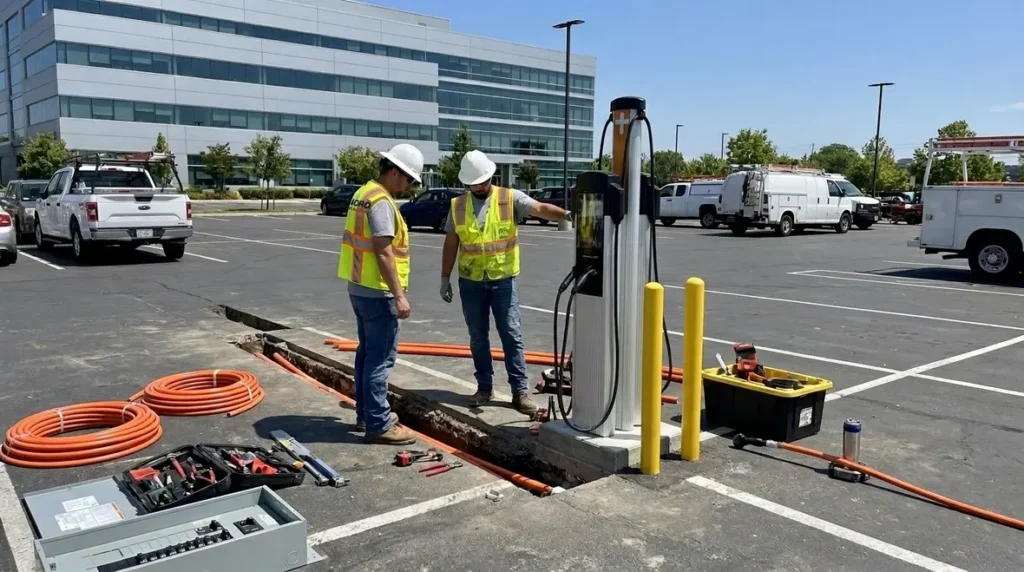
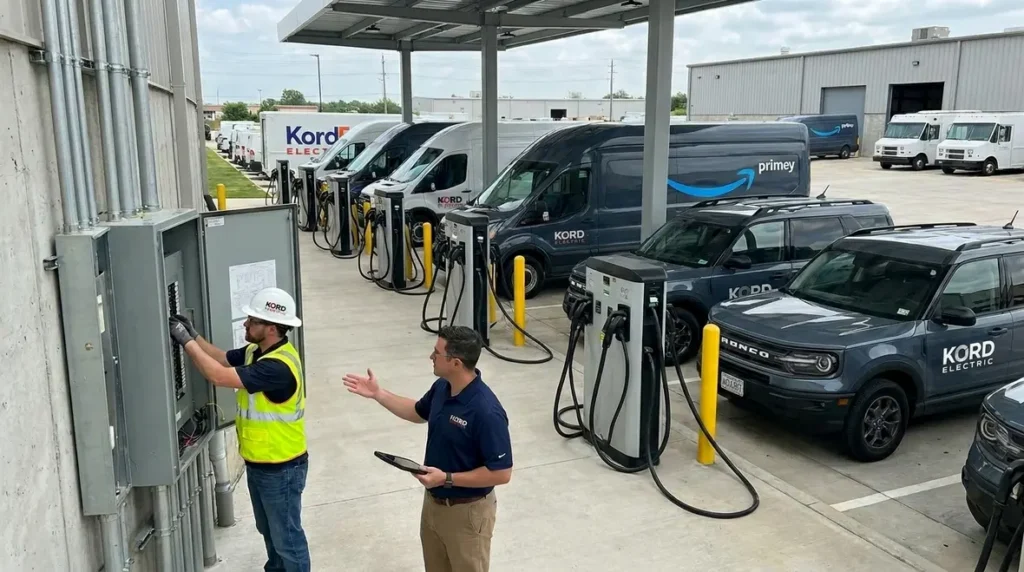
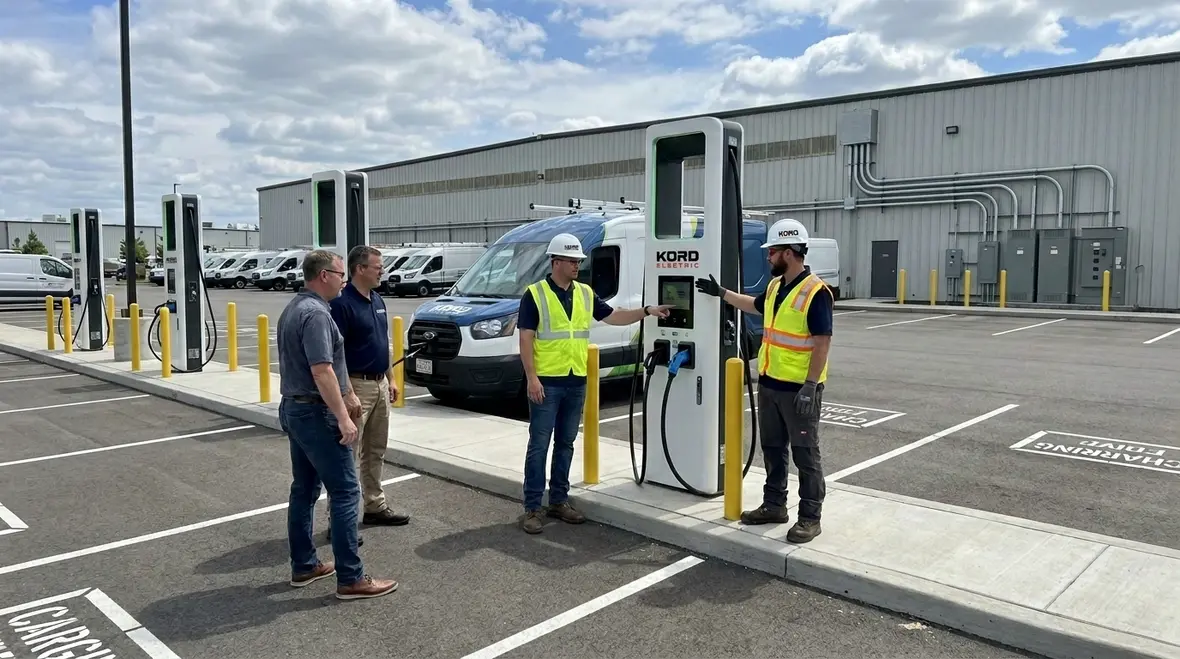
Kord Electric builds scalable EV charging infrastructure for commercial fleets, and we do it with the kind of planning that keeps your business moving even when the grid is having a “mood.” In the real world, a fleet does not scale in a straight line. So we help commercial and industrial facilities, plus major property buildings, add chargers today without painting themselves into a corner tomorrow. Our technicians and expert service staff explain every step in plain language, and we make sure the design fits the vehicles, the routes, the site layout, and the budget. In this roadmap, we lay out how to move from a pilot install to a full commercial EV charging network that you can expand with confidence.
Why scalable commercial EV infrastructure matters for fleets
A fleet manager can handle a lot, but “surprise downtime” is not on the menu. When a site adds chargers without a growth plan, the business usually pays twice: first for the install, then again for upgrades and rewiring later. Therefore, Kord Electric starts with scalability. We look at future vehicle counts, charging behavior, and how your drivers return to the depot or property each day. Then we map the electrical path so it can grow, not just survive.
We also align the charging plan with how fleets actually operate. For example, some vehicles charge nightly, while others need faster top ups during the day. As a result, we design the charging behavior from the start. Others skip that step and end up with chargers that feel like a vending machine that only works when the moon is full.
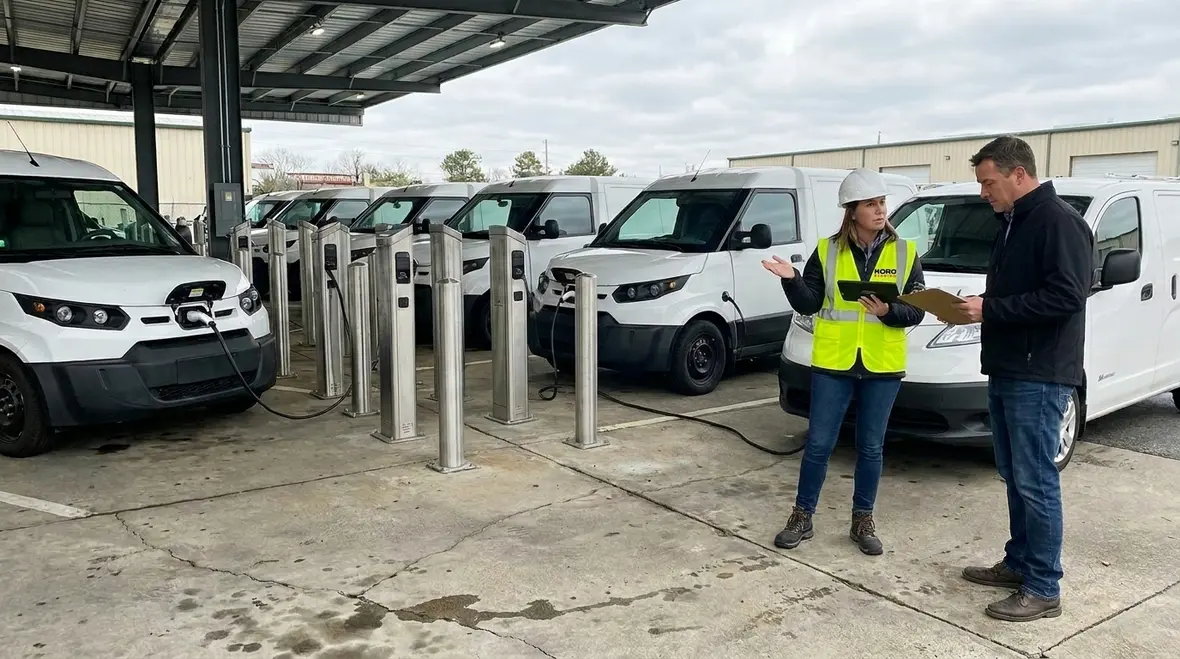
For facility leaders who want to go deeper into the cost side of planning, Kord Electric also shares a commercial EV charging installation cost guide that breaks down how power capacity, charger types, and installation conditions shape the overall budget for scalable systems.
A roadmap we follow for commercial EV charger rollout
We use a clear sequence because the fastest way to lose time is to guess. First, our team performs a site and load review. Next, we recommend an approach that can expand as your fleet adds vehicles. After that, we engineer the electrical design and handle the permitting path. Finally, we install, test, and document everything so your operations team can run with it.
In practice, this roadmap looks like this:
- Assess the facility power supply, panel capacity, service size, and existing electrical distribution
- Model charging demand and growth scenarios for commercial vehicles and staff needs
- Design the network layout and cable routes for neat installs and easier future additions
- Plan power management so chargers share available capacity without causing problems
- Permit and schedule to reduce downtime for your daily operations
- Install and commission with testing, labeling, and clear documentation
- Train your team with help from our technicians and expert service staff
Then we keep the plan flexible. So when you add chargers later, you are not starting over. You are simply extending what already works.
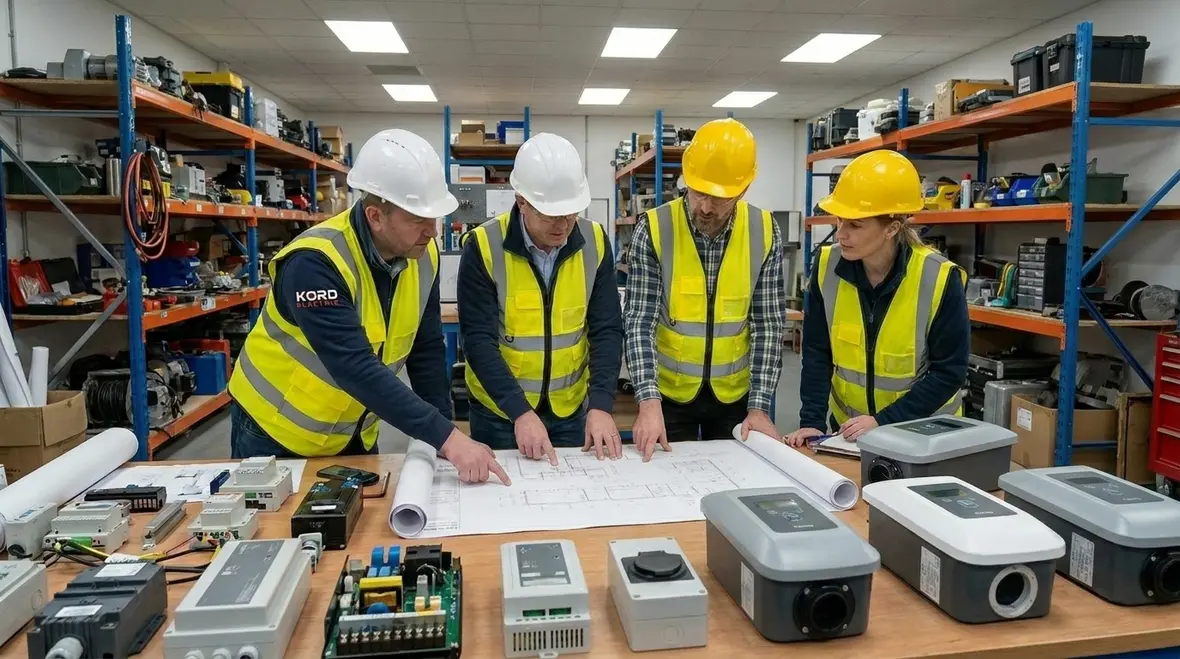
For many commercial and industrial facilities, this roadmap connects directly to Kord Electric’s dedicated EV charger installation service, where the same structured process moves from assessment to field-tested installation.
Site and load analysis that prevents expensive rework
Load analysis is where most projects quietly go wrong, and we refuse to do it quietly. Our technicians evaluate the facility’s actual electrical profile. We consider demand patterns, peak usage windows, and any new loads you may plan, like HVAC upgrades, kitchen equipment, lifts, compressors, or production lines. Consequently, we avoid designs that look great on paper but struggle in the field.
Additionally, we look at the service upgrade reality. Some sites need service modifications. Others only need smarter distribution and power control. Moreover, the layout matters. Cable routes, trenching, conduit sizing, and parking access all influence cost and timeline. By the time we begin detailed design, we have already reduced uncertainty.
To keep things calm, we explain the results in business terms. Our expert service staff walks facilities through what the numbers mean, what the upgrade path could look like, and what choices affect long term scaling. And yes, we do use normal words, not spreadsheet jargon that sounds like it was written by a robot in a hurry.
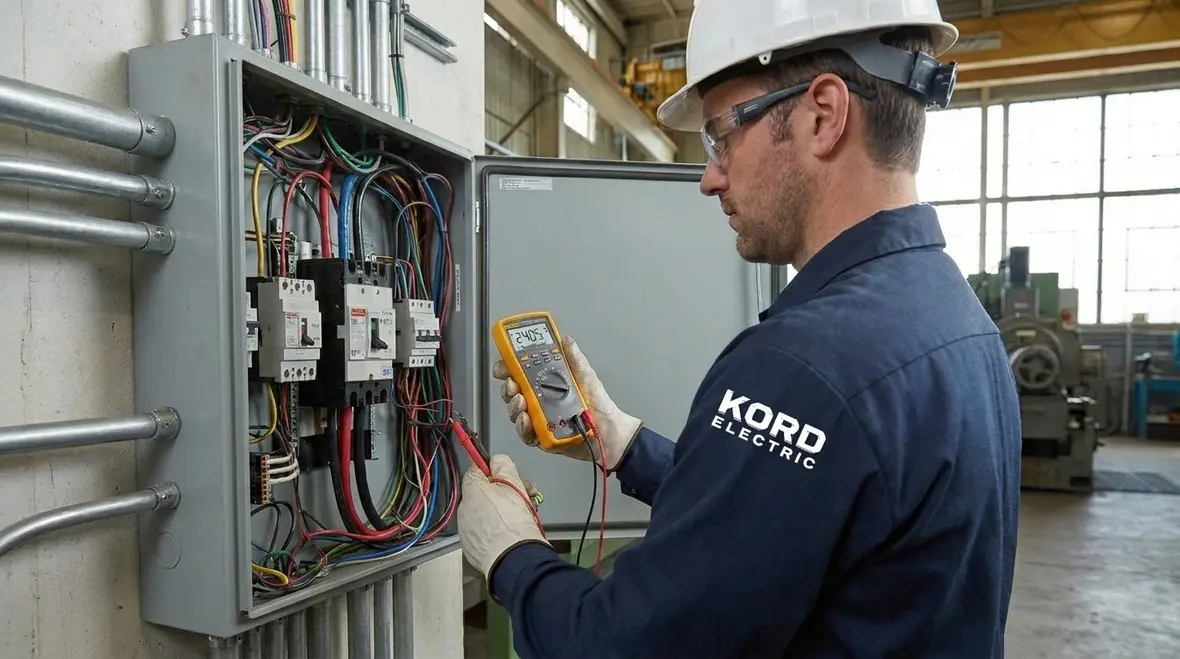
This same disciplined approach to power quality shows up in Kord Electric’s broader commercial and industrial services, where teams address voltage fluctuations, preventive maintenance, and other infrastructure upgrades that support a stable foundation for scalable charging.
Designing a system that scales with commercial fleet growth
Scalability does not only mean “add more chargers later.” It also means the system can handle future demand, manage power smoothly, and keep user experience consistent. Therefore, our team designs the electrical backbone and the charging logic as a connected system.
We focus on three layers. First, the power layer ensures the facility can deliver electricity reliably. Second, the distribution layer keeps cabling and hardware ready for expansion. Third, the control layer manages charging behavior across multiple vehicles and time windows.
For many major property buildings and commercial depots, the best plan includes power sharing and scheduling. That means chargers coordinate instead of competing like kids in a candy aisle. We also consider how drivers access chargers, how signage works, and how the chargers align with operational routes. Then we design for the reality that fleet vehicles may vary by size and charging rate.
When a facility chooses Kord Electric, it benefits from a methodical approach. We help property teams see how the commercial EV fleet infrastructure fits into their broader site plan, rather than treating chargers as isolated equipment. And because our technicians think ahead, the next phases tend to take less time and less disruption.
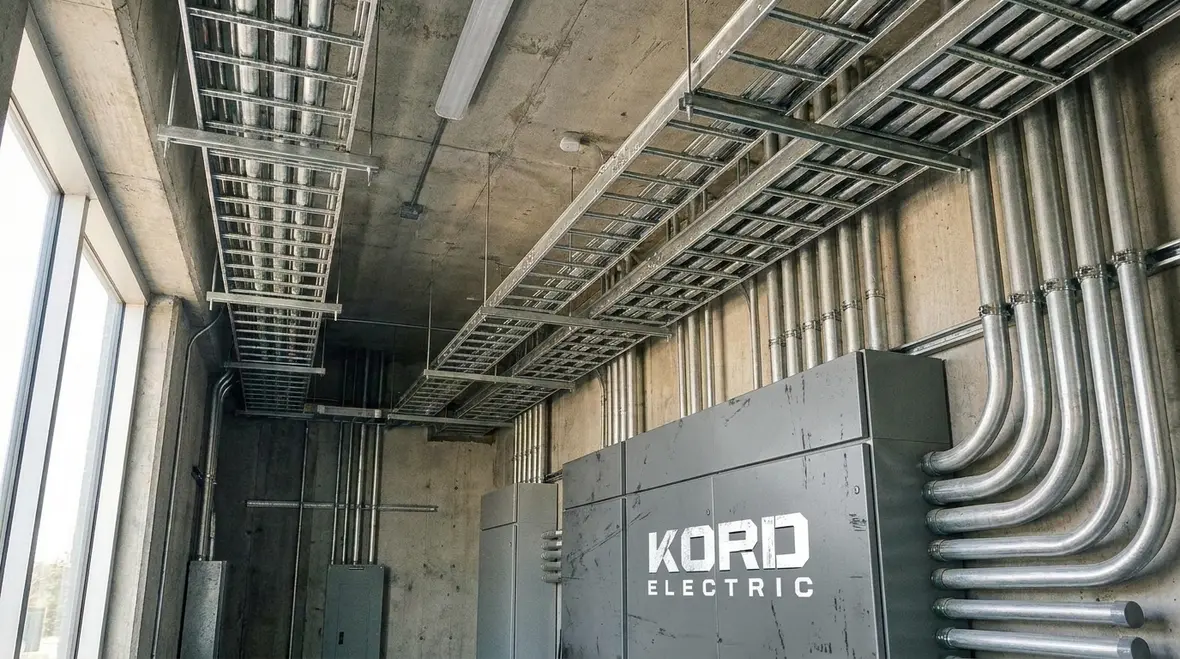
If your property team wants a deeper dive into how scalable design choices play out over time, Kord Electric’s resources on EV charging infrastructure scalability for commercial sites show how power sharing, staged buildouts, and monitoring turn into everyday reliability.
Installation, commissioning, and technician-led training
After the design is ready, the installation process needs discipline. Commercial sites rarely have empty schedules, so we coordinate the work to limit disruption. Our technicians plan access, route cables safely, and keep hardware installs neat and code compliant. Then we commission each charger and verify the system performance.
Commissioning is not a checkbox for us. We test key functions and confirm the charging setup works as expected under real conditions. Furthermore, we ensure labeling, documentation, and handoff details are complete. A charger should be easy to maintain, not a mystery box wrapped in warning labels.
Next comes training. Our expert service staff does more than show buttons. We explain how to operate the system, what to expect during peak demand windows, and how to report issues fast. If someone at the facility needs help, they know where to look and who to call. That reduces frustration and keeps downtime low.
For those who want to review our typical process in more depth, Kord Electric’s commercial EV charger installation page walks through how we plan, permit, install, and commission charging systems that fit the realities of busy commercial sites.
Operations and expansion planning that stays practical
Once chargers go live, the work shifts from install to operations. And this is where scalability really earns its keep. We help fleets and property managers plan how to add vehicles, adjust charging schedules, and handle seasonal changes that can affect demand.
Instead of waiting for a problem, we recommend a simple routine. Facilities can review charging usage patterns regularly, then adjust time windows or power settings as needed. Over time, the charging profile becomes clearer. Then upgrades feel planned, not panicked. Also, our approach supports growth because the commercial EV fleet infrastructure is built with extension in mind.
We also consider service workflows. When chargers require maintenance or updates, a clear process prevents delays. Therefore, our team supports clients with knowledge transfer and service readiness. It is not glamorous, but it keeps the system dependable. Think of it as the quiet back stage crew that ensures the show does not fall apart mid performance.
For organizations that want to wrap charging into a broader reliability plan, Kord Electric’s commercial and industrial electrical maintenance strategies can be aligned with EV infrastructure so inspections, testing, and repairs support both everyday operations and long term expansion.
And if your facility operates across multiple locations in the region, you can connect this scalable operations mindset to broader Los Angeles County electrical services that keep panels, lighting, and power distribution ready for future charging phases.
Dual column plan: pilot to full network rollout
| Pilot phase for commercial sites | Full rollout for long term scaling |
| Start with a limited number of chargers to validate load behavior | Expand using the same backbone and distribution strategy |
| Confirm power management settings for real charging habits | Refine schedules across shifts, routes, and vehicle types |
| Document cable routes and electrical equipment details | Use the established documentation for faster additions |
| Train staff on operation and issue reporting | Scale training and service workflows across locations |
| Plan the next expansion step before the first install finishes | Deploy new chargers without rebuilding major electrical parts |
In many cases, this dual phase path starts with a targeted pilot at one facility, then scales across commercial EV fleet infrastructure at additional depots, campuses, or properties once the data proves out the design.
FAQ
Conclusion: let us map your next charging phase
Scalable EV charging infrastructure for commercial fleets is not a wish, it is a plan. Kord Electric helps commercial and industrial facilities build a charging system that expands with your vehicles, your schedule, and your power reality. Our technicians and expert service staff guide you from site review to installation, commissioning, and training, so you avoid costly surprises later. If you want a roadmap that works today and tomorrow, contact Kord Electric and we will help you design the next phase with confidence.
As you plan for the next wave of vehicles, routes, and charging needs, you can also tie this roadmap into other electrical upgrades across your properties, from core service improvements to lighting and power quality work. That way, your commercial EV fleet infrastructure becomes part of a stable, future-ready electrical backbone instead of an isolated project.
If your facility team is ready to take the next step, explore how Kord Electric’s regional commercial services support companies across the county with integrated planning, installation, and long term support for modern electrical systems and EV charging combined.