Workplace Electrical Surge Protection for Business
Workplace Electrical Surge Protection Keeps Your Business Running
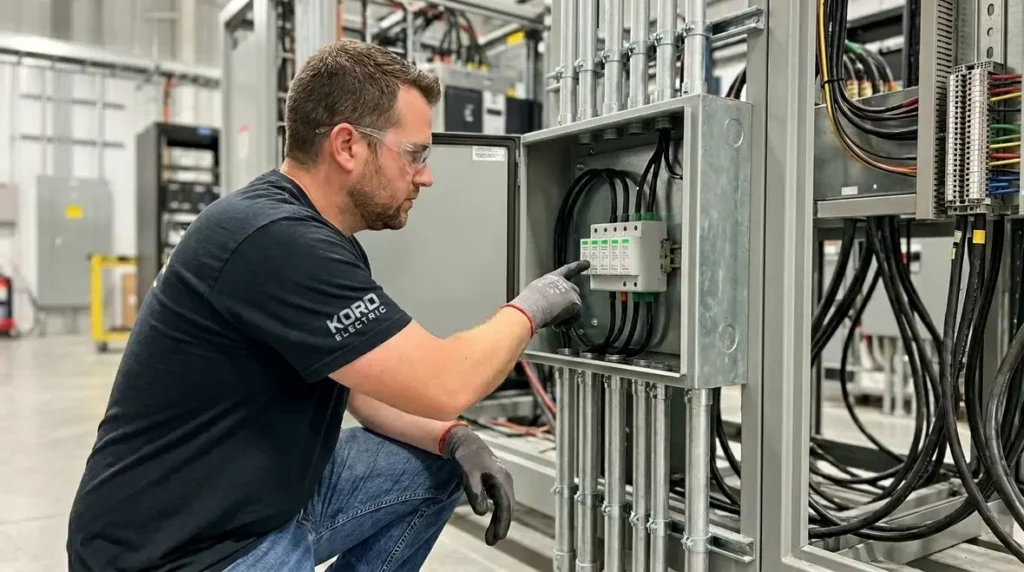
At Kord Electric, we build and support workplace electrical surge protection systems designed for commercial and industrial facilities and major property buildings. We know power events do not send invitations. A brief surge can ride in on utility lines, slip through data lines, and quietly damage sensitive gear that keeps operations moving. Meanwhile, your team keeps working, blissfully unaware, until the day a controller fails or a server complains like it is auditioning for a drama series.
Others may treat surge protection as an afterthought. We treat it as part of reliable electrical distribution. And importantly, our technicians explain the “why” in plain terms, so owners and managers can make calm, informed decisions instead of rushed ones.
Why Surges Hurt More in Commercial Power Systems

In small businesses, people often assume the main risk is an outage. However, surges tend to be more sneaky. They can happen in a split second, and they do not always trip breakers. As a result, equipment can receive stress that adds up over time, even if it keeps running for a while.
Commercial and industrial buildings also have more electronic loads than most people realize. Think variable frequency drives, HVAC controls, access systems, POS networks, building management systems, and specialized manufacturing equipment. These loads rely on stable voltage and clean waveforms. Therefore, when a transient event hits, the cost shows up later as shortened component life, nuisance faults, and repeat repairs.
In other words, we do not only protect devices. We protect your operating budget and your downtime schedule, because business owners do not get extra hours to “wait and see.” When a surge silently shortens the life of control gear or data infrastructure, it shows up later as overtime calls, missed production, and frustrated tenants or customers. A smart workplace electrical surge protection plan keeps those surprises from stacking up in the first place.
What Triggers Transients in the First Place
Surges come from several sources, and we plan protection with all of them in mind. Utility switching events can create voltage transients. Lightning can induce surges through the power network and nearby conductors. Even large loads inside the building can cause events, such as when motors start or when electrical loads switch.
Furthermore, power quality issues often travel through distribution systems. Once a transient gets into a panel, it can follow downstream paths to branch circuits and the equipment you care about. That is why we focus on system level protection rather than point fixes. Panelboards, feeders, and branch circuits all get evaluated for how they pass energy along to the gear you cannot afford to lose.
Our expert service staff also explains a simple truth: you cannot prevent every transient. But you can manage how energy is diverted and how fast sensitive circuits get shielded. With the right workplace electrical surge protection design, the system takes the hit, not your servers, drives, and controls.
Designing Surge Protection with Distribution Reliability in Mind
When we approach a project, we look at electrical distribution design like it matters, because it does. The reliability work we support connects well with the thinking in our Kord Electric blog on data center electrical distribution design for reliability. That article highlights a key idea: good distribution planning controls risk, and it uses clear pathways for power flow.
So, in practical terms, we help teams create a layered surge strategy that matches the building layout. We evaluate incoming service equipment, main distribution panels, branch panel locations, and the distance between protection points and loads. Then we coordinate surge devices so the energy does not just scatter randomly across the system.
To do that, we consider grounding and bonding, because surges need a safe path. We also pay attention to coordination between upstream and downstream devices, which helps avoid situations where one layer fails to provide the intended clamping and another layer takes on excess stress. If that sounds like “who spilled the coffee” detective work, well, sometimes it is. But we do it before the equipment starts leaking expensive tears.
Layered Protection: From Service Entrance to Sensitive Loads
Effective surge management uses multiple layers, each doing a job at its level. At the service entrance, we often install protection that can handle higher energy exposure. Then we add additional devices in downstream panels near sensitive equipment. This helps reduce let through voltage as the surge moves closer to the load.
Because commercial and industrial facilities vary in layout, we also help teams account for cable routing and equipment types. For example, a motor control center feeds different loads than a network closet. Additionally, we consider whether you need protection for power only, data only, or both. Many sites benefit from coordinated protection on signal and communication lines, especially where building control systems and network equipment live in the same environment.
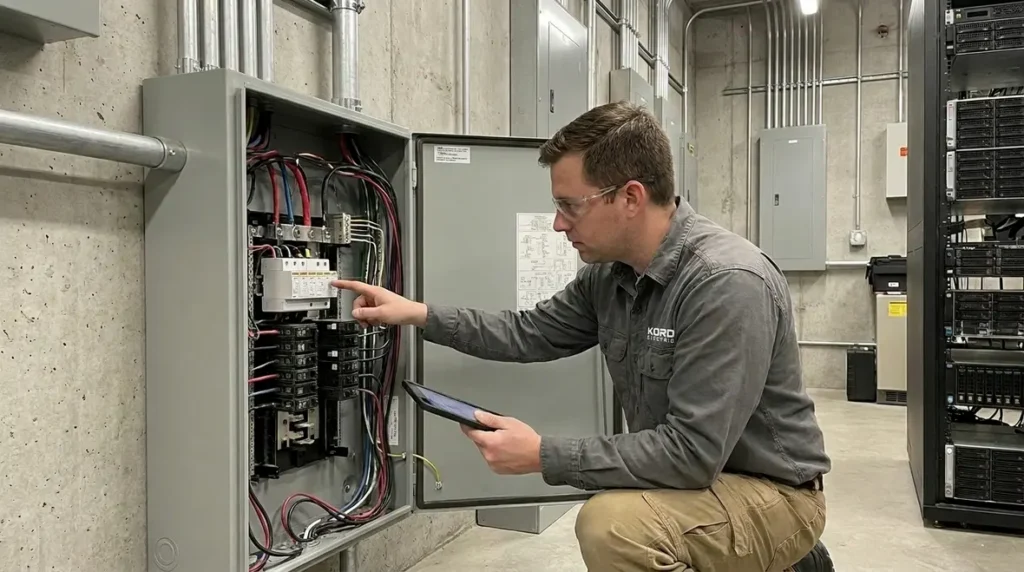
Our technicians explain the reasoning as we design and install. They show what gets protected, where the devices go, and why the arrangement supports reliability goals. In the end, the system protects the building’s “brains” and “muscles,” not just one lucky component.
Grounding and Bonding: The Part People Skip Until It Costs Money
Surge protection without proper grounding is like locking the front door while leaving the windows open. The surge still needs a defined route, and that route depends on how your grounding system is built and maintained.
We help facilities verify the integrity of grounding and bonding connections across panels, frames, enclosures, and related building metalwork. We also confirm that bonding practices meet code intent and support stable reference points for equipment. Then we check how surge protective devices connect to the grounding electrode system.
Just as importantly, we plan maintenance thinking into the design. Over time, corrosion, loose terminations, and changes to equipment can weaken performance. Therefore, we advise owners on periodic inspection and documentation, so the system stays ready for the next event, not just the first time it works.
Planning, Testing, and Keeping Protection Effective Over Time
Once surge devices are installed, the work does not end with a ribbon cutting. We help commercial and industrial teams set a practical plan for verification and ongoing reliability. That includes reviewing as built documentation and ensuring the devices installed match the coordinated design.
We also support testing and evaluation methods that align with the facility’s needs. Some projects call for inspections of terminations and visual checks. Others benefit from more structured verification tied to the building’s risk profile. In many cases, we connect this work with electrical maintenance routines, so surge devices get checked alongside breakers, switchgear, and critical distribution paths.
Then, we coordinate with facility changes. When someone adds new equipment, expands a production line, or upgrades HVAC controls, the electrical system changes too. As a result, the surge plan may need adjustment. Our approach stays calm and thorough. We do not sell fear. We build control.
Connecting Surge Protection to Broader Facility Strategies
Workplace electrical surge protection becomes even more effective when it lines up with your broader facility strategy. For example, if your site already follows a disciplined electrical maintenance checklist or a reliability program for data centers and major property buildings, surge devices can be folded into that routine. They get the same attention as the rest of your power backbone instead of becoming a “set and forget” box on the wall.
We also help owners align surge planning with capital projects. When you add EV charging, new tenants, or modern automation, it is usually more cost effective to revisit surge coverage at the same time. Coordinated upgrades mean fewer surprises later and help you avoid the “we just upgraded that panel, why did this drive fail now?” moment.
Surge Protection and Regional Code Expectations
Commercial and industrial facilities live inside a web of code requirements, insurance expectations, and local utility practices. While surge protection itself may not solve every compliance item, it often supports the same goals: safer systems, fewer failures, and better documentation.
In regions with dense urban infrastructure and complex occupancy mixes, facility managers are under more pressure than ever to show that electrical systems are planned, not improvised. A clear workplace electrical surge protection layout, backed by drawings, device schedules, and testing records, gives owners something solid to point to when questions come up about resilience and risk management.
For organizations working across multiple sites, Kord Electric also helps standardize surge approaches so each property is not reinventing the wheel. Instead, you get a playbook that adapts to each building while following a common philosophy for layering, grounding, and verification.
FAQ: Workplace Electrical Surge Protection for Commercial Facilities
Linking Surge Protection with Local Service Expertise
Surge protection delivers the most value when it is backed by a team that understands your region, your utility, and your building types. Kord Electric supports commercial and industrial customers across complex urban and industrial areas with design, installation, and service that all speak the same language. From major property owners to facility managers overseeing a mix of warehouses and offices, we help you make decisions that fit your actual operations, not someone else’s assumptions.
If your portfolio includes facilities in demanding jurisdictions or high-density areas, aligning surge protection with your broader Los Angeles County electrical services strategy can keep projects moving smoothly. One coordinated plan for distribution, surge, and maintenance means fewer surprises, faster approvals, and a better story when you explain reliability investments to leadership.
Ready to Strengthen Your Power Reliability?
If you run a commercial or industrial facility or manage a major property building, surge events deserve a real plan, not a hope and a prayer. Kord Electric helps you design and install workplace electrical surge protection with coordinated layering, grounding support, and clear documentation. Our technicians explain every step in plain language, so your team can approve confidently.
Whether you are planning new construction, updating legacy electrical rooms, or reviewing reliability for critical operations, we can help you build a surge protection approach that fits your risk profile and your budget. We look at the whole path: utility service, distribution, controls, IT spaces, and the everyday loads that quietly keep your business alive. Then we turn that insight into a practical design, a clean installation, and a maintenance roadmap you can actually follow.
When the next transient shows up, your equipment should not be the one taking the drama role. Let the protection system do the heavy lifting so your building can shrug, keep running, and move on with the work that matters.