Commercial Lighting Retrofit Benefits That Last
Why commercial lighting retrofit benefits pay off for the long run
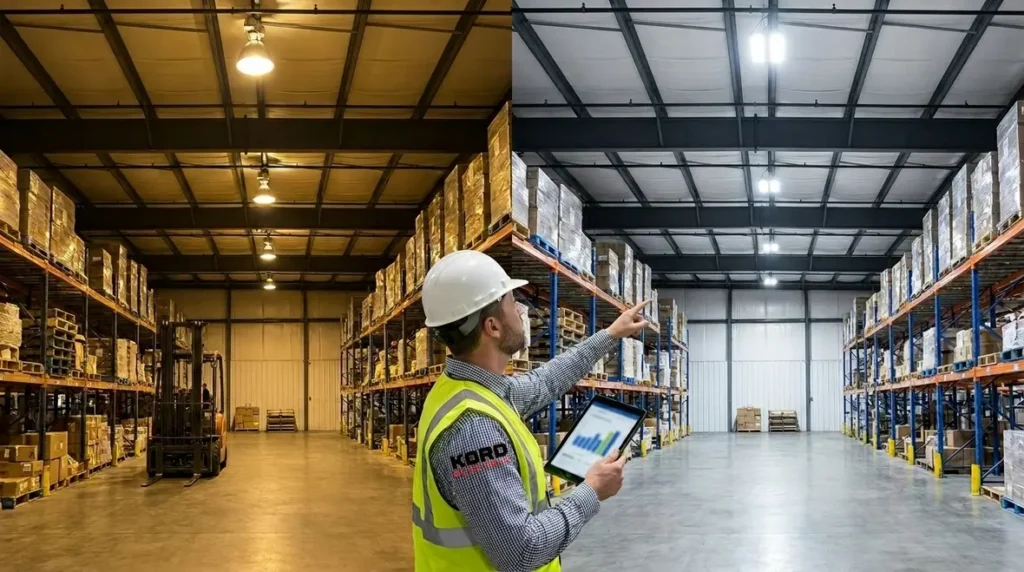
At Kord Electric, we see the same story play out in building after building. When others keep old fixtures running year after year, energy costs climb like a phone bill from a “limited time” promotion that never ends. In contrast, commercial lighting retrofit benefits often show up fast, then keep paying dividends month after month. We focus on commercial and industrial facilities and major property buildings, because those locations feel the impact of lighting efficiency every day: lower electricity use, steadier maintenance, and fewer surprises for your operations team. And yes, we also make sure your lights stay code friendly, so you do not get an unpleasant visit from compliance worries.
In this article, Kord Electric’s approach stays practical. We explain what happens during a retrofit, why LED technology lasts longer than most people expect, and how our technicians help you make smart choices that support long term cost control.
Step one: understand how LED cuts cost without cutting quality
When a building upgrades to LED through a professional retrofit, the biggest win usually comes from reducing power demand. Traditional lighting systems waste more energy as heat, while LEDs turn a greater share of electricity into usable light. Then, because LED fixtures maintain output longer, buildings often avoid the “lights are fine until they are not” cycle that drives maintenance budgets upward.
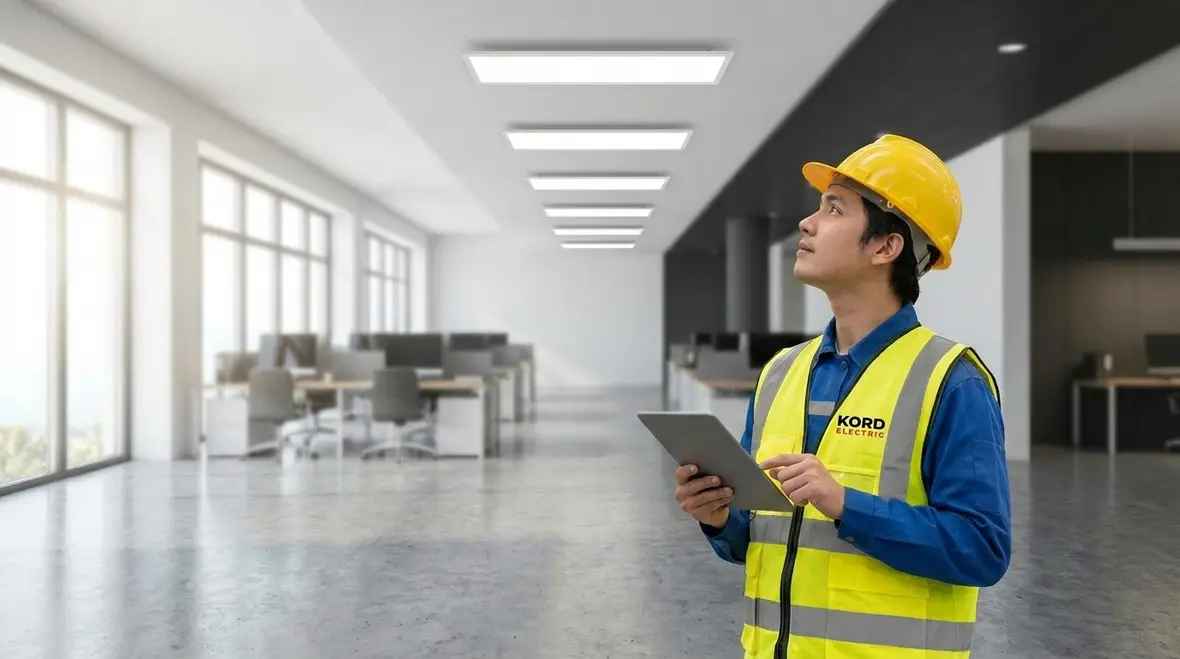
Still, the savings do not come from changing bulbs like you would in a kitchen lamp. Instead, a real commercial lighting retrofit targets the full system. We evaluate the existing layout, switching controls, fixture condition, and room use patterns. Then we recommend an LED solution that matches real work activity, not just a spec sheet.
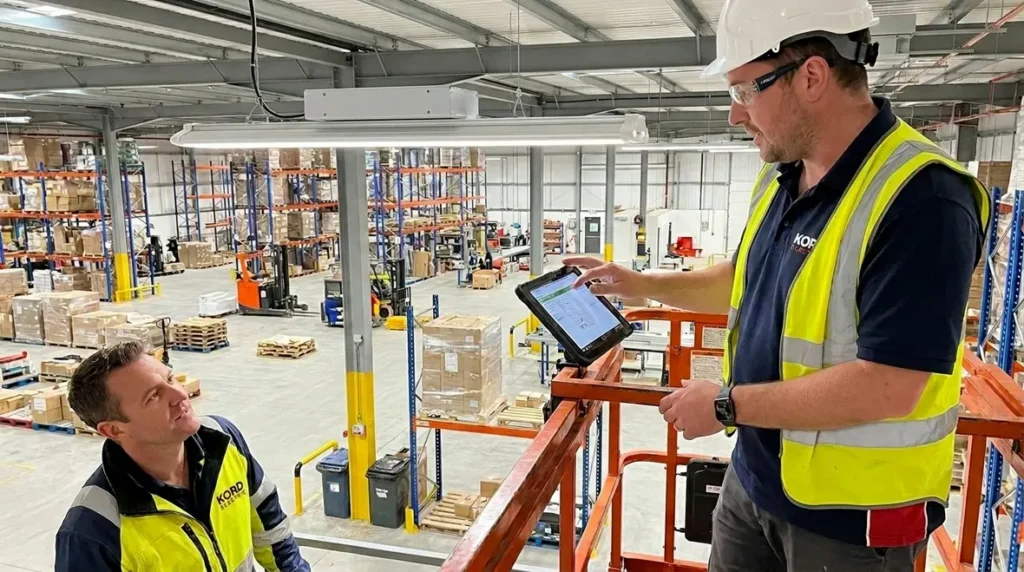
At that stage, our technicians explain the process in plain language. For example, we show how proper lumen levels support tasks like reading labels, inspecting parts, or keeping hallways safe. We also explain that the goal is consistent visibility, not harsh brightness. Nobody wants the “airport runway effect” in a warehouse office, and our team does not install that kind of lighting.

What drives long term cost benefits of commercial LED retrofits
Long-term cost benefits come from several levers working together. First, LED systems typically reduce electricity costs. Second, they reduce maintenance costs because many fixtures last much longer. Third, LEDs often lower labor time because fewer replacements mean fewer shutdowns. And fourth, buildings can improve comfort and performance, which helps operations and tenant experience.
We also account for total cost, not only the purchase price. For example, if a facility has frequent lamp failures, the maintenance team spends time coordinating replacements, ordering parts, and managing downtime. In contrast, LED retrofits reduce replacement frequency, which frees staff to handle the work that actually keeps the facility running.
Additionally, LED lighting supports better planning around building schedules. We coordinate installations to limit disruption for commercial and industrial facilities and major property buildings. As a result, your operations do not feel like they are stuck in a never-ending renovation saga.
Our expert service staff adds another layer of clarity. They help building managers understand payback timelines in a way that makes sense. Then, we compare options that align with your hours of operation and your maintenance approach. If a building runs 24 7, the math changes. If it operates only during shifts, the strategy changes too. We do not pretend every facility looks the same, because they do not.

Controls and daylight: the part most people forget
Many organizations focus on fixture replacement and stop there. However, the best commercial lighting retrofit results often come from pairing LED fixtures with smart controls. That includes occupancy sensing, scheduling, dimming, and sometimes daylight harvesting where windows or skylights exist.
Here is why it matters. Lighting use changes across a day. People arrive, work ramps up, then foot traffic drops. In older systems, lights often stay on at full output. With modern controls, lighting can match actual conditions. Thus, the building uses less power without sacrificing safety or visibility.
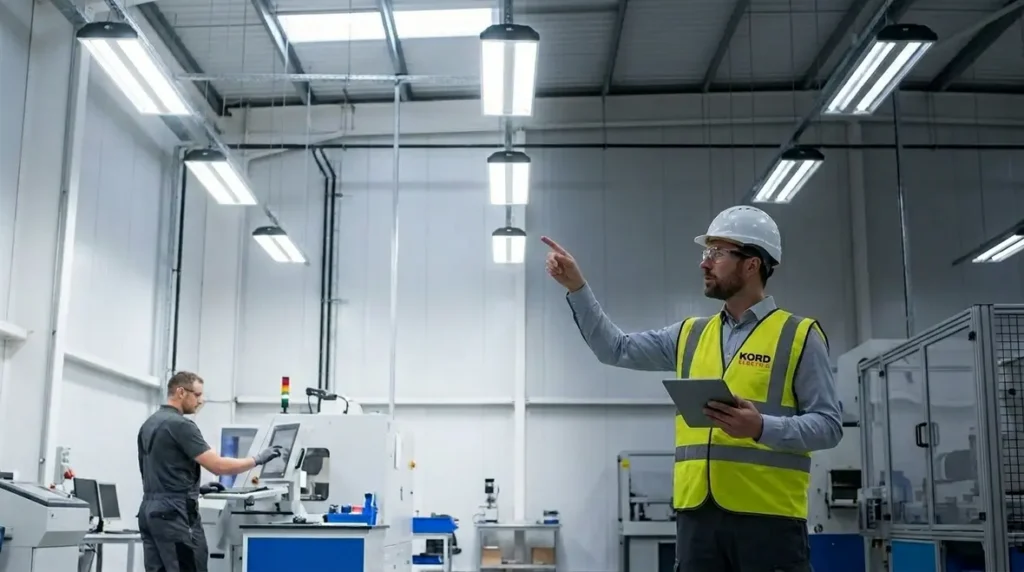
Our technicians explain control options so your team can choose what fits your building’s workflow. For instance, we discuss how occupancy sensors perform in different areas like offices, restrooms, corridors, and storage rooms. We also explain that dimming works best when it aligns with task requirements. Nobody wants to dim office spaces so low that productivity disappears. Instead, we tune lighting settings to support real tasks and safety needs.
And yes, we have heard the joke: “Why do we need lights if we already have a sun?” Then we walk them through how daylight varies, how weather changes, and how nighttime work still needs consistent coverage. The sun does not show up for the night shift, unless you have a time machine.
Staying compliant: NFPA 70A and NEC explained
Commercial lighting retrofits need more than good lighting. They also need correct electrical installation and code alignment. Kord Electric references key guidance from NFPA 70A vs NEC for commercial electrical compliance to support our approach. We do not treat compliance as a checkbox. We treat it as the foundation for safe, reliable installations that protect people and property.
To keep it clear, our expert service staff breaks the difference down during the planning stage. We explain that the NEC covers many electrical installation requirements, while NFPA 70A supports installation considerations in areas where grounding and bonding matter. Then we connect those principles to lighting retrofit work, including how circuits get handled, how wiring paths get planned, and how grounding practices support safe operation.
Because lighting projects touch building power, code requirements affect how we select components, route wiring, and verify performance. In other words, we make sure your retrofit does not create new risks while trying to reduce costs. And if the building has ongoing operations, we plan the install so it stays safe and predictable.
When clients ask whether a retrofit “will pass inspection,” we respond with the real answer. We help ensure proper installation, documentation, and testing so compliance does not become a last minute drama scene. Nobody enjoys that part, not even the actors.
Choosing the right retrofit plan for your building
Each commercial and industrial facility has different constraints. Some have high ceilings. Others have tough maintenance access. Some run in multiple shifts, while others operate seasonally. At Kord Electric, we build the plan around those details.
First, we evaluate lighting performance and the current fixture condition. Then we examine room layout, reflectance, and task needs. Next, we consider the electrical setup and control opportunities. After that, we confirm installation requirements and coordinate scheduling.
Then we talk options. One building might benefit from replacing fixtures directly. Another might need a more thoughtful approach to controls and wiring integration. We also consider whether the facility needs to keep current systems running while we install new ones. That planning reduces operational disruption and helps your team stay on schedule.
Our technicians also coach facility managers on what to track after installation. That includes measured energy reductions, lamp and fixture reliability, and occupant feedback. Consequently, your organization can verify performance and use the data for future projects.
For teams who want to dig deeper into the budgeting and planning side of upgrades, Kord Electric’s commercial lighting upgrade cost guide and California Title 24 lighting retrofit ROI guide walk through how investment, energy savings, and code compliance come together for large properties.
FAQ for commercial lighting retrofits
Ready to lock in savings with a professional retrofit
If your facility wants predictable long-term cost control, do not gamble with a quick fix. Kord Electric builds commercial and industrial LED retrofit plans that reduce energy use, lower maintenance demands, and support safe installation practices. Our technicians explain every step clearly, and our expert service staff helps you keep the project aligned with compliance needs. Call us today to review your building, estimate your retrofit path, and build a lighting strategy that keeps paying off long after the first month.
For organizations mapping out broader electrical improvements alongside lighting, Kord Electric’s dedicated Los Angeles County electrical services help coordinate panel work, distribution upgrades, and emergency power strategies so your retrofit supports a stronger overall infrastructure instead of operating in a silo.
When you are ready to turn commercial lighting retrofit benefits into everyday savings, reliability, and better visibility, partnering with a team that lives and breathes commercial lighting compliance in California and large facility operations gives your project a smoother path from planning to inspection to long term performance.