Scalable EV Charging Infrastructure for Fleets
How we scale EV charging for commercial fleets with reliable ev charging infrastructure for fleet management
Kord Electric helps commercial and industrial facilities scale EV charging without turning their property into a patchwork of cables and promises. In our approach, ev charging infrastructure for fleet management is not a buzz phrase we toss around. It is the backbone of how fleet operators expand charging, protect uptime, and manage costs as vehicles multiply. And yes, we hear the jokes too, like “just plug it in.” That sounds simple until the first peak-load hour arrives and the building acts like it never signed up for this. We plan for that day. Then we execute, with technicians and expert service staff who explain what is happening, why it matters, and what gets done next.
Plan for load, site limits, and future growth before anyone installs anything
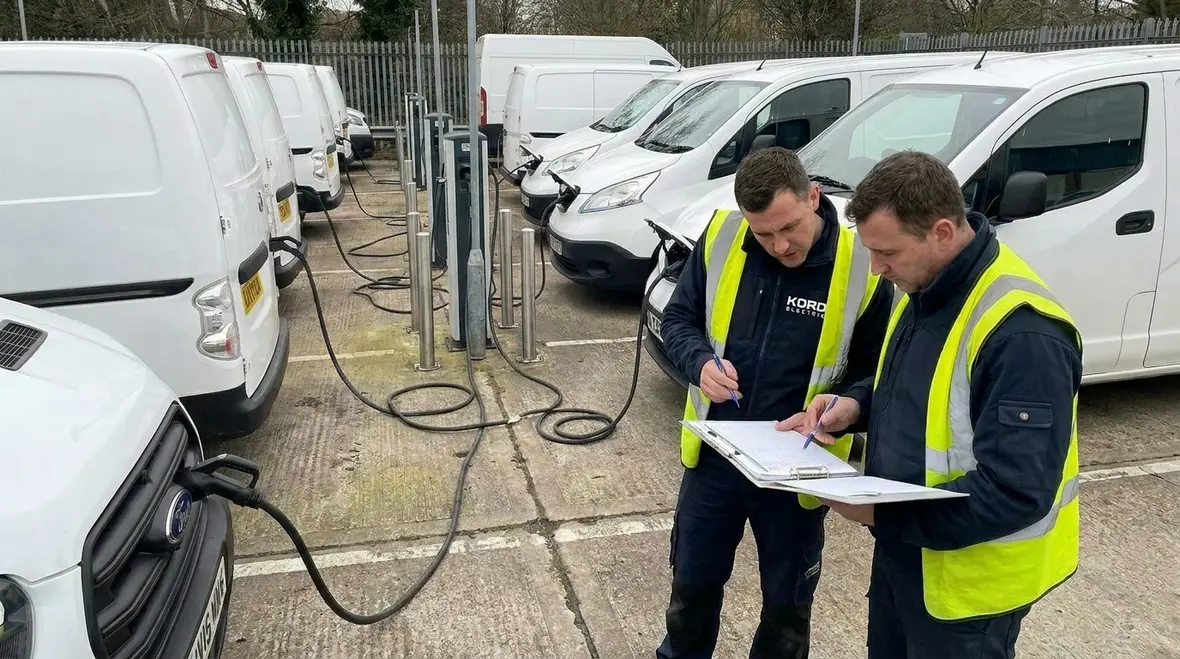
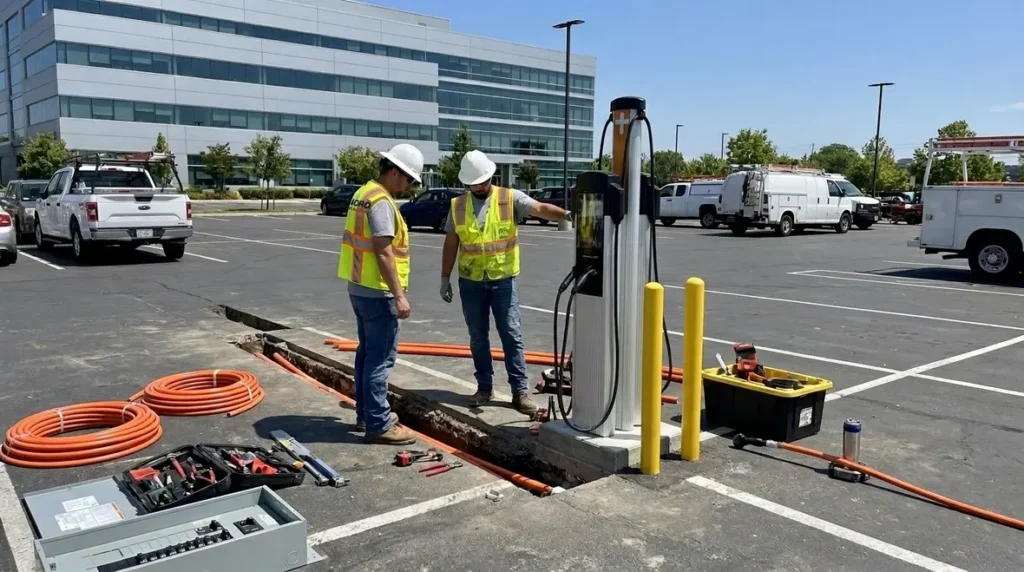
Scaling charging starts long before we mount chargers. First, we look at the property’s electrical capacity, utility service size, and how existing loads behave across the day. Then we map charging demand to the way fleets actually operate. That means we ask what time vehicles return, how many charge overnight, and whether drivers rotate between shifts. At that point, we build a charging plan that fits the site, not one that hopes the site will forgive it.
To keep expansion smooth, we also design for staged growth. For example, we might add chargers in phases while upgrading upstream components only when the numbers truly justify it. This avoids big, early upgrades that feel like buying a whole treadmill because you walked past a gym once. Instead, we align electrical upgrades with actual fleet expansion. And since every commercial site has its own pattern of HVAC, lighting, and process loads, we treat each plan as unique.
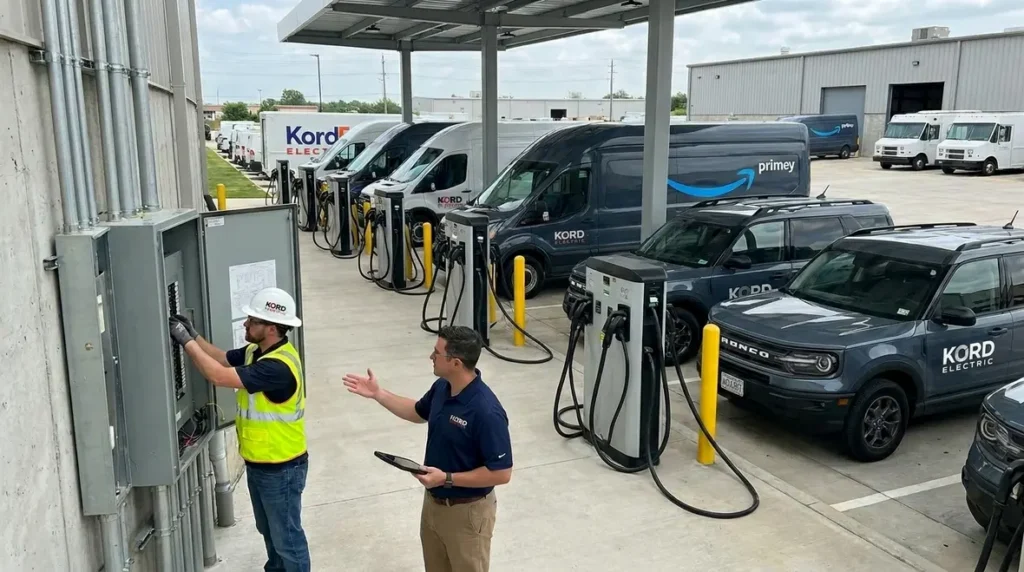
At Kord Electric, our expert service staff then walks stakeholders through the logic in plain terms. They do not just say “we chose this” and move on. They explain load paths, demand profiles, and how the system stays within limits. When people understand the plan, they approve faster. When they approve faster, projects finish sooner. Nobody likes delays. Not even the jokes.
Design charging stations that fit commercial realities, not parking lot fantasies

Commercial and industrial properties need more than hardware that can push power. They need chargers that work in real weather, remain serviceable, and support fleet operations with clear reporting. Therefore, we design layouts that reduce cable runs where possible, protect equipment from vehicle impacts, and keep the installation neat enough that maintenance stays easy. After all, property managers and electricians should not need a treasure map to find a disconnect.
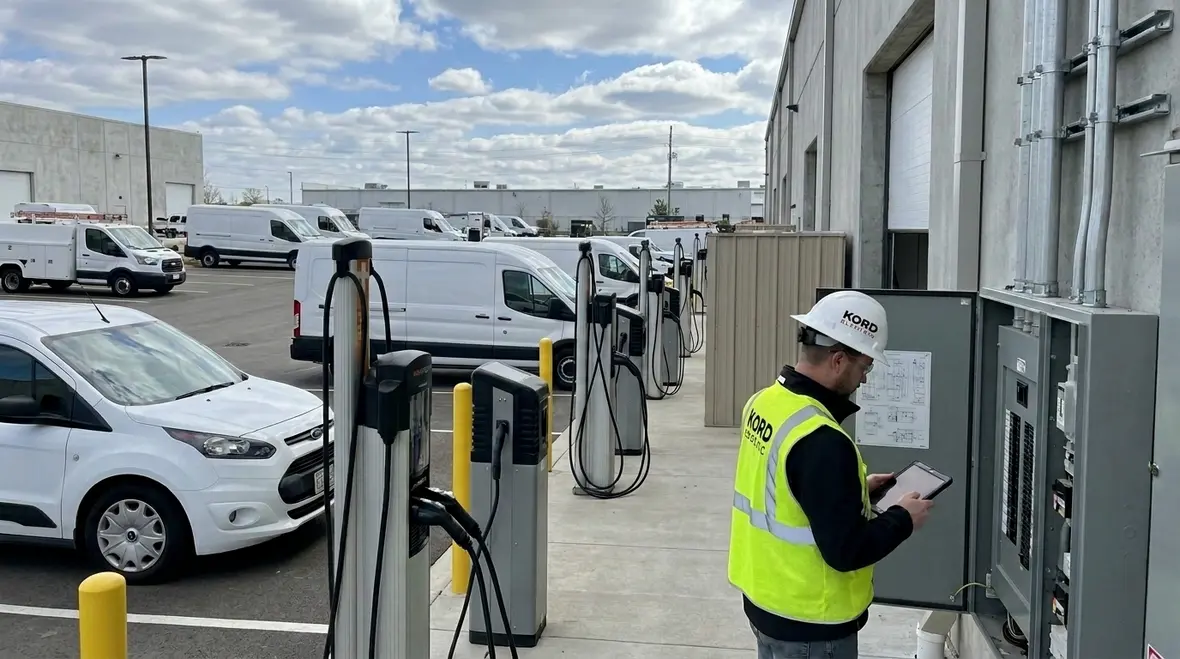
We also consider vehicle behavior and access. For instance, fleets may require plug reach that works across multiple duty cycles. Some sites need chargers arranged to support safe traffic flow, while others need clustered staging areas. As a result, we align charger placement with driver movement, safety rules, and site traffic patterns.
Then we select charging levels that match the operational goal. Some fleets need slower, overnight charging that supports a predictable daily reset. Others require faster charging that helps maintain utilization. Our technicians help teams decide what makes sense based on duty cycles, available parking time, and how quickly the fleet must recover after each route.
Build a power foundation using best practices from data center electrical infrastructure essentials

When commercial sites grow complex, the electrical backbone matters. While an EV charging build is not the same as a data center, the discipline looks familiar. Kord Electric draws on the principles from our data center electrical infrastructure essentials guidance: strong infrastructure planning, clear distribution design, and attention to reliability. In other words, we treat charging like critical equipment, because in fleet operations, downtime costs real money.
So we build the foundation with careful attention to distribution architecture. We plan how power moves from the service through switchgear or distribution, then out to charging circuits. We focus on good labeling, safe routing, and component selection that supports long-term use. Additionally, we validate how power quality and protection settings align with charger requirements.
Next, we support serviceability. We design systems so that troubleshooting does not require removing half the site. Then we document the build clearly so the next team can maintain it without guesswork. And when our technicians explain each step, the work stays transparent. We have found that calm, honest explanations reduce friction. Also, it helps clients avoid the “we thought it would be simpler” moment that shows up later like a sequel nobody asked for.
Use smart management to control costs and avoid peak demand surprises
Charging systems should do more than deliver power. They should manage power intelligently. Therefore, we implement controls that prevent overloads and help align charging with utility rates, grid capacity, and site demand patterns. When the building and charging run together, the system needs to coordinate, not compete.
To do this, we plan load management strategies such as prioritization, scheduling, and dynamic sharing. Then we set up charging rules that fit fleet schedules. For example, vehicles that return first might receive power first, while others charge later. As a result, we reduce peak spikes that can drive utility costs and strain electrical infrastructure.
Additionally, we configure reporting so fleet and facilities teams can track utilization, energy usage, and operational trends. That data helps with staffing decisions too, because knowing charge time and throughput improves how fleets plan routes. Then, when expansion arrives, the system’s operational history guides the next phase. We do not guess. We measure.
Install with expert service staff, then support long after the ribbon cutting
Many projects fail after installation. Not because the equipment is bad, but because the maintenance plan and service response were never fully planned. We treat support as part of the build, not an afterthought. That means our technicians follow clear commissioning steps, verify electrical performance, and confirm that controls work as intended under real-world conditions.
Then we create an ongoing service approach that matches commercial and industrial needs. We support troubleshooting, preventive checks, and parts readiness. If a site uses fleets daily, then downtime cannot be treated like a minor inconvenience. It becomes a business issue.
Just as important, we explain maintenance needs in a way that people can act on. Our expert service staff helps facility leaders understand indicators that show when something needs attention. And when they ask questions, we answer them directly. No fog, no “trust us.” The calm truth is we want the system to stay reliable, and we want the team that runs the building to feel confident.
Scale across multiple buildings and properties with consistent standards
Fleet operators often expand to new sites or upgrade existing ones. That is where inconsistency becomes expensive. Therefore, we build standards that can repeat across properties while still adapting to local electrical limits. We define how distribution is planned, how circuits are grouped, how chargers are deployed, and how controls and reporting connect to the operational goals.
As we scale, we keep documentation tight and consistent. That means labeling, one-line diagrams, commissioning records, and clear service notes. Then, when another facility comes online, the team can move faster because the foundation is familiar. Moreover, when a fleet changes its charging needs, we can evaluate upgrades with a clear baseline instead of starting from scratch.
In practice, we also coordinate with facility teams on safety, access, and scheduling. We plan work windows that fit real operations. And when timelines compress, we still protect quality. In commercial and industrial work, speed without structure turns into rework. Rework costs. Nobody budgets for that.
FAQ
Ready to scale your EV fleet charging without guesswork
When commercial fleets grow, charging must grow with them, and it must stay reliable. Kord Electric designs and installs scalable charging systems for commercial and industrial facilities, then supports them with clear documentation and expert service staff. If you want a plan that protects capacity, reduces peak surprises, and keeps uptime high, contact us for an assessment of your site and fleet schedule. We will map the path from today’s demand to tomorrow’s growth, calmly and clearly.
If your property is preparing for significant EV adoption or already managing multiple vehicles, exploring a dedicated commercial EV charger installation strategy can help align your electrical infrastructure, charger layout, and growth plan. Kord Electric’s EV charger installation services support everything from initial design to commissioning so your ev charging infrastructure for fleet management scales efficiently.
For facilities that also depend on mission-critical equipment, pairing fleet charging projects with strong foundational planning—like the approach outlined in our data center electrical infrastructure essentials article—helps keep the entire site resilient, not just the charging area.