
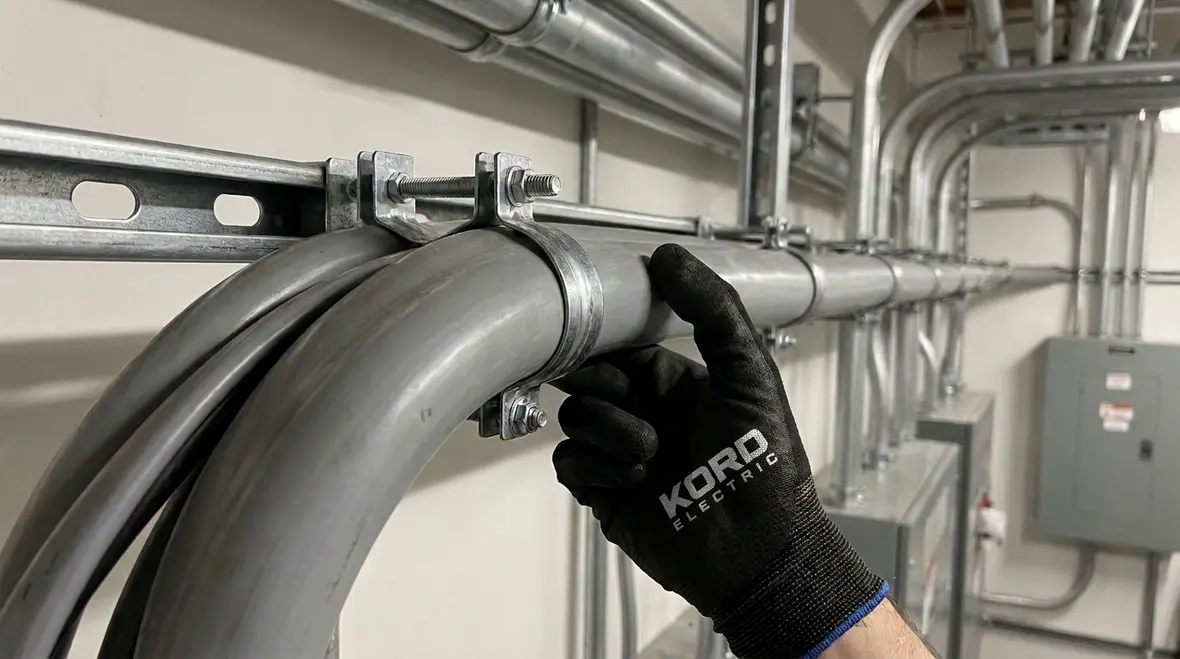
Sheath Compliance Matters on Every NEC SEC Cable Run
At Kord Electric, we back commercial and industrial facilities with field-tested electrical knowledge and real installation discipline. When an NEC SEC cable is pulled through a building, the NEC SEC cable sheath becomes more than a cover. It helps protect conductors, supports safe installation, and reduces the risk of damage that can turn a “routine job” into a “why is this failing” meeting. And yes, we have seen failures that look like bad luck, but they usually trace back to simple sheath requirements that were ignored.
To keep your systems steady, our technicians and expert service staff explain the rules in plain terms. In this article, we walk through NFPA 70 Section 332.116, explain what sheath requirements actually mean, and show how smart choices help commercial and major property owners avoid trouble. Then we connect it to real-world planning, inspection, and lifecycle performance.
If you want a broader code backdrop while you read, you can also explore Kord Electric’s guide Understanding NFPA 70: The National Electrical Code Explained for 2026, which lays out how the rulebook shapes real electrical projects long before anyone pulls the first SEC cable.
What NFPA 70 Section 332.116 requires for the sheath on SEC cables
NFPA 70 Section 332.116 focuses on sheath requirements for service entrance cable types where the cable includes an outer covering. In simple terms, it sets expectations for what that outside layer must do and how it must be built so it can stay functional in the conditions where it gets installed.
First, it ensures the sheath supports the cable’s overall safety role. Even when a cable looks fine at a glance, the sheath influences moisture resistance, physical protection, and long term durability. Next, the section helps standardize installation outcomes so that one project is not “made up” based on guesswork.
Our team often sees confusion here. People think, “It is just the outer layer.” However, the NEC treats the sheath like a safety component. If the sheath fails, the conductors and insulation pay the price, and the building ends up paying twice: once to fix it, and again through disruption.
And for the record, we are not interested in reruns any more than the fans of a certain streaming show who swear the next season will finally answer everything. Power systems do not work like that. They work like physics.
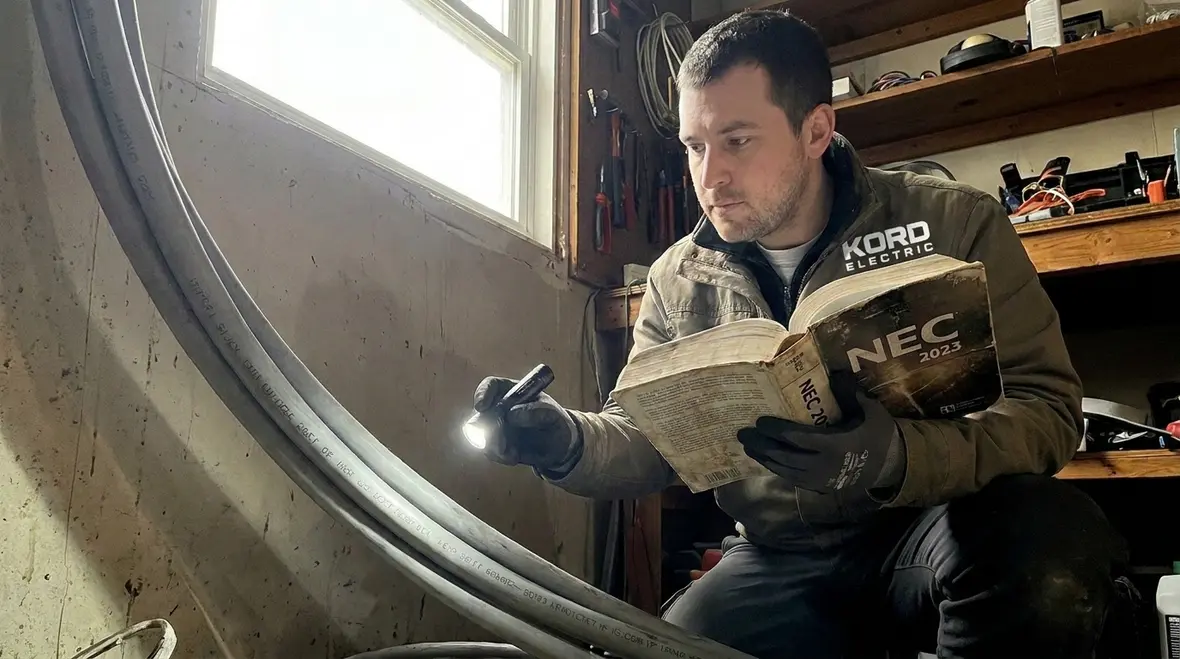
In many commercial projects, that “physics first” mindset also means tying sheath choices back to your broader NEC strategy, from service entrance conductors to distribution branches and grounding. Treating Section 332.116 as part of the same playbook that governs your overall National Electrical Code approach keeps designs consistent and inspections calmer.
How sheath construction affects safety, heat, and moisture in buildings
Sheath requirements do not exist in a vacuum. They match how SEC cables behave once they sit in walls, raceways, risers, or service areas. For commercial and industrial facilities, those environments can change fast. Equipment rooms run warm. Mechanical spaces collect moisture. Utility feeds face vibration and handling stress.
That is why the sheath matters. It can help protect against:
- Physical damage from installation pulling, abrasion, or future maintenance activity
- Moisture intrusion that can accelerate insulation aging
- Corrosion risk when exposure to damp air or chemicals affects the outer protection layer
- Heat exposure where the cable experiences sustained temperature loads
Transition matters here. When designers and field crews select the right sheath performance level up front, the rest of the build usually becomes smoother. On the other hand, if someone chooses an outer protection layer that does not match the NEC SEC cable sheath intent, the project may pass the first checklist and still fail during commissioning, seasonal shifts, or later maintenance.
Our technicians explain this step-by-step during preconstruction reviews. We do not just point to the code. We describe what the sheath does in your building’s actual conditions, because commercial sites are not laboratories, and major property buildings do not get do overs.
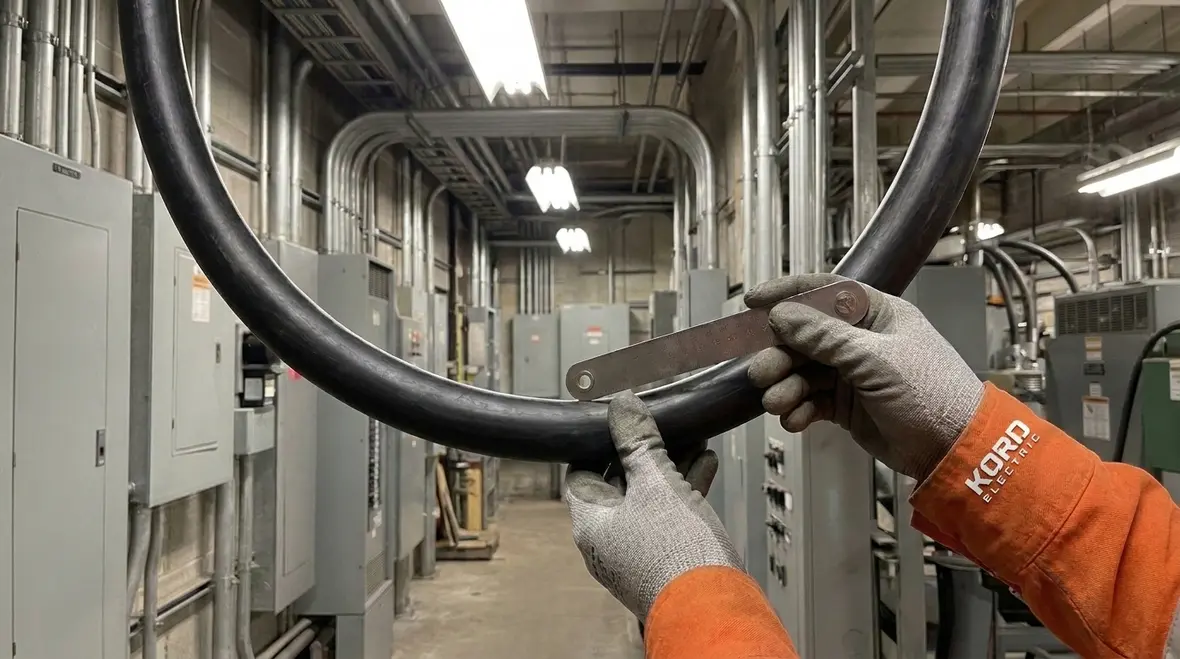
When we review how sheath choices affect long term performance, we often connect them to larger upgrade plans, including electrical infrastructure modernization and maintenance schedules, so that cable protection, load growth, and inspection readiness all point in the same direction instead of fighting each other over time.
Where the SEC cable sheath shows up during installation and inspection
In the field, sheath compliance shows up as a set of measurable outcomes. Inspectors and qualified engineers want to see that the installation matches the intended cable type, uses correct routing, and protects the cable from damage. That means the NEC SEC cable sheath cannot be treated like a cosmetic finish.
First, crews handle the cable carefully during pulling. Then they maintain bend limits and avoid crushing. After that, they plan terminations so the sheath does not get nicked or pulled back incorrectly. Finally, they confirm that the protective approach aligns with the code requirements for the cable type.
Transition from design to jobsite is where mistakes happen. A drawing might show the “right cable family,” but the sheath details get lost when someone substitutes a similar-looking product. In commercial and industrial facilities, those substitutions can create hidden differences that inspectors catch, or worse, that operations notice later as faults and nuisance alarms.
We help prevent that. Our experienced service staff tracks sheath requirements across procurement, staging, and installation. In practice, we verify labeling, product documentation, and cable markings before a crew makes the first pull. That is how we keep schedules intact and reduce the number of “quick fixes” that usually cost more.
During those reviews, we frequently reference internal and external resources that unpack NFPA 70 for 2026, so project managers, designers, and operators all share the same view of what sheath compliance means across the full service entrance and distribution path.
Choosing compatible products for commercial and industrial projects
When Kord Electric supports a major property building, we align sheath needs with the project’s environment and load profile. That means we look at how the SEC cable will run, how it will be protected, and how the facility is expected to operate over time.
We also support designers and facility teams with clear explanations. Our technicians break down what to ask for when specifying the outer protection so procurement does not wander off into “close enough” territory. In other words, we help you buy the right NEC SEC cable sheath approach the first time.
Here is how we recommend teams think about product selection:
- Match sheath performance to environment such as damp areas, mechanical rooms, and service routing
- Confirm the cable type aligns with the service entrance intent and the code application
- Plan for handling so the sheath is not compromised during pulling and routing
- Coordinate terminations to keep the sheath interface correct
- Document the selection so inspections and future maintenance stay clear
And yes, sometimes teams come in with a product they “like.” Like how people pick a movie for its poster. But power cables do not care about posters. They care about sheath integrity and safe installation details.
When we help build those product lists, we often pair sheath decisions with other NEC-focused planning content from the Kord Electric blog, so that cable types, conduit strategy, and overcurrent protection work together instead of forcing everyone to patch gaps with change orders halfway through construction.
Common mistakes we see with sheath compliance and how to avoid them
Even careful teams can stumble. However, most sheath problems follow a pattern. First comes a rushed substitution. Next comes sloppy handling. Then comes an installation detail that looks minor until it becomes a problem during inspection or later service calls.
Some of the most common mistakes include:
- Substituting a similar cable that does not meet the same sheath intent for the NEC SEC cable sheath application
- Damage during pulling where the sheath gets nicked, scraped, or compressed
- Improper routing that exposes the cable to abrasion or moisture beyond what the sheath can manage
- Incorrect termination practices that leave the outer layer improperly handled
- Missing documentation so inspection teams cannot confirm the specified cable details
To reduce these risks, we emphasize process. Our technicians and expert service staff walk facilities through the “before, during, after” sequence: verify the cable before it enters the site, protect it while crews pull and route, then confirm correct handling at terminations.
Meanwhile, facilities benefit from staff training. When operators understand sheath basics, they spot issues early, and they avoid the slow drift toward larger repairs. Transitioning to that culture is often where reliability improves most.
Dual-column planning view for project teams
What to check before installation
- Specified SEC cable type and sheath intent
- Cable labeling and documentation matching drawings
- Route path protection plan for mechanical areas
- Pulling method and protection for abrasion points
- Inspection hold points for commercial jobs
What to verify during inspection
- Sheath remains intact, with no damage from pulling
- Correct handling at terminations and interfaces
- Protection against moisture and physical contact
- Routing matches the approved plan
- Clear traceability for future maintenance
FAQs about NFPA 70 Section 332.116 and SEC cable sheaths
Call Kord Electric for sheath-ready SEC cable support
When your project involves service entrance cable, we handle sheath requirements with the care they deserve. Kord Electric supports commercial and industrial facilities with technicians and expert service staff who verify the cable type, protect the sheath during installation, and help teams prepare for inspection outcomes. If you need help aligning your SEC cable plan with NFPA 70 Section 332.116, contact us. We will bring calm expertise to the jobsite, and we will keep surprises out of your power system.
If your facility is in Southern California and you are planning upgrades, new service work, or major renovations, you can explore how we support regional facilities through our Los Angeles County electrical services, then pair that high level view with project-specific planning around NEC SEC cable sheath decisions.
Whether you are reviewing drawings, preparing for an inspection, or recovering from a “why is this failing” meeting, treating sheath compliance as a core safety topic instead of a background detail keeps your SEC cable runs closer to the rulebook and further from surprise outages. That is the kind of quiet reliability most commercial and industrial buildings are really paying for, even if the purchase order just says “electrical work.”


