
Standby Generator Plan for Commercial Uptime
Why Kord Electric pushes standby power planning from day one
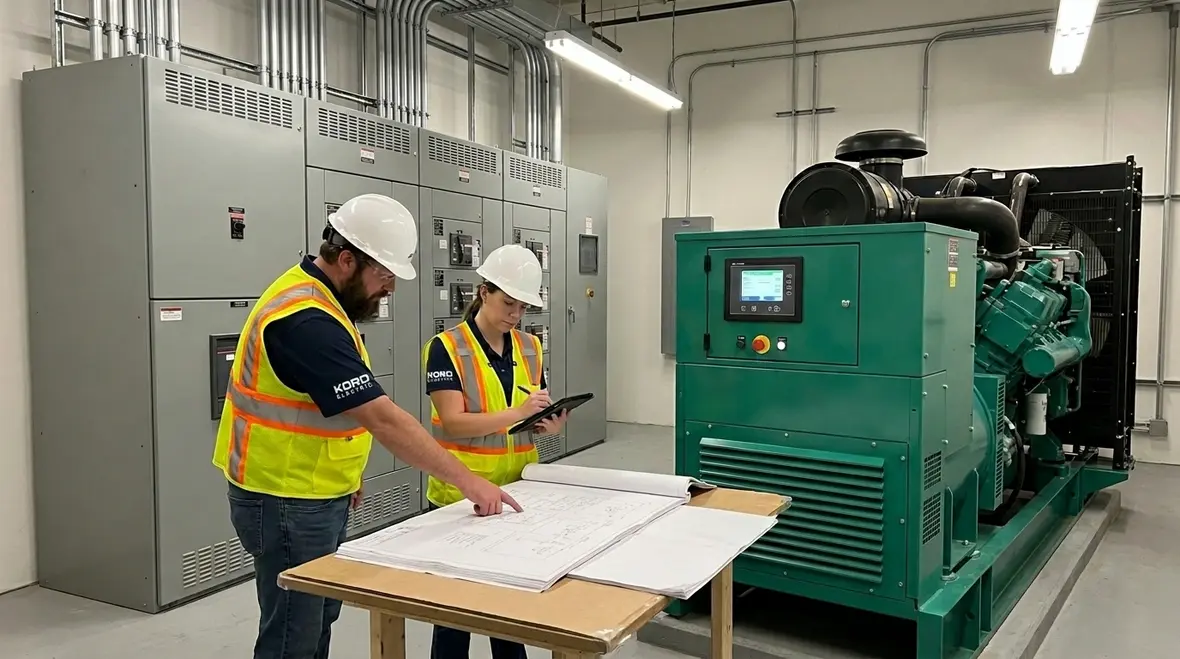
In commercial and industrial facilities, power is not a convenience. It is the heartbeat of operations, safety, and uptime. That is why Kord Electric treats a standby generator plan like a core system, not a last minute bandage. When others plan too late, they end up paying for rushed parts, long downtimes, and avoidable risk. Meanwhile, our approach helps protect critical loads, reduce disruption, and support smoother emergency response. And yes, it also keeps your team from becoming a full time troubleshooting crew during a storm. Others may call that “bad luck.” We call it “avoidable.”
How a standby generator plan protects critical loads and people
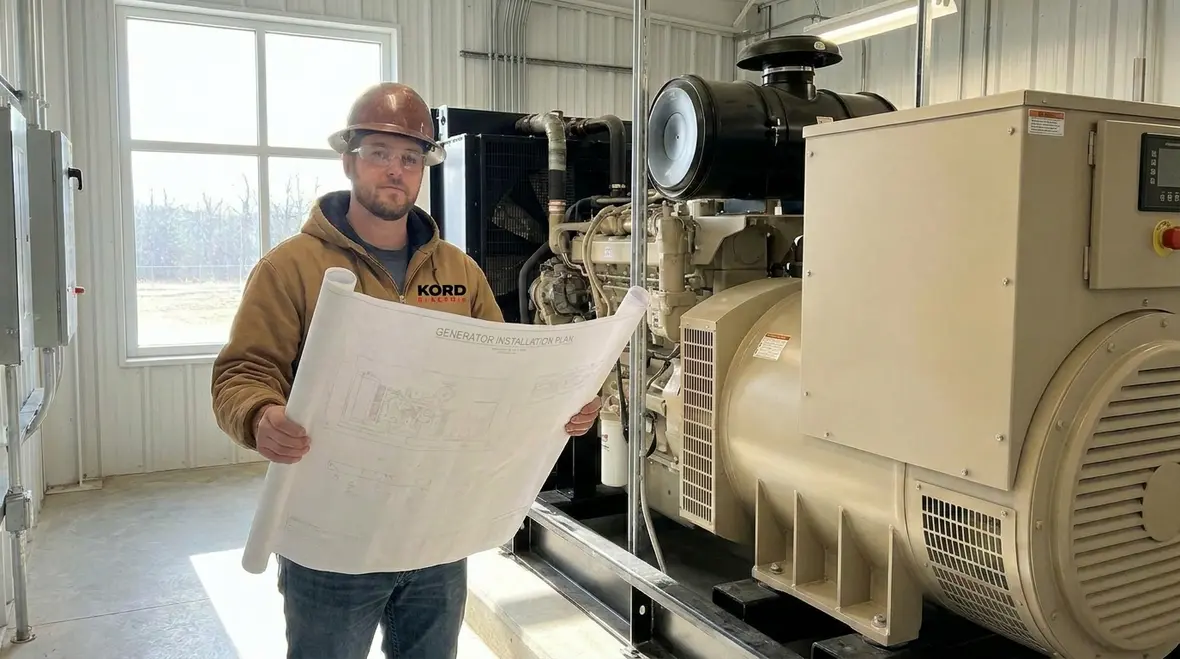
A well built plan starts with knowing what must stay online. Then it goes one step further and builds a decision path around those loads. Kord Electric technicians and our expert service staff explain this in plain language: you cannot treat all circuits the same, and you should not flip random breakers during an outage like it is a game show. Instead, we identify life safety systems, process loads, IT and communications, pumping systems, refrigeration, and any equipment that can fail safely or unsafely.
Next, we map these loads to transfer equipment and generator capability. As a result, the generator does not get overloaded in the first minutes. Also, the facility avoids voltage dips that can damage motors and sensitive electronics. In data and high availability environments, this planning becomes even more strict. If a system expects stable power, we plan for that expectation early, before the outage forces a painful lesson. For sites with data-centric operations, this often dovetails with broader data center electrical requirements for uptime, so standby strategies line up with the rest of the power chain.
Commercial and industrial outages do not wait for approvals
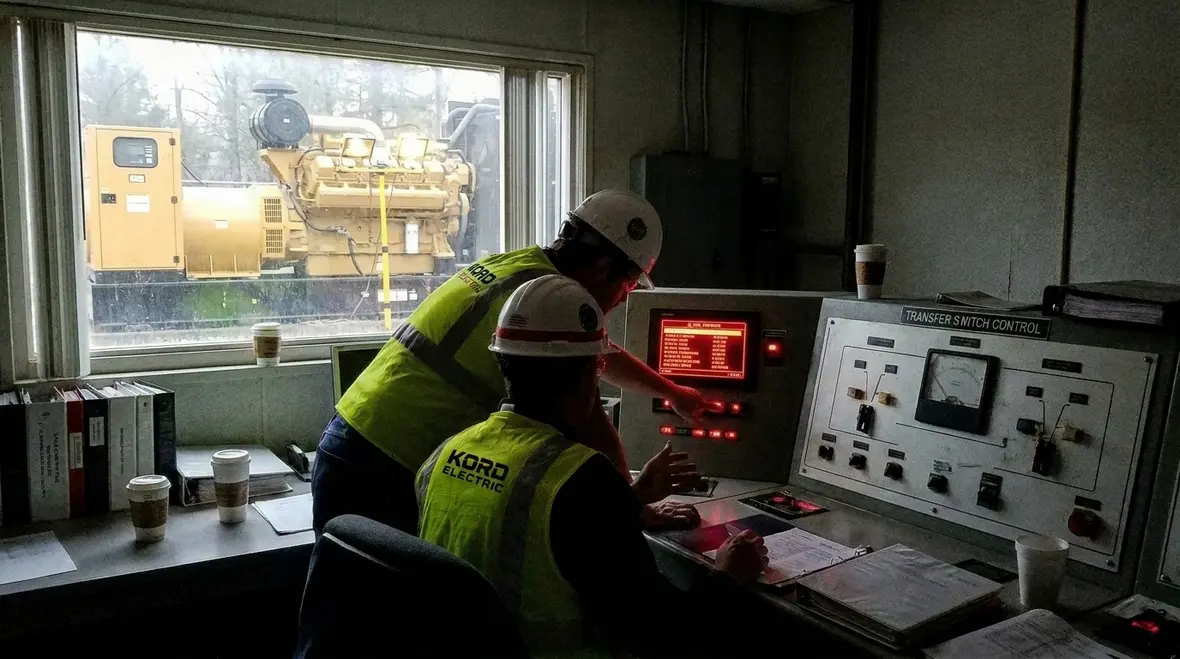
When power fails, time compresses. Teams move fast, but they often lack the right steps. That is where standby power planning becomes more than hardware. It becomes a process: who checks what, how they confirm load priority, and how they verify transfer performance. Transition words matter here because real outages follow a sequence. First, utilities lose power. Then the facility signals alarms. Next, transfer occurs. Finally, the team confirms the generator carries the required loads.
Our service staff helps organizations build a runbook that matches their actual electrical layout. So when a storm hits or a utility event occurs, the response is controlled. Also, your staff spends less time guessing and more time restoring operations. It is calmer, and frankly, it is better for everyone’s blood pressure. Even the calmest supervisor does not want to improvise like they are starring in a late night sketch.
What we review in your electrical planning before the next outage
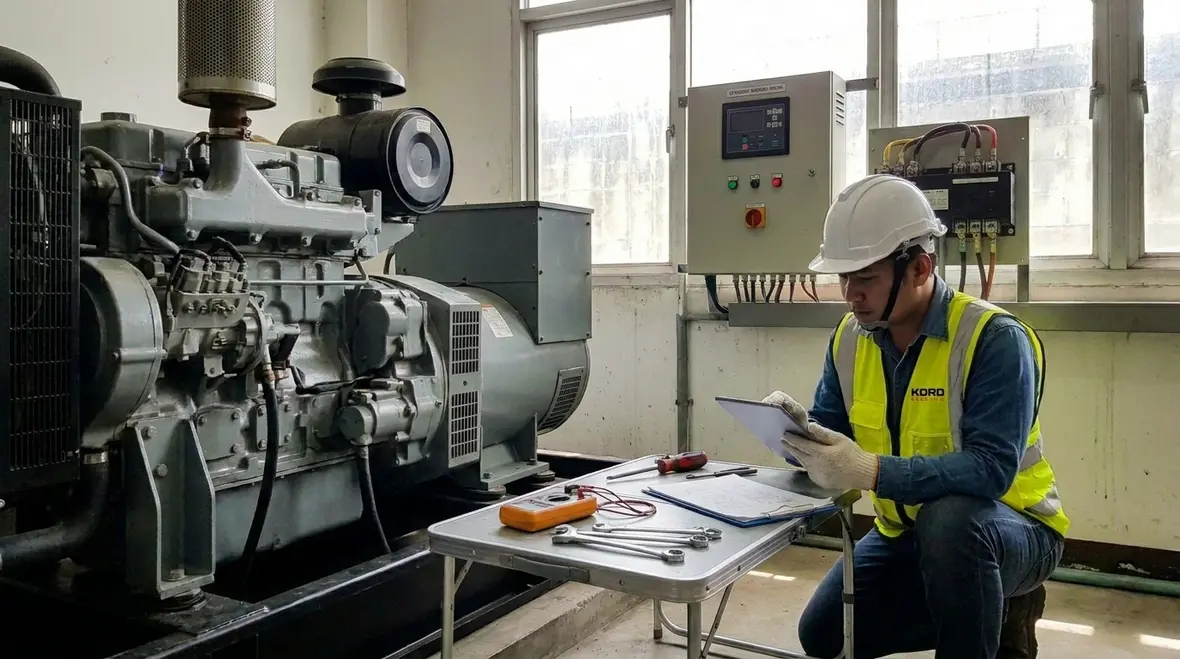
Kord Electric goes deeper than “install a generator.” We review the facility’s electrical requirements, how the standby system interfaces with the rest of the plant, and the practical details that affect uptime. In our guidance for high availability electrical planning, we stress that uptime depends on more than capacity. Power quality, transfer strategy, and protection settings all play a role. In other words, you need the system to start, transfer, and run correctly, not just to exist.
Specifically, we examine load calculations for peak conditions, start inrush requirements, and how critical circuits behave during transfer. We also look at generator sizing assumptions and duty cycle. Then we confirm that transfer switches match the facility needs, including safe coordination and correct sequence.
Finally, we support a plan that includes testing and maintenance schedules. After all, a standby generator that sits idle for months can develop hidden problems. Therefore, we help facilities set realistic checks and performance tests so the system behaves as expected when it matters. For many buildings, that planning lines up with broader reliability work such as emergency power failures reviews and Los Angeles County electrical services that keep distribution and standby systems aligned.
Standby generator benefits that show up when the lights go out
In the first few minutes of an outage, the right standby generator planning delivers real commercial standby generator benefits. First, critical operations keep running, which reduces lost revenue. Second, your safety systems remain powered, so evacuation and monitoring stay dependable. Third, you protect sensitive equipment from abrupt shutdowns, which helps avoid costly repairs and data loss.
Moreover, the plan reduces confusion among staff. When our technicians explain the system and its logic, teams understand what “normal” looks like during an event. As a result, alarms guide action rather than cause panic. Also, the facility can coordinate with facility management, security, and maintenance teams with fewer missteps.
And yes, there is a business side too. Major property buildings often compete on reliability. A predictable standby response helps protect tenant trust and operational reputation. If uptime is part of the brand, power planning becomes part of the brand. For mission critical spaces, it also complements the lessons learned from topics like electrical panel labeling best practices and data center electrical distribution design, where clarity and coordination save minutes when it counts.
Maintenance, testing, and training: the part people forget
Equipment fails in two common ways: it breaks during stress, or it fails silently during neglect. Therefore, we insist on a plan that includes scheduled maintenance and testing. Our technicians help facilities set up checks that verify starting reliability, transfer timing, fuel readiness, and load acceptance. Then we align this schedule with operational reality, not just a generic calendar.
We also train staff. Training matters because a standby generator is a system, and systems need human understanding. Our expert service staff shows how to interpret alarms, what conditions require escalation, and how to avoid common mistakes like leaving bypass modes active longer than required. We keep the guidance practical and clear, so your team can act confidently.
To keep things engaging, we sometimes say: the generator should not be treated like a sleeping giant you only wake up during emergencies. Instead, we wake it up in a controlled way through testing and review. That way, when the real event arrives, the giant moves like it has done this before. Because it has.
Steps to build a standby generator plan for your facility
If a commercial or industrial facility wants a workable plan, it needs a sequence. Kord Electric typically guides clients through the following steps so the final result supports real world operations:
- Identify critical loads and rank them by safety, process impact, and time sensitivity
- Verify load calculations for peak demand, motor starting, and sustained run conditions
- Select transfer strategy that matches electrical design and avoids risky backfeeding
- Confirm generator capacity with realistic assumptions for continuous operation
- Write an event runbook covering roles, checks, and step by step actions
- Set testing and maintenance so performance stays reliable over time
- Train facility staff to interpret alarms and follow procedures calmly
Meanwhile, we coordinate documentation and system labeling so teams can find the right controls fast. So during an event, confusion drops and response improves. That is how a standby generator plan becomes an operating advantage, not a paperwork exercise.
FAQ: Standby generator planning for commercial and industrial buildings
Ready to protect uptime with a real standby plan?
Kord Electric helps commercial and industrial facilities build standby generator planning that supports true uptime, clear response steps, and safe operation. We review critical loads, electrical requirements, transfer strategy, and testing schedules, then we train your team so events do not turn into chaos. If you want fewer surprises and smoother recovery during outages, contact Kord Electric today. Our experts will walk your team through a plan that fits your facility, your loads, and your standards.
If your operations depend on continuous service, consider pairing your standby strategy with broader commercial electrical support, from distribution upgrades to automated lighting controls and labeling improvements. Kord Electric’s commercial and industrial services help align everyday reliability with the same discipline you expect from your standby gear, so “emergency” feels like a process, not a problem.
When your facility is ready to turn commercial standby generator benefits into a real, tested uptime strategy instead of a hopeful backup plan, that is the moment to bring in a team that treats standby systems like a core part of the electrical backbone.


