Commercial Emergency Power Planning Guide for Multi Tenant Buildings
Commercial emergency power planning in a multi tenant property is not something you improvise when the utility grid decides to run its own drill. It is a structured, tested response that keeps critical systems alive, tenants informed, and building teams calm enough to follow the script instead of writing a new one in the dark. This guide walks through how Kord Electric helps commercial and industrial property leaders design a plan that actually works under pressure, from load assessments and switching procedures to tenant communication and structured drills.
For facility managers already focused on preventive care, this kind of Commercial emergency power planning lines up naturally with broader maintenance strategies. Kord Electric regularly supports large properties with services like commercial and industrial electrical maintenance plans, NFPA 70B based switchgear upkeep, and structured inspections that reduce surprises. Those same habits of documentation, testing, and clear explanation form the backbone of a strong emergency power plan.
Commercial emergency power planning starts before the first outage
When lights flicker and systems start acting like they forgot their training, the real test begins. Kord Electric builds Commercial emergency power planning into a practical plan for multi tenant facilities, so leadership teams and building managers know exactly what to do, in what order, and with which resources on hand. In our experience, the worst time to learn your emergency electrical response plan is during an emergency. And yes, that is also the moment when everyone suddenly remembers they lost the key to the electrical room. Our approach keeps that from happening.
Others can write a document. We help create a plan that works in the real world, across multiple tenants, multiple floors, and multiple electrical interfaces. Then our technicians and expert service staff explain it clearly, so the plan does not live only in a binder.
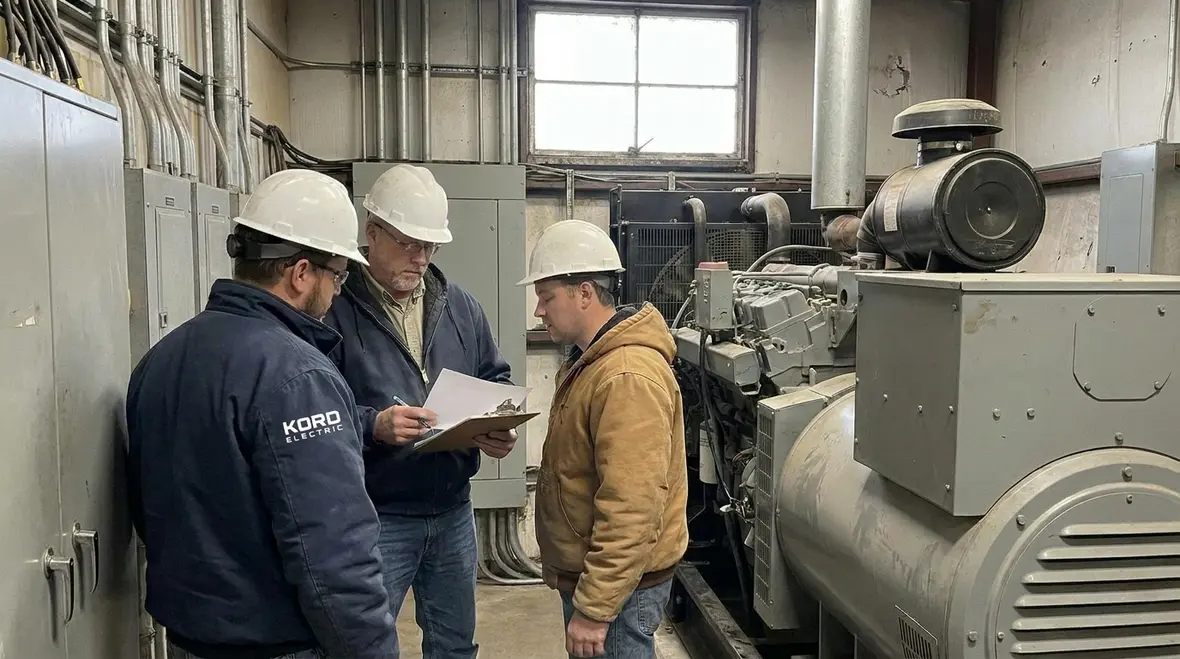
If your team is also updating panel schedules or improving labeling, a structured emergency plan fits neatly alongside those upgrades. Kord Electric’s approach to electrical panel labeling best practices shows how small details like consistent breaker names and accurate one line diagrams become critical decision tools when time is short and power is unstable.
Design the response map for shared systems and tenant responsibilities
Because multi tenant buildings share feeders, panels, life safety systems, and sometimes generator or UPS rooms, a single response plan must cover many roles. Kord Electric develops a response map that separates responsibilities by function, not by guesses. First, we identify critical loads like exit lighting, fire alarm power, life safety circuits, elevators, and any tenant connected equipment that truly must stay online. Next, we define who makes decisions, who performs switching, who verifies load transfer, and who communicates with each tenant.
We also account for the human part. Tenants often operate under different schedules, different staffing, and different risk tolerance. Therefore, we create a tenant notification workflow that does not create panic. It provides consistent instructions and avoids misinformation. Our team runs through scenarios so the building staff understands what “verified” means, not just what “looks fine” means.
And just to keep things entertaining, we remind everyone: the plan is not a magic spell. If someone says, “Don’t worry, the generator will handle it,” that person is usually the first one to ask, “Why is the panel warm?”

For commercial leaders looking beyond emergency events, this same mapping mindset also shows up in how Kord Electric structures broader risk conversations. Their article on hidden electrical risks in commercial buildings breaks down where shared infrastructure quietly adds stress—and why tying those insights into your emergency response map keeps surprises to a minimum.
Run load assessment and power quality checks that match real operations
Emergency electrical response planning fails when the load assumptions do not match the facility. Kord Electric performs load assessment for commercial and industrial environments, using your actual operating profiles whenever possible. We look at what starts during transfer, what drops out, and what might delay or surge. Then we document which loads move to standby power and which loads stay shed.
After that, we consider power quality. In modern buildings, equipment can be sensitive to voltage dips, frequency variations, and harmonics. As a result, the emergency plan needs clear rules for transfer timing, sequencing, and any controlled startup. We also evaluate whether the facility relies on generator, UPS, or both. Each system changes the way the response plan should function.
Most importantly, we translate engineering details into actions. Our technicians explain the plan using plain language during site walkdowns and readiness meetings, so your staff understands why the sequence matters. When people understand the why, they execute the how.
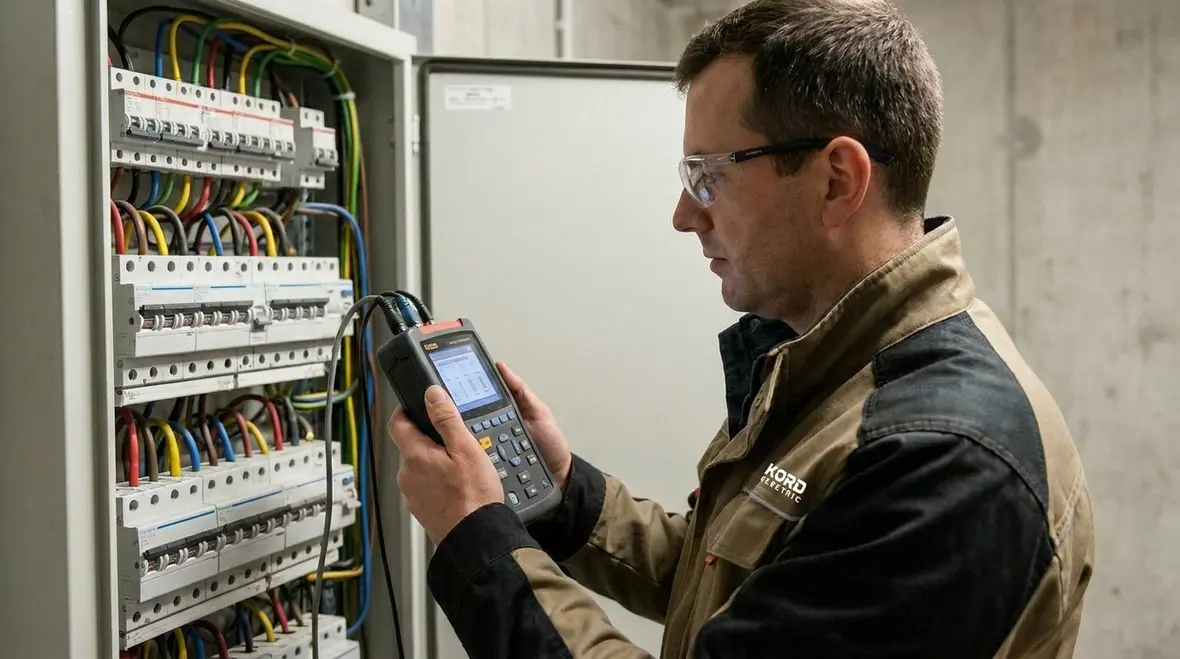
These assessments pair naturally with structured preventive programs. If your team is already exploring maintenance planning, Kord Electric’s NFPA 70B electrical panels and switchgear maintenance guide explains how condition based inspections, torque checks, and thermal imaging provide the baseline data that feeds a more accurate emergency power strategy.
Create switching and verification steps that reduce downtime
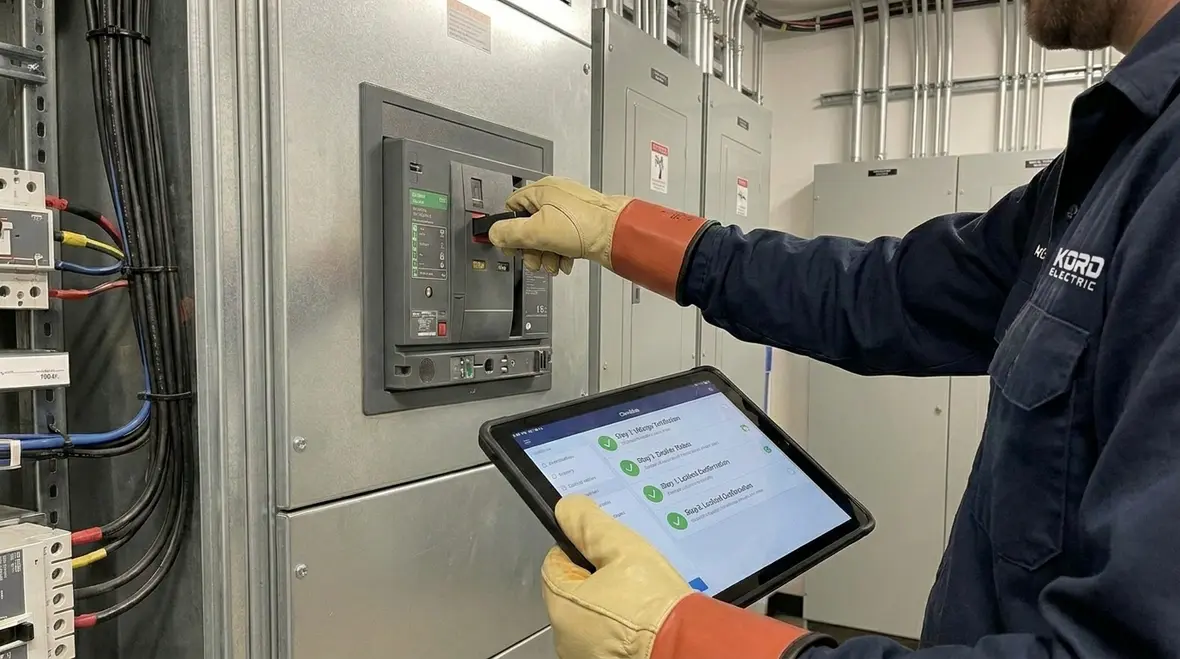
In a real emergency, time moves fast and attention slips. That is why Kord Electric builds switching procedures with verification points that prevent guesswork. We include step by step actions for isolating circuits, initiating generator or UPS operation, and transferring critical loads safely. We also add “checkpoints” for confirmation: phase balance, voltage levels, breaker position states, and functional tests for key life safety loads.
Because multi tenant facilities can have multiple electrical rooms and shared distribution paths, we map where switching can occur and who can access each area. Then we build a controlled process that avoids conflicting actions by different staff members. We usually recommend using role based access and a clear authorization chain, so two people do not try to switch the same device at the same time, like two chefs reaching for the same pan.
Our expert service staff also prepares guidance for what not to do. For example, they outline when to hold, when to stop switching, and when to escalate to field engineering support. As a result, your team follows a disciplined routine rather than improvising.
If you operate mission critical rooms like data centers inside a larger multi tenant property, this level of detail is non negotiable. Kord Electric’s data center electrical requirements for uptime article digs into how transfer logic, redundancy, and protective coordination keep those high priority spaces online even while the rest of the building rides through an event.
Plan communication with tenants, responders, and facility leadership
Electrical emergencies spread through communication delays as much as through electricity. Kord Electric sets up a communication plan that works during outages, generator starts, and partial load events. We help building leadership define messaging for tenants based on severity. For instance, we support templates that explain which services should remain available, which may temporarily shut down, and when updates will arrive.
At the same time, we coordinate with external responders. Your plan should identify what information to share with fire services, local utility contacts, and on site contractors. It also lists where key documentation sits: single line diagrams, panel schedules, generator load reports, and contact trees. Then we make sure people can find these materials quickly without digging through a desk drawer like it is a lost artifact.
Most facilities improve dramatically when they stop treating communication as a last minute task. Therefore, we align tenant communication with the actual technical steps in the response plan. Our technicians often sit with building managers to explain the operating logic, so the message matches what the electrical system can deliver.
Test the plan with drills, metrics, and continuous improvement
A plan that never gets tested behaves like a fire extinguisher that looks brand new but has never been used. Kord Electric helps multi tenant facilities run tabletop exercises and field drills that simulate realistic conditions. We use structured scenarios such as utility failure, generator auto start failure, UPS runtime depletion, and partial switchgear issues. Then we evaluate response time, verification accuracy, and whether staff follow the intended sequence.
After each exercise, we capture metrics. We track what slowed down execution, what information people struggled to find, and which steps needed clarification. Next, we update the plan and train staff again. This is where continuous improvement happens, not when the next emergency shows up uninvited.
In our work with commercial and industrial facilities, we also notice a pattern: when staff see the outcome of a drill, they take ownership. They stop waiting for someone else to “handle it.” Our team supports that shift by explaining results in a calm, business focused way. And yes, we do it without turning your emergency readiness meeting into a comedy club, even though the situations sometimes try.
Many facility managers pair these drills with routine inspection programs so the plan stays in sync with equipment conditions. Kord Electric’s resources on data center electrical maintenance checklists and broader commercial maintenance programs help align everyday work with what the emergency plan expects.
Typical elements in a multi tenant emergency electrical response package
To keep the plan usable during stressful moments, Kord Electric organizes the emergency package into clear, operational sections. We include site specific items that cover both the technical and human sides of response. Below is a practical set of components we commonly build for commercial and industrial buildings and major property structures.
| Plan section | What it covers |
| System overview | Key one line summaries, standby sources, transfer equipment, and critical load categories |
| Load priorities | Life safety, essential operations, and tenant critical needs with defined sequencing and shedding rules |
| Switching procedures | Step based actions with verification checkpoints and escalation rules |
| Tenant communication flow | Notification steps, update cadence, and clarity on which services should remain available |
| Contact and access | Role based responsibilities, contact trees, and location of key documentation |
| Testing and updates | Drill schedule, performance metrics, review cycle, and plan revision triggers |
Because documentation alone does not guarantee execution, we make the package match how your staff actually works. Then we support rollout so everyone understands their part.
For multi tenant facilities in high demand regions, it often makes sense to connect Commercial emergency power planning with broader service coverage. Kord Electric supports a wide range of projects and maintenance work through their dedicated Los Angeles County electrical services, helping building owners align day to day improvements with long term emergency readiness.
FAQ about emergency electrical planning for commercial multi tenant buildings
Ready to strengthen emergency readiness for your facility?
If your multi tenant property needs a plan that holds up under pressure, Kord Electric is ready to help. We build commercial and industrial emergency electrical response planning that matches your real loads, defines clear roles, and supports tenant communication that stays accurate. Then our technicians and expert service staff explain the steps in plain language so your team can execute quickly. Contact Kord Electric today to schedule a site review and get an emergency power planning package that actually works when it matters.
Whether your building includes data rooms, manufacturing spaces, or high turnover office suites, aligning Commercial emergency power planning with structured maintenance and clear tenant workflows turns a stressful unknown into a practiced routine. The earlier you map the system, verify the loads, and rehearse the response, the more confidence your entire property has when the next outage test arrives unannounced.