Troubleshooting Industrial Power Quality Issues
In industrial settings, Troubleshooting industrial power quality issues often starts with what people can see before they notice what the meters say. We watch for flickering lights, nuisance trips, and equipment that seems to fail “for no reason.” Then, we confirm the story with testing, because guessing wastes time and money. Kord Electric technicians step in when factories, warehouses, and major property buildings show patterns that do not fit normal wear. And when the pattern repeats, we know the power is talking, even if it is doing it quietly. In other words, we listen first. After that, we measure.
Common signs of poor power quality in industrial electrical systems
When power quality slips, the electrical system behaves like a playlist with bad mixing. Everything still plays, but it sounds wrong. We see these signs in commercial and industrial facilities and major property buildings:
- Lighting that flickers or changes brightness when equipment starts and stops
- Frequent breaker trips that do not match the load history
- Motor problems such as overheating, slow starting, or repeated failures
- Unplanned resets in drives, PLCs, or control panels
- Transformer noise or unusual heat at specific load times
- Capacitor bank failures or blown fuses due to harmonic stress
- Corroded terminations at panels and feeders that point to arcing or loose connections
Meanwhile, other clues show up in data. Many teams log short events, voltage drops, or spikes but only interpret them after production losses. We do not wait for that. Instead, we help others connect the dots between what operators feel on the floor and what electricians confirm in the field.
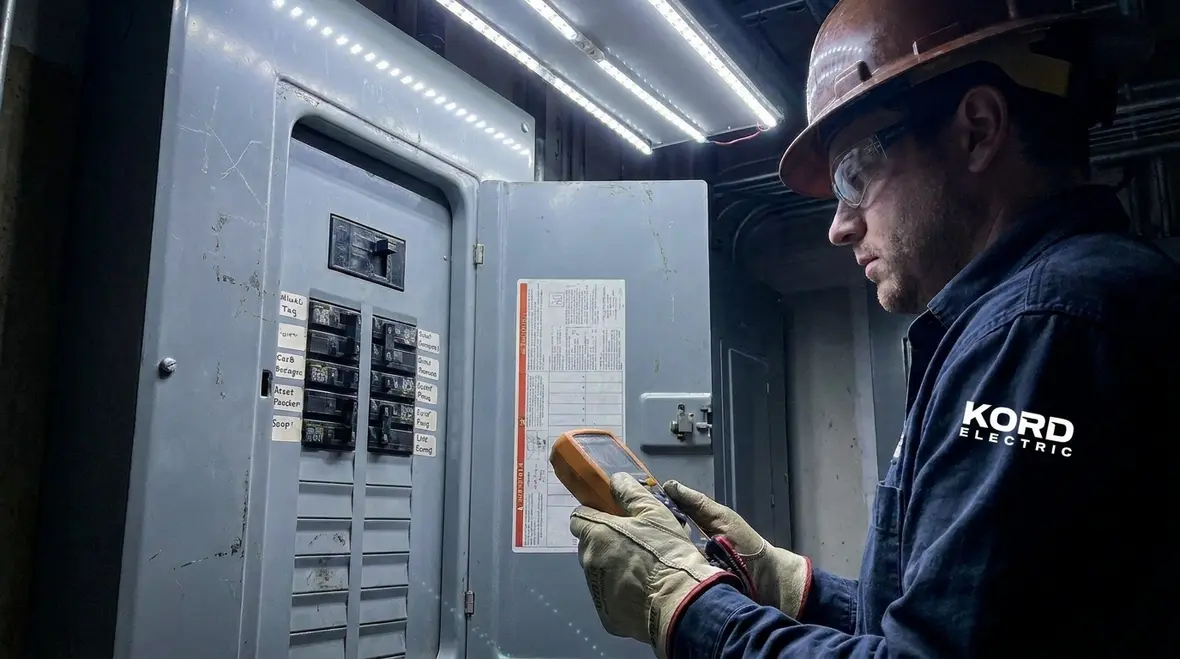
Voltage sags, swells, and interruptions that disrupt production
Voltage issues tend to cause the most frustrating failures, because the equipment often “survives,” then slowly loses reliability. A voltage sag dips below normal for a short time. Then, equipment draws higher current to recover, and electronics may reset. Voltage swells push the other direction, stressing insulation and power supplies. Interruptions can be brief, but control systems interpret them as a full stop. And yes, the downtime can feel personal, like the machine is judging everyone who walks past it.
To support others, our technicians explain how these events often tie to motor starting, large process loads, or utility switching. After that, we align test results with the facility’s operating schedule. We also check for weak connections, undersized conductors, or protective devices that respond too slowly or too quickly. In short, we focus on the event pattern, not just the single measurement.

Harmonics, neutral overheating, and noisy electrical “background music”
Harmonics build when nonlinear loads draw current in shapes that do not match the smooth sine wave the system expects. Typical culprits include VFDs, rectifiers, UPS systems, computers, and LED drivers. Over time, harmonics increase heat and reduce efficiency. Worse, they can overload the neutral conductor in systems where triplen harmonics add together.
Our expert service staff often finds this before it becomes visible to everyone else. They check for:
- Neutral conductor overheating even when phase currents look “normal”
- Transformer temperature rise that does not match the kW demand
- Erratic performance in sensitive loads like automation systems
- Burning odor or discoloration at terminations and bus bars
Then, we test the waveforms and confirm the harmonic profile. After that, we recommend mitigation that fits the building load and operating style. Because the goal is not to win an argument with a waveform. The goal is to keep production stable, reduce stress on equipment, and prevent outages that arrive like surprise guests.
Loose connections, arcing, and grounding faults that steal reliability
Some power quality problems look like “electrical ghosts,” but many come from physical issues. Loose connections, corroded lugs, and damaged bus bar sections create extra resistance. That resistance generates heat, and the heat leads to failure. Meanwhile, arcing can create high frequency noise that trips controls and damages components. Grounding faults and improper bonding also raise risk, especially in large facilities where many panels tie into shared systems.
Our team supports others by inspecting critical points, including:
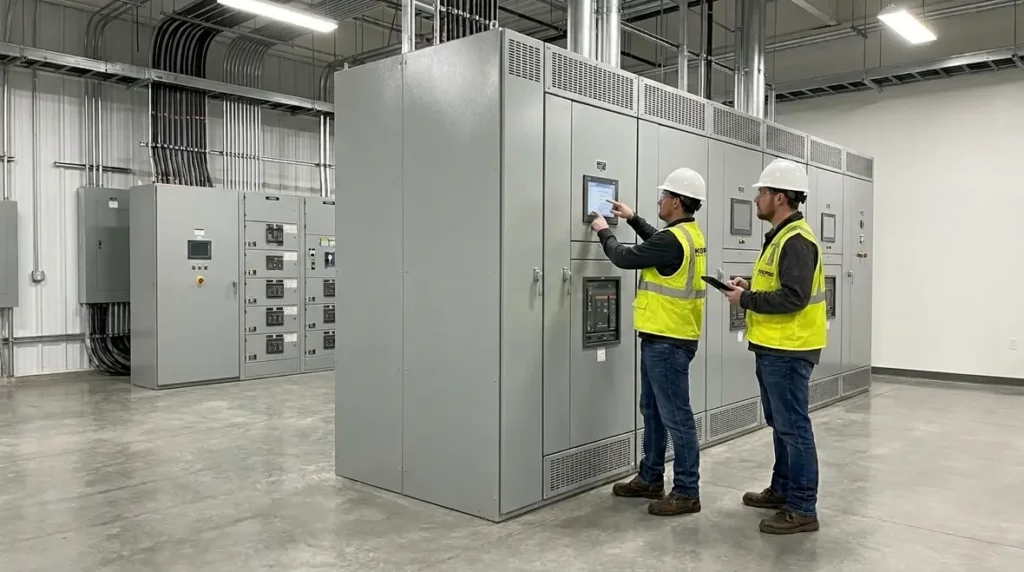
- Feeder terminations at main switchboards and distribution panels
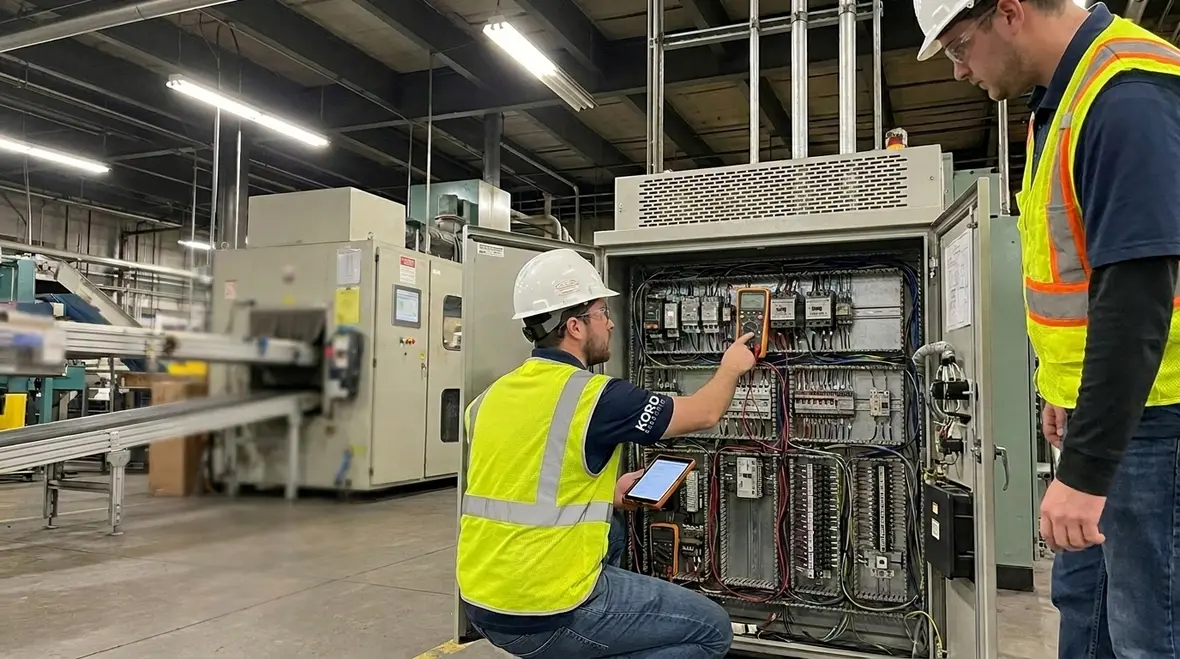
- Motor starter enclosures and cable ends
- Grounding conductors and bonding jumpers
- Splices, lugs, and any connection that “feels hot” on a maintenance walkdown
Then, we verify with field measurements and guided troubleshooting. We also explain how grounding affects fault clearing, touch safety, and control stability. In other words, we keep the system from becoming a science project in the worst way possible. And if you have ever watched a panel door close and still heard a faint crackle, you understand why we take this seriously.
How we troubleshoot and document issues for commercial and industrial buildings
Instead of guessing, Kord Electric technicians use a method that builds a clear story from symptoms to data. First, we review the facility’s load profile, equipment list, and any recent changes. Then, we watch the system during real operating conditions. That matters because power quality often depends on what runs at 2:00 p.m., not what runs at 2:00 a.m.
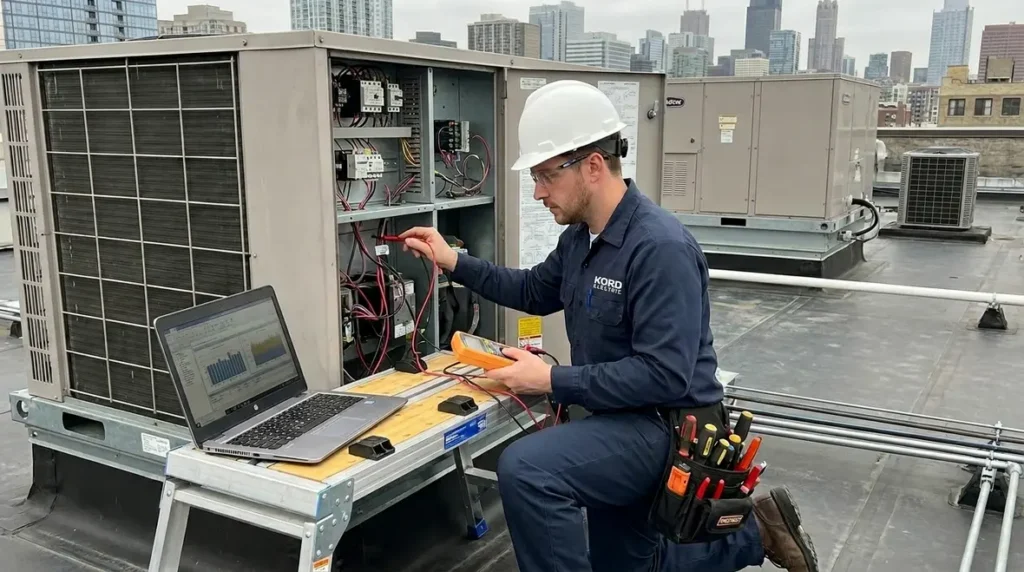
Next, we capture key indicators like voltage magnitude, frequency stability, harmonic distortion, and transient events. After that, we compare results to what the site should do. We also verify protective device settings and how breakers or relays respond to events. Then we provide a plain language report that others can act on without translating a meter manual.
To keep maintenance aligned, we also reference our commercial and industrial electrical maintenance plans. These plans support steady checks, targeted testing, and clear schedules for inspection and service. When others follow a plan, failures feel less random. They become trends. And once they become trends, they become manageable.
Maintenance planning that reduces repeat failures
In many facilities, we see the same trouble spots come back after ad hoc service. So, we use structured maintenance that covers the checks that prevent power quality drift. Through our maintenance approach, our technicians schedule inspections around operational realities and focus on risk areas first.
Below is a simple two step view that we apply for commercial and industrial electrical work:
Step |
What we focus on |
Discover |
Inspect connections, verify grounding, review load changes, and test for event patterns |
Prevent |
Schedule targeted follow up, correct loose parts, address harmonics where needed, and confirm improvements with new readings |
Preventive steps that protect motors, drives, controls, and UPS systems
Once others see the cause, prevention becomes straightforward. Yet the details matter. We prioritize the equipment that carries risk during every shift change and every production surge. Power quality problems often hit motors, variable frequency drives, controls, and UPS systems because these loads respond fast to voltage changes and waveform distortions.
Our expert service staff explains prevention as a set of practical actions:
- Correct connection quality through torque verification, cleaning, and replacement where needed
- Balance loads where appropriate to reduce neutral stress and uneven phase currents
- Use protection that matches the site such as surge protection and properly designed filtering
- Address harmonic sources with mitigation strategies suited to the facility
- Maintain capacitors and filter components so they do not fail and add new problems
Then, we retest after changes. That last step keeps the work honest. It is easy to claim improvement. It is harder to prove it. We prove it.
If your team is already working through recurring voltage swings, nuisance trips, or unexplained resets, pairing these preventive actions with a structured service visit through our Los Angeles County electrical services helps align troubleshooting, upgrades, and long term planning under one coordinated approach.
FAQs about troubleshooting industrial power quality issues
CTA: schedule expert help before the next outage story
If your facility shows flicker, nuisance trips, overheating, or repeated control resets, do not treat it like bad luck. Our technicians at Kord Electric help commercial and industrial facilities and major property buildings troubleshoot industrial power quality issues with real testing, clear documentation, and practical fixes. Reach out to schedule an assessment and put a calm, steady plan in place. Let others guess if they want. We prefer results. Call Kord Electric and protect your uptime like it matters because, in production, it does.
When you are ready to move from chasing symptoms to building a reliable long term strategy, our dedicated electrical preventive maintenance services help align inspections, testing, and corrective work around your facility’s real schedule and risk profile.
From there, we can connect power quality findings to broader upgrades, whether that means resolving voltage fluctuations, planning targeted rewiring, or coordinating corrective projects across complex commercial and industrial sites.
However your story starts—flickering lights, nuisance trips, or equipment that just “feels wrong” during production—our goal is the same: turn scattered symptoms into a clear, documented plan that protects your uptime.