

Title 24 EV Charger Requirements in California
Kord Electric installs EV charging systems for commercial and industrial facilities and major property buildings across California. And early on, we make sure our clients understand the Title 24 EV charger requirements that can shape everything from equipment choice to how the charging network gets wired, logged, and monitored. In the first few site conversations, we also cover load behavior, controllability, and the documentation that follows the install. Because yes, California can be thorough. Still, when our expert service staff walks through the rules in plain language, the process feels less like a puzzle box and more like a plan you can actually execute.
How Title 24 EV Charger Rules Affect Your Project Timeline
When a facility owner plans EV charging, the installer must treat California’s compliance expectations as part of the schedule, not an afterthought. Title 24 can change what the electrical design includes, so we plan early to avoid late revisions. Additionally, we coordinate with the electrical layout, panel capacity, and parking or loading access so the system does not fight the building. That matters because chargers are not just “hardware on a wall.” They affect power flow, demand, and how charging gets managed during peak hours.
As a result, we typically start with a site review and a power study. Then we map charger placement against electrical constraints and operational needs. Only after that do we lock the design package and prepare the compliance path. Our technicians explain each step and why it exists. They do not speak in code, except for the occasional joke about “code” and paperwork, because every project needs at least one laugh to stay sane.
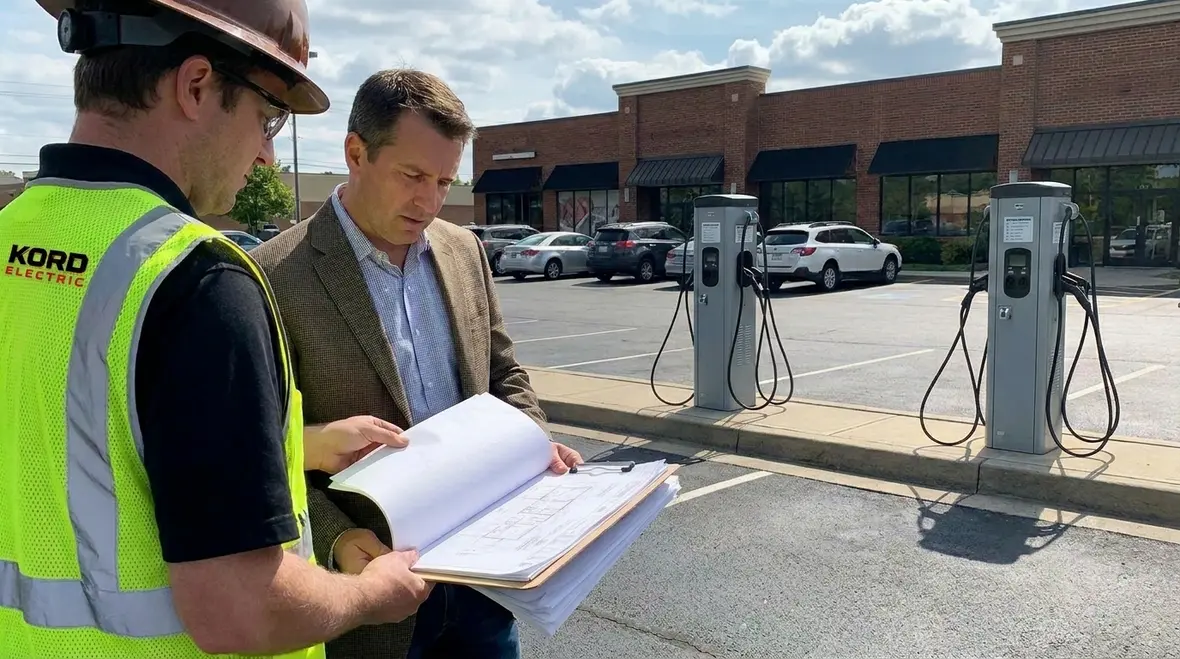
Electrical Design Requirements for Compliance and Real-World Use
Title 24 EV charger requirements influence more than the final inspection date. They drive the electrical design choices that determine how the chargers behave in the building’s daily routine. For example, facilities usually need a safe path for power delivery, proper circuit planning, and controls that match the site’s load conditions. We evaluate whether the existing service can support the new demand. If it cannot, we develop a buildable upgrade plan before construction begins.
At Kord Electric, our expert service staff focuses on the details that keep systems stable: correct conductor sizing, proper breaker selection, safe conduit routing, and disciplined labeling. Moreover, we align the charging setup with how the property operates, including tenant usage patterns and shift changes. In other words, we build the charger plan around reality, not fantasy.
And since we work with commercial and industrial facilities and major property buildings, we also think about scale. A small home install can sometimes hide problems with simple solutions. For larger facilities, those “hidden” issues turn into load spikes, user complaints, or rework. We handle that upfront.
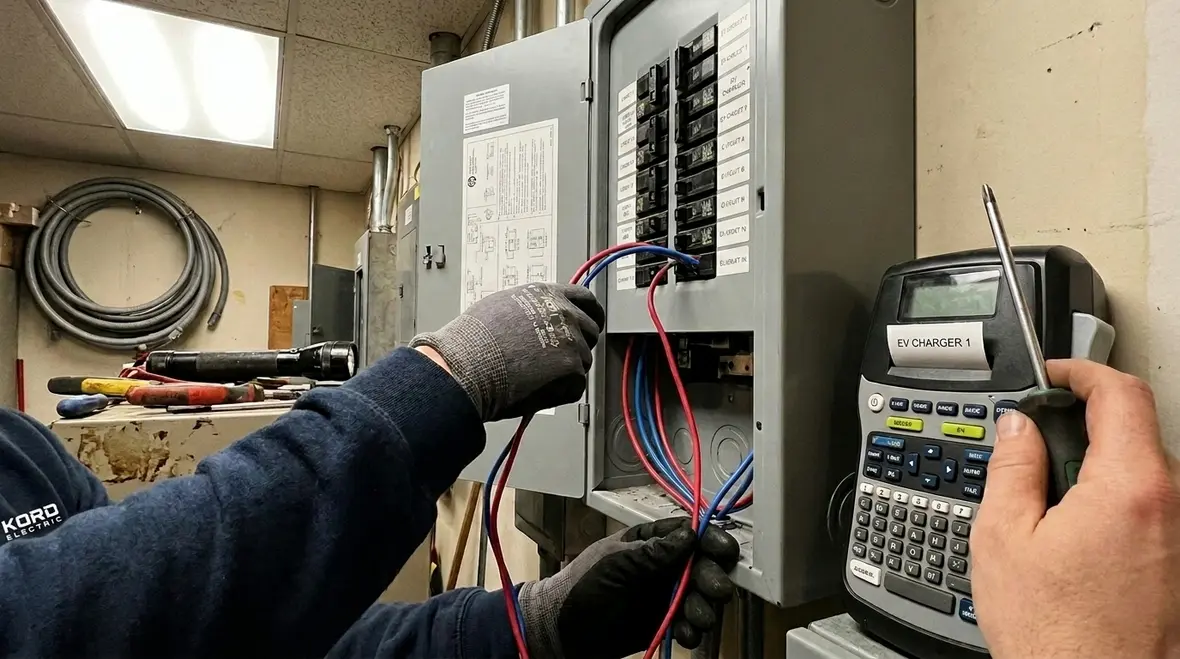
Connecting Title 24 EV Charger Requirements With Broader Code Expectations
EV charging design does not live in a vacuum. For commercial and industrial projects, the same mindset that drives commercial lighting compliance in California also supports EV infrastructure that passes review. Title 24 expects systems to be efficient, controllable, and documented. When we plan EV chargers alongside lighting, power distribution, and control strategies, the whole property benefits from a more coherent, inspection-ready electrical story.
Load Management, Power Sharing, and Why It Matters
Many people think EV charging means plugging in and charging. That works until multiple vehicles arrive at once, or until the facility hits its peak electrical demand. Then the system’s behavior becomes the real story. Title 24 expectations often push projects toward smarter power management and controllability, so the charging system can operate within site limits.
Therefore, we help clients choose an approach that fits the property. Some sites need coordinated charging, while others benefit from load balancing across multiple stations. Additionally, we consider how the building’s metering and electrical systems interact with charging. This helps prevent situations where chargers demand more than the site can comfortably provide at the same time.
Our technicians explain this like they are talking to a very capable person who just wants the truth, not a lecture. They map charging performance to the electrical realities of the building. And yes, sometimes we use a simple analogy. It is like trying to pour three pitchers of water through one straw. Everyone still gets water, but only if you manage the flow.
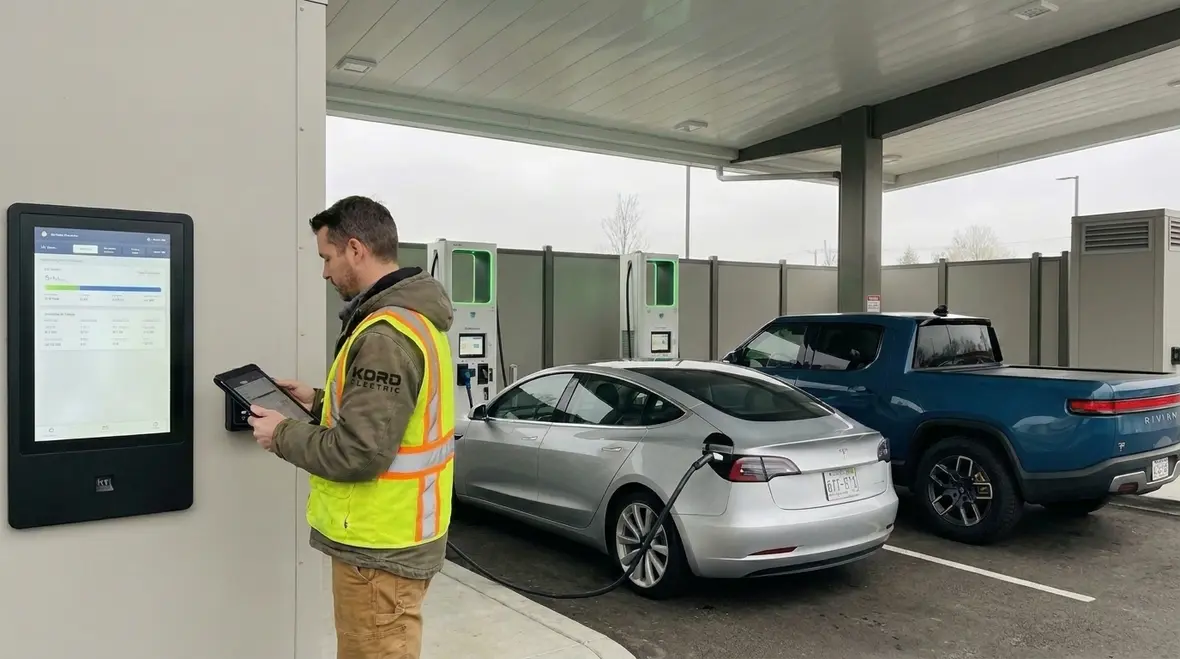
Designing Load Strategies Around Real Facility Operations
Facility and fleet teams often ask whether smarter load management will complicate daily operations. In practice, the opposite happens when the system is designed correctly. We map charging schedules, access rules, and power sharing logic to how vehicles actually move through the site. For example, facilities that already run preventive electrical maintenance programs can fold charger checks into their existing routines, much like they would with electrical preventive maintenance across panels and feeders.
Permitting, Documentation, and Inspection Readiness
Compliance does not end at installation day. California projects require correct paperwork and inspection-ready documentation. For commercial and industrial facilities and major property buildings, the administrative side can be as demanding as the electrical side. Title 24 EV charger requirements can affect labeling, system configuration, and the information that must be provided for approval.
Kord Electric prepares the project package so the facility team does not get stuck waiting for missing details. We review the requirements early, confirm the equipment and configuration align with the planned compliance approach, and then organize the supporting items that inspectors look for. At the same time, we keep communication clear between facility management, electrical crews, and any involved stakeholders.
Because our expert service staff prioritizes readiness, we reduce last-minute changes. And when changes do happen, we document them properly. You can think of it as the difference between “winging it” and doing the job the first time, which is also the difference between a smooth inspection and a very long coffee break.
Linking EV Charger Documentation With Broader Title 24 Records
Many properties already track Title 24 lighting documentation, control narratives, and commissioning forms. When EV charging joins that mix, we keep the paperwork ecosystem organized. The same habits that support a clean California commercial lighting code file set can also support your EV compliance binder, from single-line diagrams and panel schedules to meter configurations and control descriptions.
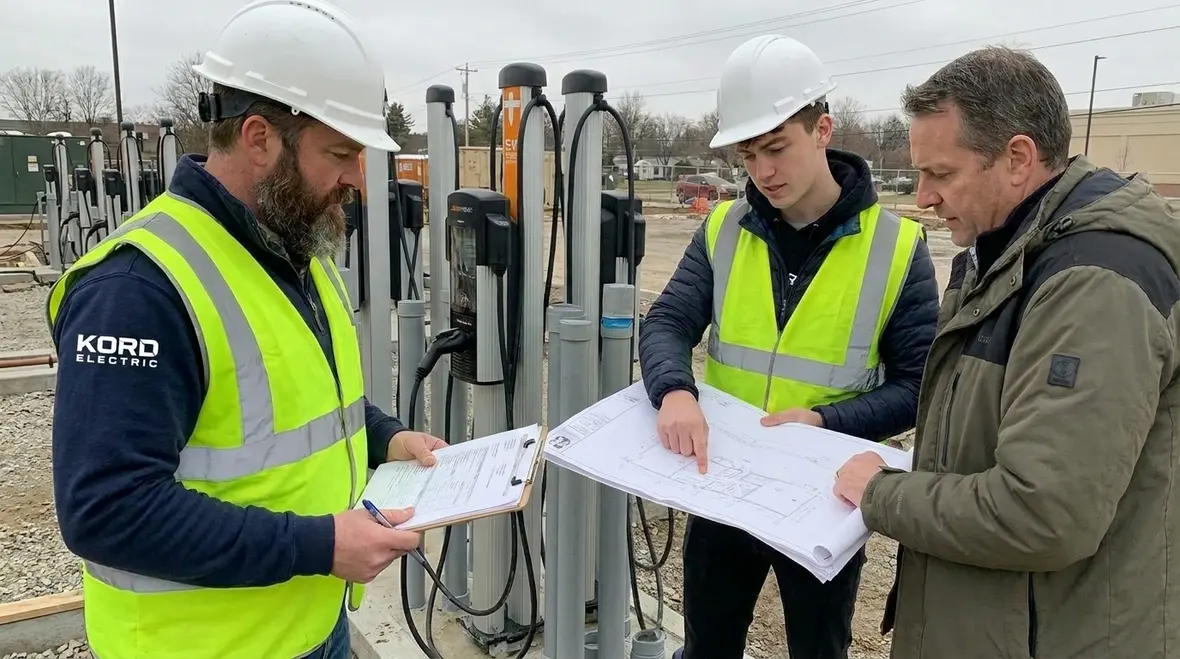
Technical Coordination Across Facilities and Parking Layouts
Facility environments bring variables that do not show up on a brochure. Parking structures, loading areas, and shared drives each create constraints for trenching, conduit runs, and safe equipment placement. Also, property operations determine how we stage the work and protect access. In many projects, we must coordinate with site rules, security procedures, and sometimes ongoing operations during installation.
For major property buildings, we also consider future expansion. A site may start with a limited number of chargers, yet plans for more later. Title 24 related planning often rewards a design that can scale without a total rebuild. Therefore, we build conduit routes and electrical capacity in a way that supports additional stations, while still meeting the compliance expectations of the current phase.
To keep things organized, Kord Electric runs a deliberate process: we review the layout, confirm mounting and clearances, plan route paths, and align the charger locations with both power access and user flow. Then our technicians explain the layout logic so the facility team knows why each decision exists.
Planning EV Infrastructure Alongside Other Electrical Projects
Some facilities tackle EV charging as part of a larger electrical upgrade that may also include lighting retrofits, panel changes, or enhanced compliance work. In those cases, it often makes sense to coordinate EV charger construction with other scheduled work, leveraging the same crews who handle projects like preventive electrical maintenance and inspections. Bundling work can reduce downtime, simplify staging, and keep Title 24 EV charger requirements aligned with broader code goals.
Real Project Outcomes: What Clients Notice After Installation
After the electrical work and approvals, the success of an EV charging program shows up in everyday use. Clients typically notice steadier charging behavior, fewer operational issues, and a system that supports predictable energy use. They also notice smoother property management because the charger plan matches the building’s capacity and operational patterns.
To make this easier to understand, Kord Electric organizes outcomes in a clear dual-column view that our clients can reference during planning and handoff:
| What the facility team cares about | How we address it through design and compliance planning |
| Power stability and predictable performance | We coordinate electrical capacity, circuit planning, and controlled charging behavior to reduce spikes and surprises |
| Fast, inspection-ready approval | We prepare documentation and configuration details early so the project moves through review with less friction |
| Clear system understanding for operators | Our expert service staff explains the controls and setup in simple terms, so operations teams know what to expect |
| Scalability for future chargers | We consider buildable expansion paths in the original layout and electrical planning |
In practice, that means less downtime, fewer “can we change it later?” moments, and a charging setup that does not feel like it was assembled in a hurry. Because it was not.
FAQ About Title 24 and EV Charger Installations in California
Choose a Compliance-Ready Installer From Day One
If a property owner wants EV charging that performs well and avoids last-minute compliance headaches, planning matters. Kord Electric builds EV charging systems for commercial and industrial facilities and major property buildings with Title 24 EV charger requirements in mind from the start. We review site power, design for controlled charging behavior, and prepare documentation so inspections feel manageable. Reach out to us for an on-site assessment and a clear compliance path. Then we install with care, and your chargers can start doing what they are meant to do, charging vehicles, not stress.
For facility teams mapping long-term infrastructure, partnering with an experienced installer matters as much as the hardware itself. Kord Electric’s dedicated EV charger installation services combine practical field experience, Title 24 awareness, and clear communication so your project moves from idea to energized without losing momentum.
Whether you are planning a few chargers for a single building or a larger network across multiple facilities, starting with a compliance-ready plan helps avoid costly redesigns later. When Title 24 EV charger requirements are addressed early, your team can focus on daily operations while your charging infrastructure quietly does its job in the background, the way good electrical systems always should.


