Troubleshooting Commercial Electrical Flickering Lights
Why commercial lights flicker, and why it matters right now
When employees, customers, or tenants notice flickering, our troubleshooting commercial electrical flickering lights start long before anyone blames “old bulbs.” In commercial buildings, flicker often signals a real electrical issue: loose connections, failing components, poor grounding, voltage swings, or load changes that the system cannot handle. So, while flicker can look like a minor nuisance, it can also create comfort problems, equipment stress, and even safety risk. And yes, we get it. Nobody wants to be the person who says, “It’s probably fine,” while the lights do a little dance like they’re auditioning for a sitcom.
At Kord Electric, our expert service staff takes a calm, methodical approach. Then, they explain what they find in plain language, so property managers understand the “why” and the “what next,” not just the invoice.
How our technicians find the cause fast in major buildings

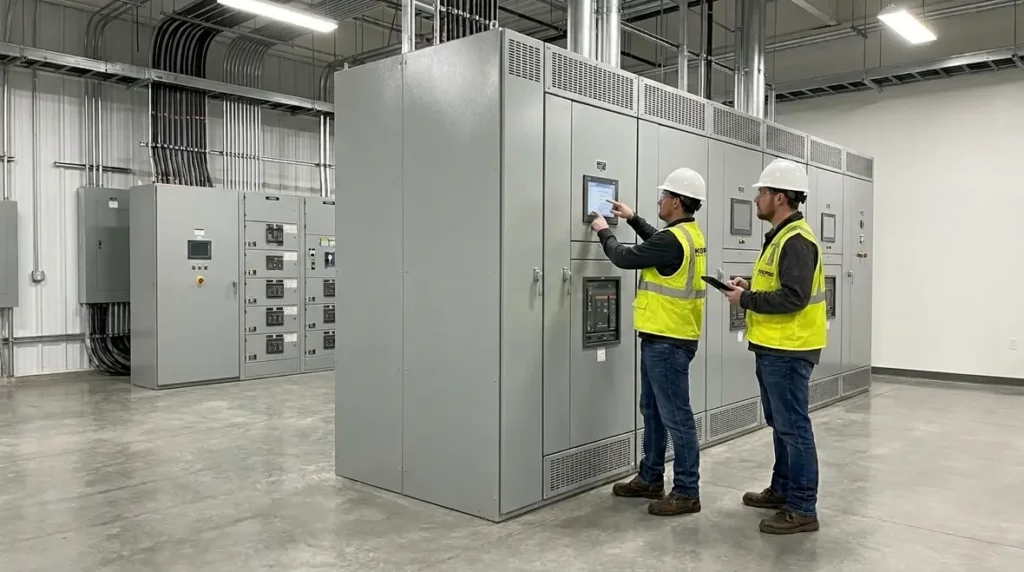
Our technicians do not guess. First, they inspect the pattern of the flicker: does it happen only in one suite, across multiple floors, or during specific times like HVAC startup? Next, they compare which loads are running, whether motors cycle, and if large equipment turns on right before the lights misbehave. After that, they check for signs of overheating at panels, terminations, and junctions.
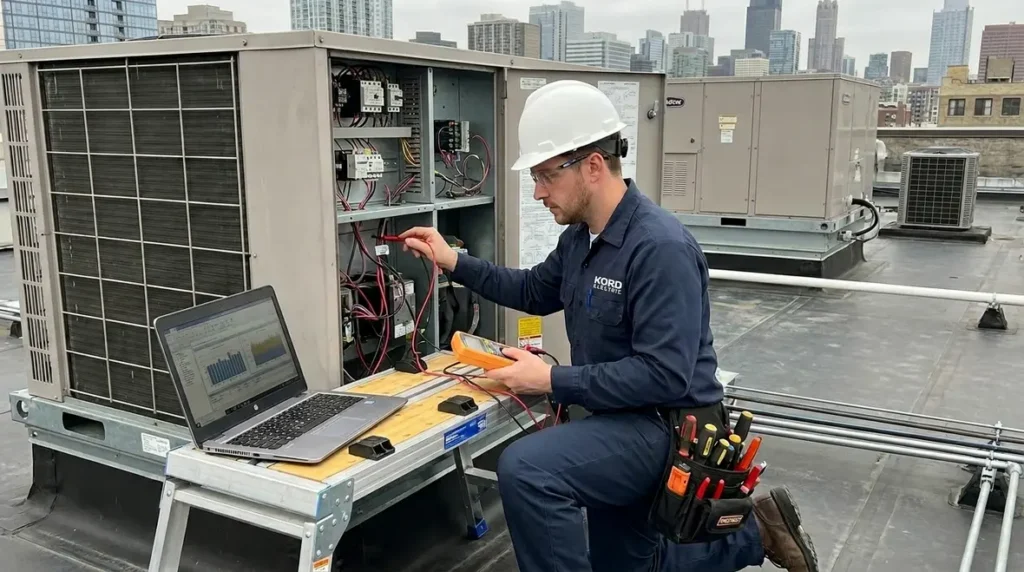
Then they move to measurement. Instead of staring at fixtures hoping for inspiration, our team uses testing equipment to verify voltage stability, check for harmonic effects, and confirm grounding and bonding integrity. Because in industrial and major property buildings, even small electrical weakness can show up as flickering when loads shift.
Finally, our expert service staff walks clients through the findings. They point out what would happen if the issue stays. They also describe the simplest fix that restores stable power while protecting the rest of the system.
Common triggers behind flickering power in commercial spaces
In commercial and industrial facilities, flicker typically comes from a handful of root causes. Understanding them helps our clients make better decisions about repairs and scheduling.
Here are the usual suspects:
- Loose or worn connections at switches, breakers, or feed points can create intermittent contact. As current changes, the lights may brighten, dim, or flicker.
- Voltage drops caused by undersized conductors or long runs can show up most during peak loads or motor starts.
- Neutral problems can trigger flicker, especially in multi-tenant buildings where loads vary by floor or time of day.
- Failing drivers or ballasts in lighting systems can also cause instability, particularly in retrofits or mixed fixture types.
- Harmonics from VFDs, data equipment, and some LED lighting can create distortion that makes lights behave unpredictably.
- Improper grounding and bonding can lead to unstable reference points, which often shows up under real load conditions.
Meanwhile, tenants and staff often describe it the same way: “It’s worse when something else turns on.” That clue matters, and our team treats it like a breadcrumb trail.
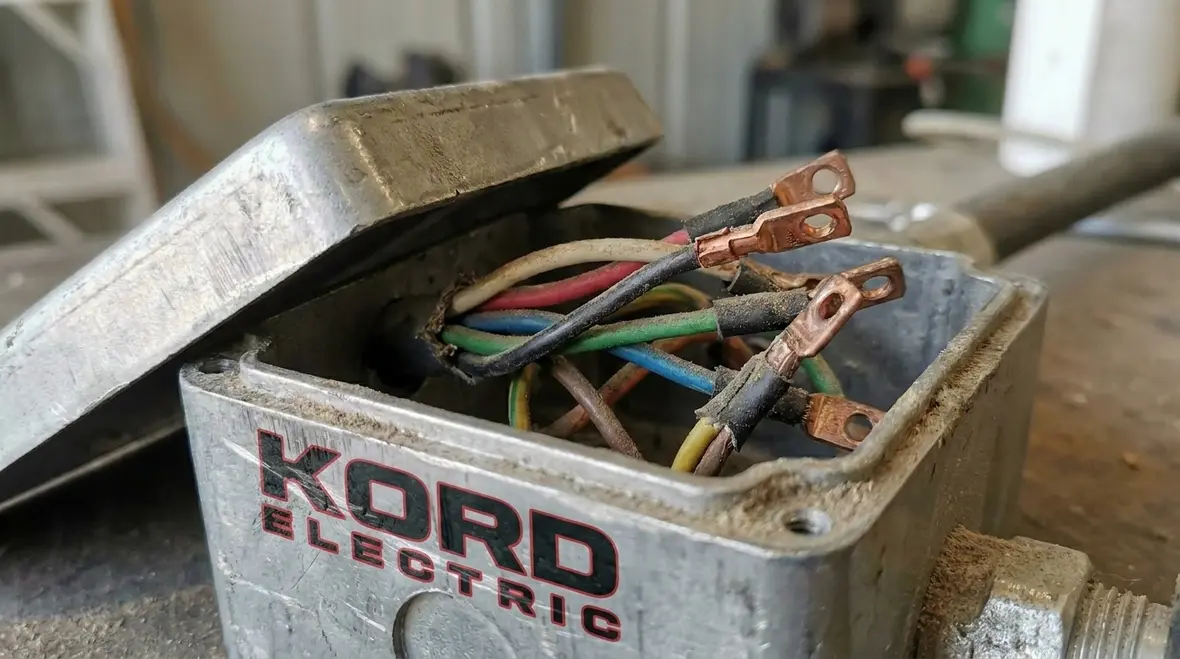
Field testing and troubleshooting commercial electrical flickering lights safely
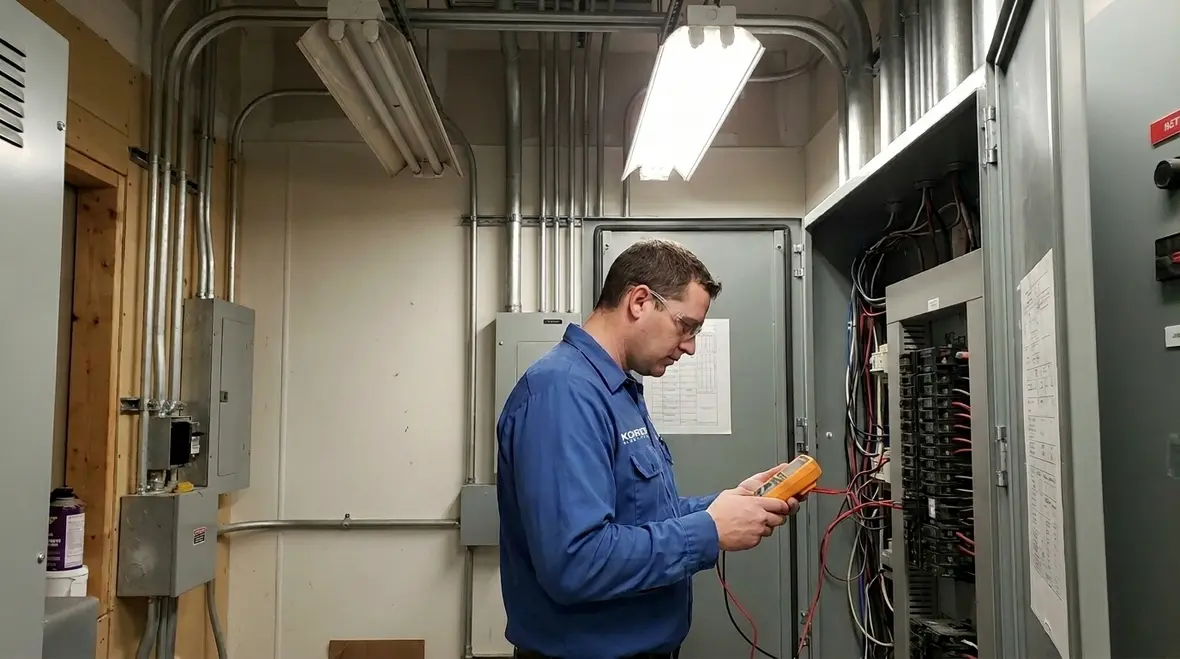
When our technicians troubleshoot, they balance speed with safety. First, they isolate circuits when needed and verify that the environment remains safe for staff and occupants. Then, they inspect the lighting circuit layout, including panel labeling, switching configuration, and any recent work performed by other contractors.
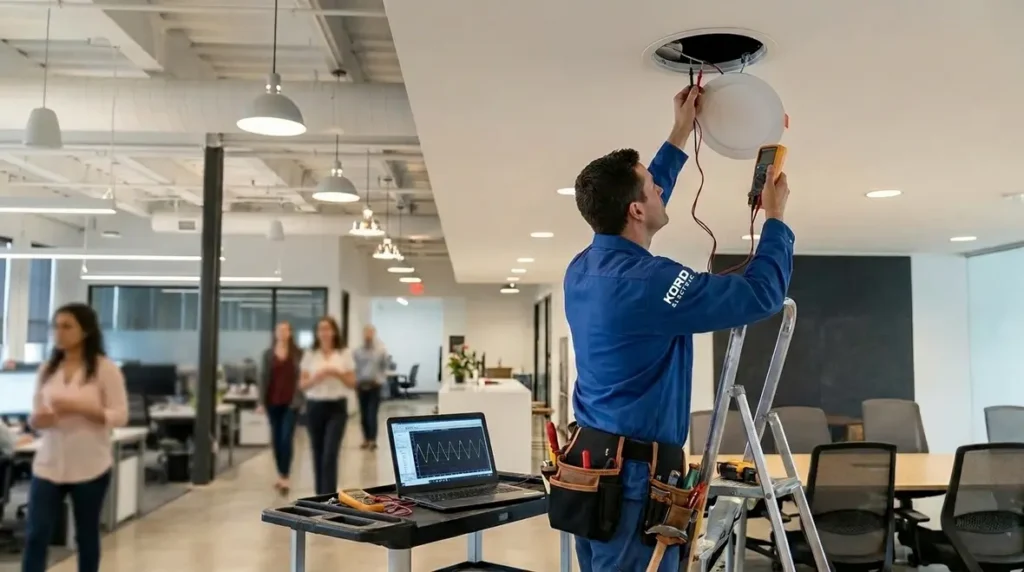
Next, they test. They measure voltage at the distribution point and at representative fixtures so they can see how power behaves across the system. After that, they check current draw and look for abnormal patterns that point toward failing components. Because flickering is rarely random in commercial buildings; it follows the rhythm of electrical load.
Then, they correlate test results to symptoms. For example, if flicker appears during elevator use, HVAC cycling, or compressor startup, our team looks at motor-related inrush current, voltage dips, and coordination within the electrical panel. If flicker appears at the same time every day, they check schedules, control systems, and load growth.
And once they find the likely cause, they document the issue clearly. They explain the path forward, including what parts must be repaired or replaced, and what preventative steps can keep the problem from returning.

Step by step repairs that restore stable lighting and protect equipment
Repairs depend on the cause, but our method stays consistent. First, we address safety risks and fix anything that could overheat or fail. Then, we correct system issues that create voltage instability or poor connections. Afterward, we verify performance so the building does not “fix itself” in the wrong way.
Common repair actions include the following:
- Tightening and re-terminating connections in panels, junctions, and switching devices to remove intermittent contact.
- Repairing or replacing neutral and grounding components when measurements show imbalance or weak connections.
- Upgrading drivers or ballasts for failing lighting control components, especially where mixed fixtures create control mismatch.
- Balancing loads across phases to reduce imbalance and stabilize line behavior in multi-tenant buildings.
- Addressing voltage drop by verifying conductor sizes, tightening distribution, or coordinating panel feeds.
- Evaluating harmonic sources and adding appropriate mitigation when distortion is confirmed.
Here is the part clients appreciate: we do not stop at “lights are steady again.” We confirm the underlying electrical behavior under real load. That is how we prevent the second episode, because nobody wants the lighting version of a horror sequel.
Preventing future flicker with smarter maintenance for property teams
After a successful repair, our expert service staff helps clients reduce the odds of a repeat issue. First, we recommend a maintenance plan that fits commercial and industrial operations. We also suggest what to watch during routine inspections, like panel heat, connection wear, and signs of aging components. For a deeper dive into why preventive work matters, many property teams also review Kord Electric’s guidance on hidden electrical risks in commercial buildings and how small warning signs can point to larger problems behind the scenes.
Then we help facilities teams plan upgrades. For instance, if a building adds new tenants, more outlets, or new production loads, electrical distribution may need balancing or coordination. Likewise, if a facility retrofits lighting with different fixture types, the control system and drivers may need harmonization.
We also encourage simple operational checks that save time. Property teams can track whether flicker aligns with motor start times, generator switching, or HVAC cycling. When they report patterns early, we can narrow down troubleshooting commercial electrical flickering lights causes faster and restore stability with less disruption. Facilities that prefer a more structured approach often combine this with an electrical preventive maintenance program built specifically for commercial and industrial sites.
In short, we turn an annoying problem into a manageable process.
FAQ: Flickering lights in commercial buildings
When Kord Electric diagnoses flicker, the building gets steadier power
If your commercial or industrial property shows flickering, waiting usually does not help. Kord Electric sends technicians who measure, test, and explain the cause in clear terms, then we repair the issue with verified results. We work with property teams and major facilities because disruption matters and stability matters more.
For facilities across the region, partnering with a dedicated Los Angeles County commercial electrical team means you have experts who already understand local code, permitting, and the realities of high-demand buildings. From targeted troubleshooting commercial electrical flickering lights to full system review, we help you treat flicker as a solvable reliability issue, not a mystery you have to live with.
If your building is also facing panel capacity limits, aging switchgear, or recurring nuisance trips along with flicker, it may be time to review your broader electrical infrastructure. Kord Electric can help you coordinate repairs and upgrades through their comprehensive Los Angeles County electrical services for commercial and industrial properties, so stability, safety, and future growth all move in the same direction.
Call us today, and we will schedule a site visit that fits your operations, restore dependable lighting, and help protect your electrical system from repeat problems.