
Data Center Electrical Redundancy Benefits
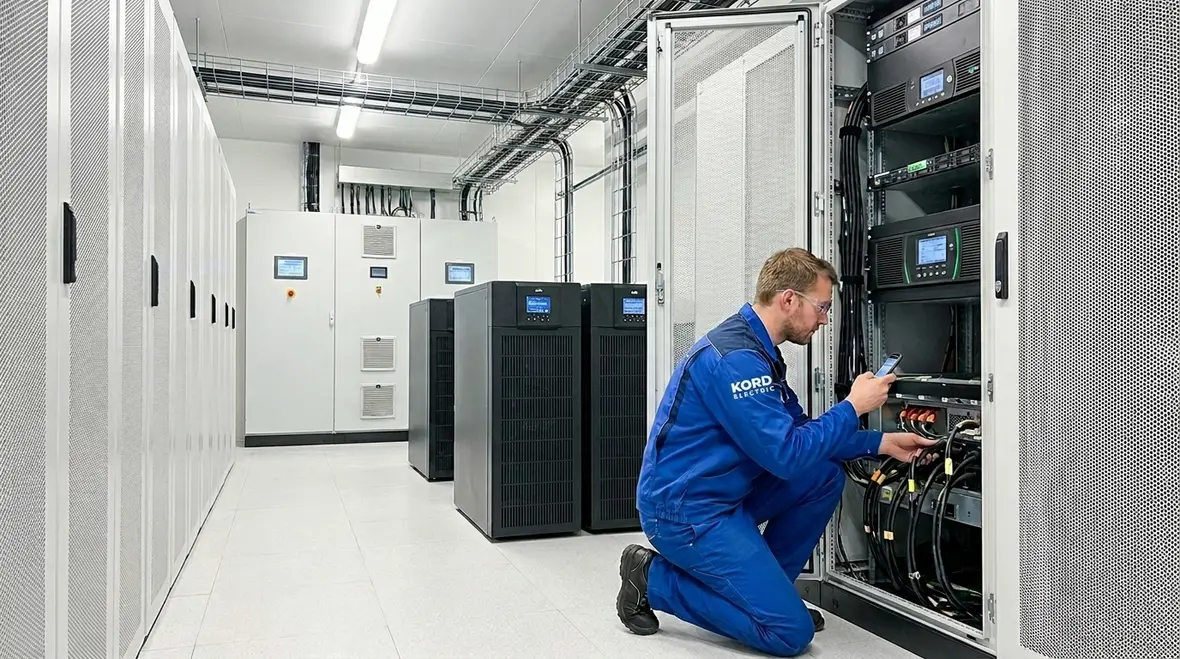
At Kord Electric, we support commercial and industrial facilities and major property buildings, and we treat uptime like a non negotiable promise. That is why electrical redundancy matters in data centers: it keeps critical loads running when a component fails, it reduces downtime, and it helps protect equipment that costs more than most cars a person will ever buy. In the real world, failures do not ask permission. So we design and maintain systems that can take the hit, switch over, and keep going, delivering the data center electrical redundancy benefits that owners actually feel, not just see on a diagram. And yes, we also explain it in plain language, because nobody wants to read a power plan like it is a novel.
What electrical redundancy means in a data center
Electrical redundancy is the practice of building power systems so that a single problem does not stop operations. For example, instead of relying on one power path from utility to critical loads, we plan multiple paths with enough capacity and correct switching so power can continue. Then we add layers of protection, such as separate transformers, multiple feeders, redundant UPS systems, and diverse distribution routes.
As our technicians and expert service staff explain, redundancy is not just “more gear.” It is also correct design, correct coordination, and correct changeover behavior. Therefore, when one element trips or fails, the rest of the system responds as intended and the load does not drop out. In other words, redundancy creates options, and options are what keep servers from going dark.
And if you are picturing a data center as a bunch of spinning disks and hopes, that is common, but incorrect. The power system is the real backbone. It just does not get the spotlight.
Layers that keep the power path alive
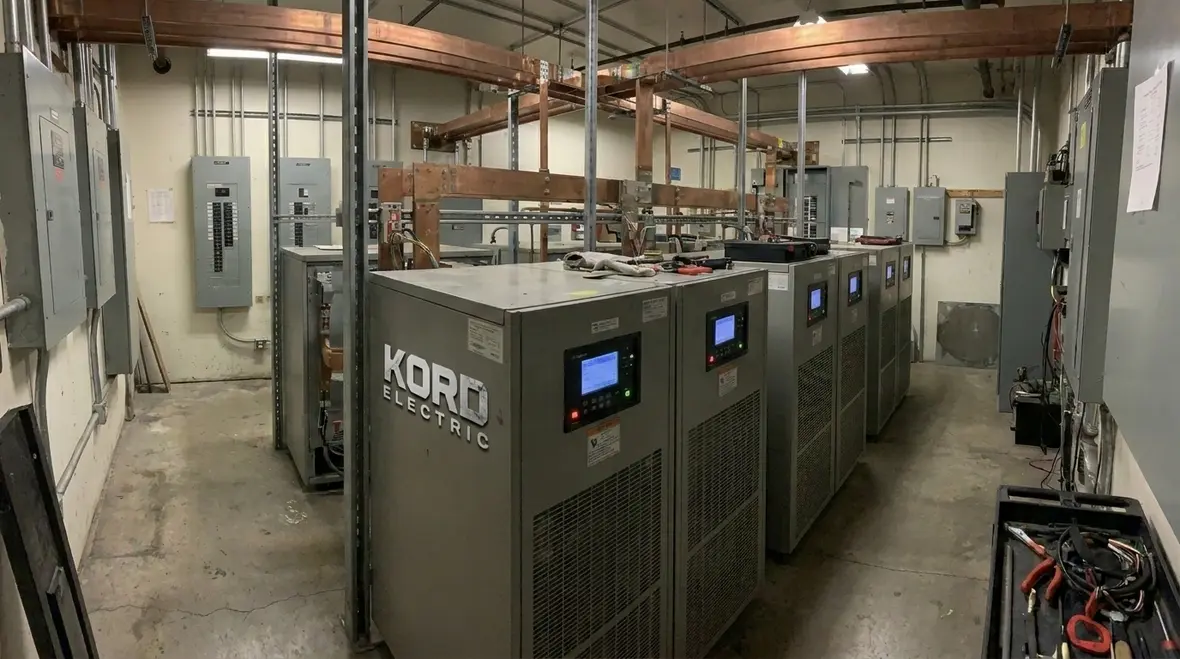
Behind those neat rows of server racks, redundancy often shows up as quiet layers of protection: separate upstream transformers, parallel UPS modules, dual-corded IT loads, and switchgear that can reroute power with minimal disruption. At Kord Electric, we build these layers so they work together instead of fighting each other when something goes wrong.
That layered approach is also why data center electrical redundancy benefits extend beyond the data hall. When power stays stable, cooling systems, security, and building operations stay stable too. The result is a facility that can absorb a hit, adapt, and keep operating.
Why uptime depends on failure planning
Data centers face a wide mix of risks, and our teams plan for more than one scenario. A UPS might degrade, a breaker could malfunction, a fan can fail, a transformer can overheat, or a utility feeder can experience a disturbance. Even routine maintenance can create risk if the switching sequence is not well planned. So we treat failure planning as a core design requirement, not an afterthought.
When redundancy gets done properly, it reduces the chance of cascading failures. That is important because once a critical load loses stable power, the system can keep tripping, and that turns a small event into a big one. However, when the architecture supports seamless transfer, the site holds steady. Consequently, the data center electrical redundancy benefits show up as fewer interruptions, fewer forced shutdowns, and faster recovery when a component has a problem.
One more thing: many owners focus on the big failures, yet small ones often cause the longest headaches. A minor instability might not look dramatic at first, but it can shorten equipment life. Therefore, our approach aims for steady power quality and dependable transfer, not just “backup exists.”
Designing for “when,” not “if”
In practice, that means we assume every component will eventually have a bad day. We map how that failure should behave, what should transfer, what should hold, and what alarms should tell the operations team. Then we test and document those behaviors so the system is ready for real life, not just a theoretical one-line diagram.
That same philosophy also drives our work in data center electrical requirements for uptime, where we align redundancy, power quality, and protection so they support the uptime goals that matter to business owners and facility managers.
Common redundancy models used for commercial and industrial sites
Because Kord Electric works with commercial and industrial facilities and major property buildings, we typically build redundancy strategies that match business needs, utility conditions, and critical load sizing. Here are common models our experts discuss during design and upgrades.
N plus 1 designs: more than one unit supports the load, so one unit can be out of service without losing capacity.
2N designs: two independent systems supply power paths, so transfer can happen without a shared single point of failure.
A and B feeds within redundant distribution: separate routes for critical circuits so faults stay contained.
Dual bus configurations with proper transfer switching: the critical loads can move between buses during maintenance or faults.
Diverse utility feeds: when available, we help ensure incoming power sources come from separate routes or transformers.
Now, we do not treat any model as a one size fit. Instead, our technicians evaluate load profiles, equipment tolerances, switching times, and maintenance windows. Then we recommend a configuration that supports safe operations while keeping the site realistic to run. After all, a perfect drawing is only useful if it survives the real test of day to day work.
Choosing the right redundancy level for your facility
Some environments demand full 2N systems end to end. Others benefit from N+1 capacity in key components, combined with smart distribution and maintenance planning. We help owners weigh capital cost, operational complexity, and risk tolerance so the final design matches what the business actually needs, not just what sounds impressive.
For many commercial and industrial facilities that host data rooms, production systems, and tenant operations in the same building, we often combine redundancy models with targeted upgrades guided by our experience in data center electrical distribution design for reliability. That way, the redundancy strategy supports the whole building, not just the server racks.
How we help ensure fast, safe transfer during faults
Redundancy only works when the transfer process performs. That is where design details matter. Our team and our experienced service staff focus on coordination between protective devices, switching logic, and control systems. In turn, this helps prevent nuisance trips and reduces the risk of power interruptions.
For instance, during a utility disturbance, the system may need to switch to UPS output or generator supply. Therefore, we pay attention to transfer time, voltage ride through behavior, and synchronization requirements. Also, we check that protective settings coordinate so a fault clears at the right level and does not unnecessarily isolate healthy sections.
We also plan for maintenance states. So we design bypass and maintenance procedures that allow safe work on panels and distribution gear without putting the critical load in jeopardy. When a facility team knows the steps and the equipment supports the steps, downtime stays low.
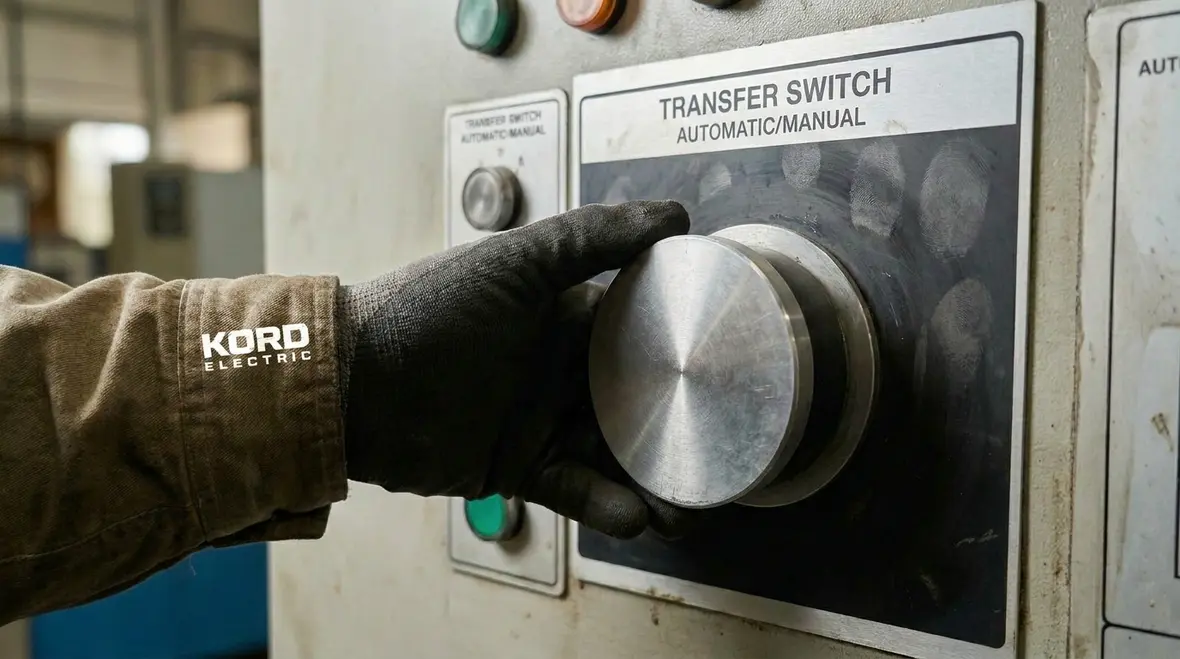
One playful truth: a transfer switch is like a good bouncer. It does not brag, but it decides who gets in and who gets kicked out. If it is not set right, it can ruin the party. Our job is to make sure it behaves.
Coordination, testing, and clear playbooks
We combine short-circuit and coordination studies with field testing, so what looks clean on paper actually works under stress. From breaker settings to generator start signals, we confirm that the sequence of events supports uptime instead of fighting it. Then we put those behaviors into clear operating procedures so staff can follow them without hesitation.
This same attention to coordination and transfer often appears in our broader work on Los Angeles County electrical services, where large facilities rely on Kord Electric to keep complex power systems safe, compliant, and ready for both planned and unplanned events.
Reducing risk with power quality and monitoring
Electrical redundancy is not only about keeping power available. It also involves power quality, because the load cares about voltage stability, harmonic content, and the ability to ride through brief events. If power quality slips, the servers may still stay online, but performance can degrade and equipment can age faster.
To support data center electrical redundancy benefits, we help implement monitoring and reporting so operators can see trends before problems become incidents. This includes tracking load levels, transfer events, UPS performance, alarm status, and environmental factors that affect power equipment. Then we use that data to support targeted maintenance rather than guesswork.
Our technicians often describe this as moving from reactive to proactive. In practice, that means we schedule work based on actual conditions, we verify connections and protective devices, and we confirm that system behavior matches design intent. As a result, the facility avoids surprise failures and improves reliability over time.
And yes, it also helps with audits and operational reporting. Nobody likes last minute scrambling. We have seen that movie. Usually the plot ends with a very tired facilities manager and a lot of coffee.
From invisible issues to visible insights
Many of the risks that threaten uptime hide in subtle voltage swings, harmonic distortion, and overloaded circuits that have not tripped yet. By pairing redundancy with targeted monitoring, we turn those invisible issues into visible data points. That makes it easier to schedule corrections during planned windows instead of reacting during the worst possible moment.
If your facility also struggles with unstable voltage outside of the data hall, Kord Electric provides dedicated support for voltage fluctuations in commercial and industrial facilities, helping teams stabilize sensitive equipment across the entire site.
Redundancy does not mean ignoring maintenance
A redundant system still needs care. If one “standby” path sits unnoticed for too long, it can drift out of spec. Batteries can age, capacitors can fail, breakers can corrode, and cables can develop issues. Therefore, even with redundant supplies, we insist on disciplined maintenance and testing.
Our expert service staff helps commercial and industrial facilities and major property buildings build maintenance plans that match their operational needs. We coordinate testing so critical loads stay protected, and we verify that transfer sequences behave correctly under controlled conditions. Then we document findings so the site team has a clear record.
We also support training and operational readiness. When the facilities staff understand how the system is supposed to behave, they respond faster during alarms and abnormal events. Consequently, troubleshooting time drops and the incident becomes less stressful.
In short, redundancy buys time. Maintenance keeps that time useful.
Maintenance as part of your uptime strategy
We often integrate redundancy reviews with structured maintenance programs, using checklists similar to our data center electrical maintenance checklist for facility managers. That way, facility teams are not just fixing what breaks; they are continuously tuning the system so redundancy stays ready for the day it matters most.
What owners ask about redundancy design and service
The people who run data centers for commercial and industrial operations often want straightforward answers. They also want clarity on scope, timelines, and how we avoid disruption. Below, we keep responses short and useful for featured snippets.
Question |
Short answer |
|---|---|
How does electrical redundancy prevent downtime? |
It provides multiple independent power paths so a single failure does not stop critical loads. |
Is redundancy the same as a UPS? |
No. A UPS is part of the system. Redundancy includes distribution, switching, and backup generation or utility paths. |
What does Kord Electric focus on for commercial sites? |
We design and service electrical reliability for commercial and industrial facilities and major property buildings. |
How do you keep transfers safe? |
We coordinate protection and switching so the system transfers quickly and reliably during faults or maintenance. |
FAQ about electrical redundancy in data centers
Owners and facility managers often circle back to the same concerns: what fails most often, how redundancy affects cost, and how to know the system will actually perform when needed. These quick answers give a starting point, and our team fills in the details during a site specific review.
Schedule a reliability review with Kord Electric
If a data center cannot afford uncertainty, electrical redundancy must be engineered and maintained with care. Kord Electric helps commercial and industrial facilities and major property buildings strengthen power paths, improve transfer behavior, and support monitoring that catches issues early. Our technicians and expert service staff explain what matters, then we act with disciplined planning and clear documentation. If you want fewer interruptions and better reliability, contact Kord Electric today to schedule a redundancy and power reliability review.
Whether you operate a dedicated data center, a mixed use commercial building, or an industrial facility with critical loads, our team can walk your site, review your one lines, and identify practical ways to capture more data center electrical redundancy benefits from the infrastructure you already have. From there, we help you prioritize upgrades, maintenance, and monitoring so uptime stops feeling like a gamble and starts feeling like a plan.
When you are ready to talk through options, you can also explore our broader Los Angeles County electrical services to see how redundancy, maintenance, emergency response, and long term system upgrades all support the same goal: reliable power for critical operations.


