Commercial Lighting Controls ROI Guide
Commercial lighting controls ROI: what a smarter upgrade actually pays back
When a facility manager looks at a smart lighting plan, they often ask one thing first: commercial lighting controls roi. We at Kord Electric see it the same way. If the numbers do not make sense, the project will not survive the next budget meeting. And if the project survives, it still has to perform like it was promised. So we build the math, we validate the assumptions on site, and we help decision makers connect savings to the real world, not a brochure dream. After all, no one wants to install “state of the art” controls and then discover they behave like a teenager in a quiet library: only sometimes, and usually at the worst time.
How we estimate ROI for commercial smart lighting upgrades
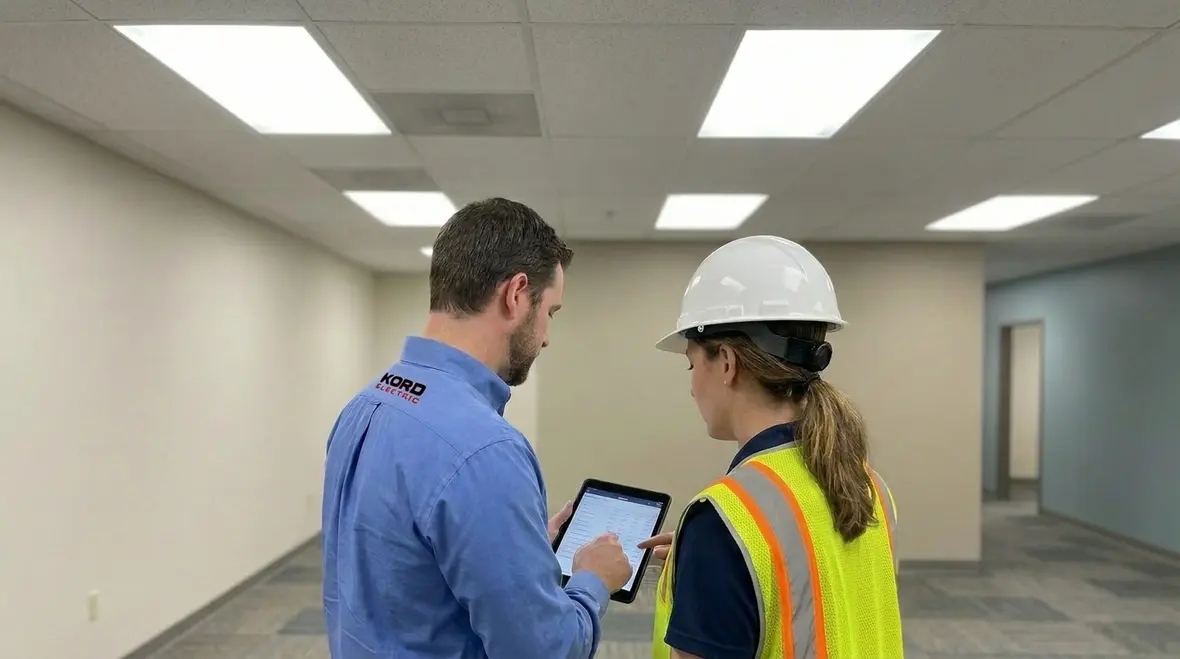
Others can give you a rough guess. We do better. We start by breaking the project into measurable parts, then we attach a cost to each part and a benefit to each one. From there, we calculate a clean ROI model that your team can explain without hand waving.
In most commercial and industrial buildings, the upgrade value comes from several lanes:
- Energy use reduction by dimming, scheduling, and occupancy control
- Demand and peak load management when controls reduce usage during high price or high demand periods
- Maintenance savings because LEDs and smart systems reduce relamp cycles and service calls
- Operational improvements like fewer manual overrides and better lighting consistency
Then we turn those lanes into numbers. First, we audit the current lighting baseline. Next, we apply expected control behavior by zone, occupancy patterns, and operating schedules. Finally, we use utility rates and any available incentives to forecast annual savings. The result is a practical ROI picture your leadership can approve with confidence.
What drives savings: occupancy sensing, daylighting, and scheduling
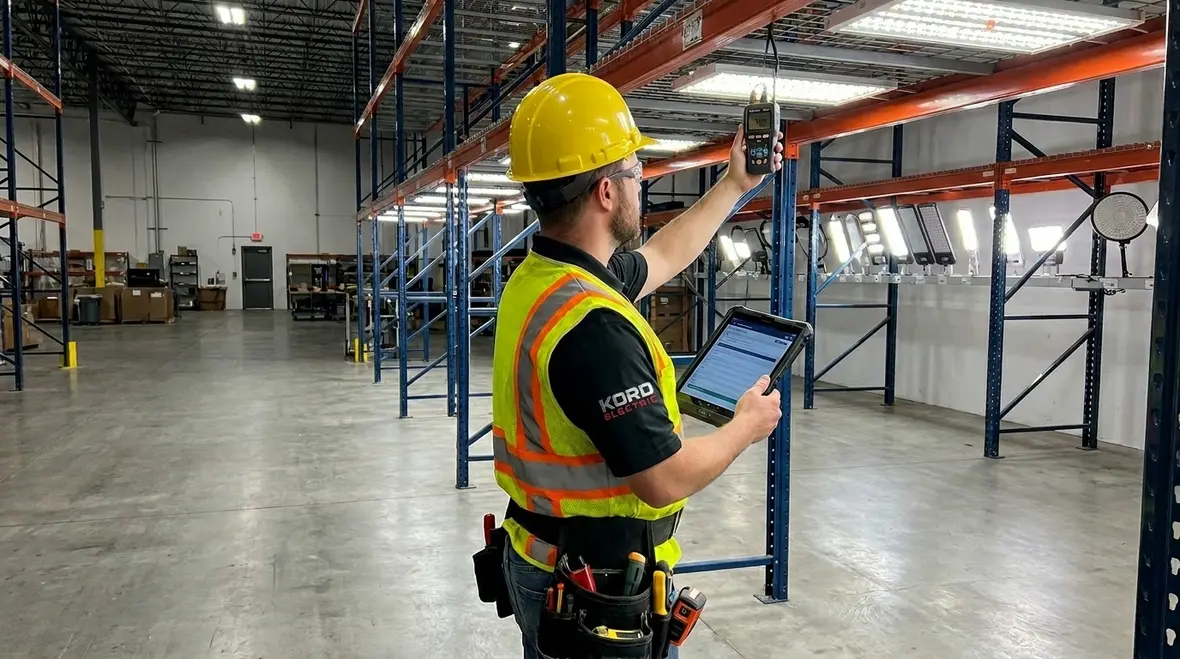
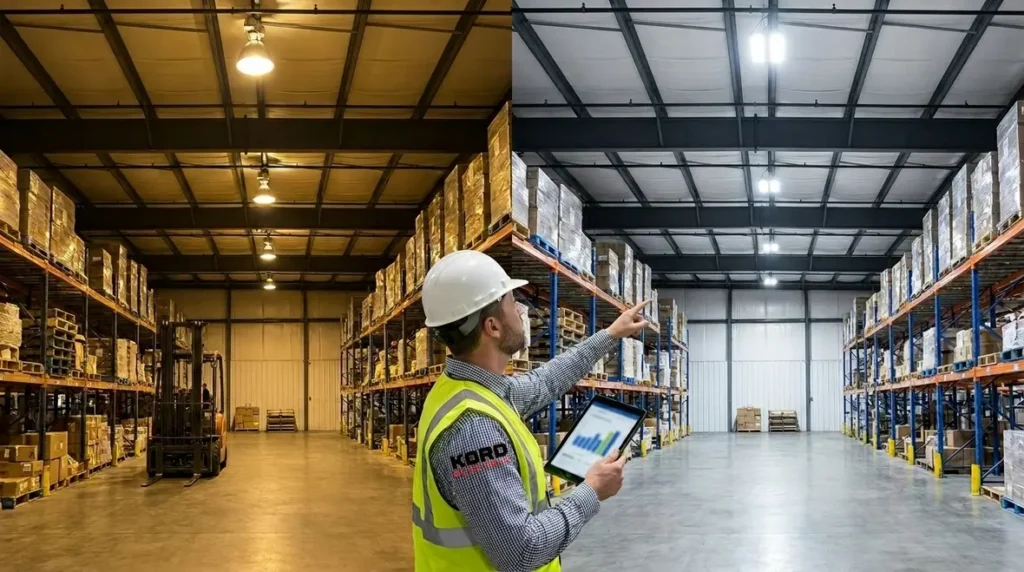
Smart lighting works because it reduces wasted light. However, we do not just install sensors and hope. We design control logic that matches how your space actually behaves. Therefore, savings rise when controls prevent overlighting in areas that rarely need full output, like warehouse aisles or back-of-house corridors.
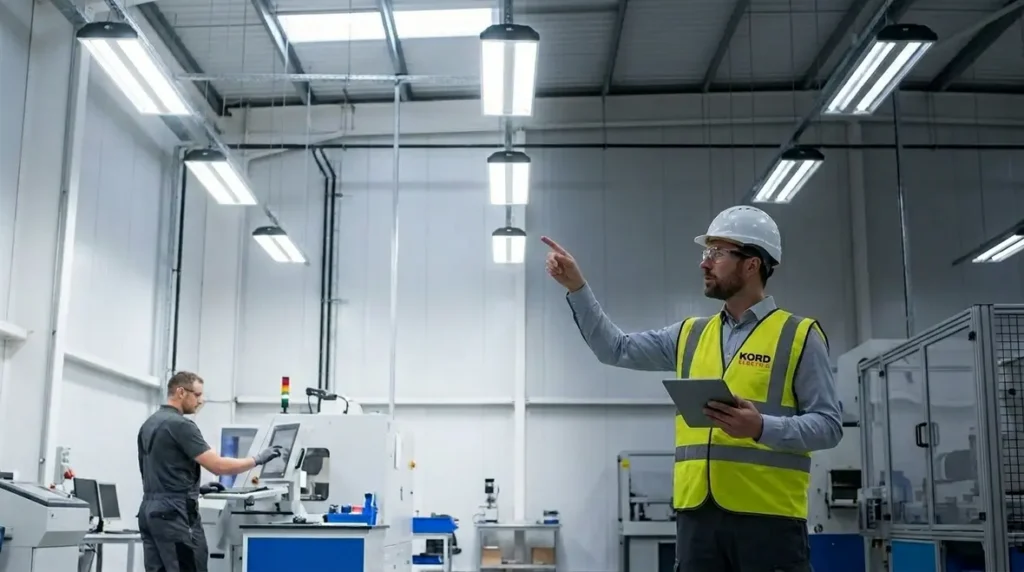
Our technicians and expert service staff explain each decision in plain language. They will tell you, for example, that occupancy sensors can save energy in rooms with irregular traffic. They will also tell you that daylight harvesting saves money when windows or skylights affect illumination levels. And yes, scheduling helps too, but only if it aligns with real operating hours. If your building changes shifts every week, a static schedule can turn “smart” into “mildly annoying.”
We also map zones. Large facilities do not run like one big room. We group areas by use and risk, then we set control strategies that make sense per zone. This approach lowers energy waste while keeping safety and comfort steady.
Building a baseline: audits, power profiles, and control assumptions
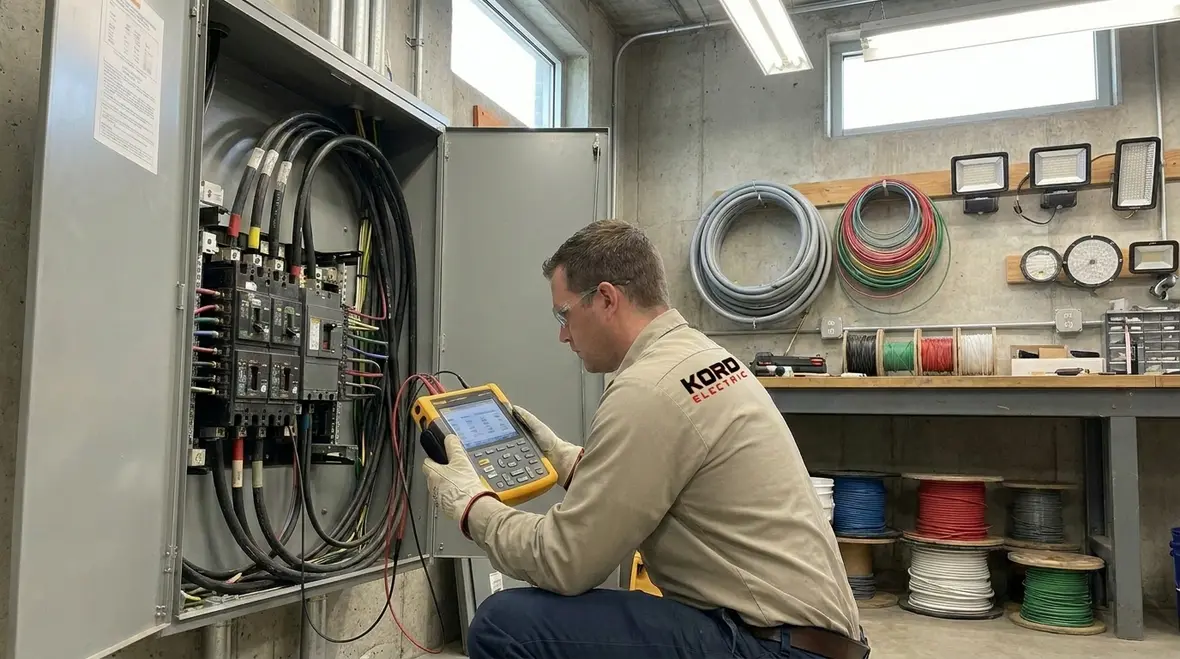
To calculate commercial lighting controls roi without guesswork, the starting point matters. We create a reliable baseline through field checks and documentation review. For major property buildings and industrial sites, we focus on factors that directly influence performance.
We typically verify:
- Fixture types and wattages, including any existing control devices
- Operating schedules by area, not just by the whole building
- Occupancy patterns, traffic frequency, and typical dwell time
- Daylight exposure where applicable, including window coverage and glare risk
- Controls compatibility, network needs, and power quality considerations
Then we set the assumptions used in the ROI forecast. In other words, we define what “dimming” means for your project. For instance, we may plan for higher output during peak occupancy and reduced output when spaces sit idle. We also consider how often lights return to full brightness. When these values match your real usage, the ROI model stays credible.
And because we serve commercial and industrial facilities, we pay attention to operational continuity. Lighting controls must not disrupt work or create surprises. So our staff coordinates installation timing and testing steps to reduce downtime and protect production schedules.
ROI is more than energy: maintenance, reliability, and preventive service

Many teams only count kilowatt hours. We add the rest of the story because it is usually where the project looks better than expected. When smart controls reduce unnecessary cycling and extend equipment life, maintenance costs often drop.
We also connect upgrades to an ongoing maintenance plan. If a system cannot be inspected and tuned, it can drift over time and savings can shrink. That is why we reference our approach to electrical preventive maintenance and tie it to lighting performance. You can see how we organize preventive work and keep systems in dependable shape on our preventive maintenance page: https://kordelectric.com/electrical-preventive-maintenance/.
From a practical standpoint, preventive service helps with:
- Sensor calibration and cleaning schedules
- Verification of control settings after equipment or schedule changes
- Review of breaker and power issues that can impact dimming performance
- Faster fault detection so small issues do not become big problems
Our expert service staff also helps teams keep documentation and operating logic clear. That way, when someone asks, “Why did savings change this quarter?” you can answer with evidence, not vibes. And if you ever hear, “We think it’s the controls,” we politely say, “Let us check.”
Simple ROI math your stakeholders can understand
Now we get to the part everyone wants: the calculation. We use a straightforward model that still respects real-world variables. First, we estimate annual savings. Then we compare those savings to the total installed cost, and we compute payback and ROI.
Here is the structure we use. You can swap numbers to match your building:
- Total project cost includes equipment, installation labor, commissioning, and any network components
- Annual energy savings comes from baseline usage minus forecast usage
- Annual maintenance savings comes from reduced lamp replacements and fewer service calls
- Annual incentives are included if your project qualifies
Then we calculate:
- Payback period equals total cost divided by annual net savings
- ROI over a chosen period equals net benefit minus total cost, divided by total cost
We also model risk in a healthy way. For example, if operating hours change, we adjust savings. If occupancy behavior differs from the survey, we factor it. And if daylight patterns shift due to renovations, we update the assumptions. That is how we protect your forecast from becoming a fantasy spreadsheet.
Can your controls ROI drop after installation and how we prevent it?
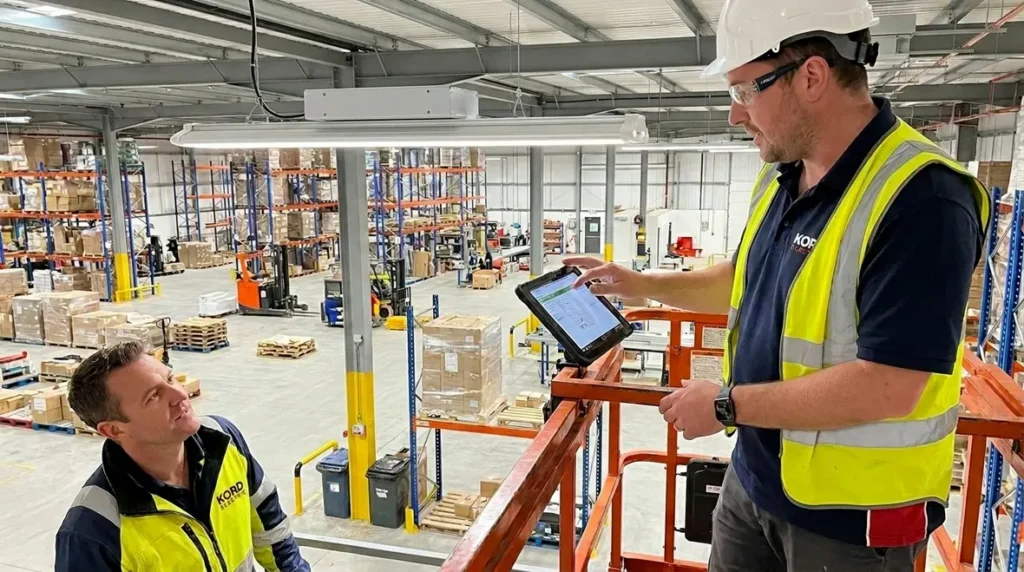
Yes, it can, and we plan for that. Lighting controls rarely fail outright. Instead, savings drift when settings do not match operations, sensors get dusty, or zones get reused for new tasks. So our technicians focus on commissioning and ongoing performance checks, not just initial activation.
To prevent performance drift, we use a disciplined process:
- We test each zone and confirm the control behavior matches design intent
- We document the schedules and dimming levels so the logic stays intact
- We schedule routine checks aligned with preventive electrical service practices
- We train facility staff on override behavior so they do not accidentally defeat automation
We also encourage change management. When a building adds a shift, changes store layouts, or changes equipment use, controls should adapt. When teams treat lighting controls like a living system, not a set and forget gadget, the commercial lighting controls roi results stay stable.
And if someone ever tells you, “We do not need to review it again,” we smile the way a calm professional smiles when the room is on fire in a sitcom. We then offer a plan.
How lighting controls support California compliance and upgrades
Controls are not only about savings; they are also a powerful way to keep large facilities aligned with California lighting codes. Title 24 and related standards expect commercial systems to use automatic shutoff, daylight response, and demand-responsive controls in many spaces. When we design your sequences, we keep those rules in view so your ROI model also supports inspections and long-term compliance.
If you are exploring a broader lighting upgrade, pairing your controls strategy with a full LED retrofit often delivers stronger numbers. Our commercial lighting upgrade cost guide walks through how fixture choices, ceiling height, and control layers influence both upfront budget and long-term savings.
For property teams who want to go even deeper on code requirements, our overview of California commercial lighting code for 2026 explains how modern control strategies plug directly into state expectations. In other words, when you design commercial lighting controls ROI correctly, you are not only saving money; you are future-proofing your building against the next round of updates.
Where lighting controls deliver the strongest ROI in your building
Not every square foot earns the same return. We often see the best commercial lighting controls ROI in areas with long hours, fluctuating occupancy, or high safety demands. That includes warehouses, loading docks, back-of-house corridors, large open offices, and production floors that run multiple shifts. Exterior and parking lighting can also see strong payback when combined with scheduling and motion-based trims.
During site walks, our technicians flag “ROI hotspots” where controls can deliver fast wins without disrupting operations. For example, a warehouse aisle that sits empty 60 percent of the day but still runs at 100 percent output is a prime candidate for zoned occupancy control with dim-to-off behavior. A lobby flooded with daylight most of the afternoon is a good candidate for daylight harvesting that slowly trims levels without guests even noticing.
For facilities planning deeper improvements, we can bundle controls work with broader lighting installation services. That way, fixture layouts, circuiting, and controls wiring all point toward the same outcome: better visibility, code compliance, and a cleaner ROI story.
FAQ
Ready to model your upgrade and prove the savings?
If you want commercial smart lighting upgrades that hold up to real scrutiny, we at Kord Electric can help you calculate the numbers, design the right control strategy, and support the system with expert preventive service. We evaluate your zones, confirm assumptions, and explain the logic clearly so stakeholders can approve confidently. Call us to schedule a site assessment and receive a ROI forecast built for your commercial or industrial facility. We bring the calm, the math, and the wiring expertise.
For facilities across Southern California, our Los Angeles County electrical services team supports everything from lighting retrofits and controls integration to panel work and preventive maintenance. When you are ready to connect the dots between design, code compliance, and commercial lighting controls ROI, we are ready to walk the site and build the model with you.