Warehouse Lighting Control Systems for Efficiency
Why warehouse lighting control systems matter for daily efficiency
In most commercial and industrial facilities, lights run like they are stuck in yesterday. That is where warehouse lighting control systems come in. We design and install solutions that help teams use power wisely, keep safety high, and reduce costly rework caused by poor visibility. Our approach connects controls, fixtures, and schedules so lighting supports operations instead of fighting them. And yes, our technicians explain the plan clearly, because we have found that nothing breaks productivity like a confusing control panel and a confused operator, like trying to set up a smart TV using only a microwave manual.
As we guide major property buildings through lighting upgrades, we also pay attention to layout, motion patterns, and maintenance cycles. Then, we help facilities move from “lights on, always” to lighting that works with how the space is used.
Operational efficiency starts with the right lighting layout
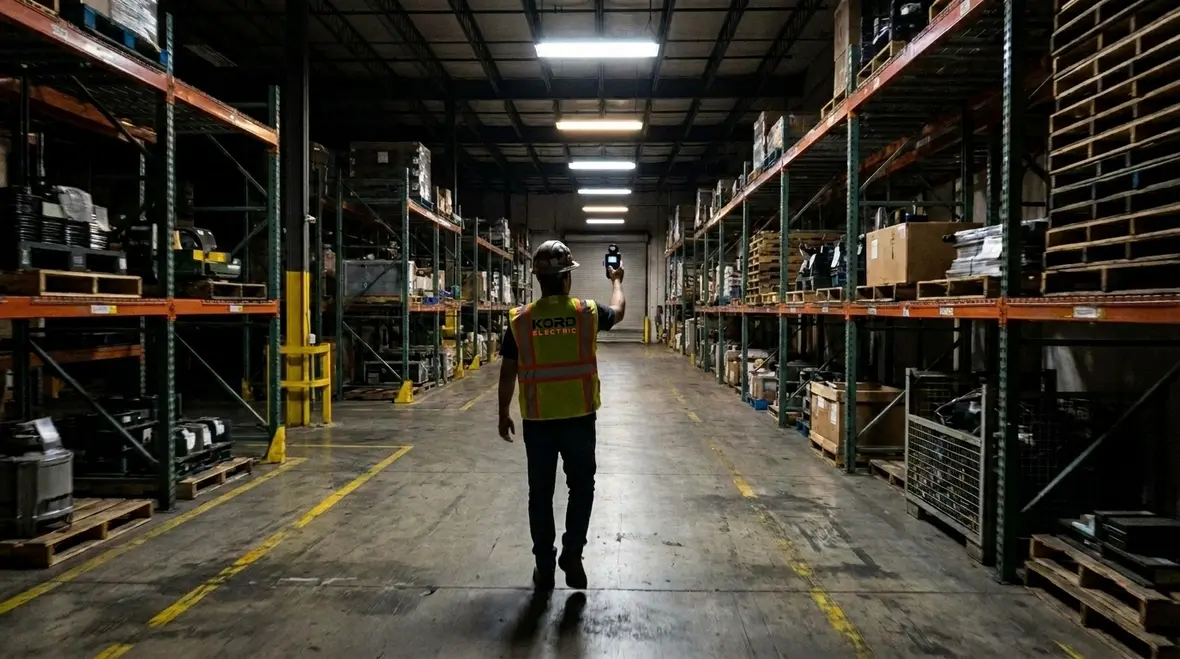
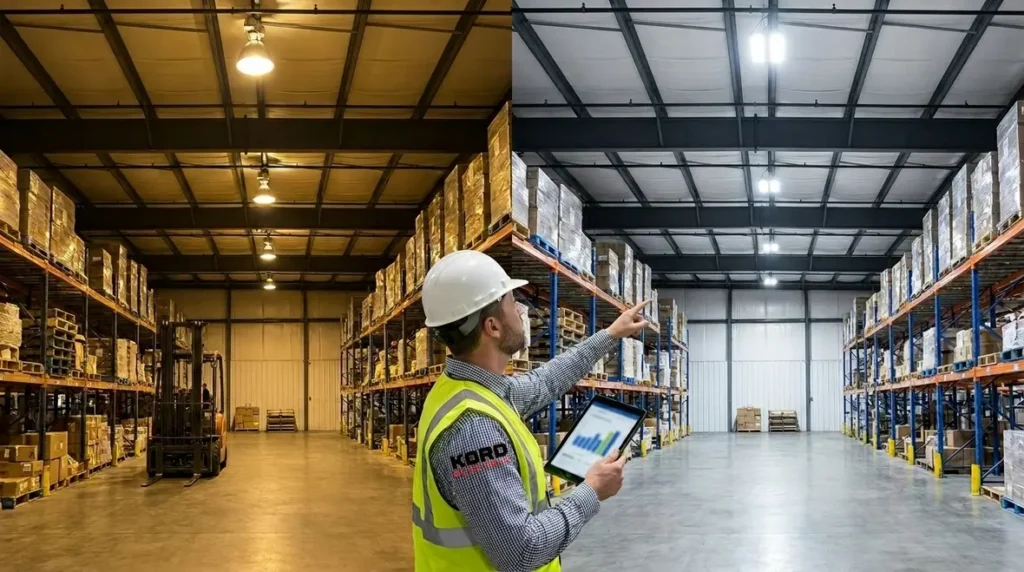
Before anyone touches a control device, we review how the warehouse actually runs. For example, our team looks at aisle traffic, dock schedules, staging zones, and seasonal changes. We also reference our layout optimization work, including industrial lighting layout planning for efficiency, where we map light levels to tasks and paths rather than guessing. When lighting matches the way goods move, staff spend less time searching, stepping around glare, or stopping because a spot looks dim.
Then we connect that layout to controls. If the space has long travel routes and high activity near docks, we may use staged dimming by zone. However, if storage areas sit idle for long stretches, we can reduce output during low use. In both cases, the point is the same: controls should protect visibility and avoid wasting energy.
How zoning and occupancy sensing reduce wasted power
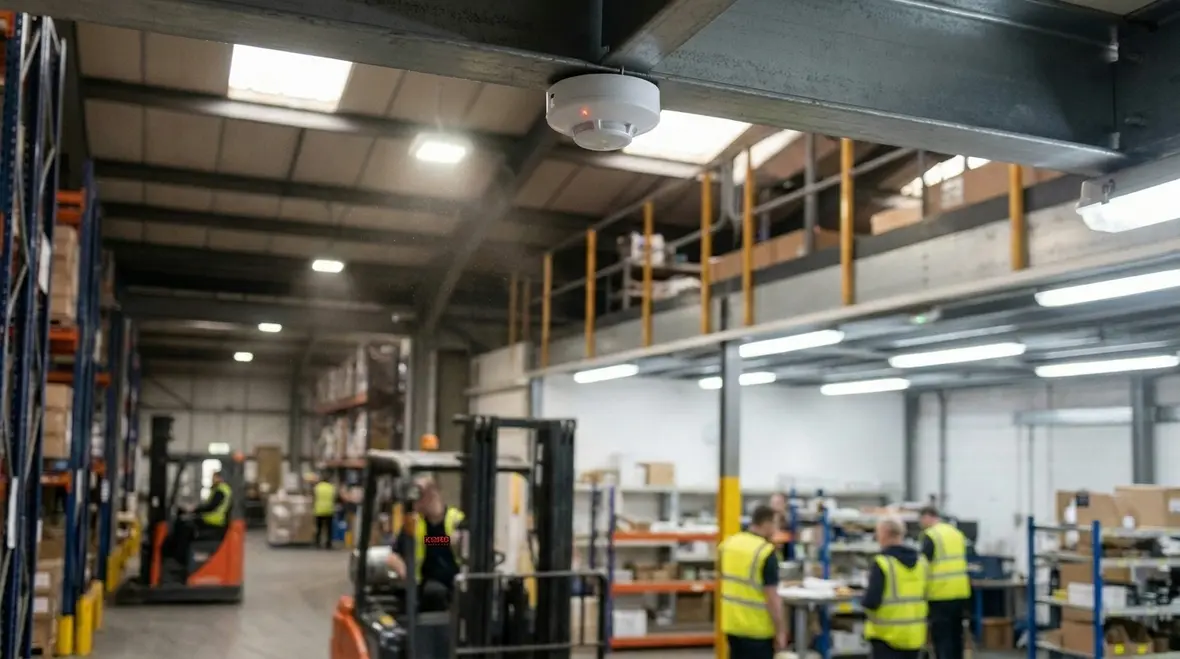
In warehouses, occupancy rarely stays uniform. One hour, a forklift lane is packed with activity. The next hour, only one shift uses that area. With warehouse lighting control systems, we can divide the space into zones and control output based on presence and timing. When sensors detect motion, lights rise to the needed level. When activity stops, lights fade or turn off based on defined rules.
Just as importantly, we handle “edge cases” that other teams miss. If a door opens but no one enters, the system should not blast full brightness for half the day. If a person walks by quickly, lighting should respond enough to support safe movement without creating flicker complaints. Our technicians calibrate settings so the system feels natural to operators, not like a robot is deciding when to help.
Next, we tune sensitivity and time delays to match job reality. That way, teams do not fight the controls during peak work periods.
Scheduling strategies that match shift work and delivery cycles
Controls get far more useful when they align with how shifts actually run. We help commercial and industrial facilities build schedules that reflect start times, breaks, and weekend patterns. For dock areas and staging zones, we often set pre activation, so lighting reaches the right level before trucks arrive. Meanwhile, distant storage rows can follow different logic because their tasks differ.
And yes, we plan for the kind of schedule drift that happens in real life. A delayed shipment does not care about your lighting timer, but your lighting should adapt. We can incorporate overrides for supervisors or allow temporary hold modes during special work orders. Then we log events so facility managers can review what happened and adjust the next cycle.
This is where operational efficiency becomes measurable. Teams spend less time with “temporary workarounds” and fewer lights stay on longer than necessary.

Daylight harvesting and task based dimming without guesswork
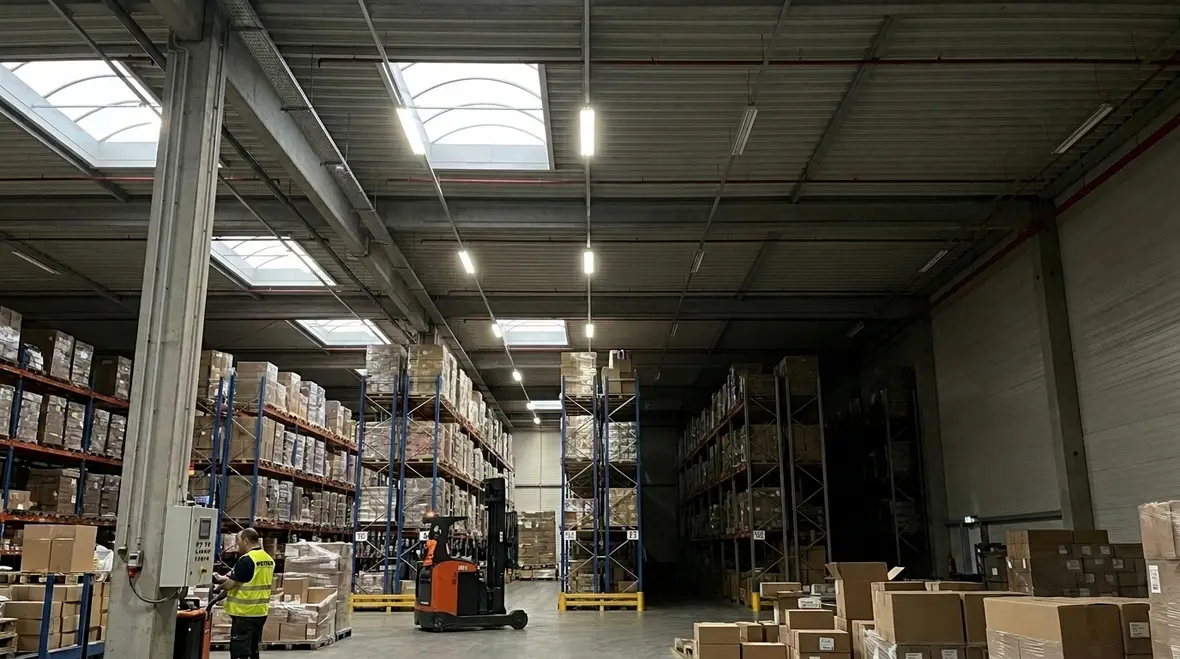
Many major property buildings include skylights, translucent panels, or side windows. However, light from the sun does not follow your utility bill. So we design daylight harvesting to reduce energy while keeping task lighting stable. Instead of dimming blindly, we tie dimming levels to target light output in each critical zone.
When daylight increases, the system can lower electric light to maintain the same on floor performance. When clouds roll in, it restores output smoothly. In practical terms, this means staff see consistently, and managers reduce energy waste. It also lowers complaints, because the system does not “hunt” up and down like it is confused.
Our experts explain the behavior in plain terms. We show how sensors work, what thresholds do, and how tuning helps the system stay steady. That calm, step by step approach keeps decisions from turning into a “Who touched the settings?” mystery.

Maintenance, controls commissioning, and long term reliability
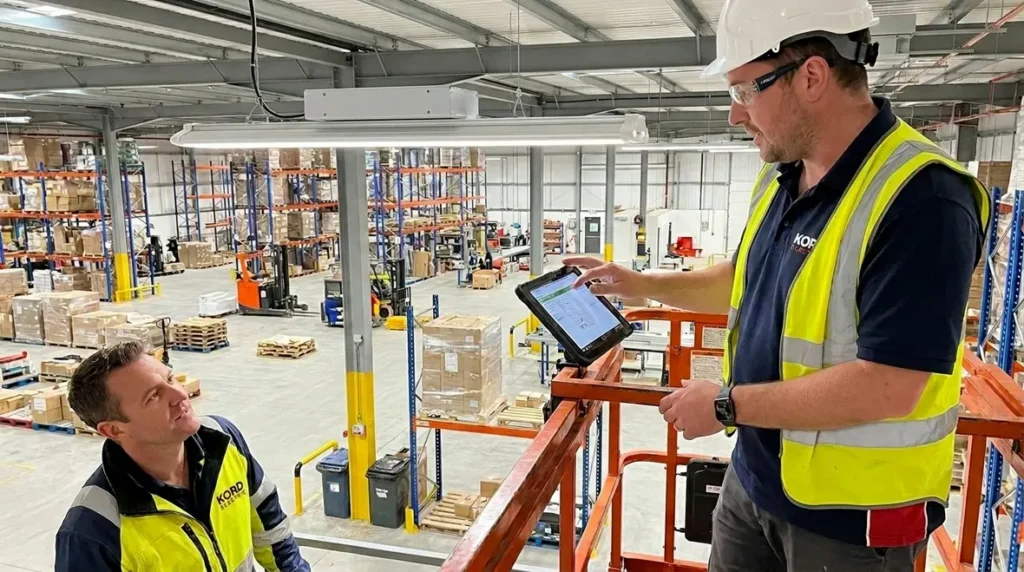
We do not treat this like a one day job. After we install warehouse lighting control systems, we commission the system so it performs as designed. That includes verifying sensor placement, confirming zone maps, testing schedules, and checking fail safe behavior. Then we document the setup so the facility can maintain it over time.
In major commercial and industrial buildings, reliability matters because lighting affects safety audits, work speed, and incident risk. Therefore, our technicians focus on details like stable wiring, correct device addressing, and clear labeling. We also train the facility team, so operators understand how and why to use overrides and manual modes.
We also consider maintenance cycles. If a fixture group fails or a sensor drifts out of spec, the system should handle it cleanly, with alerts when possible. That way, your operation does not discover a dim area during the rush, like realizing your warehouse is out of batteries at the worst time. We prefer proactive service.
Real world ROI: fewer outages, lower bills, better work flow
When lighting controls run well, the ROI shows up in several ways. First, energy use drops because the system avoids over lighting. Second, lighting stays at the right levels, which reduces time spent searching and re doing tasks. Third, visibility helps safety outcomes, which can reduce disruptions and claims.
Yet the real win is operational consistency. Teams do not have to remember to turn lights on, and they do not have to walk into random dark spots. With zoned control, occupancy sensing, and good schedules, the warehouse becomes more predictable. And predictable operations tend to be faster, calmer, and easier to manage.
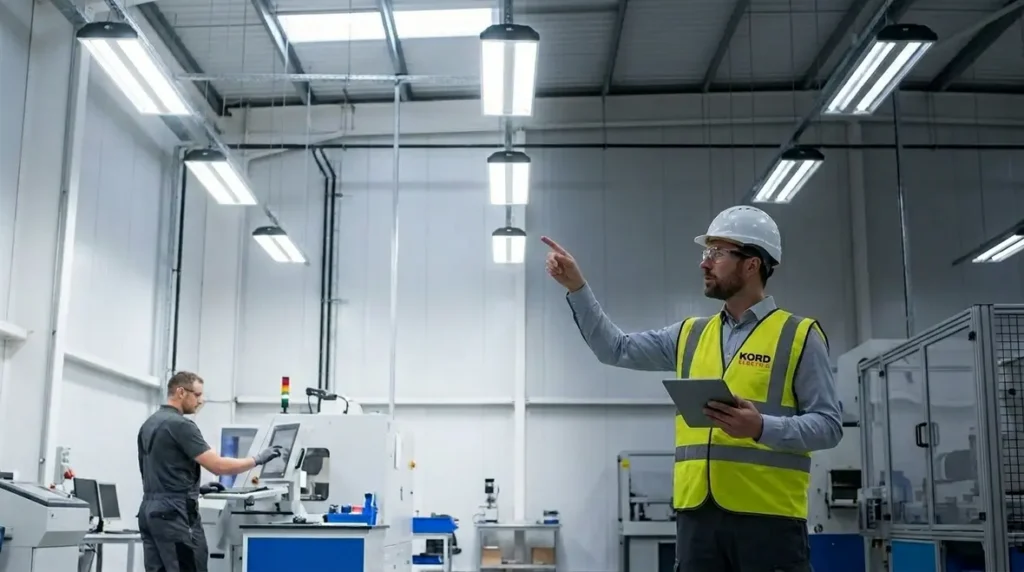
Our staff evaluates the space, designs a control approach that matches workflow, and then delivers a solution that fits commercial and industrial needs. We do not sell generic tricks. We build systems that support the way your warehouse moves product, shifts, and people. For facilities planning deeper upgrades, many teams pair these projects with broader lighting installation services so layout, controls, and infrastructure all move forward together.
FAQ: Warehouse lighting controls for commercial and industrial facilities
Conclusion: Get lighting controls that keep your operation moving
If your facility still runs lights like a factory floor from the past, it is time to modernize. Kord Electric helps commercial and industrial warehouses improve visibility, reduce wasted power, and support safer, steadier work flow with engineered warehouse lighting control systems. Our technicians review layout, install with care, and commission the system for real operations, not theory. For teams looking to coordinate upgrades, these projects often pair well with dedicated lighting installation services so fixtures, controls, and code compliance all move forward together. Contact Kord Electric today for an efficiency focused plan that fits your building and your shifts.