Warehouse Lighting Energy Efficiency and Safety
How Kord Electric Optimizes Warehouse Lighting for Safety and Energy Efficiency
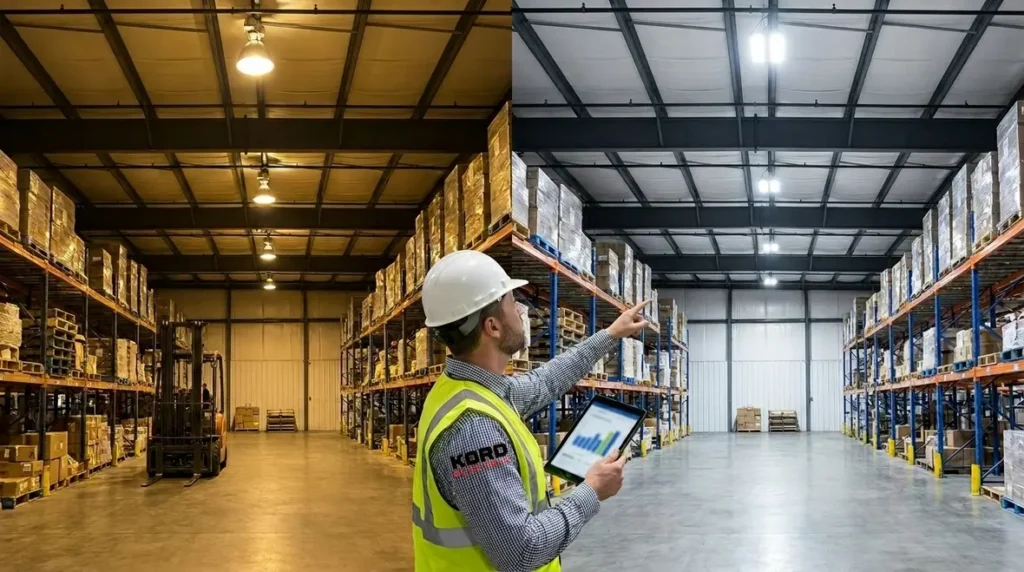
At Kord Electric, we start with one goal: reduce waste in warehouse lighting energy efficiency strategies without sacrificing safety. We balance task lighting, aisle visibility, and glare control so people can work confidently at shift speed. At the same time, our team selects controls and fixtures that cut energy use when power is not needed, like lights dimming at the exact moment no one is walking that aisle. We also document what is found, what is fixed, and what to plan next, because guessing is fun in movies, but risky in warehouses.
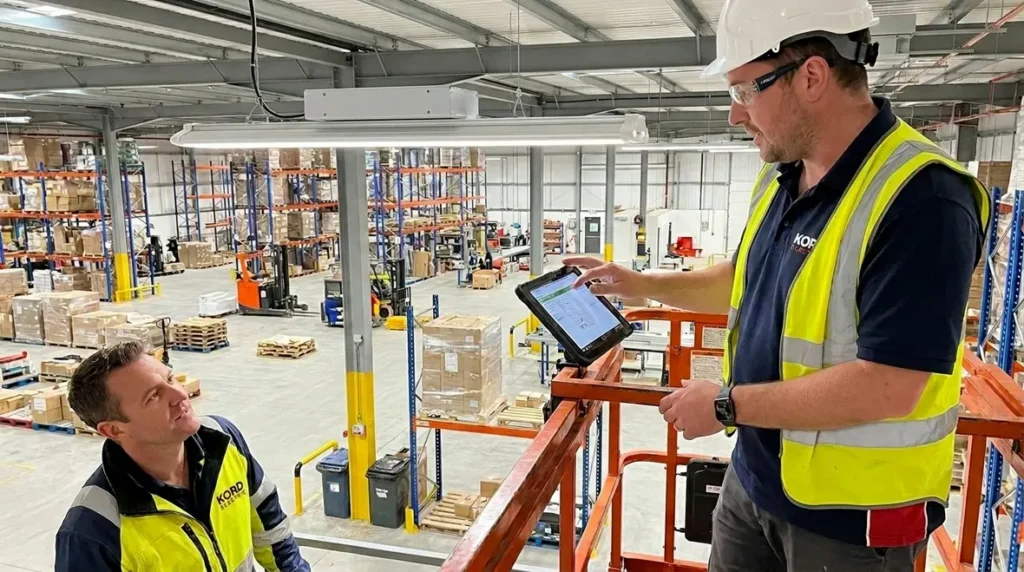
Our technicians and expert service staff explain each step in clear language and stay on site long enough to confirm the results. Because in commercial and industrial facilities, lighting is never just “decor.” It is operations, safety, and uptime.

Warehouse Lighting Energy: Where Energy Gets Lost First
Most facilities do not lose energy because they use “too much” light on purpose. Instead, they lose it through small, compounding issues. For example, a building may have fixtures installed years ago, but occupancy patterns changed. Further, high bay lights may stay on during clean up, receiving, and overtime windows long after the area becomes empty.
Also, many warehouses suffer from poor control logic. Timers run on schedules, not behavior. Then motion sensors only cover part of the space, leaving stubborn hotspots lit all night. In addition, dirt on lenses and reflectors reduces usable light, which pushes teams to add more light “just to be safe.” That is how energy turns into a treadmill.
Because our work focuses on commercial and industrial facilities and major properties, we approach lighting like an integrated system, not a box of fixtures. We evaluate distribution, mounting height, and reflector design so the light actually reaches where workers need it.
Safety Risks That Show Up as “Lighting Problems”
When Kord Electric audits warehouse lighting, we also look for electrical hazards that hide behind the fixtures. In commercial buildings, electrical risks often travel with the same parts people ignore during routine inspections. Our team references the type of hidden risks described in our article on Hidden Electrical Risks in Commercial Buildings, because what looks like a lighting issue can start as wiring, connection, or protection failure.
For instance, aged wiring in high vibration areas can loosen over time. Then a fixture may flicker, dim, or cycle, and the staff thinks, “It is just the bulb.” Meanwhile, the underlying issue can involve loose terminations, overheating, or damaged insulation. If the problem continues, it can escalate into faults that increase downtime and create real safety exposure.
Additionally, we inspect for signs of moisture ingress around fixtures in loading docks, washdown zones, and areas with condensation. We also verify grounding and bonding so equipment operates safely. And because warehouses run like clockwork, we make sure the lighting improvements do not introduce new issues.
We have learned that when a facility treats safety as a separate project, it costs more later. So we treat lighting and electrical integrity as one mission, handled by technicians who understand both.
Designing for Visibility: Coverage, Glare, and Task Needs
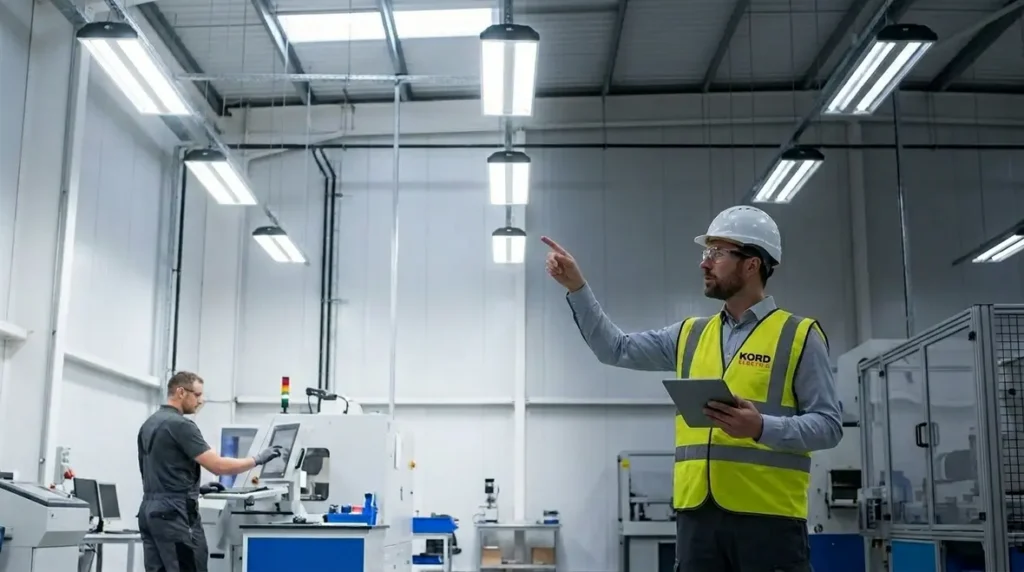
Energy savings mean little if the floor plan becomes harder to read. Therefore, we design warehouse lighting for visibility first, then efficiency. We map the space by function: receiving, palletizing, pick and pack, staging, maintenance, and dock access. Each zone needs a different light pattern and level.
Next, we correct glare and harsh contrast. Glare tires the eyes and slows reaction time, which matters when forklifts move and workers scan shelves. Then there is glare reflection from polished floors and reflective racking. So we select fixture optics and mounting positions to spread light evenly, instead of creating bright “pools” separated by dark gaps.
We also account for work height. People standing at 6 feet do not see the same brightness as tasks performed at 15 feet. When lighting only targets the aisle floor, teams struggle to read labels higher up, which increases errors. In contrast, good distribution supports picking accuracy and safer navigation.
To keep the process practical, our service staff explains the logic behind fixture placement and control zones, so others in the facility understand why the lighting looks different after we finish. We do not leave people guessing, even if they asked for “more light,” because “more” without direction is just more power.
Controls That Save Energy Without Fighting Staff
Controls are where warehouse lighting energy efficiency strategies often deliver the biggest gains, because they cut runtime. However, controls fail when they do not match how the building actually runs. So we start by observing usage patterns and then we design control logic that supports them.
For example, we use occupancy sensing where it makes sense, such as smaller work bays, offices with variable use, and maintenance rooms. For large aisles, we commonly use step controls that reduce output during low activity, then restore full output when motion or traffic increases. This approach keeps the environment safe, without leaving everything at full brightness all night.
We also recommend daylight harvesting when skylights or exterior exposure exists. Then, we integrate schedules for shift changes, cleaning cycles, and seasonal variations. In addition, we coordinate controls with emergency lighting testing requirements so compliance stays clean.
Because our technicians know that staff members dislike systems that feel “random,” we tune sensitivity and timing. If lights pop on every time a loading door moves, people stop trusting the system. And trust matters, even in a warehouse where everyone is already busy.
Upgrading Fixtures and Wiring Like Professionals, Not Like a Weekend Project
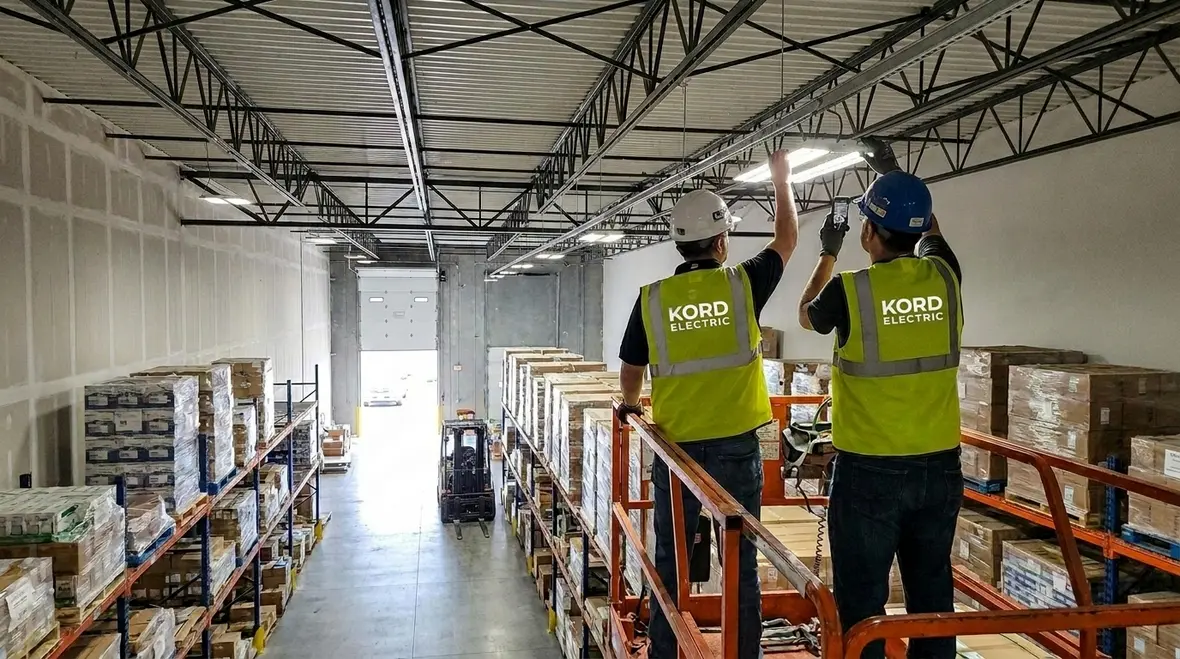
Fixture replacement and rewiring can deliver major improvements, but only if it is done with the right electrical foundation. In commercial and industrial buildings, we focus on safe, durable installs that meet operational demands and reduce future failures.
First, we verify compatibility between new luminaires and existing components. Then we check for proper driver selection, correct dimming behavior, and appropriate thermal performance for the environment. High bay spaces trap heat differently, and dock areas can experience moisture and temperature shifts. So we choose components that can handle it.
Next, we evaluate circuit loading and protection. If a facility uses outdated protection or has uneven load distribution, the new lighting system can behave unpredictably. We fix what needs fixing, including terminations and panel conditions where we find concerns. In that process, our technicians document findings so property teams can plan maintenance with clarity.
Finally, we test after installation. We verify illumination levels, control response, and emergency function. If the building runs multiple shifts, we confirm performance under real conditions, not just during a quick walk-through. In short, we build lighting systems that last, not systems that “look good on day one.”
Verification: How We Prove the Lighting Works and Stays Safe
After changes go live, verification protects both people and investments. We measure and validate lighting levels, then we confirm that control behavior matches expected patterns. This helps avoid the classic problem where savings exist on paper, but workers still complain because visibility feels off.
To strengthen the safety side, we also confirm electrical integrity around the installed points, especially where there were signs of wear or prior issues. We aim to reduce the chance that hidden wiring risks reappear as recurring faults. Our approach is consistent with what we cover in our discussion of hidden electrical hazards in commercial spaces, because safety problems rarely announce themselves with a big red warning sign.
We then share a practical summary with the facility team. That summary typically includes what was found, what was replaced, what controls were configured, and what maintenance should look like going forward. Because future service calls cost more when details were never documented.
How Warehouse Lighting Upgrades Connect to Broader Electrical Goals
Warehouse lighting upgrades rarely live in isolation. When we modernize fixtures, controls, and wiring, we often uncover opportunities to coordinate with other projects, such as commercial lighting layout improvements or preventive maintenance plans across your portfolio. For some facilities, pairing a warehouse retrofit with the kind of planning described in Kord Electric’s industrial lighting layout optimization work helps keep production, storage, and shipping areas visually consistent and easier to manage.
We also keep your local operations in mind. If your building sits in or near Los Angeles County, aligning warehouse lighting energy efficiency strategies with your broader Los Angeles County electrical services plan makes upgrades easier to phase and easier to document. Instead of treating each project as a one-off, you get a roadmap that covers lighting, panels, emergency systems, and future capacity in a single conversation.
In practice, that means fewer surprises when code requirements evolve, tenants change, or your distribution mix shifts. The same team that fine-tunes occupancy sensing in your aisles can help you address hidden panel risks, emergency power questions, and other issues that affect reliability long after the lights themselves have been upgraded.
FAQ
Conclusion: Let’s Make Your Warehouse Lighting Work Harder
When warehouses run safely and efficiently, everyone benefits. Kord Electric brings a practical blend of lighting design, electrical safety checks, and controls that match real shift behavior. We send expert technicians who explain what they find and why it matters, then we verify performance after the work is complete. If your lighting feels unreliable, too bright in empty zones, or suspiciously costly, reach out. We will review your facility and recommend a clear plan to improve visibility, reduce energy waste, and protect operations.
If you are planning a broader lighting project, you can also explore related topics like commercial lighting upgrade planning and warehouse emergency egress needs through Kord Electric and Kord Fire resources. Aligning everyday lighting, backup systems, and maintenance schedules helps your facility stay ready for normal shifts and unexpected events alike, without constant rework or guesswork.
Whether you manage a single warehouse or a portfolio of distribution sites, treating lighting as part of your electrical backbone—not just an overhead expense—turns each upgrade into a step toward safer, more predictable operations. The right warehouse lighting energy efficiency strategies free up budget, reduce headaches, and give your team a clearer view of every aisle, rack, and dock they rely on.