Warehouse Lighting Retrofit Benefits for Safety
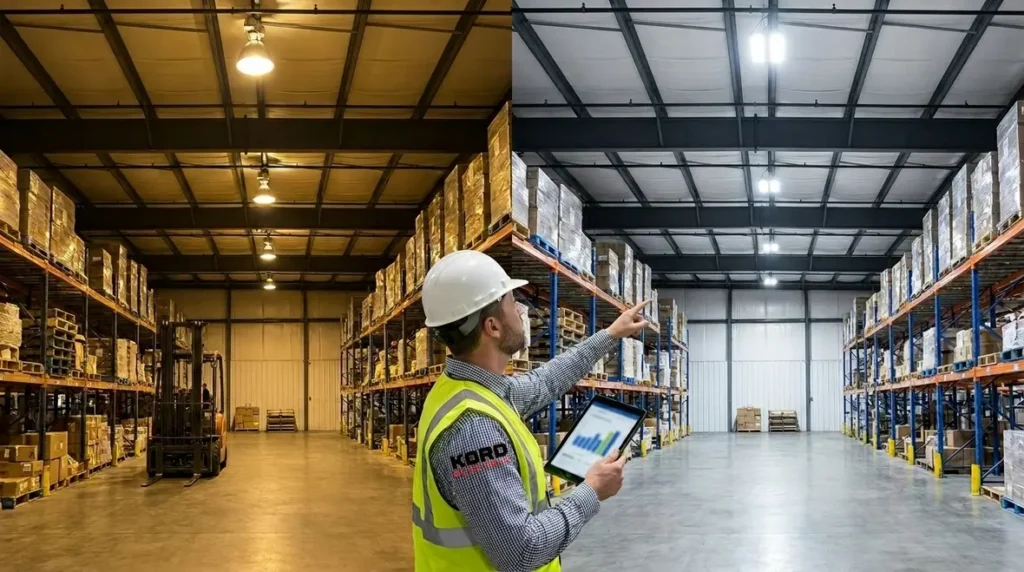
When a commercial warehouse upgrades lighting, the warehouse lighting retrofit benefits show up fast. Better visibility helps safety teams spot hazards sooner, reduces the chances of trips and missed pallet damage, and supports steady operations even during shift changes. And because we plan upgrades with the building in mind, these improvements also cut wasted energy and help managers keep compliance-minded documentation cleaner. At Kord Electric, our approach stays practical: we assess the real risks on site, then we design smart lighting that improves how people move through the space, how systems respond to change, and how maintenance teams work. Meanwhile, the warehouse stops looking like a poorly lit sci fi set where every forklift driver is one “light flicker” away from a bad day.
Why safety improves when warehouses adopt smart lighting
Smart lighting improves safety because it changes how light behaves, not just how bright it looks. In many warehouses, older fixtures create harsh glare near aisles and darker pockets behind racks. Consequently, workers can misjudge depth, drivers can struggle to read floor markings, and supervisors can miss early signs of spill zones or clutter. By contrast, we configure smart systems to deliver stable light levels across routes, with sensors that adapt when doors open, clouds roll in, or machines cycle.
Our technicians and expert service staff then walk teams through what they install and why. They explain the control logic in plain terms, so the maintenance plan feels predictable instead of mysterious, like a streaming show you binge but never read the plot summary for. Even so, the biggest safety wins come from visibility consistency. When light stays steady, people and equipment interact with less uncertainty.
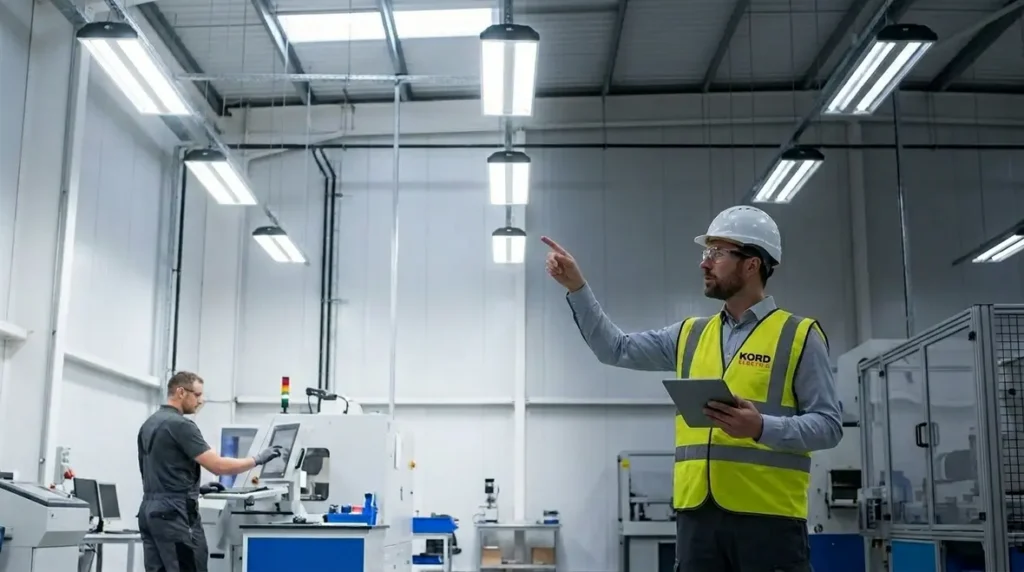
We also design for human sight. Warehouses hold tall shelving, reflective floors, and moving shadows from carts and lift trucks. Therefore, we focus on reducing glare near high traffic areas and maintaining uniform illumination where decisions happen, like pick paths, staging zones, and loading docks.
How smart controls reduce hazards in high traffic areas
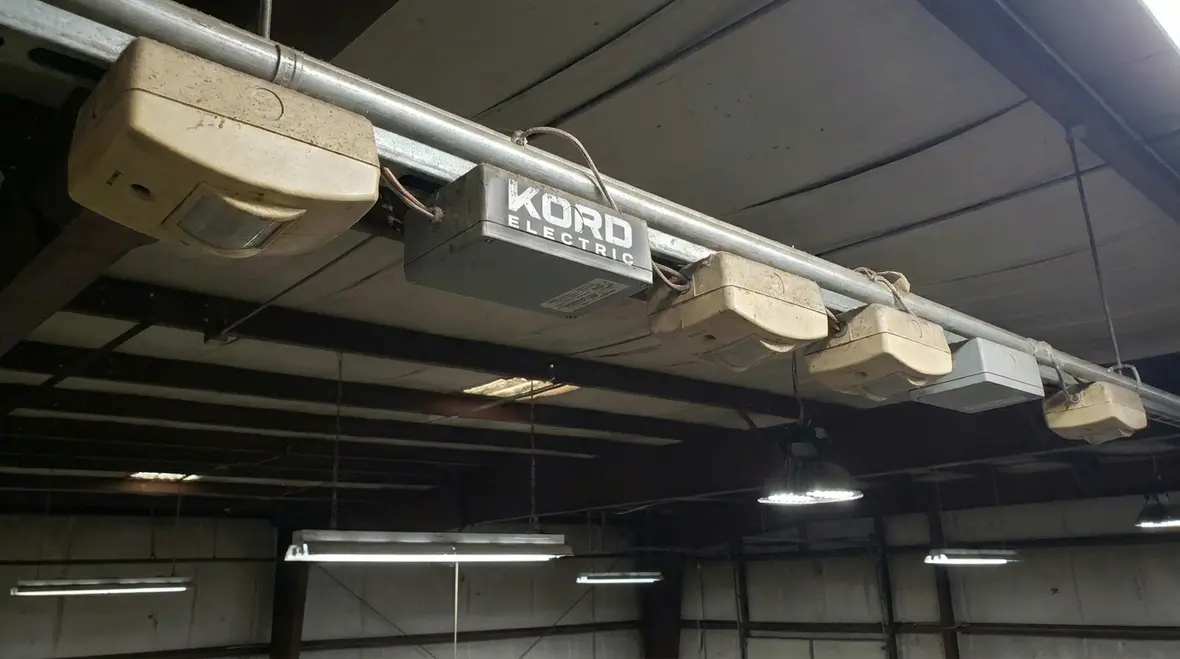
Warehouses do not stay still. Forklifts cross lanes, dock doors open, and workers switch tasks from loading to picking within minutes. To match that reality, smart lighting uses controls that respond to activity and time of day. For example, motion and presence sensing can increase light levels when people enter a zone, and return to a lower level once the area clears. This approach keeps aisles usable during shift starts, while also supporting energy management after hours.
Additionally, daylight harvesting can help when skylights or exterior light change. Instead of forcing workers to adapt to swings in brightness, we tune the system so the warehouse maintains a safer visual baseline. That matters because contrast swings cause the most eye strain and the most “I didn’t see that” moments. And yes, even adults can make “oops” decisions when the environment fights their vision.
Our service team also helps facilities understand how the controls integrate with existing building management. As a result, operators can schedule lighting by workflow and season, rather than relying on fixed settings that do not match real operations.
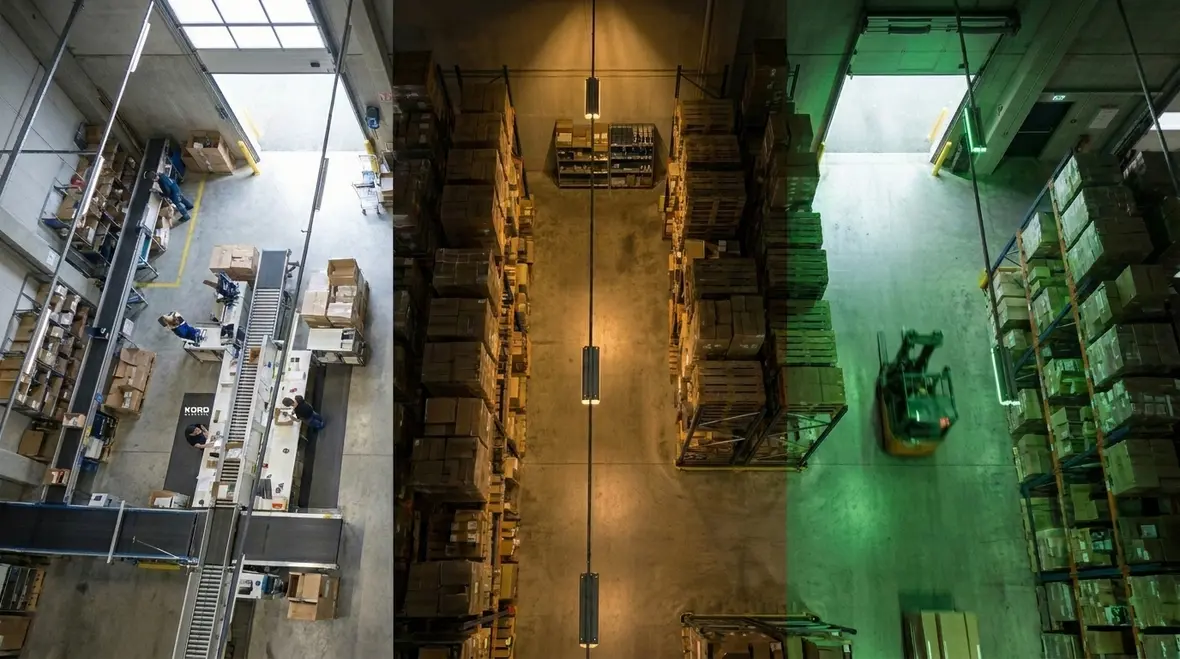
What sensors and automation do for safer visibility
Sensors give smart lighting a way to observe the environment. Then automation acts on those signals. In warehouses, that usually means a few key behaviors. First, the system can detect occupancy in picking and staging areas, then adjust output to support safer movement. Second, it can handle fault detection patterns, flagging when a device fails so maintenance can respond sooner. Third, it can coordinate zones so adjacent areas do not create sudden brightness cliffs.
We keep it simple for the people on site. Our technicians explain the sensor layout, the expected response times, and the maintenance responsibilities. So, when a team member asks, “Why did that section brighten?” our staff can answer with specifics tied to real occupancy data, not guesswork. That reduces frustration, and it builds trust. In safety work, trust is not soft. It is structural.
Also, we consider how light supports wayfinding. When pathways have consistent brightness and signage visibility improves, workers and drivers navigate with less hesitation. That improves both personal safety and operational flow, which is exactly the kind of “boring” improvement managers love.

Designing for efficiency without losing safety focus
Smart lighting does not only make people safer. It also helps facilities run efficiently. However, the important point is that efficiency must follow safety priorities. We start by mapping the space and observing how teams move. Then we design lighting layouts that reduce wasted light while keeping visibility strong.
In our process for industrial lighting layout optimization for efficiency, we look at where light should land, where glare can appear, and how fixtures should support uniform coverage. That article highlights how thoughtful layout choices help improve performance and reduce energy waste, and we apply the same logic in warehouse upgrades. In practice, that means we evaluate fixture placement, aiming angles, and zone separation so the warehouse lighting retrofit benefits do not stop at “less power.” They extend to smoother movement, fewer dark spots, and better reading of floor details.
Moreover, we avoid blanket designs that treat the warehouse like one big empty room. Warehouses have zones with different tasks and risk levels. Therefore, we tailor controls to match the workflow: higher illumination where drivers operate, stable lighting for pick paths, and efficient behavior in storage areas where traffic stays lower.
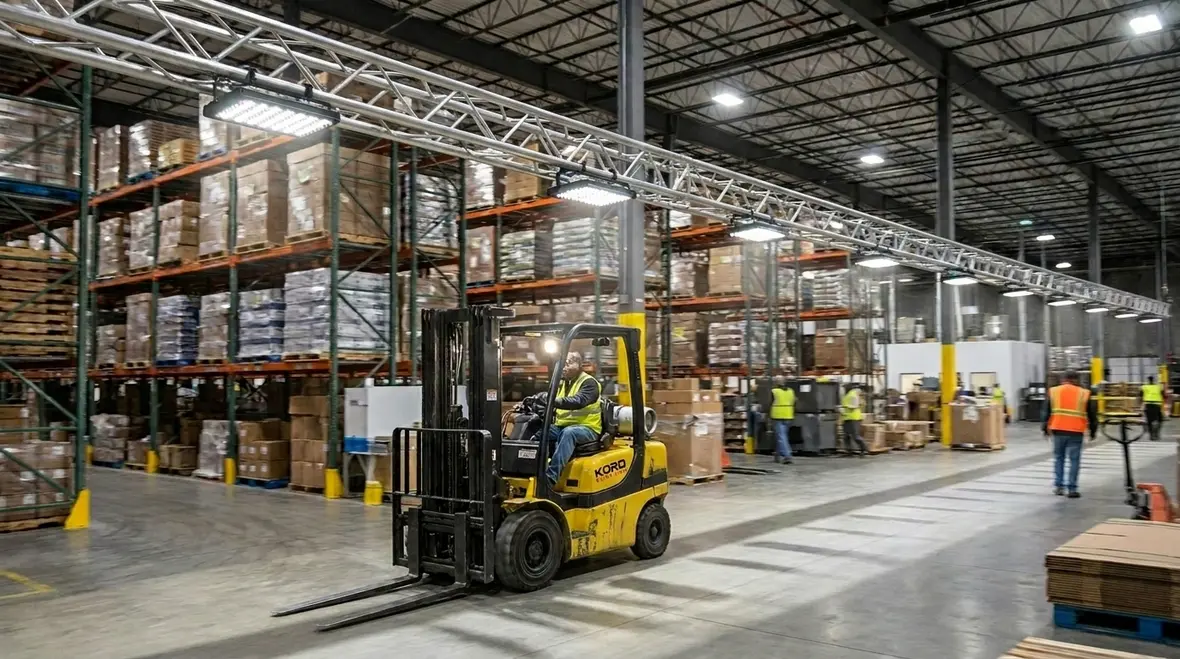
Maintenance planning and technician support that keeps systems reliable
Smart lighting only helps if it stays reliable. Over time, sensors can drift in performance, drivers can fail, and systems can lose configuration if nobody maintains the settings. This is where our expert service staff matters. We do not just hand over hardware. We help define maintenance routines, document settings, and create a clear plan for inspection and updates.
Consequently, facilities reduce downtime and avoid “lights are weird” calls that soak up hours. Instead, technicians can use scheduled checks to confirm coverage patterns and verify that safety zones remain consistent. When something needs attention, our team can help troubleshoot quickly, because we already know the original design intent.
Additionally, we train building teams on the basics. Workers do not need to become lighting engineers, but they do benefit from understanding how to report issues and what behaviors to expect during occupancy. Our technicians explain those details during handoff, so the system continues to support safe operations rather than creating new confusion.
Implementation roadmap for commercial and industrial buildings
Smart lighting retrofits work best when implementation follows a structured plan. We typically start with a walkthrough and lighting assessment for commercial and industrial facilities and major property buildings. Then we review the safety goals alongside operational constraints like docking schedules, power availability, and the need to keep key zones working during installation.
Next, we develop a design that maps control zones and addresses risk areas. We also consider how the system will behave under real conditions, like overnight security patrols, shift transitions, and seasonal daylight changes. This planning matters because smart lighting must respond correctly every day, not just in a brochure.
After design approval, our team coordinates installation with facility operations, then we verify performance after work completes. Finally, we support the facility through documentation and training so the warehouse lighting retrofit benefits stay measurable.
And since someone always asks, we make sure the project does not turn into a “who moved my pallets” mystery. The installation plan accounts for access paths and safety standards so crews can work without disrupting critical workflows.
How lighting retrofits support broader warehouse safety systems
Lighting does not stand alone in a warehouse. It works alongside fire alarm design, sprinkler performance, extinguisher placement, and emergency egress routes. When a facility upgrades to smart lighting, managers get an opportunity to look at safety as a connected system instead of a stack of separate checkboxes.
For example, clear and consistent illumination along aisles and exits makes it easier for teams to follow the kind of emergency lighting and evacuation logic outlined in dedicated warehouse life safety guidance. When exit paths, extinguisher stations, and alarm pull points sit in bright, evenly lit zones instead of partial shadow, staff can react faster under stress. That means a forklift operator or order picker is less likely to waste seconds hunting for equipment or orientation markers when they should be moving toward safety.
Lighting upgrades also help warehouse leaders coordinate with their fire protection partners. During retrofit planning, we often discuss how illuminated sightlines support extinguisher visibility, sprinkler head clearance checks, and regular inspections of alarm notification appliances. The result is a warehouse safety strategy where the electrical team and the fire protection team pull in the same direction instead of working in parallel tracks that only meet at inspection time.
Planning warehouse lighting retrofits around operations and downtime
Warehouse schedules rarely slow down just because a project shows up. That is why our retrofit plans account for shift structures, seasonal peaks, and regional service needs. In Los Angeles County and the surrounding region, delivery windows, traffic patterns, and building access rules all influence when work can safely occur. When you combine that with high rack storage, mezzanines, and mixed-use loading areas, it becomes clear that a “show up and start swapping fixtures” mindset will not cut it.
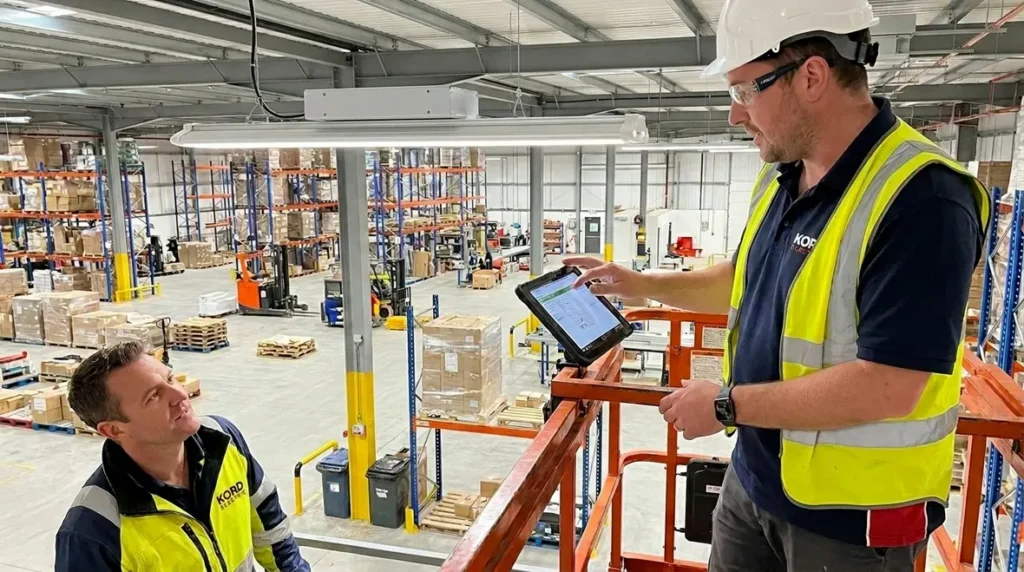
Instead, we treat lighting upgrades like an operational project. Our team sequences work in phases so key aisles and dock zones stay open. We coordinate with warehouse supervisors to identify low-traffic windows, then align lift use, scissor access, and temporary barriers so crews can work without putting staff in harm’s way. That structure helps maintain productivity while the retrofit unfolds, and it keeps the focus where it belongs: on safety, not scramble.
For multi-site operators or properties with complex utility arrangements, that planning extends to coordination with local jurisdictions and facility stakeholders. When you pair a smart lighting design with a staged implementation strategy, the warehouse lighting retrofit benefits do not just appear on an energy bill. They show up in smoother shifts, clearer communication, and fewer “Why is that area dark right now?” conversations during busy periods.
FAQ
Final call from Kord Electric
If your warehouse has dark aisles, inconsistent dock visibility, or maintenance headaches tied to older lighting, it is time to upgrade with a plan that supports safety first. Kord Electric builds smart lighting retrofits for commercial and industrial facilities and major property buildings, and our technicians explain the system clearly so your team can operate it with confidence. Contact us to schedule an assessment, review your risk zones, and design a lighting approach that keeps people safe, equipment visible, and operations running smoothly. Let us turn the lights from “guess and hope” into “know and move.”
For warehouses in and around Southern California, including complex distribution hubs and high-bay storage facilities, our team also supports broader electrical and safety priorities. If you are coordinating multiple upgrades across one or more locations, explore our regional Los Angeles County electrical services to see how lighting, power distribution, and reliability planning can work together instead of in isolation.
When you are ready to translate those warehouse lighting retrofit benefits from idea to reality, we are ready to walk the aisles, map the risks, and design a system that makes every shift safer and more predictable.