Warehouse Smart Lighting Efficiency Gains Guide
Why large warehouses unlock better warehouse smart lighting efficiency gains
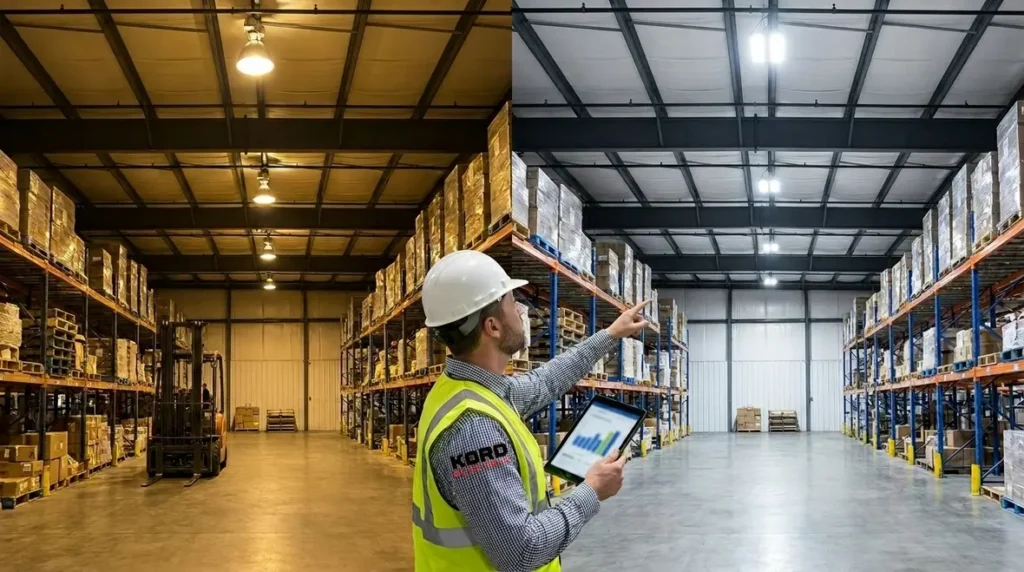
In large warehouses, the difference between “lights on” and true efficiency shows up fast. When smart controls handle dimming, scheduling, and zoning, we see energy waste drop while safety and comfort stay steady. At Kord Electric, we help commercial and industrial facilities capture warehouse smart lighting efficiency gains by combining smart lighting controls with sound electrical planning, so operations keep moving and budgets do not get surprised mid year. In other words, we help warehouses behave like professionals, not like the kind of place where every hallway light burns 24 7 “just in case.”
Next, we break down what smart controls change, where technicians focus first, and how smarter rewiring and commissioning protect long term value.
Smart lighting controls: what they actually do in a warehouse

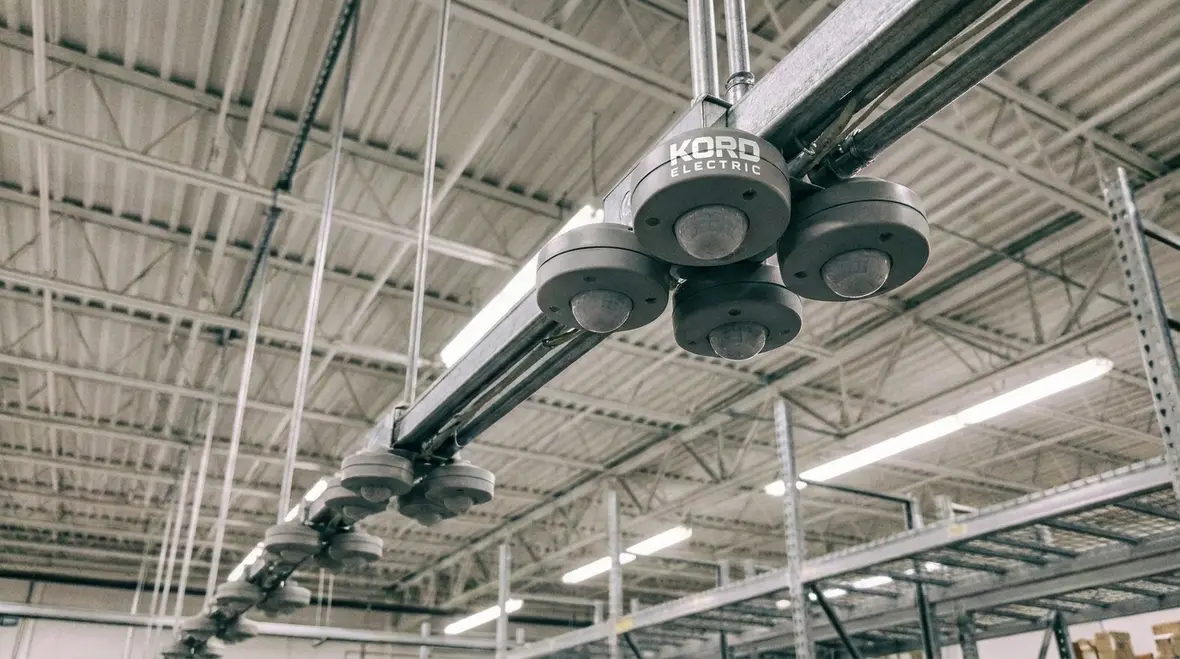
Smart lighting controls do more than turn lights on and off. They create a system that responds to how the warehouse gets used. First, sensors track motion and daylight so areas only light when people need them. Then, controls group zones so one part of the building does not carry the load for the entire facility. Finally, scheduling keeps lighting aligned with shifts, dock activity, and seasonal daylight changes.
In large facilities, that matters because lighting loads can run for thousands of hours each year. Meanwhile, warehouses often have changing layouts, varying occupancy, and high bay spaces that behave differently than office rooms. So, a single “all lights everywhere” approach wastes power and creates uneven glare.
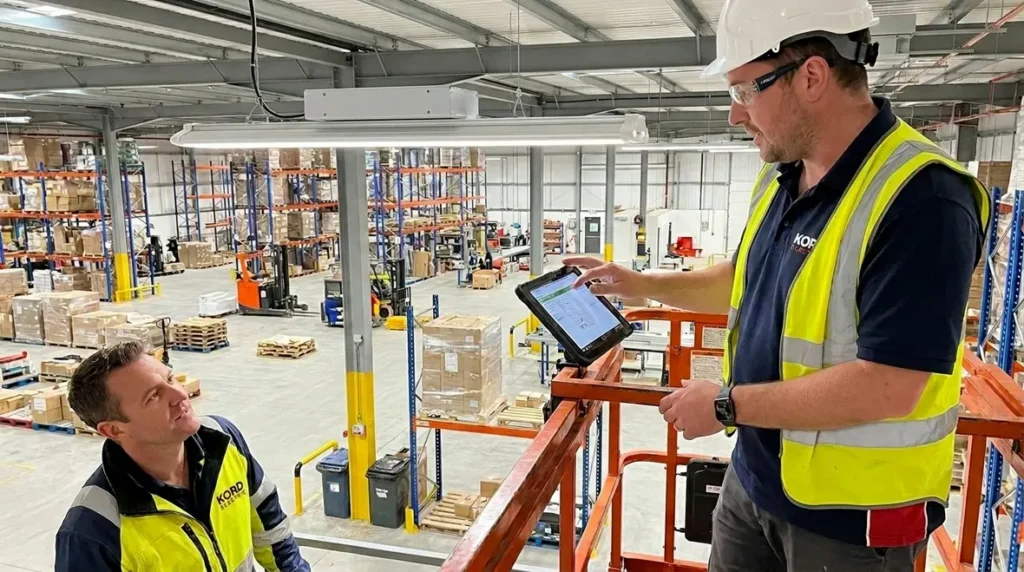
Kord Electric supports these projects with expert service staff who explain the plan in plain terms. We show facility managers how sensors cover the work flow, how dimming curves affect visibility, and how zoning choices reduce energy without sacrificing compliance. And yes, our technicians still get asked the same joke: “So the lights will stop working when nobody is around?” We smile and answer, “They will work smarter, not disappear like a magician.”
For teams that want a deeper dive into how lighting upgrades tie into broader safety and code requirements, Kord Electric’s lighting installation code compliance guide walks through common pitfalls and how to keep smart systems aligned with today’s standards.
How to map lighting zones without disrupting operations
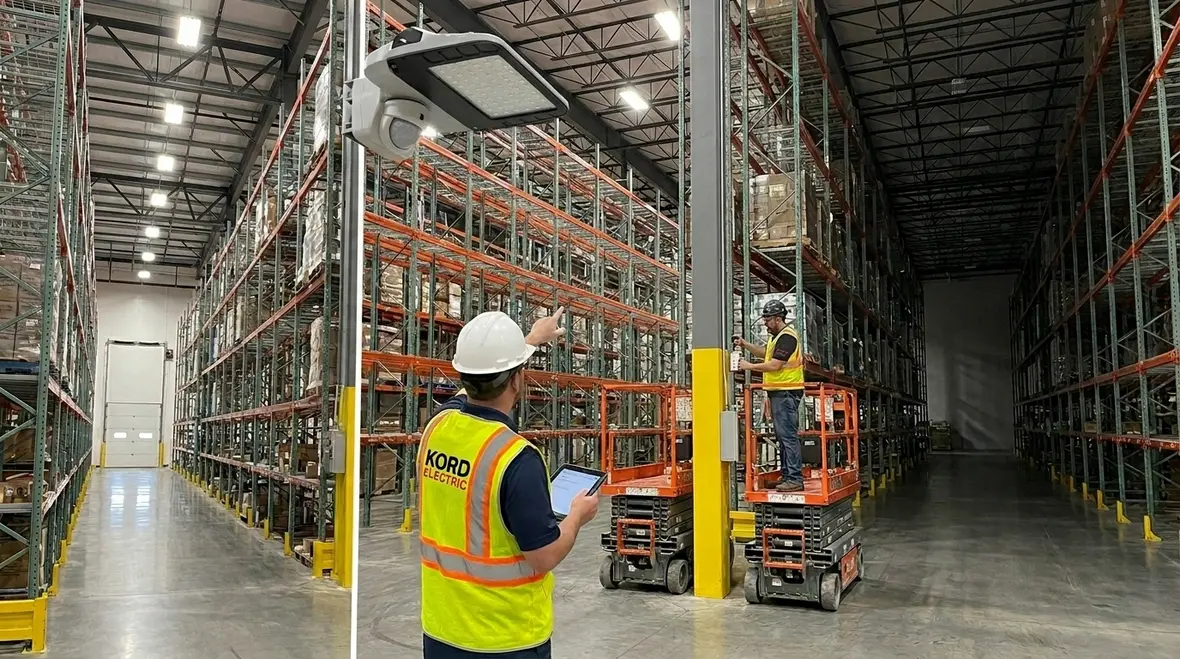
Before any device gets installed, we help clients map the warehouse. We start by identifying hot zones and low activity areas. For instance, pick modules and staging aisles need consistent task level lighting, while wide open lanes may only require full output during heavy traffic. In addition, loading docks often need brighter operation during delivery windows, then lower levels when activity slows.
Then, we check ceiling height, beam patterns, mounting locations, and reflectivity. We also consider obstructions like racking and equipment that can block sensor views or reduce effective daylighting. Because every warehouse behaves differently, we design zones around real sight lines and real movement paths, not just blueprints.
Next, we phase work to reduce downtime. We can schedule electrical work during off shifts, coordinate with planned downtime for maintenance teams, and sequence circuits so key areas stay lit. As the work progresses, our technicians document what gets changed and how the control strategy updates. That way, others in the facility can maintain the system without guesswork.
While we are mapping zones, we also consider how other systems—like commercial and industrial ceiling fans or conveyor controls—share overhead space. Coordinating lighting with equipment placement avoids conflicts later and keeps airflow, visibility, and safety aligned under one plan.
Commercial rewiring for lighting upgrades: costs and decisions
Smart lighting controls often require more than swapping fixtures. Depending on the existing system, projects can involve new wiring runs, panel changes, or updated controls that need proper circuit mapping. This is where the right decisions keep costs predictable and performance strong.
Our team points clients to a rewiring cost guide for commercial electrical systems, because it explains what tends to drive the price and what choices affect speed. For example, labor hours rise when circuits need re routing, when circuit labeling is unclear, or when electrical pathways require careful rerouting around existing structure. Conversely, costs can stay controlled when the design reuses available pathways and the facility provides good as built drawings.
To keep projects grounded, we help clients evaluate these factors early:
- Existing conduit capacity and cable condition
- Panel space and control wiring requirements
- Number of zones, device locations, and sensor density
- Commissioning needs for dependable settings
- Any tenant or shared building electrical constraints, when applicable
And because we work with commercial and industrial facilities, we do not treat this like a quick “weekend swap.” We plan like the building will be relied on every day afterward. If a site wants smart controls, it gets installed with the same respect we bring to life safety and power distribution. In fact, that calm, careful approach usually saves money over time, because fewer surprises show up during startup.
For facility leaders planning both lighting upgrades and broader electrical improvements, coordinating smart controls with services like lighting installation services for commercial and industrial facilities keeps design, wiring, and commissioning aligned instead of pieced together project by project.
Commissioning and tuning: the part most people skip
Many upgrades fail quietly, not because the hardware cannot work, but because settings never match the space. That is why we prioritize commissioning and tuning. First, we confirm each sensor’s coverage and verify its response to real motion paths. Then, we tune dimming levels so lighting remains comfortable for reading labels, scanning barcodes, and safe movement around racking.
Next, we verify scheduling with actual shift patterns. Warehouses rarely run perfectly on a calendar. If a night crew starts early one week and late the next, the control schedules should still support reliable conditions. We also test daylight response so the system does not overreact when clouds roll in like the plot twist of a sitcom.
Our expert service staff explain the results after testing. We show facility teams how to interpret reports, how to adjust settings, and how to spot unusual behavior. For example, if a zone stays at low output longer than expected, we can review sensor placement, coverage angles, or settings. When a zone lights too brightly, we adjust the dimming curve or daylight threshold. This hands on tuning supports smoother operations and helps protect your energy goals.
Commissioning is also when we double check that the lighting controls and broader electrical system play nicely together. Demand response strategies, Title 24 compliance requirements, and integration with other building systems all rely on real-world tuning, not just default factory settings.
Energy savings that hold up across seasons and shift changes
Warehouse smart lighting efficiency gains can look great in a spreadsheet, but the real proof shows up after the first few seasons. So we design the controls for variability. In winter, daylight availability drops and motion patterns shift during darker hours. In summer, bright sunlight and different work rhythms can change how sensors respond. Therefore, we use control strategies that can adapt without constant manual resets.
In addition, we support consistent performance by organizing zones logically and keeping device firmware up to date when the system allows it. Some warehouses add equipment or rearrange storage. When that happens, we help clients review whether sensor views still match the work flow. Small changes can shift coverage. Yet, when we plan controls with growth in mind, those shifts require less disruption.
We also help clients connect lighting controls to broader facility goals like demand management and operational reporting. Even when the warehouse already uses other building systems, smart lighting controls can still deliver value when they integrate cleanly and operate predictably. In other words, we make sure the building behaves like a system, not like a pile of smart parts.
Over time, that systems-based approach keeps savings steady instead of fading after the first year. The warehouse does not just chase a one-time rebate; it builds durable warehouse smart lighting efficiency gains that support safety, comfort, and budget planning across seasons and shift changes.
Dual column checklist for a smooth smart lighting rollout
Planning step
Zone mapping based on movement and tasks
Electrical pathway review for rewiring needs
Phasing plan to protect daily operations
Sensor layout test for real sight lines
Commissioning and tuning schedule
What it prevents
Uneven light levels and glare complaints
Unexpected circuit costs and delays
Downtime surprises during peak workflow
Dead zones and “why won’t it dim” issues
Performance drift after installation
For multi-site operators, this checklist also helps standardize how different warehouses approach lighting. Instead of reinventing the wheel at each facility, teams can refine a proven rollout plan that respects local workflows while keeping core steps consistent.
FAQ
Plan smart lighting like a system, not a quick swap
When commercial and industrial facilities invest in smart controls, they deserve a full plan, not a quick swap. Kord Electric brings expert technicians and service staff who map zones, evaluate electrical needs, and commission the system so it works the way your warehouse works. Smart lighting should feel like an integrated part of the building’s nervous system, not an add-on that only half connects with daily operations.
For properties across Los Angeles County and beyond, that means tying lighting upgrades into a broader electrical strategy. Alongside services like electrical preventive maintenance, emergency power planning, and code-driven lighting improvements, smart warehouse controls help your building stay safe, efficient, and ready for growth. If you are coordinating improvements across multiple facilities, Kord Electric’s Los Angeles County electrical services provide a scalable framework that keeps standards consistent while still respecting the quirks of each site.
If you want warehouse smart lighting efficiency gains that last through seasons and shift changes, contact us for an on site assessment. Let us help your building light up smarter, not just louder.
From layout and rewiring decisions to commissioning and long-term tuning, our team treats each project like the backbone of your operation, not a side project in the rafters. That mindset keeps forklifts moving, orders shipping, and teams working in clear, consistent light—without paying for lumens nobody needs at three in the morning.
When you are ready to turn “lights on” into a truly responsive, efficient system, Kord Electric is ready to design and deliver a smart lighting plan that fits your warehouse, your shifts, and your long-term goals.