Advanced Electrical Troubleshooting for Offices
Advanced Electrical Troubleshooting Techniques for Office Intermittent Power Problems
Intermittent electrical issues in an office can feel like a ghost story. The lights flicker, outlets act moody, and then everything works again, just long enough to ruin your trust in the next troubleshooting step. At Kord Electric, we lean on advanced Electrical Troubleshooting Techniques that help our team find the real cause fast, even when the failure shows up only once in a while. First, we gather the clues other people ignore. Then, we test in a logical order, using safe methods and clear documentation. Finally, our technicians explain what they find in plain language, so your facilities team can act with confidence.
And yes, we also hear the classic line, “It only happens when it feels like it.” With intermittent problems, that line is basically the villain’s monologue, and we do not let it win.
Spot the pattern, then trust the evidence
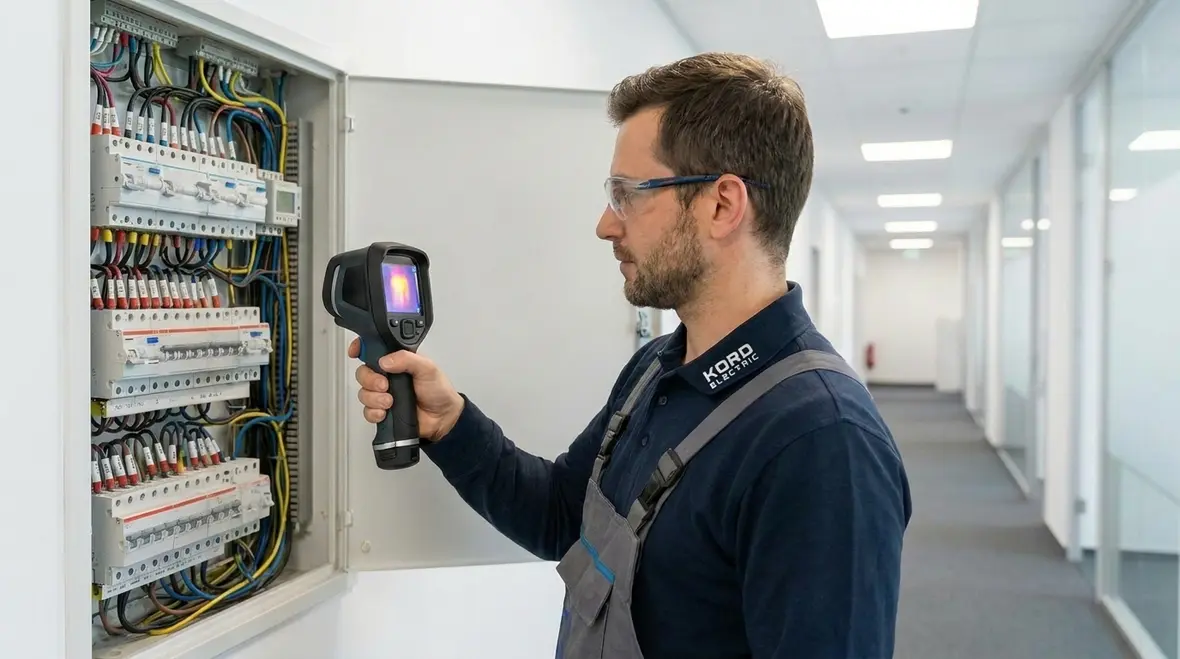
When a problem comes and goes, you cannot treat it like a simple failure. You need timing. Therefore, we start by mapping when the issue appears, where it appears, and what else was running at the same time. For example, we look at shift schedules, HVAC cycles, elevator runs, or printer bursts. Next, our expert service staff asks for details such as whether the issue follows a door access event, a maintenance activity, or a certain work area being heavily used. If your building has multiple tenants or changing loads, we also track those changes.
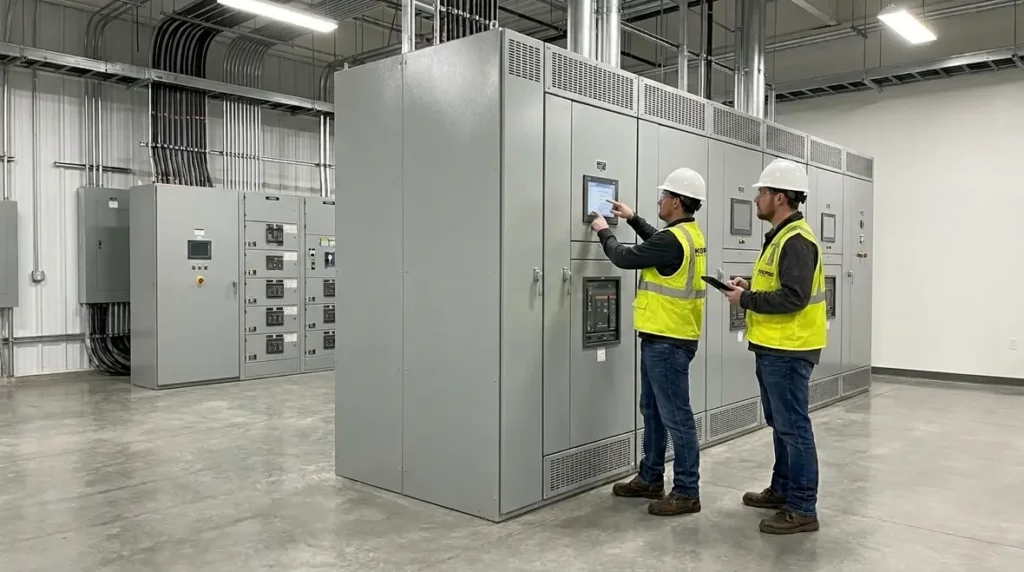
Then we move to the panel and distribution points. In commercial and industrial environments, intermittent faults often connect to loose terminations, overheating connections, failing breakers, damaged insulation, or sensor and control interactions. Even when the lights “come back,” that does not mean the circuit healed itself. It usually means the connection stopped failing long enough for someone to notice later.
To keep this calm and controlled, our technicians document every observation. In the field, we treat notes like a blueprint. Without them, you end up guessing, and guesswork is how expensive problems get promoted to long term projects.
How we isolate the fault without guessing
Once the pattern shows itself, we isolate the fault step by step. We do not jump straight to replacing parts. Instead, we apply Electrical Troubleshooting Techniques that narrow the search area safely. First, we confirm the symptoms with quick checks. For instance, we verify whether the issue affects an entire branch circuit or just a portion of it. We also determine whether the problem follows specific loads, such as server racks, microwave use, or charging stations.
Next, we inspect and test at the most common trouble spots. That usually includes device wiring, junctions, and connections at distribution points. If the problem involves lighting, we check drivers and ballasts where applicable, as well as connections at the luminaire feed. For outlet circuits, we check for damaged wiring and loose device connections inside gang boxes. In offices, tenants love to reconfigure spaces. Over time, that creates a quiet trail of wiring changes.
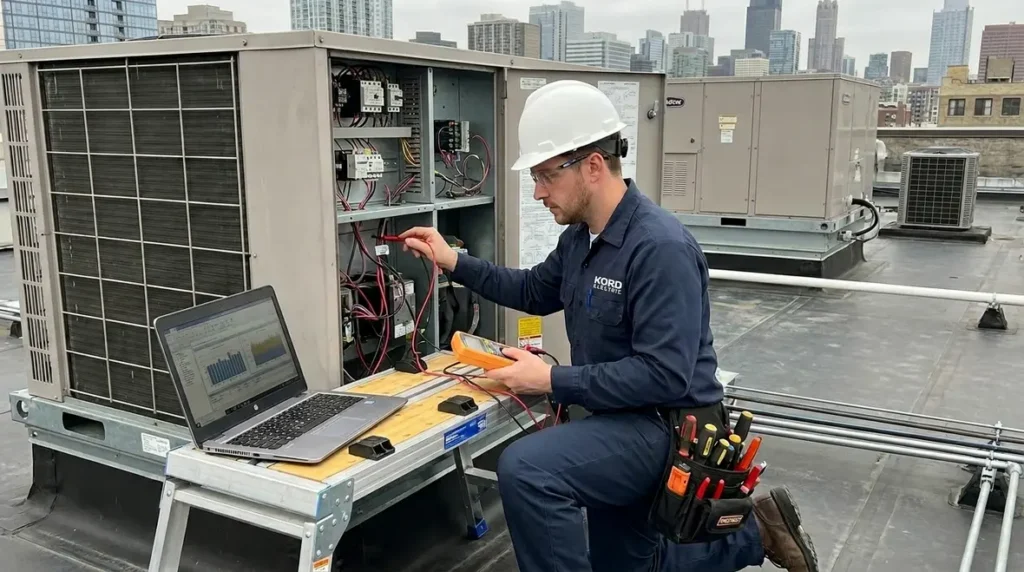
We also use load based checks, because an intermittent issue rarely obeys our schedule. While the circuit carries its normal load, we monitor voltage behavior and look for signs that the problem matches a failing connection or an unstable supply. If the building has advanced controls, we also verify whether controls cause the symptom, especially for lighting scenes, occupancy modes, and dimming functions.
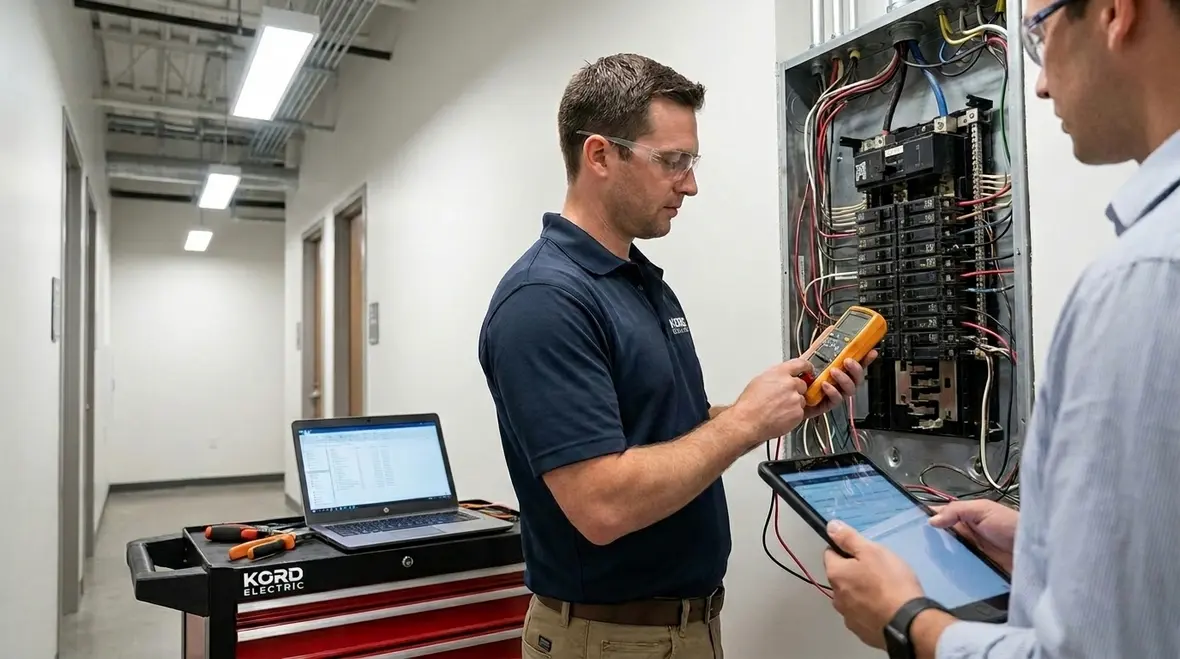
As our team moves deeper, we keep communication tight. Our technicians explain what they test, what each reading means, and what they expect to see next. That way, the facilities manager does not feel like they are watching a magician pull rabbits from a hat.
Connection failures, heat, and the “it works after I reset it” trap
Many intermittent issues come from connections that look fine until heat and vibration push them past the edge. When a loose termination warms up, it can raise resistance. Then the circuit may behave normally for a while, until the temperature changes again, or until load increases. After that, you get flicker, dimming, or nuisance trips.
This is where we focus on evidence. We inspect terminations for signs of discoloration, mechanical looseness, and improper torque. We also check for incorrect wire size and mismatched components. In offices and major property buildings, these problems can appear after renovations, device swaps, or cable routing updates.
And yes, the “just reset the breaker” habit is popular. It is also one of the most expensive habits in maintenance. Resets can temporarily restore operation, but they often hide the root cause. If the underlying connection still overheats, the circuit eventually fails again, sometimes at a worse time.
Our technicians use careful checks to confirm whether the fault relates to thermal stress, conductor damage, or a breaker that does not perform as designed. Then we recommend corrective action that prevents repeat failures. We do not just chase the symptom. We fix the reason the symptom shows up.
Lighting compliance matters during troubleshooting
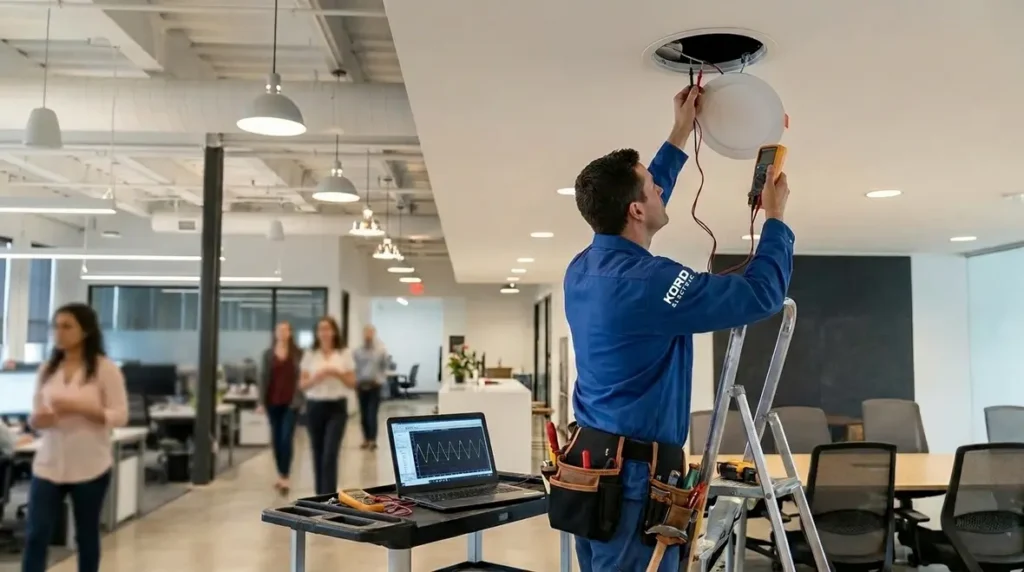
When intermittent issues show up in lighting, we treat the system like a network, not a single fixture. Proper design, installation quality, and compliance all influence how systems behave over time. For commercial lighting, we also pay attention to code requirements that govern safe installation and performance. If the system does not meet lighting installation standards, troubleshooting becomes harder because the fault may hide in the installation details.
Our team uses practical guidance from our Lighting Installation Code Compliance Guide to support what we see on site. For example, we check the basics that often cause trouble later: correct wiring methods, proper device ratings, secure connections, correct conductor routing, and installation practices that reduce heat buildup. We also verify that the system configuration supports the intended control method, since dimming and occupancy features can react differently when wiring or drivers drift out of spec.
Meanwhile, our expert service staff explains how these details connect to the symptom you see. If a driver or control module fails intermittently, the result may look like a wiring issue. However, the fix may sit at the fixture or control interface. That is why we confirm the electrical behavior before we recommend upgrades.
One more note, said with a smile: lighting problems rarely ask permission before they inconvenience people. Still, we handle them with order, not panic.
Document everything, then plan repairs that last
After we isolate the likely cause, we plan corrective action with a long term view. Intermittent problems often return if repairs only address the “visible” part. Therefore, we document readings, test results, and the location of each suspect component. Then we outline what we will replace, what we will tighten or re-terminate, and what we will verify after the repair.
In major property buildings and office campuses, we also coordinate repair timing. We schedule work to reduce downtime and protect sensitive areas like data rooms and client spaces. Our technicians review safety steps and isolate circuits when needed. Next, we test again under realistic operating loads, because a “pass” on a light test does not always hold under full use.
We also provide a clear explanation of the cause and the prevention plan. Our clients get a report they can share with their leadership. They also get guidance on monitoring intervals and how to spot early signs, such as repeated nuisance trips, warmth at panels, or recurring flicker in a specific zone.
In short, we replace the chaos with a plan. And if the office staff ever says, “It must be the building,” we gently remind them that buildings usually follow physics, not excuses.
Quick troubleshooting checklist for office facilities
Symptom details
- Time of day and day of week the issue appears
- Location in the building, including floor and zone
- Which loads are active, such as HVAC, elevators, printers, or kitchen equipment
- Whether lights flicker, outlets cut out, or breakers trip
Operational context
- Recent renovations, tenant changes, or cable routing updates
- Known water intrusion events or roof leaks
- Any ongoing work near panels or distribution boards
What to note for us
- Whether the issue clears after a reset
- Whether the issue targets a single circuit or multiple areas
- Any recurring pattern around occupancy controls or lighting scenes
Dual column: How we respond and what you get
What Kord Electric does
We inspect, test, and isolate branch circuits and device loads, using safe procedures and clear documentation.
We verify lighting behavior, control interactions, and installation details that affect long term performance.
We coordinate timing for commercial and industrial sites to reduce disruption to operations.
We retest after repair under normal operating load to confirm the fix holds.
What your team receives
A detailed report with test results, probable root cause, and the repair steps.
Practical explanation of what caused intermittent flicker and how we fixed it.
Repair plans that consider uptime, safety, and access constraints.
Confirmation checks that reduce the odds of repeat failures.
FAQ: Intermittent electrical issues in offices
Call Kord Electric for confident fixes and lasting results
When intermittent electrical issues hit an office, the goal is not luck. The goal is a calm, systematic repair that holds under real operating load. Kord Electric sends expert service staff who explain what they test, what they find, and why the fix works. If flicker, nuisance trips, or outlet failures are disrupting your team, contact us. We will review the pattern, apply advanced Electrical Troubleshooting Techniques, and restore reliable power with a plan your facilities team can trust.
If your facility is facing repeated voltage swings, breaker trips, or unexplained equipment behavior, you can also explore our dedicated service options like Voltage Fluctuations in Commercial & Industrial Facilities and long term programs such as Electrical Preventive Maintenance. Pairing targeted troubleshooting with structured maintenance gives your office a stronger defense against the next “it only happens sometimes” event.
For offices planning lighting upgrades or code driven improvements as part of a broader reliability strategy, our Lighting Installation Services are built for commercial and industrial environments that cannot afford guesswork. From intermittent power problems to full system optimization, our team connects day to day Electrical Troubleshooting Techniques with long term safety, compliance, and performance.