
Advanced Facility Energy Management Strategies
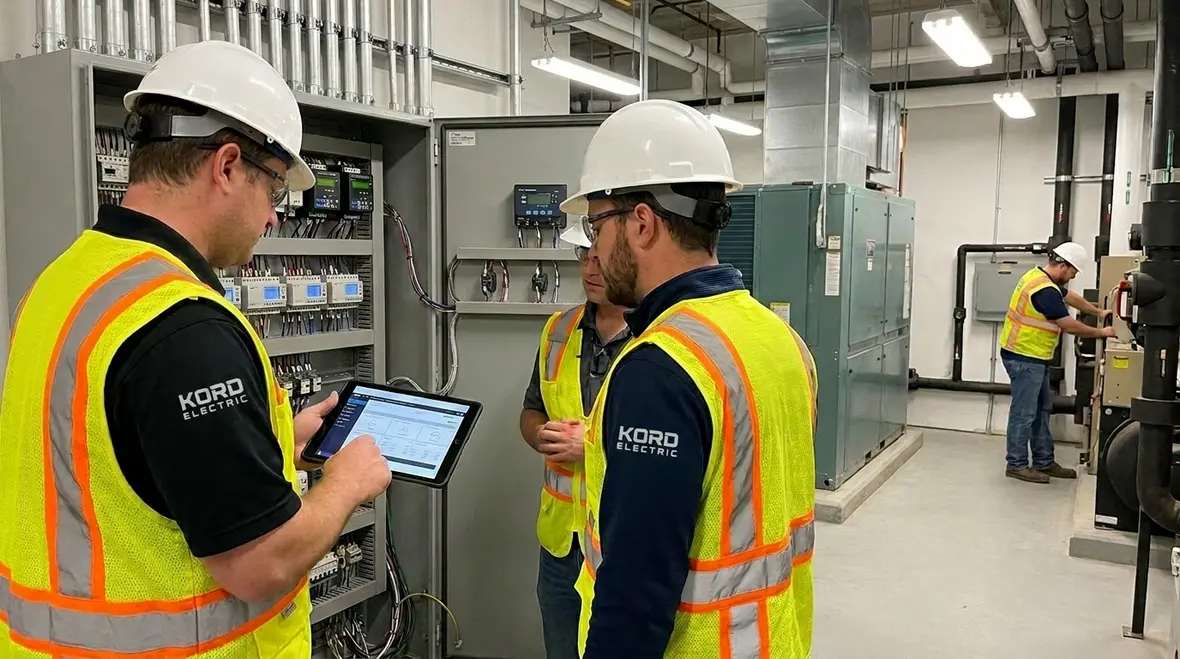
At Kord Electric, we help commercial and industrial facilities run with steadier power, smarter controls, and fewer surprises. So, when we talk about integrating advanced facility energy management strategies, we mean practical steps that connect electrical systems, monitoring, and operational decisions into one coordinated plan. Our technicians and expert service staff walk through the process in plain terms, because nobody should need a decoder ring to understand their own site. And yes, sometimes we even explain things with a little humor, because power planning can be about as exciting as watching paint dry… unless you prevent the drying problems.
Below, we outline how our team guides facilities through energy management that actually holds up in the real world, not just in a slide deck.
How advanced facility energy management strategies fit commercial sites
Most commercial and industrial buildings do not fail because they lack equipment. They fail because the equipment runs without a unified view. Therefore, our approach starts by linking load behavior, schedules, and power quality into one operating picture. We look at how motors, HVAC systems, process loads, lighting, and standby equipment behave across the day, week, and seasons.
Next, our expert service staff maps that behavior to your operational goals. For example, some sites need tight temperature control during production windows. Others need dependable power for data centers, manufacturing lines, or large life safety loads. Then we design facility energy management strategies that respect those priorities instead of fighting them.
Finally, we implement the controls and monitoring that let your staff act on the data. Think of it like giving a dispatcher more than a speedometer. You get the whole traffic picture, so decisions stop being guesswork.
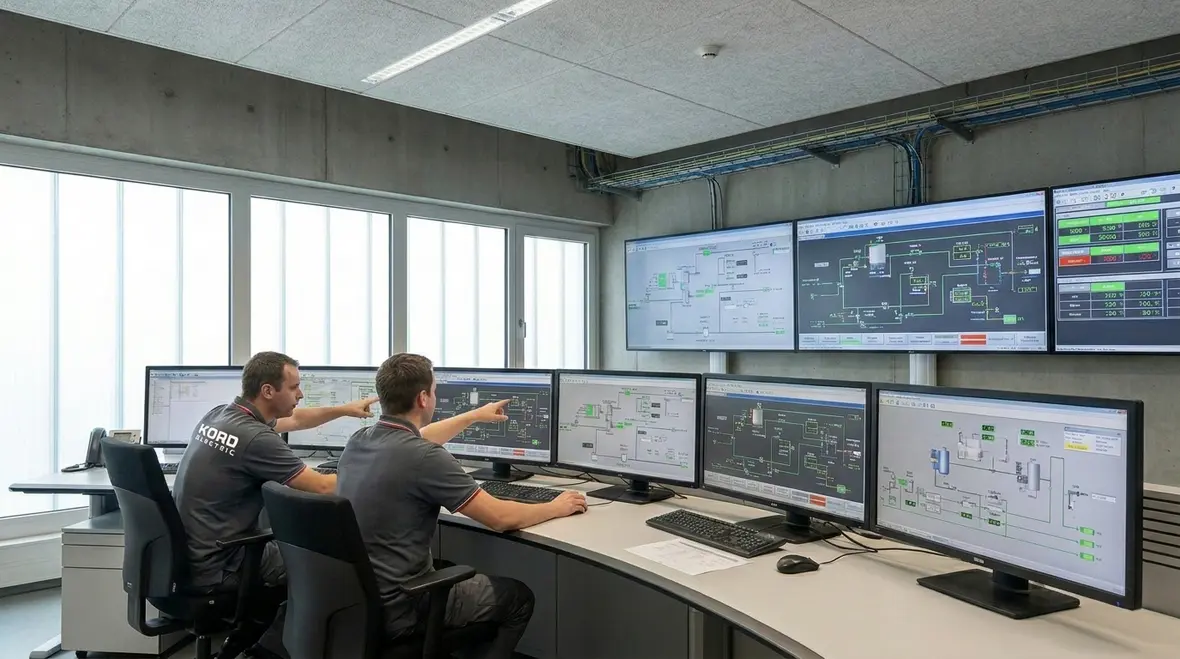
When you connect these elements into a coordinated electrical plan, your building stops behaving like a collection of independent gadgets and starts running like a focused system. That shift is where serious savings, better uptime, and calmer maintenance calls begin.
Assess loads, baselines, and constraints before changing anything
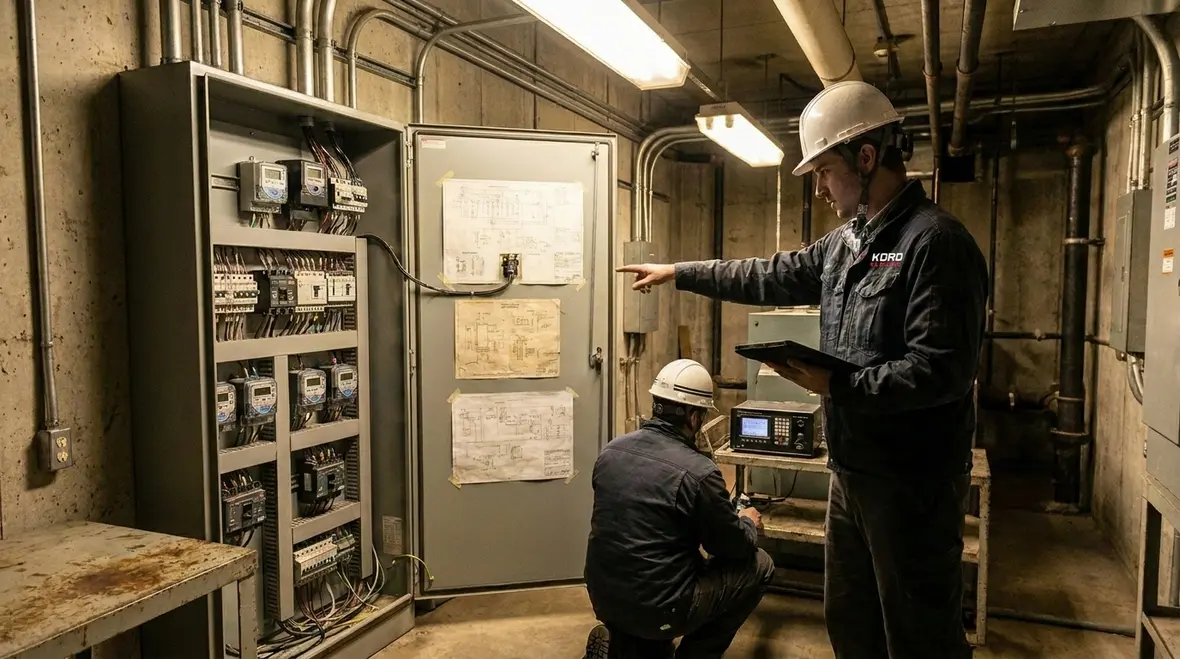
Before a facility updates controls or targets savings, we establish a baseline. That means we capture how energy moves through the site, then we confirm what drives demand and consumption. We review electrical one line diagrams, panel schedules, and operating sequences, then we validate with field measurements.
At this step, our technicians pay attention to constraints that often get ignored. For instance, some processes cannot shift. Some loads must start in a specific order. Also, certain electrical systems have limits on starting current, voltage dip tolerance, or transfer switching timing. If we skip these details, changes may increase risk even when they reduce costs.
So, we build a realistic model of your facility’s load profile. From there, we identify the highest impact opportunities, such as peak demand control, power factor improvement, scheduling optimization, or reducing unnecessary standby losses. Because once you know the “why,” you can design the “how” correctly.
This kind of disciplined baseline work pairs well with deeper troubleshooting and maintenance, like the structured approach outlined in Kord Electric’s electrical system troubleshooting for factories checklist, where clear observations and data guide every correction.
Use monitoring and analytics to catch waste early
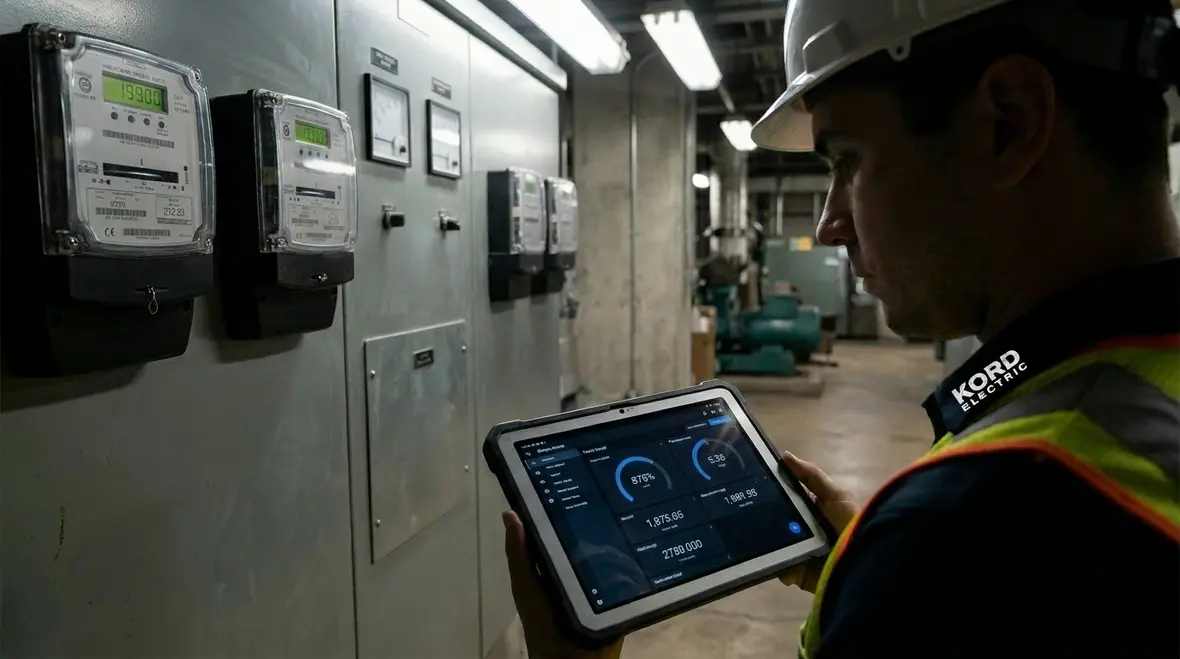
After baseline work, we connect monitoring where it matters most. Many facilities already have meters, but the data often stops at basic reporting. Instead, we help you use measurements to detect abnormal patterns. For example, our approach can highlight recurring spikes, failed setpoint control, inefficient cycling, or equipment running outside approved schedules.
Then we translate analytics into actions. We do not just deliver charts and hope someone finds time to interpret them. Our expert service staff helps site teams understand what the signals mean, then recommends adjustments that match your operations. As a result, issues get corrected before they grow into costly failures.
Additionally, we focus on power quality indicators that affect equipment health. Voltage stability, harmonics, and load imbalance can quietly shorten component life. When facilities manage these factors as part of facility energy management strategies, they protect uptime while improving efficiency.
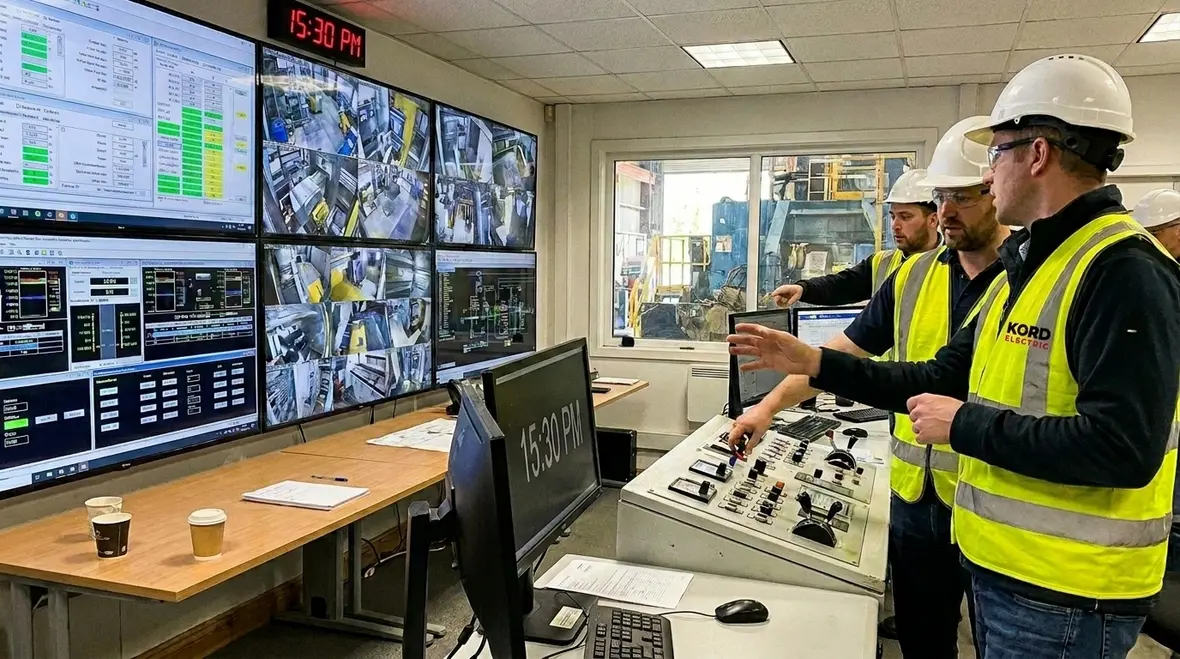
In many commercial buildings, this kind of analytics driven oversight becomes the backbone of a smarter electrical plan, especially when combined with upgrades like those described in Kord Electric’s rewiring cost guide for commercial electrical systems, where modern distribution supports better data and control.
Implement demand response and load shifting with real operating rules
Demand charges can hit commercial and industrial buildings like an unexpected late fee. You do not plan on paying it, yet it arrives on schedule. That is why we help facilities control peak demand using methods that align with how the building actually operates.
Typically, we implement demand response logic and load shifting strategies that follow your constraints. For example, we may coordinate HVAC staging, optimize chilled water or steam schedules, or manage noncritical process loads during peak utility windows. If a facility runs on set production cycles, we design control logic around those cycles rather than forcing arbitrary schedules.
Also, we integrate safety and critical loads. Life safety, critical IT, and essential process equipment remain protected. Then the control strategy targets the loads that can flex without damaging output quality. In other words, we keep your power system calm, even when the utility decides to get dramatic.
Demand response also pairs naturally with electrification moves like fleet or EV charging installations. When facilities fold load shifting into the planning for programs such as California’s commercial EV charger incentives, they can coordinate charging with building demand and keep bills predictable.
Automate controls for HVAC, lighting, and process equipment
Automation works when it responds to site conditions, not when it follows a generic template. Therefore, our technicians help facilities implement control strategies tied to actual performance. We can coordinate HVAC sequences, adjust start times, and refine control loops using sensor feedback and scheduling logic.
Lighting is another major opportunity. We support upgrades and control integration that reduce wasted run time and avoid overcorrecting brightness. When occupancy sensors and daylight controls work as intended, they cut consumption without making staff feel like they work in a submarine.
For process equipment, automation often means smarter sequencing. We coordinate starting order, ramp rates, and interlocks so electrical loads rise smoothly instead of slamming into peak demand. Consequently, you reduce stress on switchgear and electrical distribution, while improving efficiency.
As we implement these improvements, we keep the facility energy management strategies consistent across systems. That consistency matters because HVAC controls, power distribution behavior, and scheduling often interact. When they do not, a facility can “save” energy in one area and lose it in another. Nobody wins that game.
The same careful coordination shows up in specialized environments like commercial kitchens, where Kord Electric’s approach to commercial kitchen electrical upgrades and wiring ties dedicated circuits, controls, and energy usage into one coherent plan.
Manage power factor, harmonics, and distribution efficiency
Efficiency is not only about how much energy you use. It is also about how cleanly and reliably you use it. Many industrial facilities experience reactive power and harmonic distortion that raise losses and create stress on transformers and cables.
Kord Electric supports power factor management and harmonic mitigation by analyzing existing conditions, then selecting the right approach for your load types. For example, motor drives, rectifiers, and other nonlinear equipment can introduce harmonics. Then those harmonics can affect temperature rise and long term wear.
In addition, we evaluate distribution efficiency. Losses occur in conductors and transformers, and they increase when currents and operating patterns remain higher than necessary. So, we pair operational changes with electrical improvements, which leads to better performance across the whole system.
Because the goal is not only to lower utility bills. The goal is to keep equipment healthy while the building runs reliably, day after day.
Train your team with clear explanations and documented playbooks
Even the best automation fails if people cannot understand what it does. Therefore, our expert service staff trains facility operators, maintenance teams, and building engineers on how to interpret the system and how to respond to alerts.
We explain changes in terms that match real work: what loads move, what signals to watch, and what actions to take when conditions shift. Then we provide documentation that supports day to day operations, not a binder that sits on a shelf like a forgotten remote.
We also encourage a simple review rhythm. Facilities should check performance periodically, validate savings, and confirm that control logic remains aligned with operations. This step ensures that facility energy management strategies stay effective as schedules, production rates, and equipment behavior change.
And if anyone asks, “Why did the system do that?” we make sure your team can answer with confidence, not with a shrug.
For facilities in and around Los Angeles, that training and support often connect directly to Los Angeles County electrical services, where regional experience and disciplined electrical planning keep local operations steady.
FAQ
Conclusion: let Kord Electric build a smarter energy plan for your facility
If your commercial or industrial site wants lower costs, steadier power, and fewer electrical surprises, we can help. Kord Electric brings our technicians and expert service staff to the work, and we design facility energy management strategies that match how you operate. Contact us to schedule a site review, and we will outline high impact opportunities with a clear path to implementation. Let us turn your energy data into confident decisions, so your building runs like it means it.
From modernizing distribution and controls to coordinating regional support, our team treats facility energy planning as an ongoing partnership. Whether you are tightening demand charges, preparing for new equipment, or simply tired of unexplained electrical “mysteries,” we help your system move from reactive firefighting to steady, documented control.


