Downtime Prevention for Businesses by Kord Electric
Proactive downtime prevention for businesses: how Kord Electric keeps power steady
Power loss can shut down production, freeze operations, and create costly delays for a commercial or industrial facility. That is why downtime prevention for businesses must be planned before an outage shows up like an uninvited guest. At Kord Electric, we focus on proactive strategies that reduce electrical failures, speed up corrections, and keep your operations running when the rest of the world is still dealing with “urgent” phone calls.
To put it plainly, others wait for the lights to go out. We plan so they rarely do. And yes, we still hear the classic joke from facility managers: “If it fails, we’ll just call you.” Well, that is exactly what we help you avoid. In this article, we explain the steps our expert service staff uses, what our technicians check, and how businesses can stay ahead of electrical trouble.
Spot the risks early with power quality and load planning
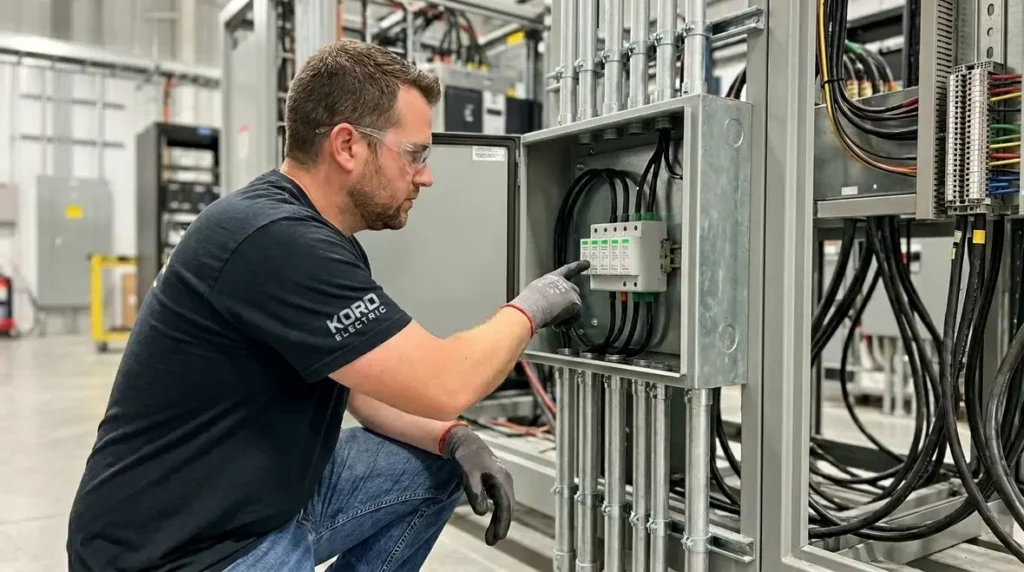
First, we look at how your electrical system behaves under real conditions. Equipment may “work” during normal hours, yet still suffer from hidden stress like voltage swings, harmonics, or unstable power quality. Over time, those issues wear down motors, drives, lighting systems, and sensitive controls, until a failure finally lands on the calendar like a surprise meeting that nobody scheduled.
Then we pair that with load planning. When a facility adds equipment, expands processes, or changes shifts, the electrical demand shifts too. As a result, protective devices may trip earlier, panels may run hotter, and spare capacity shrinks without anyone noticing. Our technicians review available capacity, evaluate expected growth, and document load profiles so others do not guess.
Because proactive planning saves more than it costs, we often recommend a structured approach that includes power quality monitoring, thermal imaging during typical operations, and an electrical single line review. In other words, we treat your system like a living asset, not a mysterious box that only gets attention after something breaks.
Why preventive maintenance works when it is built like a system
Preventive maintenance sounds simple, but it fails when it is generic. We build it as a plan tied to your equipment, your production cycles, and your risk level. For example, a facility with high duty cycles and continuous operations needs tighter intervals than one that can tolerate longer downtime windows.
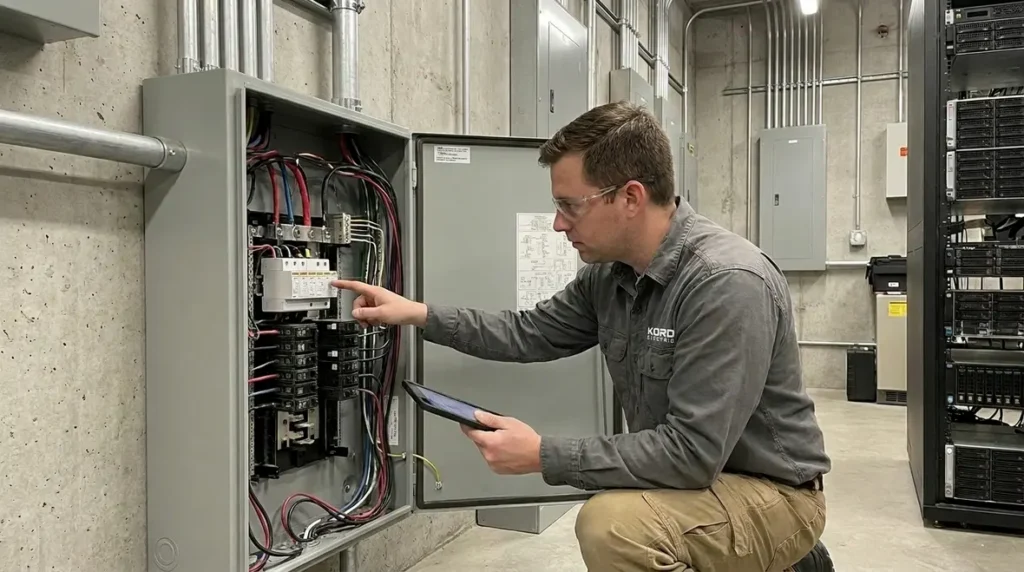
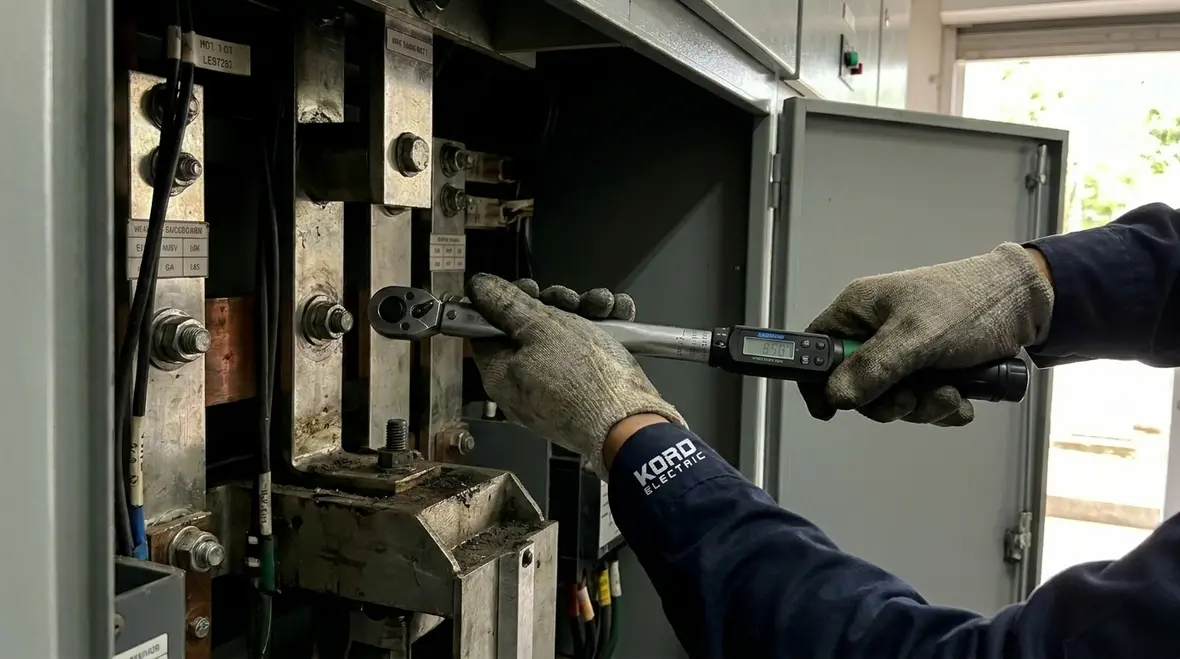
Next, we align maintenance tasks with the failure modes that actually happen in the field. Our expert service staff checks connections for looseness and corrosion, inspects switchgear components, evaluates breaker health, and tests protective functions where applicable. We do not just “look around.” We measure, log, and verify.
And because moisture and vibration can ruin electrical components faster than a bad sitcom plotline, we pay attention to environmental conditions. We also review cleaning practices and enclosure seals, since dust and humidity can turn even a good design into a problem.
As a result, downtime prevention for businesses becomes less about reacting and more about controlling. Your team gains a clear schedule, predictable service windows, and a documented baseline that makes future troubleshooting faster. For a deeper dive into long-term strategies, you can explore how structured programs are built in Kord Electric’s article on commercial and industrial electrical maintenance plans.
How infrared and thermal checks stop failures before they spread
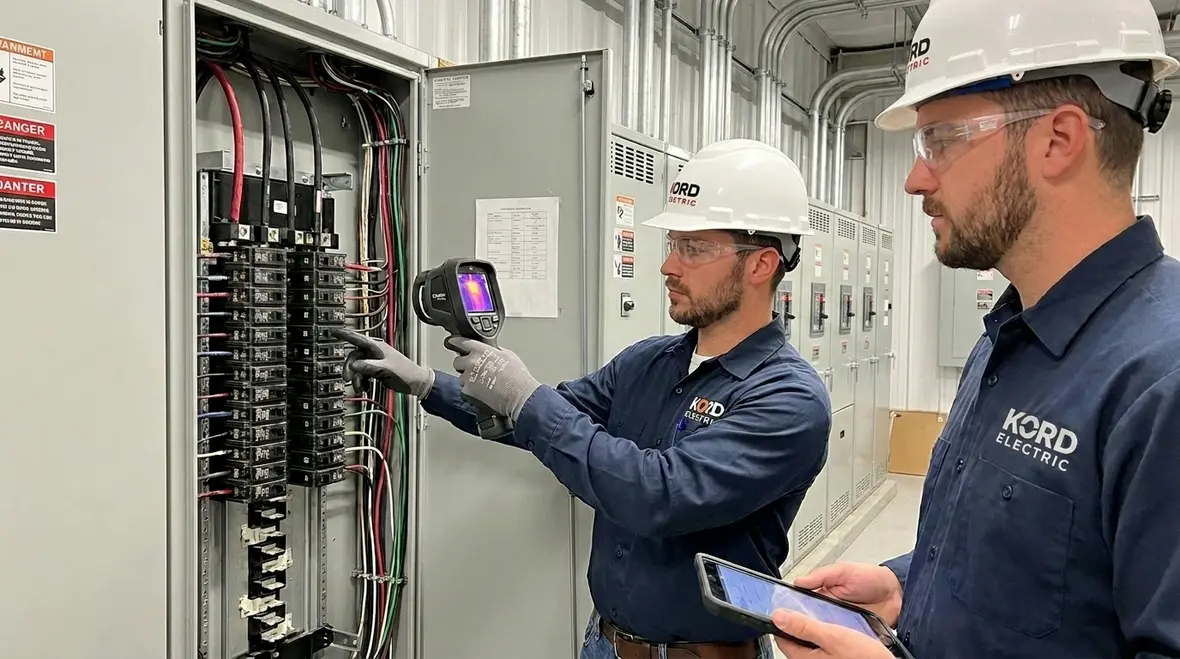
Infrared and thermal inspections give facility teams a real advantage because they reveal heat patterns that eyes cannot see. When connections loosen, contact resistance rises, and heat climbs. By the time the system shows visible damage, it may already be too late to avoid a forced shutdown.
Our technicians use thermal imaging to identify abnormal temperatures on bus bars, terminations, and panels. Additionally, we compare readings to baseline values and manufacturer guidance, then we prioritize corrections based on severity and likely impact. This prevents a “wait and see” mindset that always feels reasonable until it costs real money.
From there, we pair thermal results with targeted testing. For example, if we spot hotspots, we can follow up with tightening verification, torque checks where appropriate, and verification of protective device performance. Then we document everything so your operations team can track improvements over time.
Because we want your facility to stay stable, not just “pass inspection,” we focus on repeatable outcomes. That is how others reduce maintenance activity without actually reducing risk. We do the opposite: we reduce risk, then we coordinate work in a way that keeps your plant productive.
Coordination with operations: the maintenance rhythm that reduces surprises
Even a strong maintenance plan can fail if it ignores how your facility runs. Therefore, we coordinate with operations, production leadership, and facilities staff so work fits real schedules. We ask about shift patterns, peak demand windows, and critical processes that cannot pause.
Then we propose execution strategies that protect uptime. That might include planned load transfers, carefully timed testing, or staging of materials so repairs happen in the shortest safe window. We also support the permit and safety steps that keep field work clean and compliant for major property buildings, commercial operations, and industrial environments.
Next, we establish communication routines. Our expert service staff keeps your team updated on what we found, what it means, and what we recommend next. We do not hide behind jargon, and we definitely do not talk like a manual. We explain the system in plain terms your leadership can act on.
So when issues arise, your team has options. Instead of scrambling, they follow a plan. And yes, it is still possible to be calm while doing electrical work. It turns out that preparation is the best sedative.
Emergency readiness for electrical systems: faster recovery, less damage
Despite strong prevention, electrical emergencies still happen. The difference is whether you can respond quickly and safely, or whether you lose time hunting for answers while the system deteriorates.
That is why we help our commercial and industrial clients build emergency readiness into their electrical program. We review critical components, identify likely failure points, and confirm that spare parts and access procedures exist before an event. We also support fault response planning so others do not improvise under pressure. When you want a deeper look at how structured responses work in the field, Kord Electric’s breakdown of emergency power failures in commercial buildings offers additional context.
When an outage occurs, we focus on accurate diagnosis first, then controlled restoration. In many cases, we can isolate the fault, limit the affected area, and restore partial power faster. That preserves operations and reduces secondary damage to downstream equipment.
And because downtime prevention for businesses includes the “after” phase too, we conduct post event reviews. We document root causes, validate what worked, and update maintenance priorities so the same problem does not return dressed in a new disguise.
Our team approach: how we explain, document, and improve
Kord Electric operates with a simple belief: facility teams should not have to guess what is happening in their electrical systems. Our technicians and expert service staff explain findings clearly and recommend next steps that match your risk tolerance and operating reality.
To keep things understandable, we provide written summaries of inspections, measurements, and actions taken. We also outline priorities by impact, such as equipment that could cause production shutdown, safety risk, or expensive replacement. As a result, leadership can make decisions quickly and with confidence.
Finally, we support continuous improvement. After every meaningful service event, we adjust the plan. We refine schedules, update documentation, and verify that corrective work actually solves the underlying issue. That is how we help facilities move from “maintenance mode” to “control mode.”
FAQ
Two-column overview: proactive steps that lower risk
What we do |
Why it protects uptime |
Power quality review and load planning |
Reduces stress on equipment and helps prevent overload related issues that can trigger unexpected outages. |
Preventive maintenance built for your system |
Targets real-world failure modes before they turn into shutdown events, aligning maintenance windows with your operations. |
Infrared and thermal inspections |
Finds hotspots early so repairs happen before faults spread across panels, feeders, or critical equipment. |
Emergency readiness planning and response |
Speeds diagnosis, supports safe restoration, and limits the operational impact during unplanned outages. |
Ready to reduce unexpected outages? Kord Electric helps commercial and industrial facilities build downtime prevention for businesses with real inspections, clear documentation, and coordinated service planning. If you want a smarter electrical maintenance rhythm, we can review your system, identify risks, and map next steps around your operation. For organizations across the region, our Los Angeles County electrical services bring together maintenance, troubleshooting, upgrades, and emergency response under one experienced team. Contact Kord Electric today to schedule an assessment and get your facility closer to dependable power. Because the goal is simple: less downtime, fewer surprises, and a smoother run.
To support that goal, many facility leaders combine structured preventive maintenance with dedicated services like electrical preventive maintenance and emergency electrical services. This blend of planning and rapid response gives your organization both a long-term roadmap and a reliable partner when the unexpected happens.