Apartment EV Charging Requirements California
In California, apartment EV charging has moved from “nice idea” to “please, we need a plan.” Kord Electric helps commercial and industrial facilities and major property buildings meet apartment ev charging requirements california with clear design, careful electrical work, and smart scaling. And yes, the paperwork can feel like a never ending season of a reality show where nobody reads the fine print. Still, our job is to make it calm, code based, and ready for real vehicles, not just marketing photos.
We keep the focus on what owners, property managers, and engineering teams actually face: power capacity, tenant fairness, safe installation, and long term upgrades. Our expert service staff explains each step in plain language, so others can make decisions without guessing. Then our technicians handle the details with the precision that keeps systems working for years.
What California expects from EV charging at major apartment properties
California places heavy emphasis on access, safety, and practical deployment. For major property buildings, apartment ev charging requirements california usually connect to how many chargers get installed, how the site gets wired, and how the infrastructure stays ready for growth. Authorities and utilities also look at whether the design can scale without tearing up the property every year like it is groundhog day.
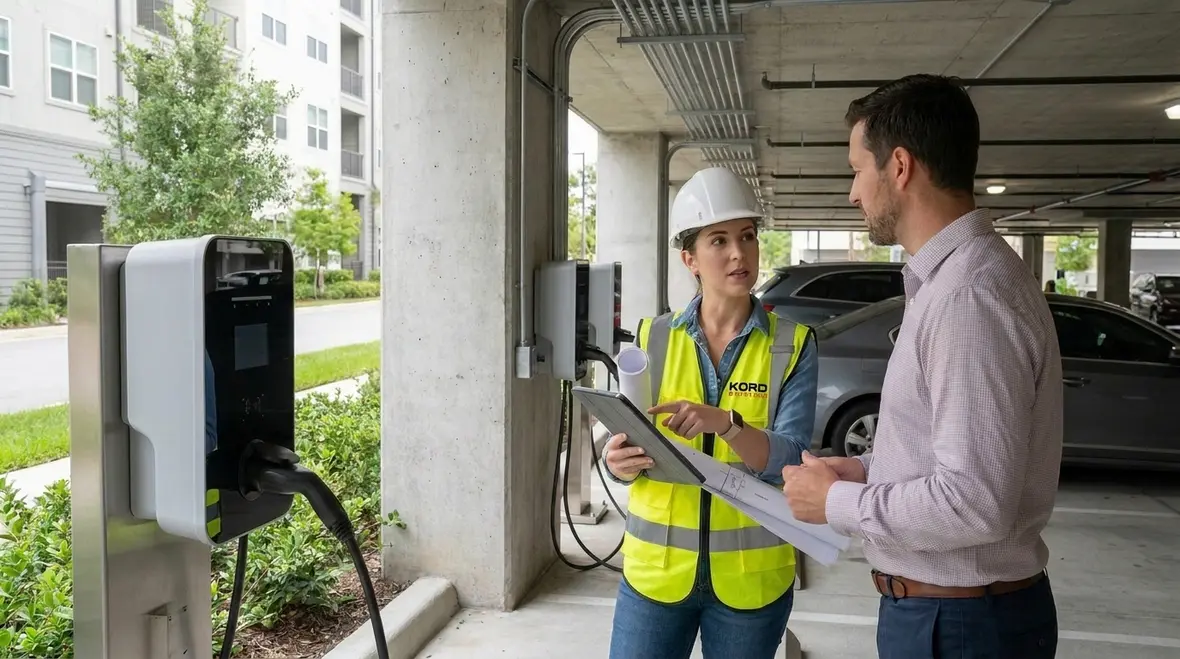
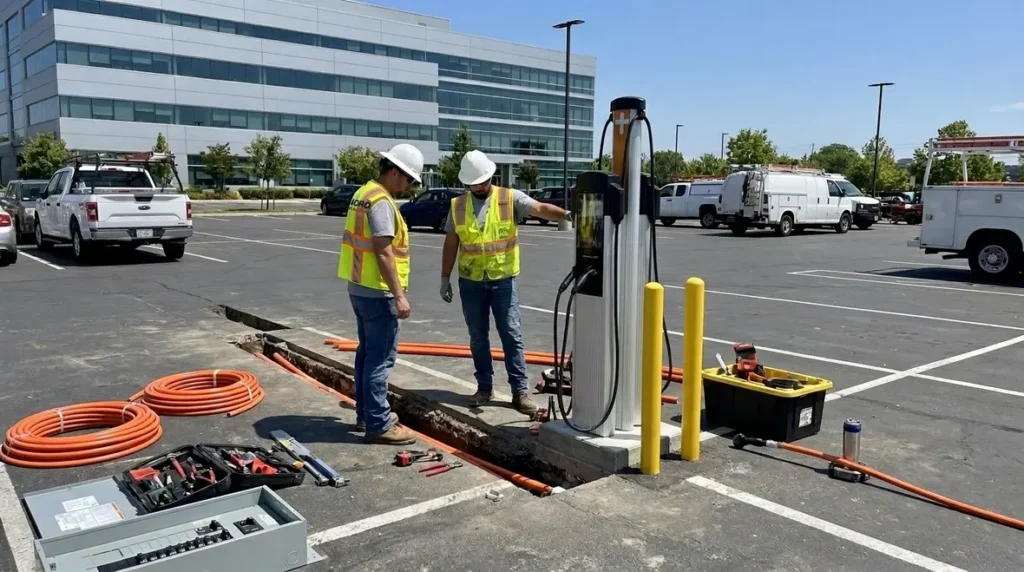
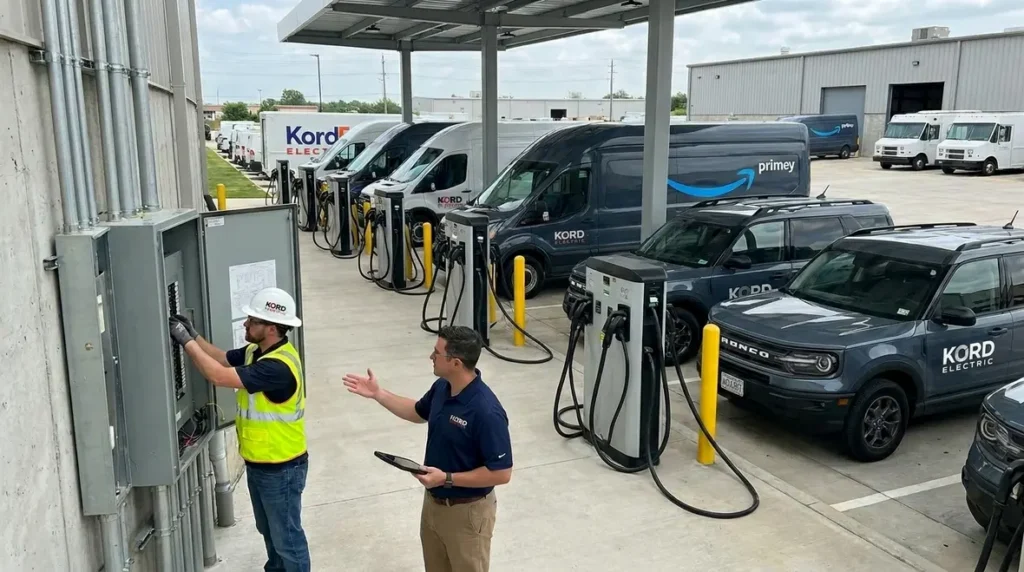
In our experience, the most common failure is not the charger itself. It is the electrical foundation around it. If the service size, load calculations, and conduit planning are weak, the project slows down later. Therefore, our team starts with a site review that checks utility capacity, panel layouts, grounding, and the path chargers will take from power source to parking space.
Our technicians also confirm basic safety practices such as correct circuit protection, weather rated enclosures, and labeling. Then we align the install with a plan for future expansion, because adding chargers later should feel like upgrading a system, not replacing the entire building’s electrical plan.
Site planning that prevents power problems later
Good planning starts before anyone buys hardware. To prevent power issues, Kord Electric maps the electrical single line, reviews available amperage, and forecasts charging demand based on parking layout and expected vehicle use. We then test the idea of “futureproofing” with real numbers.
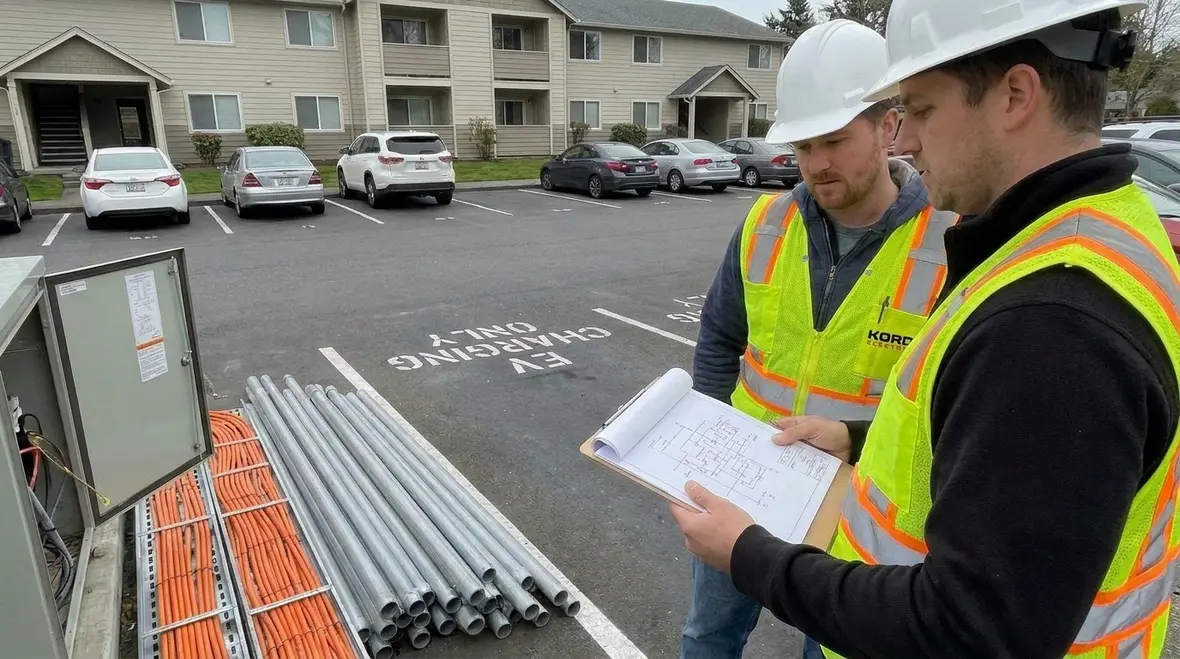
Many major properties add chargers in phases. That means the initial design should include spare capacity, correctly sized feeders, and conduit runs that allow later pull sections without major demolition. In the end, the building gets a smoother rollout and fewer change orders.
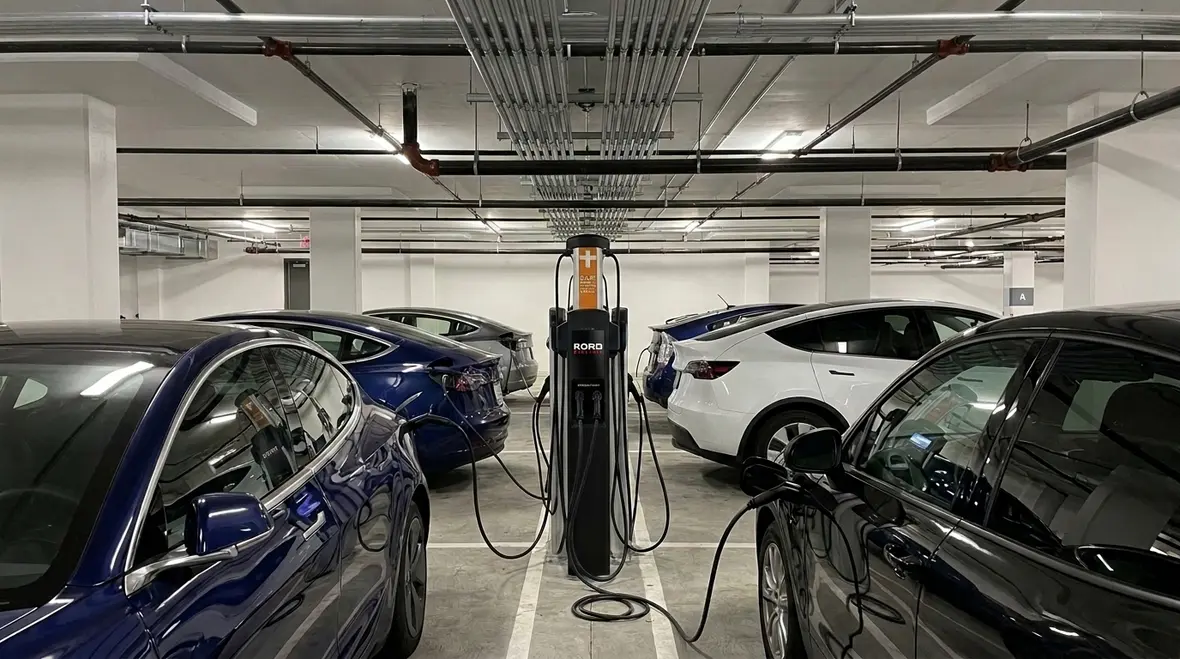
We also plan the physical layout. Parking stalls need safe cable routing, clear access, and room for maintenance. Moreover, the install has to match how the property operates. Some sites have assigned stalls, some use shared lots, and others handle guest parking. We help owners pick a charging approach that fits their policy, not just their budget.
Our team explains the plan step by step. While others may talk in vague terms, our expert service staff walks clients through power sizing, cable routes, and the logic behind each decision. When people understand the why, they approve faster and complain less. Our technicians appreciate that. Nobody wants to “discover” a conduit conflict after the trenching truck leaves.
Commercial grade electrical design for multi unit systems
Apartment EV infrastructure often needs commercial grade thinking, even when the building itself feels residential. Therefore, Kord Electric designs for consistent uptime, clean installation, and predictable load behavior across multiple units and charging spots.

First, we address load management. That can include dynamic sharing, scheduling options, and rules that prevent the site from exceeding service limits. Next, we ensure the wiring architecture supports expansion. For example, we might provide a larger electrical backbone at the start and distribute capacity later as demand grows.
Then we consider metering and billing strategy. Some properties need tenant specific billing, others prefer shared management through a platform. In either case, the wiring and data setup needs to support the chosen method. We avoid retrofits that force another electrician crew to unwind yesterday’s work.
Our technicians also keep documentation tight. Building owners often deal with audits, utility coordination, and future contractor handoffs. Clear labeling, as built drawings, and proper circuit identification reduce confusion and keep the charging network maintainable. For deeper detail on documenting large systems, many facilities also review Kord Electric’s guidance in our electrical system documentation best practices, which pairs well with apartment scale EV projects.
Permitting, utility coordination, and schedule realities
Even the best design fails if the permits and utility coordination lag behind. For major property buildings, the best schedule comes from aligning electrical engineering, trenching needs, and permitting milestones early.
Kord Electric helps coordinate the process so the project stays on track. We review requirements with the local authority, handle utility communication points, and plan for inspection timelines. Additionally, we account for how long lead times can be for switchgear, panels, and certain charging hardware.
Here is the calming truth: most delays come from missing inputs, not from the work itself. Therefore, we ask early for details like site access, parking layout constraints, and any planned construction on the property. We also confirm whether the building needs phased downtime or if the installation must avoid occupied areas.
And yes, sometimes a utility request feels like waiting for a sequel that never ends. Still, we track it. Our team follows up, documents what gets submitted, and keeps the property informed. That way owners can plan tenant communications with confidence, instead of guessing like it is a weather forecast.
Load management and smart charging options that keep peace with the grid
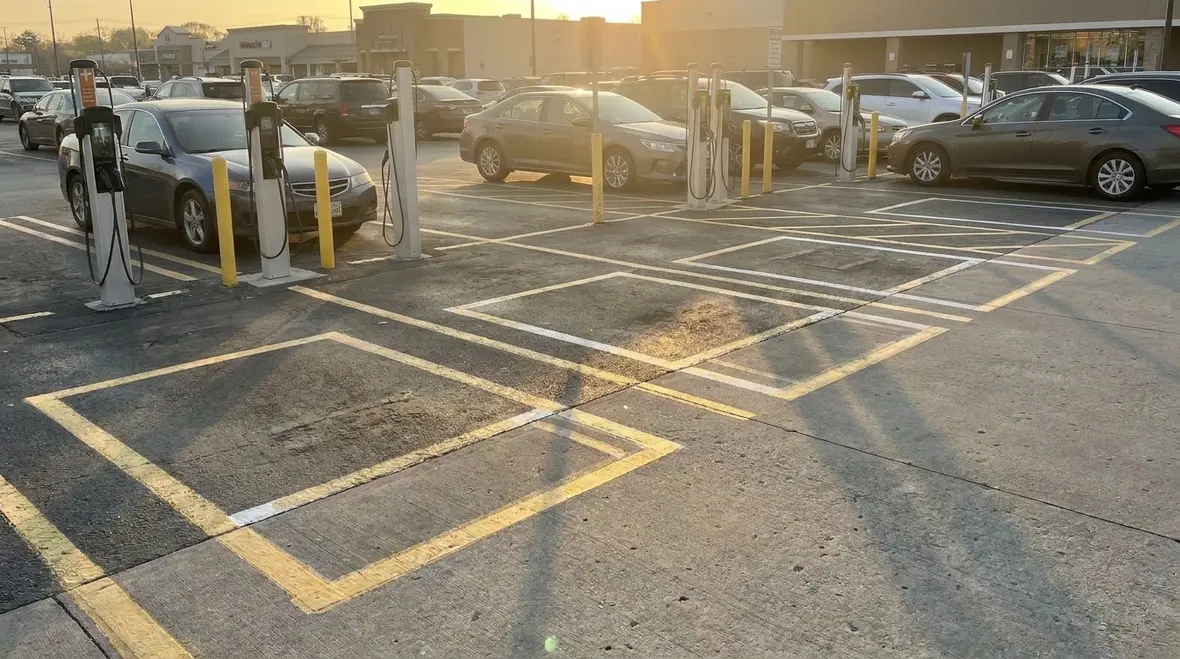
Smart charging helps protect the electrical system while supporting real vehicle charging habits. Kord Electric evaluates load profiles for the site, then recommends controls that manage demand without turning charging into a frustrating waiting game.
For many properties, the goal is simple. The building should provide charging access while the electrical infrastructure stays within safe limits. We typically address this through load balancing, managed charging schedules, and power sharing among multiple chargers.
Additionally, smart systems can support tenant policies. For example, the property can allow certain charging behaviors for residents and adjust settings for guests. We help owners choose configurations that align with fairness and operational needs. Then we verify the hardware, firmware, and network setup so performance stays stable.
Our expert service staff also explains how these controls work. Instead of vague “smart” promises, we translate the settings into what a property manager will actually see and handle. That clarity makes adoption easier and reduces support calls. In a way, we keep the technology from turning into a pop quiz nobody studied for.
Installation safety, cable routing, and durability in California weather
Charging equipment must handle sun, heat, occasional storms, and constant use. Therefore, Kord Electric installs with durability and safety in mind, especially at outdoor parking locations common to major property buildings.
We plan cable routing so conduits protect wiring from physical damage. We also handle proper termination, weather rated connections, and correct grounding. These details matter because a charging network serves tenants year round. If installations cut corners, the problems show up as downtime, replacement needs, and avoidable expense.
We also consider accessibility. Cable runs, bollards, and charger placement should support safe parking and easy service access. Our technicians keep the work clean and organized, so it looks professional and it functions correctly from day one.
At the same time, we plan maintenance access points. Chargers need occasional service, and enclosures may require inspection. When access routes and labeling are correct, the property team can keep operations steady without waiting on a long mobilization cycle.
Scaling infrastructure in phases without tearing up the property
Long term growth should not require a demolition project. Our approach supports phased scaling, which is critical for major property buildings that expect demand to rise over time.
Kord Electric follows the kind of planning logic we discuss in our commercial EV charging planning guide, where the emphasis stays on scaling infrastructure with smart backbone design and staged capacity additions. Instead of installing only what fits today, we prepare for tomorrow while using resources wisely.
That often means building a solid electrical backbone up front. We can provide extra conduit capacity, plan future breaker spaces, and prepare data pathways for additional chargers. Then each phase adds chargers by tapping into the planned infrastructure.
As a result, owners reduce disruption to parking operations and avoid repeated trenching. Moreover, phased scaling helps budgets. Many property teams prefer to add chargers gradually as interest grows, rather than paying for full buildout before demand shows up.
Our technicians also coordinate phasing with property schedules. We align work hours, traffic control needs, and any required access restrictions. Then our expert service staff keeps stakeholders informed, so the phases feel planned, not improvised.
How Kord Electric connects apartment EV charging to broader electrical strategy
Apartment EV charging rarely lives in a vacuum. Panels, feeders, transformers, and life safety systems all share the same electrical backbone. When a property team looks at apartment ev charging requirements california, they also have to consider what else the building already supports and what may arrive next.
That is why many owners pair EV work with a broader commercial electrical load capacity assessment and, when needed, a plan for upgrading commercial electrical service capacity. By reviewing how much power is truly available, how it is distributed, and where bottlenecks sit, we can design an EV charging solution that stays friendly with the rest of the building instead of stealing the spotlight and the amps.
For properties in Southern California, Kord Electric also ties apartment and mixed use EV projects into our wider Los Angeles County electrical services. That connection keeps panel upgrades, preventive maintenance, troubleshooting, and EV rollout aligned, so one team understands the full story of your infrastructure instead of leaving it scattered across multiple vendors.
When owners want a deeper dive into how phased rollout works on larger campuses and parking assets, our Kord Electric blog series on EV charging infrastructure planning for commercial sites and parking lots offers additional examples. Those same principles adapt well to multifamily and apartment properties that need to grow access steadily without turning the property into a construction zone every few years.
FAQ
Conclusion and call to action
When major property buildings plan EV charging, the winning move is a calm, code based, scalable design. Kord Electric delivers that. Our technicians install with safety and durability in mind, and our expert service staff explains every step so decision makers feel in control. If you want apartment EV charging infrastructure built to grow with demand, start with a site assessment and a clear phasing plan. Contact Kord Electric today and let us map your next charging phase with confidence.
If you are evaluating broader parking assets or mixed use facilities, you can also explore Kord Electric’s commercial EV charging planning resources, including our in depth Commercial EV Charging Planning Guide: Scaling Infrastructure With Confidence. Reading those alongside this apartment focused perspective makes it easier to align your multifamily strategy with how you manage other commercial properties in your portfolio.
For owners ready to move from research into action, Kord Electric’s dedicated EV charger installation and Los Angeles County electrical services teams can help tie apartment EV charging into panel upgrades, reliability work, and long term maintenance. That way, your charging network becomes a normal part of how the building runs every day, not a side project that constantly needs rescue.